

Quick Summary: Having sex during your period is safe and poses no inherent health risks for most people. While there’s a slightly increased risk of STI transmission due to blood exposure, using protection can mitigate this concern. Period sex may even offer benefits like reduced cramps and shorter periods, though it requires some practical considerations around mess and comfort.
Menstruation has long been wrapped in unnecessary stigma, leaving many people with questions about what’s safe and normal during their period. One of the most common questions: Is it okay to have sex while menstruating?
The short answer? Absolutely. Period sex is completely safe for most people and comes down to personal preference and comfort level.
But there’s more to the story. From pregnancy risk to potential health benefits, understanding what happens when you have sex during your period helps you make informed decisions about your sexual health. Let’s break down the facts, risks, and practical considerations.
Is Having Sex on Your Period Safe?
Yes, having sex during menstruation is safe. Menstrual blood is just another bodily fluid—no more “dirty” or dangerous than any other.
Your body doesn’t suddenly become off-limits during your period. The physical act of sex works the same way whether you’re menstruating or not. There’s no medical reason to avoid sexual activity during this time unless it causes you or your partner discomfort.
That said, period sex does come with some practical considerations. The biggest is mess—blood can get on you, your partner, and the bedding, especially with a heavier flow. But this is manageable with simple preparation like laying down a towel or choosing shower sex.
The real question isn’t whether period sex is safe, but whether it’s right for you and your partner. Communication matters here. Some people find period sex uncomfortable or simply prefer to wait. Others experience increased arousal during menstruation and enjoy the intimacy.
Can You Get Pregnant If You Have Sex During Your Period?
While pregnancy during period sex is less likely, it’s definitely possible. Here’s why.
According to the American College of Obstetricians and Gynecologists, sperm can survive inside a woman’s body for about 3 days (and sometimes up to 5 days) after sexual intercourse. An egg can survive for about 12 to 24 hours after ovulation. This creates a fertility window of roughly 6 days each cycle.
Most people ovulate about 14 days before their next period starts. But menstrual cycles vary widely. If you have a shorter cycle—say, 21 days instead of 28—you might ovulate soon after your period ends. And if you have a longer period (7 days, for example), sperm from sex on day 5 or 6 of your period could still be alive when you ovulate a few days later.
The math matters less than this: ovulation timing isn’t perfectly predictable, especially for people with irregular cycles. Relying on your period as natural birth control is risky.
If pregnancy prevention is your goal, use contraception. According to the CDC, barrier methods like condoms provide dual protection against both pregnancy and sexually transmitted infections. A 2018 Clue study with the Kinsey Institute’s Condom Use Research Team found that condoms are used 15% less often during menstruation—a concerning trend that increases both pregnancy and STI risk.
The STI Question: Does Period Sex Increase Transmission Risk?
Yes, period sex slightly increases the risk of sexually transmitted infection transmission. But using protection eliminates most of this concern.
Blood is a more efficient transmission medium for certain infections than other bodily fluids. During menstruation, the cervix is slightly more open, which could theoretically make it easier for bacteria to enter the uterus. This creates a small window of increased vulnerability.
According to the CDC, sexually transmitted infections remain a significant health concern. The agency recommends everyone aged 13–64 gets tested for HIV at least once as part of routine medical care, with more frequent testing for those at higher risk.
The solution is straightforward: use barrier protection. Condoms protect against HIV, gonorrhea, chlamydia, and other STIs regardless of where you are in your cycle. According to CDC screening recommendations, sexually active women under 25 should be tested annually for chlamydia, and anyone can benefit from regular STI screening based on sexual behavior and risk factors.
If you’re in a monogamous relationship and both partners have been tested, period sex carries the same STI risk as any other time—essentially none. But for new partners or non-monogamous situations, protection is essential.
Potential Benefits of Period Sex
Beyond being safe, period sex might actually offer some advantages. Here’s what happens for some people.
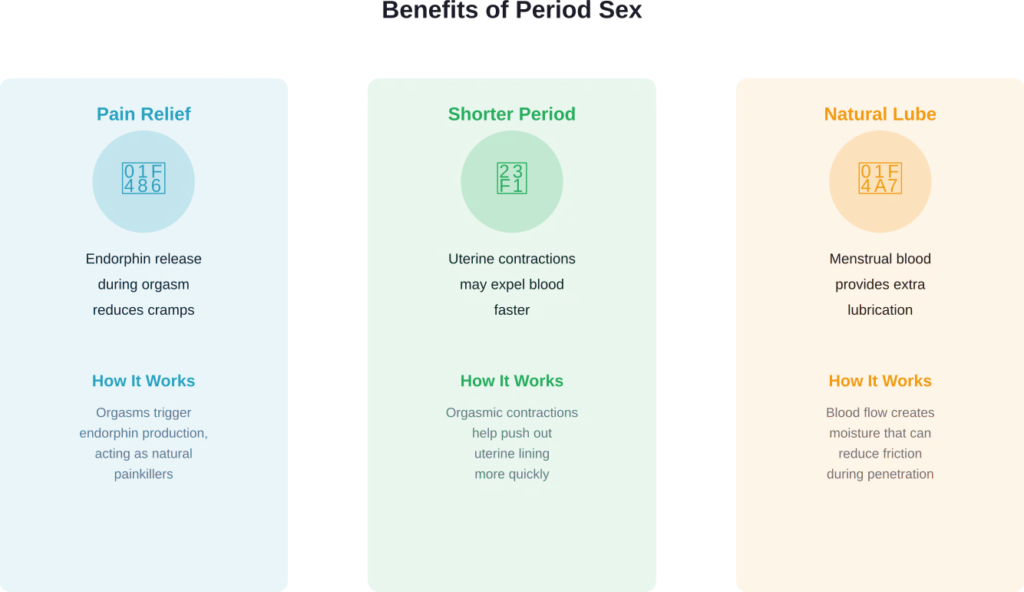
Natural Pain Relief
Orgasms release endorphins—your body’s natural painkillers. These chemicals can help reduce menstrual cramps and general period discomfort. Sexual arousal also increases blood flow to the pelvic region, which may help relax cramped muscles.
For people who experience dysmenorrhea (painful periods), sexual activity might provide temporary relief. It’s not a cure, but it’s a pleasant alternative to ibuprofen for some.
Shorter Periods
Orgasmic contractions can help expel menstrual blood and uterine lining faster. This might shorten your period by a day or so. The effect varies by person, but some notice their flow ends more quickly after sexual activity during menstruation.
Increased Lubrication
Menstrual blood acts as a natural lubricant. For people who sometimes experience vaginal dryness during sex, period sex can be more comfortable. This extra lubrication can make penetration easier and more enjoyable.
Heightened Arousal
Hormonal fluctuations affect libido throughout the menstrual cycle. Some people experience increased sexual desire during their period. If you’re feeling more aroused than usual, there’s no medical reason not to act on it.
Possible Side Effects and Considerations
Period sex isn’t without its downsides. Here’s what to watch for.
The Mess Factor
This is the most obvious consideration. Menstrual blood can get on bodies, hands, bedding, and anything else in the vicinity. Flow varies throughout your period—day 1 or 2 might be heavier, while days 4-5 are typically lighter.
Some people find the blood off-putting. Others don’t mind. Neither reaction is wrong. It’s purely personal preference.
Potential Discomfort
Not everyone feels good during their period. Cramps, bloating, fatigue, and general discomfort might make sex unappealing. Some people experience increased cervical sensitivity during menstruation, making penetration uncomfortable.
Listen to your body. If sex doesn’t feel good, there’s no obligation to push through.
Increased STI Vulnerability
As mentioned earlier, the slightly elevated STI transmission risk during menstruation is real but manageable. According to the CDC’s information on sexual risk behaviors, barrier methods remain the most effective protection against infection transmission.
Bacterial vaginosis can also become more common around menstruation. According to CDC data on BV, this condition happens when there’s too much of certain bacteria in the vagina. Sexual activity—especially with multiple partners—can increase risk, as can douching.
Psychological Comfort
Cultural and personal attitudes about menstruation affect how people feel about period sex. Some find it liberating and intimate. Others feel self-conscious or worry about their partner’s reaction.
According to Flo app research, between 3% and 30% of sexually active women choose to have period sex—a wide range that reflects diverse attitudes and comfort levels.
Practical Tips for Period Sex
If you decide period sex is for you, these strategies make the experience smoother.
Preparation
Lay down a dark towel to protect your sheets. Keep wet wipes or a damp washcloth nearby for easy cleanup. Having tissues within reach helps too.
Some people prefer removing tampons or menstrual cups before sex, though this isn’t strictly necessary for all types of sexual activity. Menstrual discs, which sit higher in the vaginal canal, can sometimes stay in place during penetrative sex.
Timing
Consider having sex toward the end of your period when flow is lighter. This reduces mess while still allowing intimacy during menstruation.
Alternatively, shower sex eliminates most mess concerns. The water washes away blood immediately, though be cautious about slippery surfaces.
Communication
Talk to your partner beforehand. Discuss comfort levels, concerns, and boundaries. Some partners need reassurance that period blood doesn’t bother them. Others might prefer to wait.
Honest communication prevents awkwardness and ensures both people feel comfortable.
Protection
Use condoms even if you’re using other contraception. This protects against STI transmission and makes cleanup easier for the partner with a penis.
If pregnancy prevention is the goal, don’t rely on the “period method.” According to the CDC’s STI screening recommendations, consistent contraceptive use and regular STI testing are essential for sexual health.
Alternative Activities
Penetrative sex isn’t the only option. Manual stimulation, oral sex (with barriers like dental dams), and other intimate activities can provide satisfaction with less mess.
Non-sexual intimacy—cuddling, massage, or simply spending quality time together—can maintain connection when one partner isn’t feeling up to sex.
| Preparation Strategy | Purpose | Effectiveness |
|---|---|---|
| Dark towels | Protect bedding from stains | High |
| Shower sex | Eliminate mess concerns | Very high |
| Lighter flow days | Reduce blood volume | Moderate to high |
| Barrier protection | STI prevention and easier cleanup | Very high |
| Wet wipes nearby | Quick cleanup afterward | High |
| Menstrual disc | Contain flow during penetration | Moderate (varies by product) |
What Partners Think About Period Sex
Partner attitudes vary widely. Some don’t mind period sex at all—they see it as a normal part of sexual intimacy. Others feel squeamish about blood and prefer to wait.
Community discussions reveal diverse perspectives. Some partners report feeling closer to their significant other through this kind of vulnerability and openness. Others appreciate the increased natural lubrication.
But squeamishness exists too. Cultural conditioning around menstruation being “dirty” or “gross” affects how some people view period sex. These attitudes are learned, not biological, but they’re real barriers for some couples.
The key is matching comfort levels. If one partner is enthusiastic and the other uncomfortable, compromise matters. Maybe you try it on lighter flow days, or stick with non-penetrative activities, or simply wait.
No one should feel pressured into period sex. Similarly, no one should feel ashamed for wanting it.
Medical Conditions That Might Affect Period Sex
Certain health conditions warrant extra consideration.
Endometriosis can cause painful periods and painful sex. People with this condition might find period sex particularly uncomfortable. According to women’s health authorities, amenorrhea (missing periods) happens in 3% to 4% of women and can significantly impact quality of life.
Pelvic inflammatory disease, often caused by untreated STIs, can make sex painful any time—but especially during menstruation when the cervix is more open. The CDC notes that STIs can lead to serious complications if left untreated.
Blood clotting disorders might make period sex messier due to heavier flow. While not dangerous, this might affect comfort and preferences.
If you experience unusually painful periods, extremely heavy bleeding, or pain during sex, consult a healthcare provider. These symptoms can indicate underlying conditions that need treatment.
Period Sex and Relationship Intimacy
For some couples, being comfortable with period sex represents a deeper level of intimacy and acceptance. It signals that all aspects of a partner’s body—including normal biological processes—are acceptable and not shameful.
Research on sexual health emphasizes that healthy sexuality includes emotional and social well-being, not just physical health. Period sex can be part of that holistic sexual wellness when approached with communication and mutual respect.
That said, choosing not to have period sex doesn’t indicate a lack of intimacy. Couples can be perfectly connected while preferring to wait. The intimacy comes from respectful communication and mutual decision-making, not from any particular sexual act.

When to Skip Period Sex
Sometimes waiting makes more sense.
If you’re experiencing severe cramps or pain, sex probably won’t help. While orgasms can relieve minor cramping for some people, severe dysmenorrhea needs medical attention, not sexual activity.
Heavy flow days might be too messy for comfort. There’s nothing wrong with choosing lighter days or waiting until after your period ends.
If either partner feels uncomfortable, that’s reason enough to wait. Enthusiastic consent matters—pressuring someone into period sex (or any sex) isn’t okay.
Active infections or recent gynecological procedures warrant caution. Consult your healthcare provider about when it’s safe to resume sexual activity.
The Cultural Shift Around Period Sex
Attitudes about menstruation and period sex are slowly changing. More people recognize that periods are normal biological processes, not something shameful or dirty.
Education about reproductive health helps. The more people understand about the menstrual cycle, fertility windows, and sexual health, the more informed decisions they can make.
According to data on reproductive health education, comprehensive sexual education that includes information about menstruation, contraception, and STI prevention leads to better health outcomes. Understanding your body shouldn’t be taboo.
Still, cultural conditioning runs deep. Many people grow up learning that periods are embarrassing or gross. Unlearning those messages takes time and conscious effort.
Frequently Asked Questions
No, menstrual blood itself won’t cause infections in a partner. However, if the person menstruating has a sexually transmitted infection, period blood can transmit it more efficiently than other bodily fluids. Using condoms prevents this transmission. For partners without STIs, period blood poses no infection risk.
Sex doesn’t typically make periods heavier. However, arousal increases blood flow to the pelvic area, which might make it seem like there’s more blood temporarily. Some people notice their flow appears heavier immediately after sex, but this doesn’t increase total menstrual blood volume. The orgasmic contractions might actually help expel blood faster, potentially shortening your period.
Yes, completely normal. Hormone fluctuations throughout the menstrual cycle affect libido. Some people experience increased sexual desire during menstruation due to higher testosterone levels. Others feel more aroused mid-cycle during ovulation. Sexual desire patterns vary widely among individuals, and all patterns are normal.
Regular tampons should be removed before penetrative sex—they can get pushed too far into the vaginal canal or become uncomfortable. However, menstrual discs (like Softdisc or Flex) sit higher in the vagina and some can stay in place during penetrative sex. Check the product specifications, as not all menstrual products are designed for this use.
Water helps rinse away blood, making shower sex a popular option for period sex. However, water isn’t a contraceptive or STI barrier. You can still get pregnant and still need protection against infections. The main benefit of shower sex is convenience and cleanliness, not safety.
Have a straightforward conversation outside the bedroom. You might say something like, “I’ve been thinking about whether we’re both comfortable with sex during my period. What are your thoughts?” This opens dialogue without pressure. Discuss concerns, boundaries, and preferences openly. If your partner seems hesitant, ask what would make them more comfortable rather than dismissing their concerns.
No, having sex during your period doesn’t change how well your birth control works. Hormonal contraceptives (pills, patches, rings, IUDs, implants) maintain the same effectiveness throughout your cycle. Barrier methods like condoms work the same way during menstruation as any other time. The only difference is that period blood doesn’t provide contraceptive protection—you still need your regular birth control method.
The Bottom Line on Period Sex
Period sex is safe, normal, and completely up to you and your partner.
There’s no medical reason to avoid sexual activity during menstruation. While there’s a slightly increased risk of STI transmission, using protection addresses this concern. Pregnancy is possible during period sex, so contraception remains important if pregnancy prevention is your goal.
Some people enjoy benefits like cramp relief and shorter periods. Others find the mess or discomfort off-putting. Both perspectives are valid.
The decision comes down to personal preference, comfort level, and open communication with your partner. Listen to your body, respect your boundaries, and use protection.
Understanding what happens during period sex empowers you to make informed choices about your sexual health. Whether you choose to embrace period sex or prefer to wait, what matters is that the decision is yours.
Talk to your healthcare provider if you experience pain during sex at any time in your cycle, have concerns about STI risk, or need guidance on contraception options. Sexual health is an important part of overall wellness, and getting accurate information helps you make the best decisions for your body.