

Quick Summary: Overfilling your car’s engine with oil can cause serious damage including increased crankshaft pressure, oil foaming, seal leaks, and potential engine seizure. Excess oil needs to be drained immediately to prevent catalytic converter damage and costly repairs.
Changing your own oil saves money and time. But there’s a catch—adding too much oil can actually wreck your engine instead of protecting it.
The damage isn’t immediate. It’s sneaky. Excess oil creates pressure, causes foaming, and eventually leads to problems that’ll cost hundreds or thousands to fix.
How Excess Oil Damages the Engine
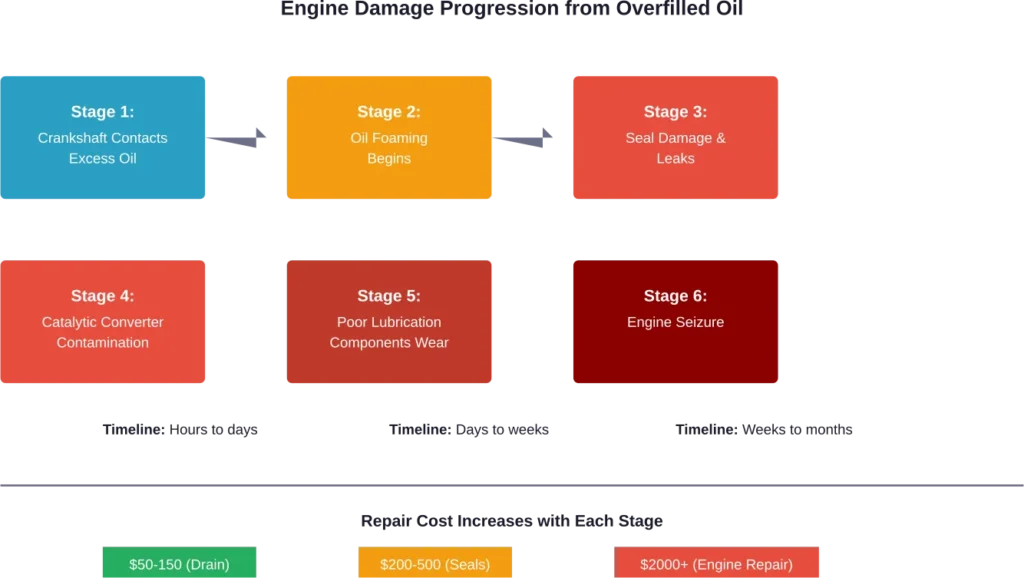
When oil levels rise above the maximum mark on the dipstick, the crankshaft—which normally spins just above the oil surface—starts making contact with the excess fluid. This creates two immediate problems that cascade into serious damage.
First, the spinning crankshaft whips the oil into a frothy foam. According to research on oil foaming, foam reduces oil’s ability to lubricate properly. The foam contains air bubbles that compress under pressure instead of forming a protective film between metal surfaces.
Second, increased oil volume builds pressure inside the crankcase. This pressure forces oil past seals and gaskets that weren’t designed to handle it.
Visible Signs of Overfilled Oil
Thick white smoke from the exhaust pipe is a common indicator of overfilled oil. This happens when oil leaks past valve seals and burns in the combustion chamber.
But wait. Other symptoms show up before visible smoke:
- Oil spots or puddles under the vehicle
- Strong burning oil smell while driving
- Blue-tinted exhaust smoke during acceleration
- Rough idling or engine performance issues
- Oil pressure warning light activation
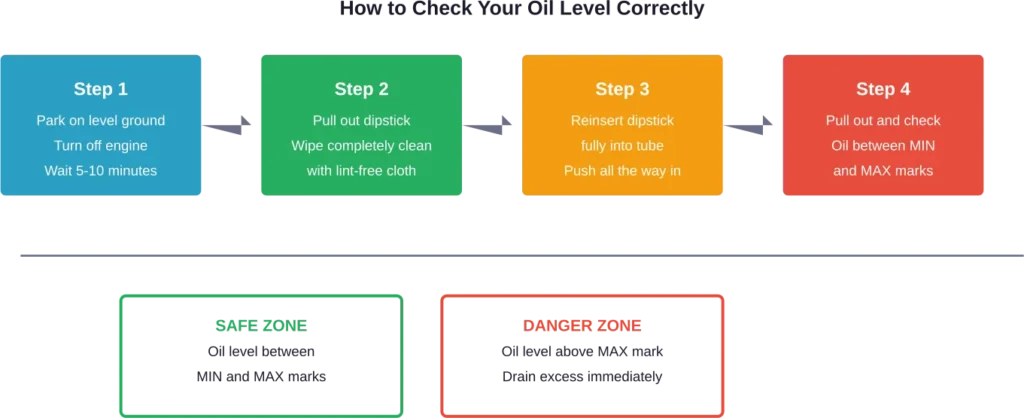
The dipstick tells the whole story. Pull it out, wipe it clean, reinsert it fully, then check the level. Oil above the maximum mark means trouble.
Why Oil Foaming Causes System Failure
Here’s the thing though—foaming doesn’t just reduce lubrication quality. It creates a domino effect throughout the entire oil system.
Foam stability testing under ASTM D892 standards measures foam generation and persistence. The test measures foam generated immediately after agitation and how much remains after 10 minutes. When oil foams excessively, the foam persists and circulates through the engine.
| Condition | Lubrication Effectiveness | Heat Transfer | Pressure Consistency |
|---|---|---|---|
| Normal Oil | 100% | Optimal | Stable |
| Minor Foaming | 80-90% | Reduced | Fluctuating |
| Severe Foaming | 50-70% | Poor | Erratic |
Foamed oil can’t remove heat effectively. Engines run hotter. Components expand beyond design tolerances. Metal-to-metal contact increases wear exponentially.
Crankshaft Contact and Pressure Problems
The crankshaft rotates thousands of times per minute. When it dips into excess oil, it acts like a high-speed mixer.
This whipping action does three things simultaneously. It aerates the oil, increases friction and heat, and raises internal crankcase pressure. That pressure has to go somewhere.
Seals fail first. Oil leaks past them into areas where it shouldn’t exist—like the PCV system, the air intake, or worst case, the combustion chambers. When the engine doesn’t get proper lubrication in critical areas because the oil is foaming or leaking elsewhere, it can seize up entirely.
Draining Excess Oil Safely
Caught overfill early? Good. The fix is straightforward but requires care.
The safest method involves removing the drain plug and letting a small amount out, then rechecking the level. This requires getting under the vehicle, so proper jack stands and safety procedures matter.
Another option uses an oil extractor pump inserted through the dipstick tube. These pumps suck oil out without getting underneath the car. They’re slower but cleaner and safer for DIY work.
Community discussions on automotive forums suggest checking the level multiple times during drainage. It’s easy to drain too much and create the opposite problem—low oil levels cause immediate damage.
Long-Term Effects on Engine Components
So what happens if overfilled oil isn’t drained immediately? The damage accumulates over time.
Catalytic converters can be damaged when oil burns in the exhaust system and are expensive to replace. Emissions compliance depends on these components functioning properly.
Spark plugs foul when coated with oil. Engine misfires follow. Fuel economy drops. Performance degrades noticeably.
Seals and gaskets deteriorate from constant pressure. Replacing a rear main seal or valve cover gaskets requires hours of labor and hundreds in parts.
| Component | Damage Type | Typical Repair Cost | Time to Failure |
|---|---|---|---|
| PCV Valve | Clogging | $50-150 | Weeks |
| Valve Seals | Deterioration | $300-800 | 1-3 months |
| Catalytic Converter | Contamination | $1,000-2,500 | 3-6 months |
| Main Bearings | Lubrication failure | $2,000-4,000 | 6-12 months |
Frequently Asked Questions
Any amount above the maximum mark on the dipstick creates risk. Even half a quart increases foaming potential and crankshaft contact. Anything over one quart should be drained immediately to prevent damage.
Yes. Thick white smoke from the exhaust indicates oil burning in the combustion chamber. This happens when overfill pressure forces oil past valve seals into cylinders where it burns during combustion.
It depends on duration and severity. Short-term overfill caught quickly might cause no lasting damage. Extended operation with significantly overfilled oil can destroy bearings, seals, and the catalytic converter—requiring engine rebuild or replacement.
Check the dipstick with the engine off and the vehicle on level ground. Wait 5-10 minutes after shutdown for oil to settle. If the oil level reads above the maximum mark, overfill has occurred.
Driving with overfilled oil isn’t recommended regardless of amount. Even slight overfill increases pressure and foaming risk. The safest approach involves draining excess before operating the vehicle.
Crankcase pressure increases when oil levels rise too high. This elevated pressure forces oil past seals designed for normal operating conditions. Oil pressure gauge readings might show erratic behavior as foamed oil circulates through the system.
Using the drain plug method takes 5-10 minutes including setup and cleanup. Oil extractor pumps require 10-20 minutes depending on pump strength and how much needs removal. Always recheck the level after draining to ensure correct fill.
Taking Action on Overfilled Oil
Real talk: overfilled oil isn’t something to ignore or “wait and see” about. The damage starts immediately even if symptoms don’t appear right away.
Check the dipstick regularly—before long trips, after oil changes, and monthly during normal operation. Catching overfill early means a simple drain instead of expensive repairs.
When in doubt about oil levels or if symptoms like smoke or leaks appear, professional diagnosis catches problems before they escalate. Engine damage from overfilled oil is preventable with proper checking habits and quick action when levels exceed specifications.