
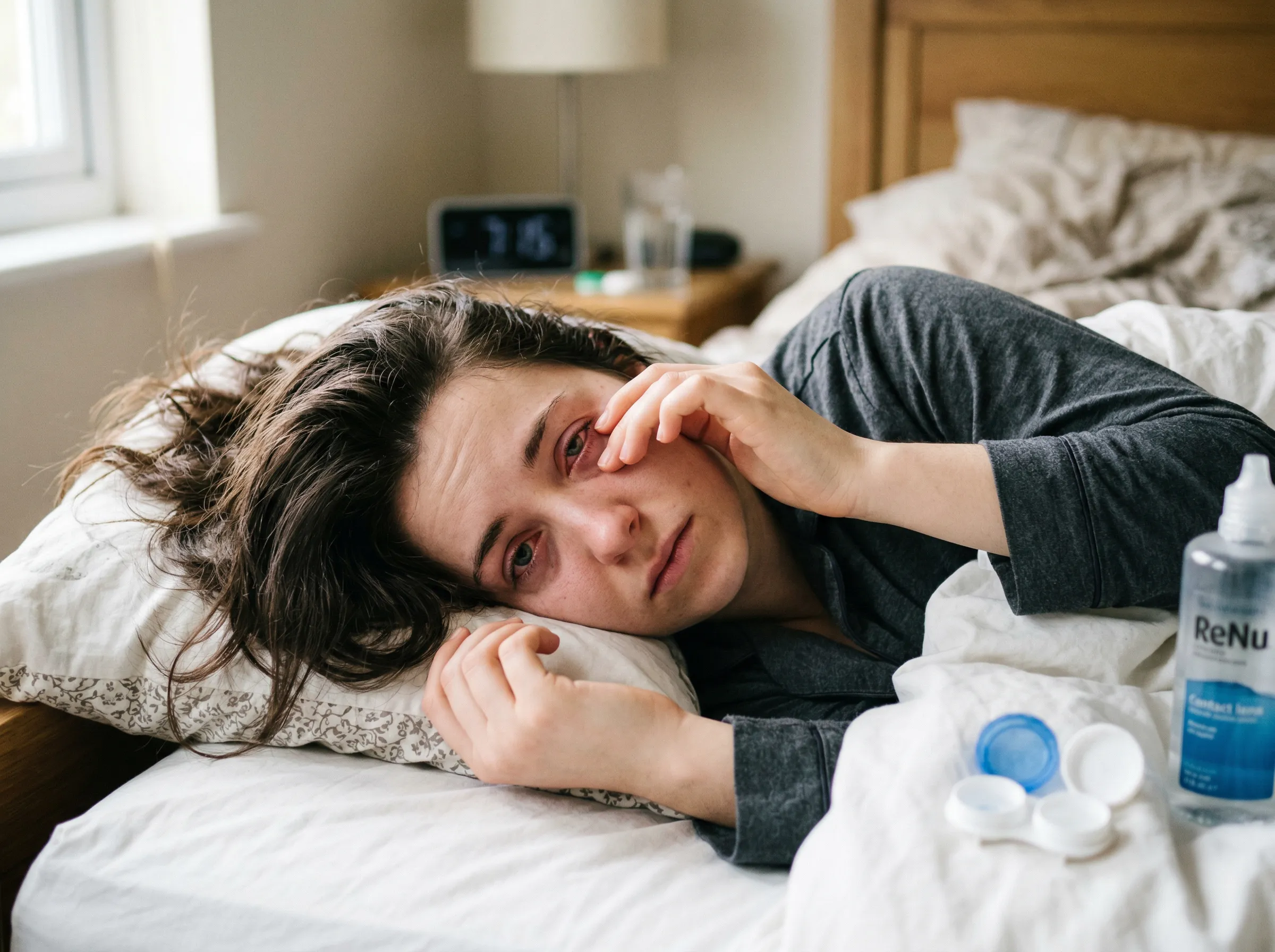
Quick Summary: Sleeping in contact lenses—even for one night—significantly increases the risk of serious eye infections and corneal damage by restricting oxygen flow to the cornea. According to the American Academy of Ophthalmology, sleeping in contact lenses increases your risk for eye infections six- to eightfold. If you accidentally fall asleep with contacts in, remove them immediately upon waking, avoid rubbing your eyes, and give your eyes a break before reinserting lenses.
We’ve all been there. After a long day, you collapse into bed and realize—hours later—that you forgot to take out your contact lenses. Or maybe you dozed off during a movie. Either way, waking up with contacts still in can feel unsettling.
But how serious is this mistake? Turns out, sleeping with contact lenses poses genuine risks to eye health that extend far beyond simple discomfort.
Why Sleeping With Contact Lenses Is Dangerous
Your corneas need oxygen to stay healthy. During the day, they get oxygen from the air around you. Contact lenses already reduce the amount of oxygen reaching the cornea—and when you close your eyes to sleep, oxygen access drops even further.
This creates a condition called corneal hypoxia. According to research published by the National Institutes of Health, hypoxia depletes the cornea’s energy reserves and causes cellular stress. The cornea can tolerate moderate hypoxia-induced swelling under 5 percent without immediate problems, but prolonged or repeated oxygen deprivation leads to serious complications.
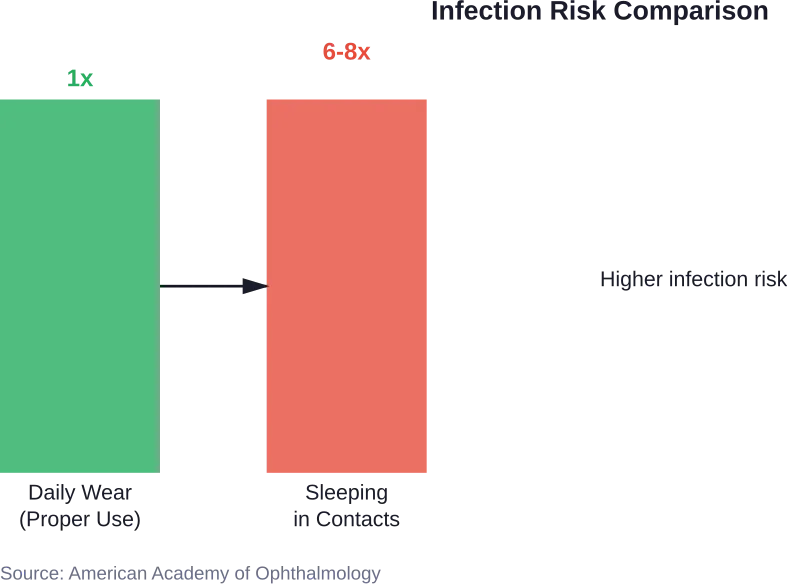
The U.S. Food and Drug Administration regulates contact lenses as medical devices, and the American Academy of Ophthalmology reports that sleeping in contacts increases the risk of eye infections by six to eight times compared to daily wear with proper removal.
How Oxygen Deprivation Affects Your Cornea
When the cornea doesn’t get enough oxygen overnight, several things happen:
- Corneal swelling (edema) develops as the tissue tries to compensate
- Blood vessels may begin growing into the normally clear cornea seeking oxygen
- The epithelial barrier weakens, making infection easier
- Cellular metabolism shifts, depleting glycogen stores
These changes create an environment where bacteria, fungi, and other pathogens can thrive.
Common Complications From Sleeping in Contact Lenses
A 2015 survey by the U.S. Centers for Disease Control and Prevention found that 99 percent of contact lens wearers admitted to at least one bad contact-lens hygiene habit—with sleeping in lenses being among the most common and dangerous.
Microbial Keratitis
This is a serious infection of the cornea. According to research from the University of Tennessee Health Science Center, the approximately 38 million contact lens wearers in the United States accounted for an estimated 1 million clinical visits related to microbial keratitis at a cost of about $174.9 million in 2010.
Symptoms include severe pain, redness, light sensitivity, discharge, and blurred vision. Without prompt treatment, microbial keratitis can cause permanent vision loss or corneal scarring.
Corneal Ulcers
These are open sores on the cornea, often resulting from untreated infections. They’re painful and potentially vision-threatening.
Corneal Neovascularization
When the cornea is chronically deprived of oxygen, blood vessels grow into it from the surrounding tissue. This clouds vision and indicates long-term damage.
Red, Irritated Eyes
Even without infection, sleeping in contacts causes inflammation, dryness, and discomfort. Eyes may feel gritty or burn upon waking.
| Complication | Severity | Primary Cause |
|---|---|---|
| Microbial Keratitis | High | Bacterial/fungal infection |
| Corneal Ulcer | High | Untreated infection |
| Neovascularization | Moderate | Chronic oxygen deprivation |
| Corneal Edema | Low-Moderate | Hypoxia-induced swelling |
| Dry Eye/Irritation | Low | Reduced tear exchange |
What to Do If You Accidentally Sleep With Contacts In
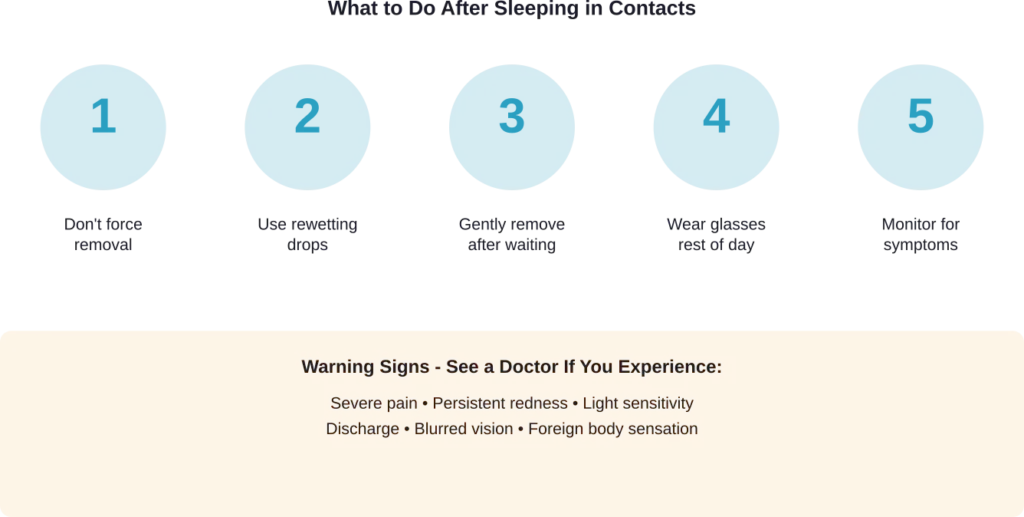
Don’t panic. Here’s what to do:
Step 1: Don’t immediately remove the lenses. When you first wake up, your contacts may feel stuck or dried out. Rubbing or forcing them out can scratch your cornea.
Step 2: Use rewetting drops. Apply lubricating eye drops or contact lens rewetting solution. Blink several times to help the lens rehydrate and move freely.
Step 3: Wait a few minutes, then gently remove. Once the lens moves comfortably, take it out using your normal removal technique.
Step 4: Give your eyes a break. Don’t put contacts back in immediately. Wear glasses for at least several hours—ideally the rest of the day—to let your corneas recover oxygen levels.
Step 5: Watch for warning signs. Monitor for pain, redness, light sensitivity, discharge, or vision changes. If any of these develop, see an eye care professional immediately.
Are There Contact Lenses Approved for Overnight Wear?
Some contact lenses are FDA-approved for extended wear, meaning they can be worn continuously for up to 30 days depending on the specific product. According to FDA data cited in ophthalmology literature, approximately 90 percent of contact lens wearers use frequently replaceable or disposable contact lenses, and some of these are designed with high oxygen permeability specifically for overnight use.
Materials like silicone hydrogel allow significantly more oxygen to reach the cornea compared to traditional hydrogel lenses. Research from the National Institutes of Health notes that high-Dk (oxygen permeability) silicone hydrogel lenses were developed to address the oxygen requirements that low-Dk materials couldn’t meet during overnight wear.
That said, even FDA-approved extended wear lenses carry higher infection risk than daily wear lenses. They’re not suitable for everyone, and require careful monitoring by an eye care professional.
What About Naps?
Generally speaking, a brief 20-30 minute nap with contacts in poses less risk than overnight sleep. But it’s still not ideal. The eyes still receive reduced oxygen, and tear exchange decreases, creating conditions for dryness and irritation.
If you plan to nap, consider removing lenses first—or use rewetting drops before and after.
How to Prevent Accidentally Sleeping in Contacts
Prevention is straightforward:
- Set a phone reminder for your lens removal time each evening
- Keep a glasses case and solution on your nightstand
- Remove contacts before lying down to watch TV or read in bed
- Establish a bedtime routine that includes lens removal as a non-negotiable step
- Consider daily disposable lenses—they eliminate the temptation to overwear
According to Harvard Health, proper use and care make contact lenses very safe. But sleeping with lenses not specifically intended for extended wear significantly increases corneal infection risk.
When to See an Eye Doctor
Schedule an appointment if you experience:
- Pain that doesn’t resolve after removing contacts
- Vision changes or blurriness lasting more than an hour
- Persistent redness or bloodshot appearance
- Discharge or excessive tearing
- Extreme light sensitivity
- A feeling that something is stuck in your eye
These symptoms could indicate infection, corneal abrasion, or other complications requiring professional treatment.
Frequently Asked Questions
A single instance rarely causes permanent damage, but it significantly increases infection risk. If an infection develops and isn’t treated promptly, it can lead to corneal scarring or vision loss. Always remove lenses as soon as you wake up and monitor for symptoms.
Wait at least several hours—ideally the full day—to allow your corneas to recover normal oxygen levels. Wearing glasses during this recovery period reduces additional stress on the eye tissue.
Overnight wear reduces tear production and exchange, causing lenses to dry out and adhere to the cornea. Use rewetting drops and blink several times before attempting removal to rehydrate the lens.
Not unless specifically labeled as FDA-approved for extended wear. Most monthly lenses are designed for daily wear only—meaning you remove them each night. Check your lens packaging or ask your eye care provider.
Extended wear lenses are FDA-approved for overnight use and made from materials with higher oxygen permeability. Daily wear lenses must be removed each night. Extended wear lenses still carry higher infection risk than daily wear, even when used as directed.
No. The CDC survey found that swimming or bathing with contacts is one of the most common hygiene mistakes. Water exposure introduces bacteria and other pathogens that can cause serious infections, especially Acanthamoeba keratitis.
Symptoms include severe pain, redness, light sensitivity, discharge, excessive tearing, blurred vision, and a sensation of something in the eye. If you experience any of these, remove your contacts immediately and see an eye doctor as soon as possible.
Protecting Your Eye Health
Contact lenses offer tremendous benefits for vision correction. But they’re medical devices that require responsible use. Sleeping in contacts—even occasionally—creates unnecessary risk.
According to the American Academy of Ophthalmology, sleeping in contacts is one of the most common and risky behaviors among teen and adult contact lens wearers. The six- to eightfold increase in infection risk isn’t worth the convenience of skipping removal.
If you frequently forget to remove lenses, consider switching to daily disposables. If you need lenses you can sleep in for medical or lifestyle reasons, talk to your eye care provider about FDA-approved extended wear options and whether they’re appropriate for your eyes.
Your vision is precious. Take the extra minute each night to remove and properly store your contact lenses. Your eyes will thank you.