

Quick Summary: Stopping sugar consumption for 30 days can lead to improved energy levels, better blood sugar control, weight loss, clearer skin, and reduced risk of chronic diseases. According to the CDC, most Americans consume excessive added sugars, and cutting them out—even temporarily—can reset cravings, stabilize mood, and improve dental health. The benefits start within days and compound over the full month.
Sugar has become so embedded in modern diets that most people don’t realize how much they’re actually consuming. According to the CDC, about 30% of Americans 2 and older eat and drink high amounts of added sugar (more than 15% of daily calories from added sugar)—far exceeding federal recommendations of less than 10%.
But what happens when you flip the script and eliminate added sugar completely?
The 30-day no sugar challenge has gained traction as people look for ways to reset their health, break sugar addiction patterns, and see tangible improvements in how they feel. The science backs this up: reducing free sugars can significantly impact everything from your waistline to your risk of chronic disease.
Understanding Added vs. Natural Sugars
Before diving into what happens when you quit, it’s crucial to understand what you’re actually eliminating.
According to WHO guidelines, free sugars include monosaccharides and disaccharides added to foods and beverages by manufacturers, cooks, or consumers, plus sugars naturally present in honey, syrups, fruit juices, and fruit juice concentrates.
Natural sugars found in whole fruits and vegetables don’t count. These come packaged with fiber, vitamins, and minerals that slow absorption and provide nutritional value.
The target? WHO recommends reducing free sugar intake to less than 10% of total energy intake, ideally under 5%—roughly 25 grams (6 teaspoons) per day. A single can of sugar-sweetened soda contains up to 40 grams (around 10 teaspoons) of free sugars, meaning one drink exceeds the entire daily recommendation.
What Happens to Your Body: A Timeline
The transformation doesn’t happen overnight, but changes begin remarkably fast.
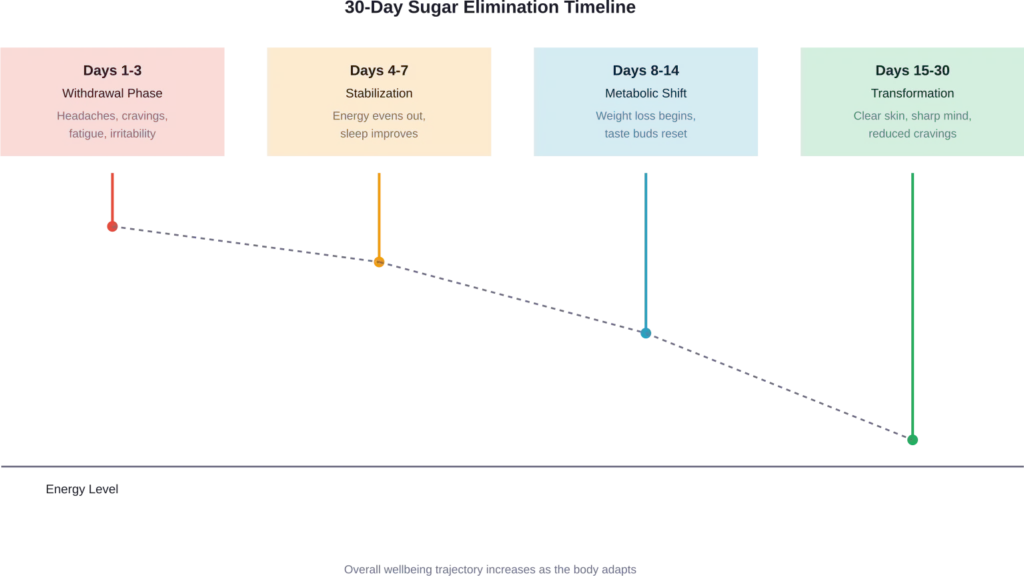
Days 1-3: The Withdrawal Phase
Here’s the thing—sugar activates reward pathways in the brain similar to addictive substances. When consumption stops abruptly, withdrawal symptoms often emerge.
Expect headaches, irritability, fatigue, and intense cravings. This isn’t pleasant, but it’s temporary. The body is adjusting to functioning without constant glucose spikes.
Mood swings are common during this phase as blood sugar levels stabilize. Many people report feeling foggy or anxious.
Days 4-7: Energy Stabilization
As the withdrawal fog lifts, something interesting happens. Energy levels begin to stabilize.
Without the roller coaster of sugar highs and crashes, the body learns to maintain steadier blood glucose. Research published in Frontiers in Nutrition (2023) found that reducing free sugars improved 24-hour glucose profiles and reduced glycemic variability in subjects without diabetes.
Sleep quality often improves during this week as well. Sugar consumption, particularly in the evening, can disrupt sleep architecture.
Days 8-14: Metabolic Shifts
Real talk: this is when weight loss typically becomes noticeable.
The body starts burning stored fat more efficiently when it’s not constantly processing dietary sugars. Inflammation markers begin dropping, which shows up as reduced bloating and puffiness.
Taste buds also begin to reset. Foods that previously tasted normal may suddenly seem too sweet, while naturally sweet foods like berries taste more intensely flavorful.
Days 15-30: Long-Term Benefits Emerge
By week three, the transformation accelerates.
Skin often becomes clearer as insulin levels stabilize. High sugar intake is strongly linked to acne and skin inflammation through insulin-like growth factor pathways.
Mental clarity improves significantly. The cognitive fog that many people accept as normal lifts, revealing sharper focus and better memory.
Cravings diminish substantially. What felt impossible in week one becomes manageable by week four as the brain recalibrates its reward system.
The Health Benefits: What the Science Says
Weight Management and Metabolic Health
Excessive sugar consumption is strongly linked to weight gain and obesity. According to the CDC, consuming too many added sugars contributes to health problems including obesity, type 2 diabetes, and heart disease.
When sugar intake drops, several metabolic changes occur simultaneously. Insulin sensitivity improves, allowing cells to respond more effectively to the hormone. Inflammation decreases throughout the body. Fat storage, particularly visceral fat around organs, begins to reduce.
The liver benefits significantly. High sugar diets, especially fructose from sweetened beverages, contribute to non-alcoholic fatty liver disease. A month without added sugars gives the liver time to process stored fat and recover.
Cardiovascular Health
Heart disease remains a leading cause of death globally, and sugar plays a more significant role than many realize.
Research indicates that metabolism of dietary sugars impacts multiple cardiovascular risk factors. High sugar intake raises triglycerides, increases blood pressure, and promotes inflammation—all independent risk factors for heart disease.
Thirty days without added sugars can improve several cardiovascular markers, including blood pressure and lipid profiles.
Dental Health
The connection between sugar and cavities is well-established. Added sugar intake from sweetened beverages is strongly linked to an increased risk of cavities and tooth decay.
Bacteria in the mouth metabolize sugar and produce acid that erodes enamel. Cutting out added sugar removes the primary fuel source for these harmful bacteria, giving teeth a chance to remineralize and recover.
Mental Health and Cognitive Function
The brain runs on glucose, but that doesn’t mean more sugar equals better brain function. Actually, the opposite is true.
High sugar consumption has been linked to increased risk of depression and anxiety. The mechanism involves inflammation, oxidative stress, and dysregulation of neurotransmitter systems.
When sugar intake decreases, many people report improved mood stability, reduced anxiety, and better concentration. The brain adapts to using more stable energy sources rather than riding the glucose roller coaster.
| Health Marker | Impact After 30 Days | Long-Term Benefit |
|---|---|---|
| Blood Sugar | Improved stability and reduced spikes | Lower diabetes risk |
| Weight | Weight loss results vary by individual, depending on starting weight, activity level, and dietary choices. | Sustained weight management |
| Energy Levels | More stable throughout the day | Reduced fatigue and crashes |
| Skin Health | Reduced acne and inflammation | Slower aging markers |
| Cravings | Significantly diminished | Reset taste preferences |
| Dental Health | Reduced cavity-causing bacteria | Lower decay risk |
Foods to Avoid and Smart Alternatives
The challenge isn’t just avoiding obvious sources like candy and soda. Sugar hides everywhere.
Hidden Sugar Sources
Common culprits include:
- Condiments like ketchup, barbecue sauce, and salad dressings
- Flavored yogurts (often containing 15-20g per serving)
- Granola bars and “healthy” cereals
- Pasta sauces and marinades
- Bread and crackers
- Plant-based milk alternatives
- Protein bars and meal replacement shakes
Reading labels becomes essential. Look for terms like sucrose, high-fructose corn syrup, cane sugar, agave nectar, maltose, dextrose, and fruit juice concentrate—all are added sugars.
What You Can Eat
Focus on whole, unprocessed foods:
- Vegetables (all types, unlimited)
- Whole fruits (the fiber slows sugar absorption)
- Lean proteins (fish, poultry, eggs, legumes)
- Nuts and seeds
- Whole grains (brown rice, quinoa, oats)
- Healthy fats (avocado, olive oil, fatty fish)
- Plain dairy or unsweetened alternatives
The key is choosing foods that don’t have ingredient lists—or very short ones.

Practical Strategies for Success
Knowledge alone won’t get anyone through 30 days. Implementation matters.
Meal Planning
Planning ahead prevents reaching for convenient sugary options when hunger strikes. Prep proteins and vegetables on weekends. Keep hard-boiled eggs, cut vegetables, and unsweetened nuts readily available.
Managing Cravings
When cravings hit hard, try these evidence-based tactics:
- Drink water first—dehydration often masquerades as hunger
- Eat a small portion of protein or healthy fat
- Go for a 10-minute walk
- Wait 15 minutes—most cravings pass
- Have fruit if desperate for sweetness
Social Situations
Restaurants and social gatherings present challenges. Request sauces on the side. Choose grilled proteins with vegetables. Bring sugar-free options to potlucks.
Being upfront about the challenge often leads to support rather than pressure.
Potential Challenges and How to Handle Them
Not everyone sails through 30 days without obstacles.
The Withdrawal Period
Those first few days can be brutal. Some people experience headaches severe enough to disrupt work. Fatigue may make exercise feel impossible.
This is normal and temporary. Stay hydrated, get adequate sleep, and don’t schedule the challenge start during a high-stress period.
Social Pressure
Friends and family may not understand why someone’s turning down birthday cake or refusing the office donuts. This pressure can derail progress.
Having a prepared response helps: “I’m doing a health reset for the month” usually suffices without inviting debate.
All-or-Nothing Thinking
One accidental sugar consumption doesn’t negate 15 days of progress. Perfectionism becomes the enemy.
If added sugar sneaks in, acknowledge it and continue. The benefits accumulate from reduced overall intake, not from absolute perfection.
What Happens After Day 30?
The real question: what comes next?
Some people find they want to continue limiting added sugars indefinitely. Others slowly reintroduce small amounts while maintaining awareness.
The key benefit is recalibration. Taste preferences shift permanently for many people. Foods that previously seemed normal taste overwhelmingly sweet. This natural aversion helps maintain lower sugar intake long-term.
CDC research supports maintaining reduced sugar intake as a sustainable health strategy. The Dietary Guidelines for Americans recommend keeping added sugars below 10% of total calories for life, not just temporarily.
Frequently Asked Questions
Yes. Whole fruits contain natural sugars along with fiber, vitamins, minerals, and antioxidants. The fiber slows sugar absorption, preventing the spikes associated with added sugars. WHO guidelines specifically exclude whole fruits from restrictions on free sugars.
Weight loss results vary by individual, depending on starting weight, activity level, and what foods replace the sugar. Weight loss occurs because eliminating added sugars significantly reduces calorie intake and improves metabolic function.
For most people, abruptly stopping added sugar consumption is safe. Withdrawal symptoms like headaches, fatigue, and irritability are uncomfortable but not dangerous. However, individuals with diabetes or other metabolic conditions should consult healthcare providers before making dramatic dietary changes.
This depends on individual goals. Some challenges allow non-nutritive sweeteners as tools to manage cravings, while others eliminate all sweetness to fully reset taste preferences. While no amount of added sugars or non-nutritive sweeteners is recommended or considered part of a healthy or nutritious diet, non-nutritive sweeteners can be used to reduce consumption of added sugars to affect glycemia and weight management.
Withdrawal symptoms occur because the brain and body are adjusting to functioning without regular sugar hits. Sugar affects dopamine pathways similarly to addictive substances. When intake stops, the nervous system recalibrates, causing temporary symptoms. This typically resolves within 3-7 days.
Yes. High sugar intake promotes inflammation and increases insulin-like growth factor, both of which contribute to acne. Excessive sugar also damages collagen through glycation, accelerating skin aging. Many people report clearer, more vibrant skin within 2-3 weeks of eliminating added sugars.
Gradual reintroduction works better than immediately returning to old habits. Start by keeping added sugars below WHO’s recommended 10% of daily calories. Continue reading labels and choosing whole foods. The reset in taste preferences makes maintaining lower intake easier than before the challenge.
Conclusion
Eliminating added sugars for 30 days represents more than a trendy challenge—it’s a science-backed intervention that can transform multiple aspects of health. From stabilized blood sugar and weight loss to improved cardiovascular markers and mental clarity, the benefits extend far beyond what most people expect.
The journey isn’t always comfortable. Those first few days test resolve with withdrawal symptoms and intense cravings. But as the CDC data confirms, most Americans consume far too much added sugar, contributing to the rising rates of obesity, diabetes, and heart disease.
Thirty days provides enough time for the body to recalibrate, for taste preferences to shift, and for new habits to form. Whether the goal is jumpstarting weight loss, breaking sugar dependency, or simply understanding how diet affects wellbeing, a month without added sugars delivers measurable results.
Ready to see what happens in your own body? Start by identifying major sugar sources in the current diet, clearing out temptations, and planning whole-food meals for the first week. The transformation might surprise you.