
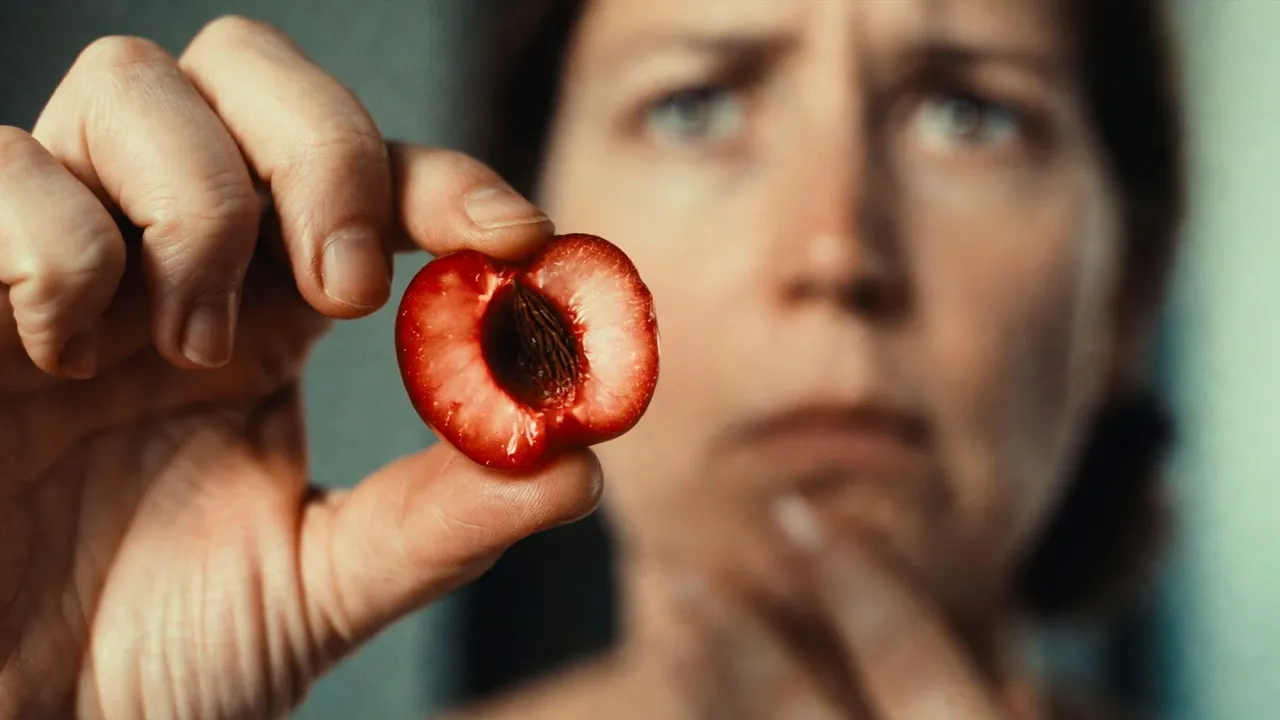
Quick Summary: Swallowing a whole cherry seed is generally harmless because the hard pit passes through your digestive system intact. Cherry pits contain amygdalin, a compound that produces cyanide, but danger only arises if the pit is crushed or chewed before swallowing. Accidentally swallowing one or two intact cherry pits won’t cause poisoning, though swallowing large quantities could pose choking risks or intestinal blockage.
Summer brings baskets of fresh cherries, and with them, the occasional accidental pit swallow. That moment of panic when you realize you’ve swallowed a cherry seed is pretty common.
But should you actually worry? The answer depends entirely on whether that pit was crushed or stayed intact.
Cherry pits do contain a toxic compound, but the reality is far less scary than many people think. Here’s what the science says.
The Toxic Compound Inside Cherry Pits
Cherry pits belong to the Prunus genus of stone fruits, which also includes peaches, apricots, plums, and almonds. All these pits contain a chemical called amygdalin.
Amygdalin itself isn’t dangerous. The problem starts when the pit is crushed or chewed, breaking down plant cells. According to Poison.org, this releases enzymes that convert amygdalin into hydrogen cyanide—a potentially deadly poison.
Cyanide blocks oxygen from reaching body tissues. In high doses, this causes symptoms ranging from headaches and dizziness to rapid breathing, seizures, and even cardiac arrest.
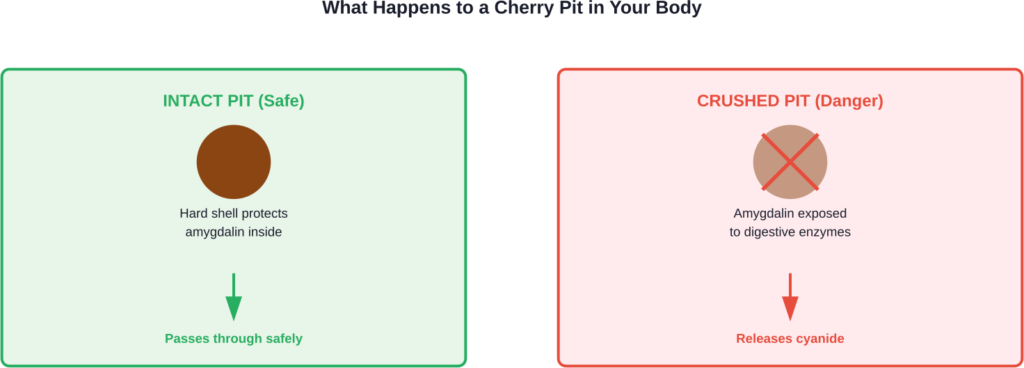
But here’s the thing: the hard outer shell of an intact cherry pit protects the amygdalin inside. Swallow it whole, and it passes through your digestive system without breaking down.
What Actually Happens When You Swallow an Intact Cherry Pit
So you’ve accidentally swallowed a cherry seed whole. What now?
Nothing dramatic, honestly. The Missouri Poison Center explains that intact pits typically move through the digestive tract without releasing cyanide. The pit travels from your esophagus to your stomach, through your intestines, and eventually exits your body naturally within 24-48 hours.
Your stomach acid can’t break down the hard shell quickly enough to expose the amygdalin inside. The pit remains sealed, making it essentially inert as it passes through.
According to Poison.org, small, unintentional ingestions of intact stone fruit pits generally don’t cause harm. This applies to cherries, peaches, plums, and apricots.
The worst-case scenario for swallowing whole pits isn’t poisoning—it’s mechanical obstruction. Swallowing multiple pits could potentially cause choking or, in rare cases, intestinal blockage. But a single cherry pit? That’s almost never an issue.
When Cherry Pits Become Dangerous
The danger escalates dramatically when pits are crushed, chewed, or ground before swallowing.
Breaking open the pit releases amygdalin, which then converts to cyanide during digestion. Poison.org documented a case where a woman chewed and swallowed a large quantity of apricot kernels (similar to cherry pits). The ER physician immediately administered cyanide antidote treatment. After 24 hours of treatment in the intensive care unit, she was able to go home without any complications a day later.
High-speed blenders pose another risk. The Missouri Poison Center notes that blenders used for smoothies can crush cherry pits. While this releases only small amounts of cyanide per pit, consuming multiple crushed pits increases exposure.
Symptoms of Cyanide Poisoning
Cyanide poisoning symptoms include:
- Headache and confusion
- Dizziness and weakness
- Shortness of breath or rapid breathing
- Nausea and vomiting
- Increased heart rate
- Seizures (in severe cases)
- Loss of consciousness
These symptoms would only occur after consuming multiple crushed or chewed pits, not from accidentally swallowing one or two intact seeds.
Other Stone Fruits With Toxic Pits
Cherry pits aren’t unique. All stone fruits in the Prunus family contain amygdalin in their pits.
| Stone Fruit | Contains Amygdalin | Risk Level (Intact Pit) |
|---|---|---|
| Cherries | Yes | Low |
| Peaches | Yes | Low |
| Apricots | Yes | Low |
| Plums | Yes | Low |
| Nectarines | Yes | Low |
| Bitter Almonds | Yes | Moderate (eaten as nuts) |
Apricot kernels deserve special mention. Some people consume them deliberately as alternative medicine, claiming they have anti-cancer properties. These claims about “vitamin B17” (a marketing name for amygdalin) are unsupported by scientific evidence, according to Poison.org.
The Singapore Food Agency recommends soaking apricot pits in water and boiling them for at least 30 minutes to break down amygdalin before consumption. But medical authorities consistently advise against eating stone fruit pits at all.
What to Do If You Swallow a Cherry Pit
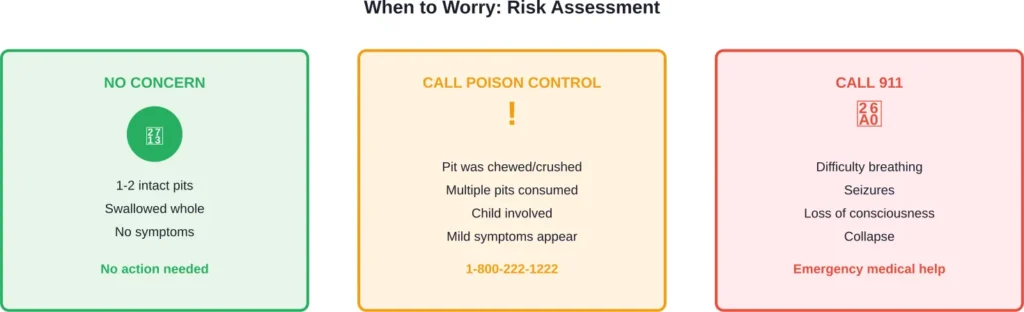
For a single intact pit, no action is necessary. Just monitor yourself for any unusual symptoms.
The Missouri Poison Center recommends:
- Rinse your mouth if needed
- Drink a normal serving of water
- Don’t panic—a single intact pit isn’t dangerous
Real talk: most people have accidentally swallowed cherry pits at some point. It’s incredibly common and rarely causes problems.
When to Seek Medical Help
Call Poison Control (1-800-222-1222) or seek immediate medical attention if:
- The pit was chewed or crushed before swallowing
- Multiple pits were consumed
- Symptoms like dizziness, headache, or breathing difficulty develop
- A child swallows pits (children may be at higher risk due to their smaller body weight)
- Choking occurs or breathing becomes difficult
For severe symptoms like seizures, collapse, or loss of consciousness, call 911 immediately.
Frequently Asked Questions
No, cherry pits cannot germinate or grow inside your digestive system. The acidic environment, lack of light, and absence of soil make it impossible for seeds to sprout. The pit simply passes through and exits your body.
An intact cherry pit typically passes through the digestive tract within 24-48 hours, similar to other indigestible materials. The exact timing varies based on individual digestion speed and what else you’ve eaten.
Maraschino cherries sold in stores are typically pitted before processing, so they don’t contain pits at all. Fresh maraschino cherries with pits follow the same safety rules as regular cherry pits—safe if swallowed intact, potentially dangerous if crushed.
High-powered blenders can crush cherry pits, releasing small amounts of cyanide into smoothies. While one crushed pit releases minimal cyanide, it’s best practice to remove pits before blending. Multiple crushed pits could potentially cause problems.
Heat can partially break down amygdalin, but cooking doesn’t eliminate the risk entirely. Cherry pits should always be removed before cooking or baking to avoid any cyanide exposure and to prevent an unpleasant texture.
Cherry pit heating pads are safe for external use. The pits remain intact and sealed inside fabric, so there’s no cyanide exposure. They’re popular as reusable heat therapy tools and pose no toxicity risk when used as designed.
Reaching dangerous cyanide levels from stone fruit pits would require crushing and consuming a large quantity of pits—far more than anyone would accidentally swallow. A single crushed pit causes minimal exposure, but exact lethal doses vary by body weight and individual factors.
The Bottom Line on Swallowing Cherry Seeds
That moment of panic when you swallow a cherry pit? Not necessary in most cases.
Intact cherry pits pass harmlessly through your digestive system. The hard shell protects the amygdalin inside, preventing cyanide formation. One or two accidentally swallowed pits won’t hurt you.
The danger only emerges when pits are chewed, crushed, or ground—especially in large quantities. That’s when amygdalin converts to cyanide and poses real health risks.
The best practice? Spit out cherry pits while eating. But if one slips down, don’t stress. Monitor yourself for unusual symptoms, and contact Poison Control if you’ve chewed pits or swallowed many at once. For most people, that wayward cherry pit will pass through uneventfully, and you’ll never know it was there.