

Quick Summary: Taking birth control while pregnant does not cause birth defects or miscarriage. Research shows no increased risk to the developing baby from hormonal contraceptives taken during early pregnancy before a woman knows she’s pregnant. If pregnancy is confirmed, discontinue birth control immediately and consult a healthcare provider.
Finding out you’re pregnant while taking birth control can be alarming. Maybe you missed a few pills, or perhaps you’re among the small percentage for whom birth control simply didn’t work. Either way, one question likely dominates your mind: did taking those pills harm the baby?
Here’s the reality. Thousands of women take birth control during early pregnancy every year, often before they realize they’ve conceived. The good news? Decades of medical research provides reassuring answers.
Can Birth Control Pills Cause Birth Defects?
The short answer is no. Taking birth control pills during early pregnancy doesn’t increase the risk of birth defects.
A comprehensive study published in the BMJ examined data from Denmark’s nationwide health records. Researchers analyzed 880,694 live births between 1997 and 2011. They compared birth defect rates among women who never used oral contraceptives, those who stopped more than three months before pregnancy, those who used them within three months of conception, and those who took them during early pregnancy.
The results were clear. Prevalence of major birth defects was consistent across all groups: approximately 25 per 1,000 births. No matter when women stopped taking oral contraceptives—or even if they continued briefly into pregnancy—birth defect rates remained the same.
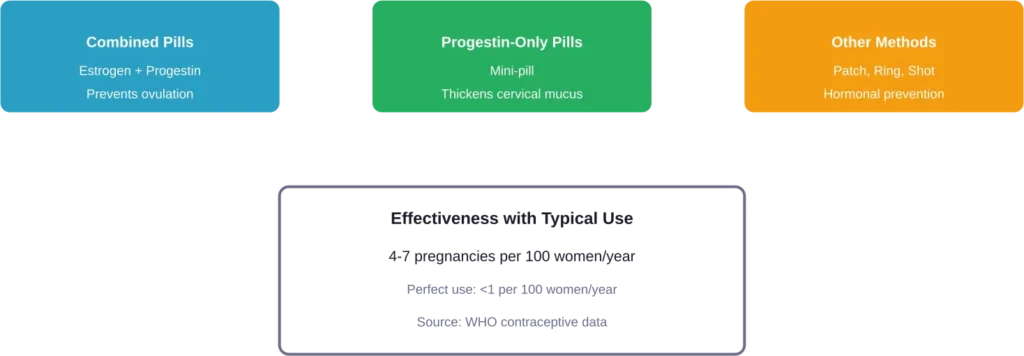
According to the CDC, combined hormonal contraceptives contain estrogen and progestin. These hormones work primarily by preventing ovulation. When pregnancy does occur despite birth control use, the hormonal exposure doesn’t disrupt normal fetal development.
What About Miscarriage Risk?
Birth control pills don’t cause miscarriage either. This misconception persists partly because some people confuse contraceptives with abortifacients.
Contraceptives prevent pregnancy from occurring. Abortifacients terminate an existing pregnancy. Birth control pills fall into the first category—they’re designed to prevent conception, not end it.
Planned Parenthood explicitly states that using hormonal birth control won’t cause miscarriage or birth defects, regardless of how long contraceptives were used before pregnancy. This applies to pills, patches, rings, shots, and hormonal IUDs.
Research published in BJOG examined hormonal contraceptive use before and after conception. The study found that oral contraceptive use—even when continued briefly into early pregnancy—showed no association with increased pregnancy loss.
How Birth Control Actually Works
Understanding how birth control functions helps clarify why it doesn’t harm early pregnancy.
Combined oral contraceptives work through multiple mechanisms. According to WHO data, the pill primarily prevents the release of eggs from the ovaries. It also thickens cervical mucus, making it harder for sperm to reach an egg.
Progestin-only pills (mini-pills) work mainly by thickening cervical mucus and disrupting ovulation. With typical use, 4 to 7 pregnancies occur per 100 women using the pill each year. With perfect use, that number drops to less than 1 per 100 women annually.
When pregnancy does occur, it means ovulation and fertilization happened despite the contraceptive. At that point, the hormones in birth control don’t interfere with embryonic development.
What to Do If You’re Pregnant on Birth Control
If you discover you’re pregnant while taking birth control, stop taking it immediately. Then schedule an appointment with your healthcare provider.
Your doctor will confirm the pregnancy through blood tests or ultrasound. They’ll also calculate your due date and begin prenatal care. Be honest about your birth control use—this information helps them provide appropriate care.
Don’t panic about the pills you’ve already taken. The research is clear: those early doses won’t harm your developing baby.
Fertility returns quickly after stopping birth control. The CDC notes there’s no delay in return to fertility after discontinuing the pill or mini-pill. This is actually why pregnancy can occur so readily if pills are missed or stopped.
Understanding Birth Control Failure Rates
No birth control method is 100% effective except abstinence. Understanding failure rates helps set realistic expectations.
| Birth Control Method | Typical Use Failure Rate | Perfect Use Failure Rate |
|---|---|---|
| Combined oral contraceptives | 7% | 0.3% |
| Progestin-only pills | 7% | 0.3% |
| Contraceptive patch | 7% | 0.3% |
| Vaginal ring | 7% | 0.3% |
| Injectable (shot) | 4% | 0.2% |
| Copper IUD | 0.8% | 0.6% |
| Hormonal IUD | 0.1-0.4% | 0.1-0.4% |
According to CDC data, approximately 7 out of 100 combined hormonal contraceptive users become pregnant in the first year with typical use. The difference between typical and perfect use is significant. Typical use accounts for human error: missed pills, late applications, or inconsistent timing. Perfect use assumes the method is used exactly as directed every single time.
Real talk: most people fall into the typical use category. Life happens. Pills get forgotten. Patches get applied a day late. That’s why long-acting reversible contraceptives like IUDs have lower failure rates—they require less active maintenance.
Long-Term Health Considerations
Some women worry that taking birth control during early pregnancy might have long-term effects on their child. A 2023 study published in Cancers examined this question specifically.
Researchers analyzed in utero exposure to hormonal contraception and mortality in offspring. They found a hazard ratio of 1.22 (95% CI: 1.01–1.48) for death among children exposed to hormonal contraception in utero compared to children of mothers with previous use. However, this study examined long-term mortality over decades, not immediate birth defects or developmental issues.
Studies examining intrauterine exposure to hormonal contraception found no significant association between maternal oral contraceptive use and fetal death.
These large-scale population studies provide reassurance. While researchers continue monitoring long-term outcomes, current evidence doesn’t support major concerns about brief early pregnancy exposure to birth control hormones.
Special Considerations for Different Contraceptive Types
Not all birth control is identical. Different formulations and delivery methods merit specific discussion.
Hormonal IUDs During Pregnancy
If pregnancy occurs with a hormonal IUD in place, removal is typically recommended if the strings are visible. Leaving an IUD in place during pregnancy carries risks, including preterm birth and infection. But the hormones themselves from an IUD don’t increase birth defect risk.
Birth Control Shot (Depo-Provera)
The injectable contraceptive contains depot medroxyprogesterone acetate. According to ACOG data, unintended pregnancy rates for women using Depo-Provera are similar to rates for women using IUDs and implants, and significantly lower than rates for combined hormonal contraceptives.
If pregnancy occurs shortly after a Depo-Provera injection, the same principle applies: the hormonal exposure doesn’t cause birth defects.
Emergency Contraception
Emergency contraception (Plan B or ella) works by delaying ovulation. If fertilization has already occurred, emergency contraception doesn’t disrupt the pregnancy. It’s not an abortifacient.

Why Pregnancy Occurs Despite Birth Control
Understanding why birth control sometimes fails helps reduce anxiety about the situation.
Most birth control failures stem from user error rather than method failure. Missing pills is the most common cause. Taking pills at inconsistent times reduces effectiveness for progestin-only pills especially.
Certain medications interfere with birth control effectiveness. Some antibiotics, antifungal medications, and antiepileptic drugs can reduce hormonal contraceptive efficacy. The CDC notes that antiepileptic drugs pose particular concern—they affect both contraceptive reliability and pose teratogenic risks during pregnancy.
Gastrointestinal issues matter too. Vomiting within two hours of taking a pill or severe diarrhea can prevent proper hormone absorption.
Body weight plays a role for some methods. Research suggests emergency contraception may be less effective in women with higher BMIs, though this remains somewhat controversial for regular birth control pills.
Medical Guidance and Recommendations
Healthcare providers follow specific protocols when patients become pregnant while using contraception.
The CDC’s U.S. Selected Practice Recommendations for Contraceptive Use, updated in 2024, provides comprehensive guidance for healthcare providers. These recommendations address contraceptive provision, proper use, and management of common issues.
According to the U.S. Medical Eligibility Criteria for Contraceptive Use, specific health conditions affect which contraceptive methods are safe for different patients. But for healthy women who become pregnant while using birth control, the standard recommendation is simple: stop the contraceptive and begin prenatal care.
The FDA regulates all birth control products sold in the United States. Product labels include comprehensive safety information, including guidance for accidental use during early pregnancy. These labels consistently note that hormonal contraceptive exposure during early pregnancy doesn’t require pregnancy termination.
Frequently Asked Questions
No. Research examining hundreds of thousands of pregnancies shows no increased risk of birth defects when women take birth control during early pregnancy. The hormones in contraceptives don’t interfere with fetal development once pregnancy has begun.
Emergency contraception won’t harm an existing pregnancy, but it also won’t end one. If you’re already pregnant, emergency contraception simply won’t work. Take a pregnancy test first if pregnancy is suspected.
No. Birth control doesn’t cause ectopic pregnancy. However, if pregnancy occurs while using progestin-only methods, there’s a slightly higher chance it will be ectopic compared to pregnancies that occur without contraception. This doesn’t mean the birth control caused the ectopic pregnancy—just that when the method fails, ectopic pregnancy is more likely than with other methods.
Schedule an appointment within a week or two of confirming pregnancy. If you have severe pain, heavy bleeding, or other concerning symptoms, seek care immediately—these could indicate ectopic pregnancy or miscarriage unrelated to birth control use.
No. Standard prenatal care is appropriate. Your healthcare provider should know about the birth control use for medical records, but no additional testing or monitoring is necessary based solely on early contraceptive exposure.
Yes. Fertility returns quickly after stopping hormonal contraceptives—sometimes immediately. The CDC confirms there’s no delay in return to fertility after discontinuing pills. Some women conceive during their very first cycle off birth control.
The same safety principles apply. According to CDC guidelines, breastfeeding patients can generally use combined hormonal contraceptives after 42 days postpartum. If pregnancy occurs while breastfeeding and using birth control, stopping the contraceptive is recommended, but prior exposure doesn’t increase fetal risks.
Moving Forward With Confidence
Discovering pregnancy while taking birth control understandably causes concern. But the medical evidence provides clear reassurance.
Decades of research involving hundreds of thousands of pregnancies consistently show that hormonal contraceptive exposure during early pregnancy doesn’t increase the risk of birth defects or miscarriage. Whether combined pills, progestin-only pills, patches, rings, or other hormonal methods, the safety profile remains consistent.
The most important steps are straightforward: stop taking birth control once pregnancy is confirmed, schedule prenatal care with a healthcare provider, and focus on healthy pregnancy practices going forward.
Birth control serves an important role in reproductive planning. When it occasionally fails, the failure itself doesn’t compromise the health of the resulting pregnancy. Understanding this helps reduce unnecessary anxiety during what should be a time focused on prenatal health and preparation.
If you’re concerned about birth control effectiveness or have questions about contraceptive options, consult with a healthcare provider. They can help identify the most reliable method for your specific situation and provide guidance tailored to your health needs and reproductive goals.