
Quick Summary: Taking expired amoxicillin isn’t typically dangerous, but the antibiotic loses potency over time, especially liquid formulations. According to the FDA, expired medications may not work as intended, risking treatment failure and potentially contributing to antibiotic resistance. While capsules and tablets usually expire 2-3 years from manufacture, always consult a healthcare provider rather than using expired antibiotics.
Digging through the medicine cabinet and finding an old bottle of amoxicillin raises an immediate question: is this still safe to use? The scenario is common—leftover antibiotics from a previous infection, stored away and forgotten.
But here’s the thing. Using expired amoxicillin isn’t just about whether it’ll make someone sick. The bigger concern involves effectiveness, treatment failure, and the growing problem of antibiotic resistance.
Understanding Amoxicillin Expiration Dates
According to the FDA, expiration dates became mandatory on prescription and over-the-counter medicines starting in 1979. The expiration date represents a critical part of determining if the product remains safe and will work as intended.
Amoxicillin shelf life varies by formulation. Capsules and tablets typically expire between 2 and 3 years from the date of manufacture, provided they’re stored properly in original packaging.
The liquid suspension form is different though. Amoxicillin suspension has a much shorter shelf life after reconstitution—usually 7 to 10 days when refrigerated.
What the Expiration Date Really Means
The expiration date doesn’t indicate the exact moment when medication becomes completely ineffective or dangerous. Rather, manufacturers guarantee at least 90% of the original potency remains up to that date under proper storage conditions.
Research from the NIH shows that drug stability testing involves storing medications at specific temperatures and humidity levels, then measuring potency retention over time.
Now, this is where it gets interesting. A military study found that 90% of more than 100 drugs, both prescription and over-the-counter, remained perfectly good to use even 15 years after the expiration date. That research was part of the FDA Shelf-Life Extension Program (SLEP), established in 1986 by the U.S. Department of Defense to defer replacement costs of expiring stockpiles.
The Risks of Taking Expired Amoxicillin
The FDA explicitly warns that taking expired medications carries certain risks. When amoxicillin passes its expiration date, several problems emerge.
Loss of Potency
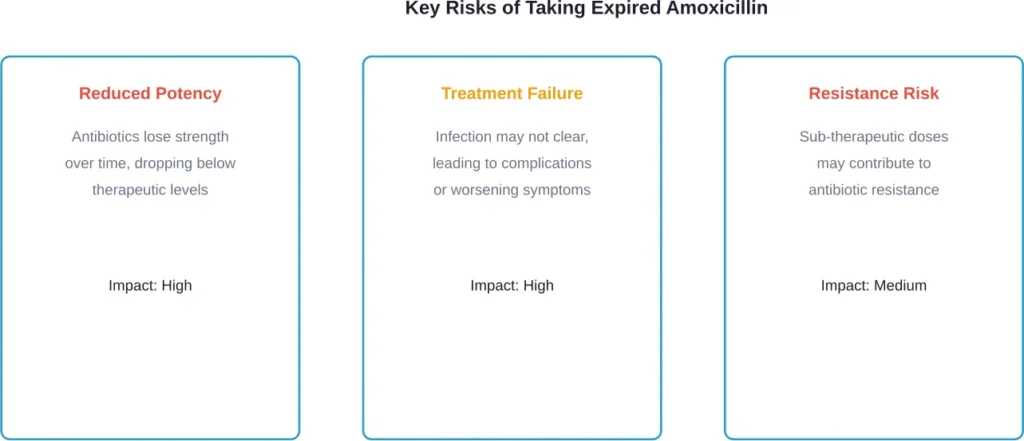
The most significant risk is reduced effectiveness. As amoxicillin ages, its active ingredients break down. Research published in the Pan African Medical Journal found that expired oral pediatric antibiotics showed decreased bacteriostatic potentials compared to unexpired formulations.
What does this mean practically? The infection being treated might not clear properly. Bacteria survive the weakened antibiotic assault, potentially leading to persistent or worsening infections.
Treatment Failure and Complications
Medical experts emphasize that using expired amoxicillin for dental infections or other bacterial conditions won’t deliver the full therapeutic effect expected. Treatment failure can result in complications, prolonged illness, or the need for stronger antibiotics later.
According to the CDC, antibiotics only treat certain infections caused by bacteria, including strep throat, whooping cough, and urinary tract infections. When these conditions don’t respond to treatment due to expired medication, health consequences escalate.
Antibiotic Resistance Concerns
Here’s what many people don’t realize. Sub-therapeutic doses of antibiotics—whether from expired medication or incomplete courses—can contribute to antimicrobial resistance.
The CDC states that healthcare providers play an essential role in preventing infections and stopping the spread of resistance. Using antibiotics only when needed and at proper strength helps combat this growing public health threat.
How Storage Affects Amoxicillin Shelf Life
Storage conditions significantly impact how long amoxicillin retains potency. The CDC recommends proper storage practices for prescription medicines.
Capsules and tablets should be kept in a cool, dry place away from moisture and heat. The bathroom cabinet—despite being the most common storage spot—is actually one of the worst locations due to humidity from showers.
| Storage Location | Temperature Range | Humidity Level | Suitability |
|---|---|---|---|
| Bathroom cabinet | 70-90°F | High (60-80%) | Poor |
| Kitchen counter | 68-85°F | Medium (40-60%) | Fair |
| Bedroom drawer | 65-75°F | Low (30-50%) | Good |
| Refrigerator | 35-40°F | Medium (40-60%) | Excellent (for suspension) |
Liquid amoxicillin suspension requires refrigeration after mixing. Even when properly refrigerated, reconstituted suspension typically expires within 7 to 10 days.
Different Formulations Have Different Expiration Timelines
Not all amoxicillin formulations age the same way. The form matters significantly.
Capsules and Tablets
Solid dosage forms like capsules and tablets have the longest shelf life—typically 2 to 3 years from manufacture. When stored properly in original packaging, there may be a small margin of safety if used shortly beyond expiry.
That said, healthcare professionals don’t recommend testing that margin. The risk of reduced potency outweighs any convenience.
Liquid Suspension
Amoxicillin suspension differs dramatically. Once the pharmacist adds water to the powder to create liquid suspension, the clock starts ticking fast.
The reconstituted suspension must be used within 7 to 10 days, depending on the specific formulation. After that window, bacterial growth becomes possible in the liquid, and potency drops sharply.
What Medical Research Says About Expired Antibiotics
A narrative review published in the journal Antibiotics in 2024 examined the efficacy of expired antibiotics in the context of repeated drug shortages. The research noted that while some medications retain substantial potency past expiration, antibiotics require special consideration.
Beta-lactam antibiotics—the category that includes amoxicillin—show particular sensitivity to storage conditions. Research published in the Journal of Pharmaceutical Health Care and Sciences found that beta-lactam antibiotics demonstrate variable chemical stability.
The German armed forces (Bundeswehr) and U.S. Department of Defense have studied extending expiration dates for stockpiled medications. But these programs involve controlled storage conditions and regular testing—conditions that don’t apply to medications sitting in home medicine cabinets.
When Expired Medications Pose Serious Dangers
Most expired medications simply become less effective. But certain categories pose actual safety risks when used past expiration.
While amoxicillin typically falls into the “less effective but not dangerous” category, liquid formulations can develop bacterial contamination. Expired liquid antibiotics might harbor the very bacteria they’re meant to kill.
Community discussions and user experiences indicate that some people experience unexpected reactions to expired antibiotics, though these reports lack controlled study verification.
What to Do Instead of Using Expired Amoxicillin
The best course of action when dealing with a bacterial infection is straightforward: see a healthcare provider and get a current prescription.
According to the CDC’s guidance on healthy antibiotic habits, antibiotics should only be taken when prescribed for the current condition. Taking leftover antibiotics—expired or not—for a different infection than originally prescribed is inappropriate.
Healthcare providers consider specific factors when prescribing antibiotics:
- The exact bacteria causing the infection
- Antibiotic resistance patterns in the community
- Patient allergies and health conditions
- Proper dosing for the current infection
- Duration of treatment needed
None of these factors are addressed when reaching for an old bottle from a previous illness.
Proper Disposal of Expired Amoxicillin
The CDC provides guidance on safe disposal of prescription medicines. Don’t flush antibiotics down the toilet unless specific disposal instructions say to do so. Most communities offer medication take-back programs.
Pharmacies, law enforcement agencies, and hospitals often participate in take-back programs where expired or unwanted medications can be disposed of safely. This prevents environmental contamination and keeps medications out of the wrong hands.
FAQs About Expired Amoxicillin
Expired amoxicillin typically won’t cause illness directly, but it loses potency over time. The primary risk is treatment failure rather than toxicity. Liquid formulations past expiration may develop bacterial contamination, which could cause problems.
While military studies show many drugs retain potency 15 years past expiration under controlled conditions, amoxicillin capsules and tablets stored at home should not be used beyond their printed expiration date. Liquid suspension expires much faster—within 7-10 days after reconstitution, regardless of the printed date.
Treatment failure from using expired or otherwise ineffective amoxicillin can lead to worsening infections, complications, and the need for stronger antibiotics. According to the CDC, untreated bacterial infections can spread and become serious health threats.
Refrigeration is required for liquid amoxicillin suspension but doesn’t extend its short 7-10 day post-mixing lifespan. For capsules and tablets, refrigeration isn’t necessary or recommended—a cool, dry storage location works best.
Taking expired antibiotics isn’t illegal for personal use, but administering expired medications to others, especially in healthcare settings, faces strict penalties in many jurisdictions. Healthcare providers and pharmacies face significant regulatory consequences for dispensing expired drugs.
Capsules and tablets that show discoloration, crumbling, or unusual odor have degraded. Liquid suspension that changes color, develops particles, or smells off should never be used. But potency loss often occurs without visible changes, making expiration dates the most reliable indicator.
Original packaging provides the best protection against moisture and light, helping maintain potency closer to the expiration date. But even properly packaged amoxicillin shouldn’t be used past expiration, as chemical breakdown occurs regardless of packaging quality.
The Bottom Line on Expired Amoxicillin
Taking expired amoxicillin poses risks that go beyond personal health. Treatment failure contributes to antibiotic resistance, making these lifesaving drugs less effective for everyone.
The FDA requires expiration dates for good reason. These dates represent the manufacturer’s guarantee of full potency and safety. While research shows many drugs retain effectiveness past expiration under ideal conditions, home storage doesn’t provide those conditions.
Healthcare is too important for shortcuts. When a bacterial infection requires treatment, getting proper medical evaluation and a current prescription ensures the best outcome. The small cost and inconvenience of a doctor visit far outweigh the risks of using expired antibiotics.
If there’s expired amoxicillin sitting in the medicine cabinet right now, dispose of it properly through a medication take-back program. Future infections deserve fresh, fully potent antibiotics prescribed specifically for that condition.