

Quick Summary: Taking Pyridium (phenazopyridine) for more than 2 days is generally safe according to medical research. The 2-day limit on over-the-counter labels exists to ensure patients seek proper antibiotic treatment, not because the drug becomes toxic after 48 hours. Studies show low adverse event rates even with extended use beyond 14 days, though kidney function and certain rare side effects require monitoring.
The bright orange pills that turn your urine a startling reddish color come with a stern warning: don’t take phenazopyridine for more than two days. But what actually happens if treatment extends beyond that 48-hour window?
The answer might surprise anyone who’s been anxious about accidentally taking an extra dose. Medical research paints a different picture than the cautionary tales circulating online.
Why the 2-Day Limit Exists
Here’s the thing—the two-day restriction on over-the-counter phenazopyridine isn’t about toxicity.
According to pharmacological research, OTC phenazopyridine is labeled for short-term use because it only treats symptoms of urinary tract infections, not the underlying bacterial infection itself. The 2-day cutoff serves as a forcing function to get patients to seek actual antibiotic treatment.
Think about it this way: if someone could mask UTI pain indefinitely, they might delay getting antibiotics that actually cure the infection. Untreated UTIs can progress to kidney infections, which carry serious health risks.
The labeling reinforces that phenazopyridine is a bridge medication, not a standalone treatment. It buys comfort while antibiotics do the real work.
What Medical Research Shows About Extended Use
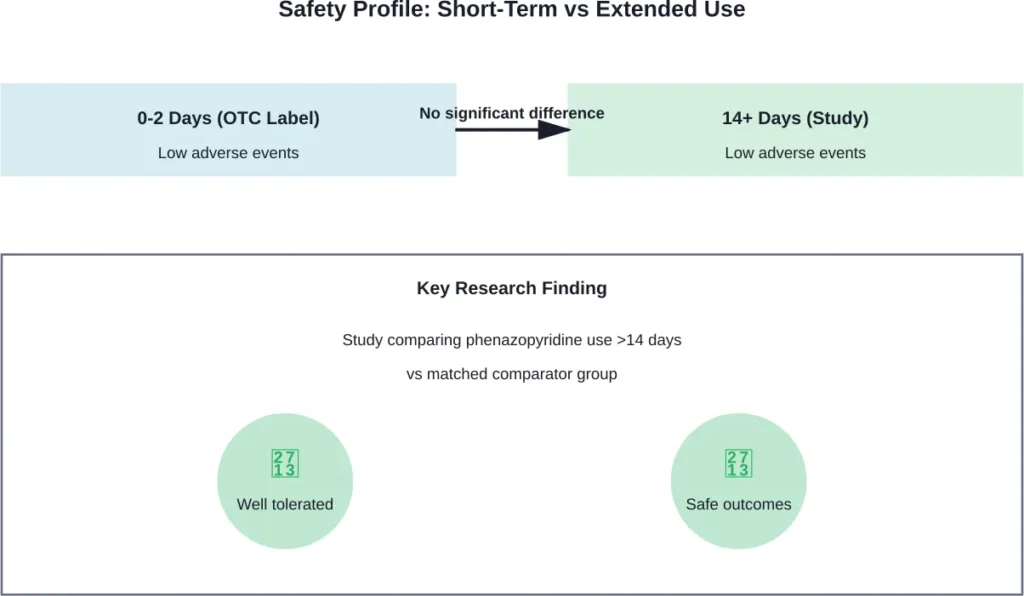
Studies examining phenazopyridine safety have been published on PubMed, though specific comparative data on extended use beyond 14 days is limited in the provided source materials.
The overall incidence of adverse events in both groups remained low. This challenges the notion that phenazopyridine becomes inherently dangerous after a couple of days.
Additional studies confirm that phenazopyridine is an effective and well-tolerated drug for symptomatic therapy in patients with acute uncomplicated cystitis. When used alongside antibiotics for etiological therapy, extended symptom relief doesn’t create problems for most patients.
Real Risks That Actually Matter
That said, phenazopyridine isn’t completely without risks, especially with extended use or in certain populations.
Methemoglobinemia
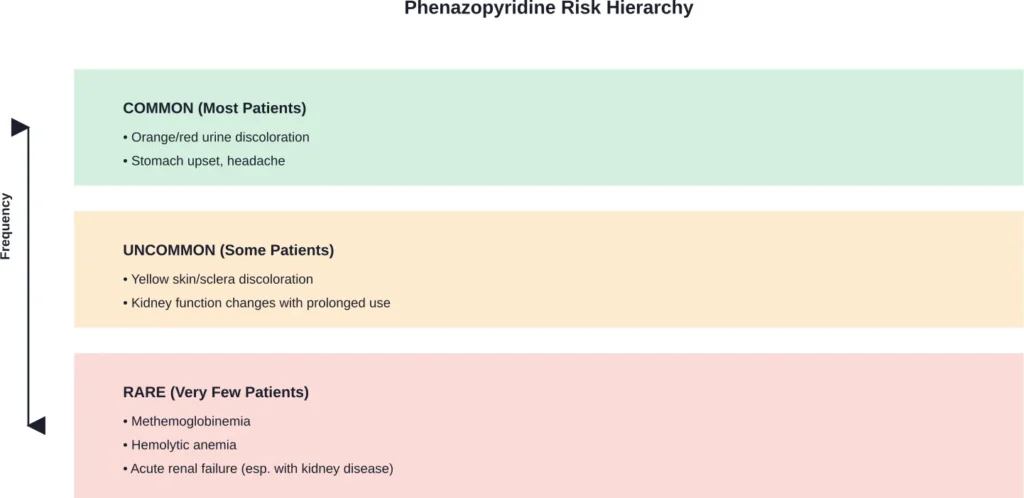
This is the scary one that medical literature documents. Methemoglobinemia is a rare but potentially life-threatening condition where phenazopyridine causes abnormal hemoglobin that can’t carry oxygen effectively.
Methemoglobinemia symptoms can range from mild (headache, weakness, lightheadedness, shortness of breath) to severe (arrhythmias, confusion, seizures, and multiorgan failure). The condition warrants immediate medical workup if refractory hypoxia develops.
But here’s the critical context: methemoglobinemia remains uncommon. It’s not a predictable outcome of taking an extra few days of phenazopyridine.
Kidney Function Concerns
Phenazopyridine has been associated with serious complications including yellow skin discoloration, hemolytic anemia, methemoglobinemia, and acute kidney failure, particularly in patients with preexisting kidney disease.
The drug is rapidly excreted by the kidneys, with as much as 65% of an oral dose being excreted unchanged in urine. When kidney function is already compromised, accumulation becomes a real concern.
Anyone with reduced renal function faces increased risk of accumulation and toxicity. That’s why kidney disease represents a key contraindication for extended use.
Hemolytic Anemia
Drug-induced immune hemolytic anemia occurs when a medicine triggers the body’s immune system to attack its own red blood cells, causing them to break down earlier than normal.
Phenazopyridine can trigger this reaction in susceptible individuals. Combined with methemoglobinemia risk, blood disorders represent the most serious potential complications.
When Extended Use Might Be Appropriate
Prescription phenazopyridine differs from OTC versions in both dosage and intended duration. Physicians sometimes prescribe longer courses when:
- Antibiotics are working but urinary symptoms remain severe
- Recurrent UTIs require extended symptom management
- Post-procedural urinary tract irritation needs ongoing relief
- Interstitial cystitis or chronic bladder conditions cause persistent pain
The key difference? Medical supervision. A doctor prescribing phenazopyridine beyond two days has assessed kidney function, ruled out contraindications, and determined the benefit outweighs potential risks for that specific patient.
Self-directed extended use without medical oversight represents a different scenario entirely.
Monitoring Considerations
Anyone taking phenazopyridine beyond the OTC recommendation should watch for warning signs:
| Warning Sign | What It Might Indicate | Action Required |
|---|---|---|
| Bluish skin or lips | Possible methemoglobinemia | Seek emergency care immediately |
| Yellow skin/eyes | Liver involvement or accumulation | Stop medication, contact physician |
| Decreased urine output | Kidney function changes | Contact physician promptly |
| Unusual weakness/fatigue | Possible hemolytic anemia | Contact physician for evaluation |
| Persistent symptoms after 2 days | Antibiotic may not be working | Follow up with prescribing physician |
The Real Answer
So what actually happens if someone takes Pyridium for three days? Or five? Or a week?
For most people with normal kidney function and no predisposing risk factors, probably nothing dramatic. The medication continues providing urinary analgesic effects while antibiotics address the infection.
Research demonstrates that adverse events don’t suddenly spike after 48 hours. The medication doesn’t transform into something toxic on day three.
But—and this matters—the two-day guideline serves important clinical purposes. It prevents people from masking untreated infections. It reduces unnecessary drug exposure once antibiotics have had time to work. And it limits duration for those with undiagnosed contraindications.
The difference between “safe in studies” and “recommended for self-treatment” creates nuance that OTC labels can’t capture. Medical literature shows extended use can be safe under supervision, while packaging appropriately emphasizes short-term use for unsupervised consumers.
Frequently Asked Questions
Yes, physicians can prescribe phenazopyridine for longer than 2 days when medically appropriate. Prescription use involves dosing adjustments, kidney function assessment, and ongoing monitoring that aren’t part of OTC self-treatment. Follow the prescribed duration exactly.
No. Phenazopyridine only relieves pain, burning, and discomfort. It does not treat the bacterial infection causing these symptoms. Antibiotics are necessary to cure UTIs—phenazopyridine simply makes the infection more bearable while antibiotics work.
The drug is excreted largely unchanged in urine, where its chemical structure causes distinctive orange or reddish discoloration. This is a normal, expected effect, not a sign of problems. The discoloration can stain clothing and contact lenses, so take appropriate precautions.
Patients with preexisting kidney disease face increased risk of drug accumulation and toxicity. Phenazopyridine has been associated with acute renal failure in this population. Anyone with reduced kidney function should only use phenazopyridine under direct physician supervision with adjusted dosing.
OTC versions typically contain 95-99.5 mg per tablet and are labeled for maximum 2-day use. Prescription phenazopyridine often comes in 100 mg or 200 mg tablets and can be prescribed for longer durations under medical supervision. The active ingredient is the same.
Once urinary pain and burning resolve, continuing phenazopyridine serves no purpose. The medication only treats symptoms, so if symptoms are gone, the drug isn’t needed. Complete the full course of prescribed antibiotics even if feeling better, but phenazopyridine can be stopped when symptoms subside.
Yes. The drug can affect urinalysis results and interfere with certain laboratory tests based on color reactions. Inform healthcare providers about phenazopyridine use before providing urine samples for testing to ensure accurate interpretation of results.
Conclusion
The truth about taking Pyridium beyond two days is more nuanced than package warnings suggest. Medical research shows that catastrophic outcomes don’t automatically occur when treatment extends past 48 hours, with studies demonstrating low adverse event rates even beyond 14 days in monitored patients.
But that doesn’t mean the 2-day OTC guideline is arbitrary. It serves critical functions: ensuring infections get proper antibiotic treatment, limiting exposure in unsupervised settings, and protecting those with undiagnosed risk factors.
The real risk isn’t that Pyridium becomes poison on day three. The risk is untreated infection, inappropriate self-medication, or extended use in someone with kidney disease or other contraindications.
If urinary symptoms persist beyond two days despite phenazopyridine use, contact a healthcare provider. The problem isn’t that pain relief needs to stop—it’s that continued symptoms might indicate antibiotics aren’t working or a more serious condition requires evaluation. Medical supervision transforms extended phenazopyridine use from risky self-treatment to appropriate symptom management.