

Quick Summary: Taking too much magnesium typically causes diarrhea, nausea, and abdominal cramping from supplements, but rarely leads to dangerous hypermagnesemia in healthy individuals. Severe magnesium overdose—mainly affecting people with kidney problems—can cause muscle weakness, low blood pressure, irregular heartbeat, and in extreme cases, respiratory distress or cardiac arrest. The body efficiently excretes excess magnesium through urine, making toxicity uncommon unless kidney function is impaired or massive doses are consumed.
Magnesium has become one of the most popular supplements on the market. From sleep aids to muscle recovery formulas, this essential mineral appears everywhere. But with popularity comes questions: can you actually take too much? And if so, what happens?
The short answer is yes—magnesium overdose is possible. But here’s the thing: it’s remarkably rare in healthy people who get their magnesium from food or standard supplements.
According to the National Institutes of Health, an adult body contains approximately 25 grams of magnesium. Most of it—about 65%—sits in bones, while muscles hold the rest. Only 1% circulates in extracellular fluids. Normal serum levels range from 1.7 to 2.4 mg/dL.
Why Magnesium Matters to Your Body
Magnesium participates in over 300 biochemical reactions. It maintains normal nerve and muscle function, supports immune health, keeps heartbeat steady, and helps bones stay strong. It also regulates blood glucose levels and aids in protein synthesis.
The body absorbs only 30% to 40% of dietary magnesium, primarily in the small intestine through paracellular pathways—which account for 80-90% of total uptake according to research published in Medicina. This built-in inefficiency provides natural protection against overdose from food sources.
Magnesium-rich foods include spinach, almonds, pumpkin seeds, brown rice, and bananas. One serving of spinach, an ounce of almonds, and a banana together provide roughly 190 mg of magnesium—nearly 60% of the daily recommendation for women and 45% for men.
Common Signs You’ve Taken Too Much
Most magnesium overdose symptoms are mild and affect the digestive system first. The body’s primary defense mechanism is simple: flush it out.
Early symptoms include:
- Diarrhea (often the first and most common sign)
- Nausea and vomiting
- Abdominal cramping
- Stomach upset
These digestive symptoms typically occur when supplement intake exceeds the tolerable upper limit. The body responds by pushing excess magnesium through the intestinal tract, resulting in loose stools or diarrhea.
Many magnesium supplements even rely on this effect. Magnesium citrate, commonly used for bowel preparation before colonoscopy, works precisely because it triggers diarrhea to cleanse the colon. According to MedlinePlus, magnesium citrate usually causes a bowel movement within 30 minutes to 6 hours.
When Magnesium Becomes Dangerous: Hypermagnesemia
True magnesium toxicity—called hypermagnesemia—represents a different beast entirely. This rare electrolyte disorder occurs when blood magnesium levels climb too high.
Hypermagnesemia is uncommon in healthy individuals. The kidneys efficiently excrete excess magnesium through urine, providing robust protection against toxicity. When kidneys function normally, getting too much magnesium from diet alone is nearly impossible.
But when kidney function falters, this protective mechanism fails.
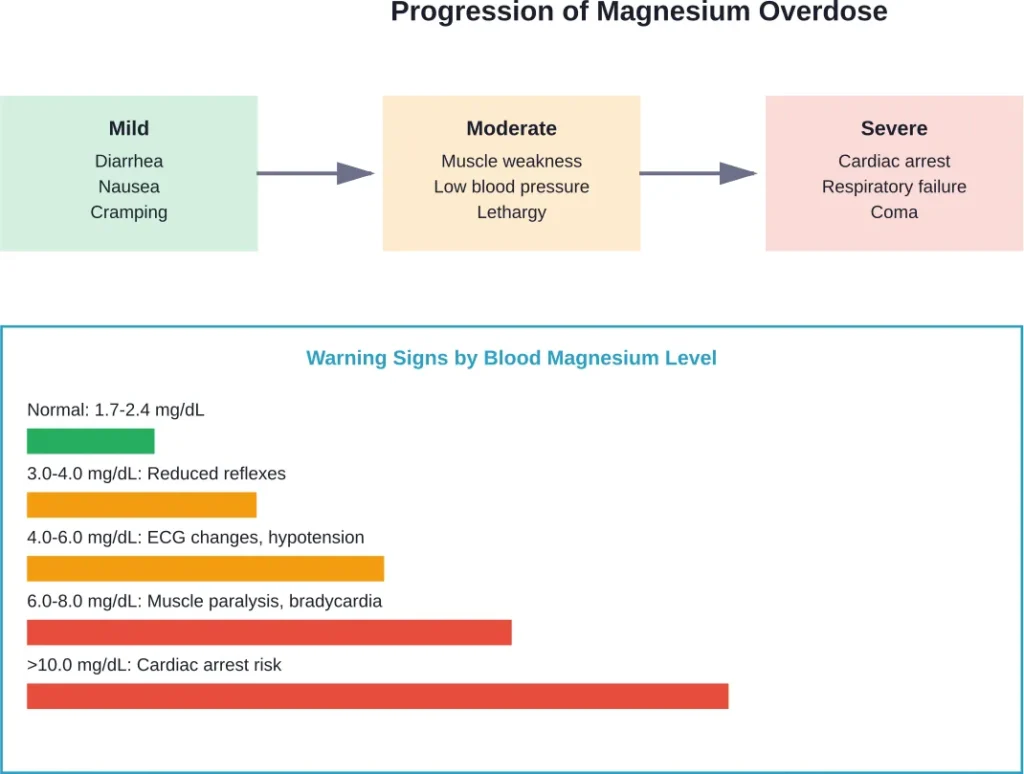
Symptoms of Severe Hypermagnesemia
As magnesium levels climb higher, symptoms become progressively more serious:
- Muscle weakness and reduced reflexes
- Lethargy and confusion
- Low blood pressure (hypotension)
- Irregular heartbeat or bradycardia
- Difficulty breathing
- Cardiac arrest (in extreme cases)
Case reports published in CEN Case Reports documented patients with severe hypermagnesemia presenting with Glasgow Coma Scale scores as low as 10, indicating significant neurological impairment. One patient showed lethargy with hypoactive Achilles tendon reflexes and serum creatinine of 5.27 mg/dL alongside acute kidney injury.
Research in the Korean Journal of Pediatrics described a child on peritoneal dialysis who developed severe hypermagnesemia from magnesium oxide used as a laxative. The patient exhibited abnormal electrocardiographic findings similar to hyperkalemia—a dangerous condition affecting heart rhythm.
Who Actually Faces Risk?
Not everyone has equal risk for magnesium toxicity. Certain populations face substantially higher danger.
| Risk Group | Why They’re Vulnerable | Additional Notes |
|---|---|---|
| Kidney disease patients | Reduced ability to excrete magnesium | Highest risk group for hypermagnesemia |
| Elderly individuals | Declining kidney function with age | Often take multiple medications including antacids |
| People with GI disorders | Impaired regulation of absorption | Conditions like Crohn’s disease affect magnesium handling |
| Those taking certain medications | Drug interactions affect excretion | Particularly antibiotics and blood pressure medications |
According to StatPearls, hypermagnesemia typically develops through either over-absorption or under-secretion. The condition affects both sexes equally and develops indirectly due to underlying health conditions rather than supplement use alone.
Elderly patients represent a particularly vulnerable group. Research published in CEN Case Reports noted that hypermagnesemia often develops when magnesium-containing laxatives are administered to elderly patients, especially those with compromised kidney function.
How Much Is Too Much?
Context matters enormously. Magnesium from food virtually never causes problems—the body regulates absorption naturally.
For supplements, the tolerable upper intake level (UL) for adults is 350 mg daily from supplemental sources (according to nutritional guidelines). This limit applies to magnesium in pills, powders, and fortified foods—not magnesium naturally present in whole foods.
But even exceeding this amount doesn’t automatically spell disaster for healthy individuals. The primary consequence is typically diarrhea, which effectively limits further absorption.
Real danger emerges with:
- Massive doses (several grams at once)
- Impaired kidney function
- Intravenous magnesium administration errors
- Chronic excessive intake combined with reduced excretion
Medical literature documents cases where patients consumed magnesium oxide as a laxative over extended periods, leading to severe toxicity only after kidney function deteriorated.
Magnesium Interactions: When Supplements Clash
Magnesium doesn’t exist in isolation. It interacts with various medications, sometimes creating complications.
Certain antibiotics—particularly quinolones and tetracyclines—bind with magnesium, reducing both the antibiotic’s effectiveness and magnesium absorption. Taking these medications requires spacing them several hours apart from magnesium supplements.
Blood pressure medications, especially calcium channel blockers, can interact with magnesium to cause excessive drops in blood pressure. The combination may lead to hypotension severe enough to cause dizziness or fainting.
Bisphosphonates (osteoporosis medications) also interact with magnesium, as do certain diuretics that may either increase or decrease magnesium levels depending on the specific drug.
What to Do If You’ve Taken Too Much
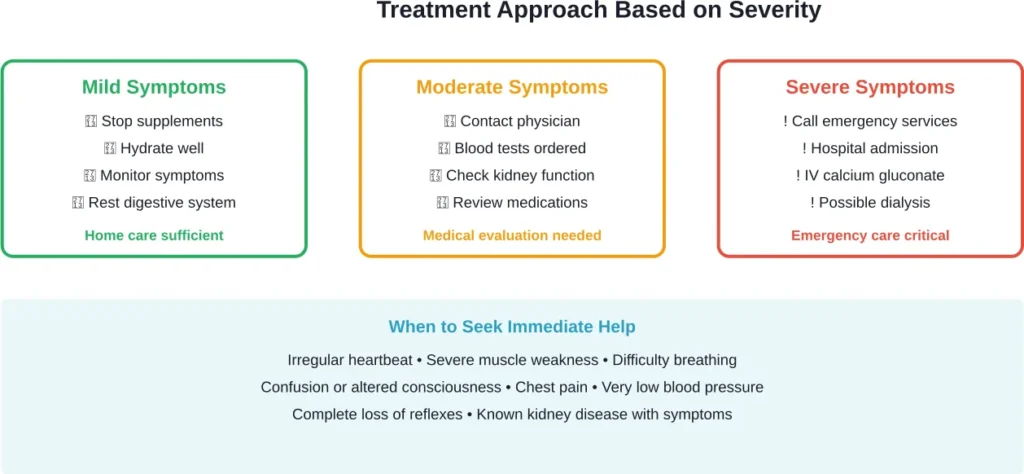
Mild overdose typically resolves on its own. Diarrhea, nausea, and cramping usually subside once the body expels excess magnesium.
Drink plenty of water. Stay hydrated, especially if experiencing diarrhea.
Stop taking magnesium supplements temporarily. Give the body time to rebalance.
For severe symptoms—muscle weakness, irregular heartbeat, difficulty breathing, or altered consciousness—seek immediate medical attention. These signs suggest hypermagnesemia requiring professional intervention.
According to MedlinePlus guidance on calcium carbonate with magnesium overdose, emergency treatment may involve:
- Intravenous calcium gluconate (counteracts magnesium’s effects)
- Dialysis in severe cases or kidney failure
- Supportive care including breathing assistance
- Monitoring of heart rhythm and vital signs
Case reports show that hemodialysis effectively reduces magnesium levels. One pediatric patient saw serum magnesium drop from dangerously high levels to 5.7 mg/dL after just 30 minutes of dialysis with appropriate dialysate.
Prevention: Safe Magnesium Supplementation
Staying safe with magnesium supplements comes down to common sense and awareness.
Stick to recommended doses. Don’t exceed 350 mg daily from supplemental sources unless directed by a healthcare provider.
Choose quality supplements. Magnesium comes in various forms—glycinate, citrate, oxide, chloride—with different absorption rates and side effect profiles. Magnesium oxide, while inexpensive, causes diarrhea more readily.
Space out doses. Rather than taking a large single dose, splitting magnesium intake throughout the day improves tolerance and absorption.
Know your kidney function. Anyone with kidney disease should consult a physician before taking magnesium supplements. Even over-the-counter laxatives containing magnesium pose risks.
According to Mayo Clinic nutritionists, magnesium absorption peaks about one to two hours after consumption, stays steady, then declines by around 10 hours (absorption is longer and more stretched out when consumed in food sources).
Frequently Asked Questions
No. Magnesium from dietary sources virtually never causes toxicity in healthy individuals. The body absorbs only 30-40% of dietary magnesium and efficiently excretes excess through urine and stool. The 350 mg tolerable upper limit applies specifically to supplemental magnesium, not food sources.
Mild symptoms like diarrhea and nausea typically resolve within 24 hours after stopping supplementation. Severe hypermagnesemia requires medical intervention and recovery depends on treatment effectiveness and underlying kidney function. With proper treatment including dialysis when necessary, magnesium levels normalize relatively quickly.
Magnesium significantly interacts with quinolone and tetracycline antibiotics, reducing their effectiveness. It also interacts with bisphosphonates (osteoporosis drugs), certain blood pressure medications especially calcium channel blockers, and some diuretics. Always space magnesium supplements at least 2-3 hours from these medications and consult a pharmacist about specific interactions.
Standard blood panels don’t always include serum magnesium levels. Physicians must specifically order a magnesium test. If experiencing symptoms or taking high-dose supplements, request this test explicitly. Normal serum magnesium ranges from 1.7 to 2.4 mg/dL, with levels above 2.4 mg/dL indicating hypermagnesemia.
All supplemental magnesium forms carry similar overdose risks at equivalent doses, but they differ in absorption and side effects. Magnesium glycinate tends to cause less diarrhea than magnesium oxide or citrate. Magnesium oxide has lower bioavailability but stronger laxative effects. The safest approach involves choosing a well-absorbed form at moderate doses rather than relying on poorly absorbed forms at higher doses.
Yes, though extremely rare. Severe hypermagnesemia can cause cardiac arrest, respiratory failure, and death if untreated. According to NIH research, fatality occurs primarily in patients with kidney failure who cannot excrete excess magnesium. Healthy individuals would need to consume massive amounts—several grams at once—to reach life-threatening levels, and would likely experience severe diarrhea that prevents further absorption first.
Not necessarily, but they require medical supervision. People with chronic kidney disease face significantly higher hypermagnesemia risk. Even common over-the-counter products like antacids and laxatives containing magnesium can cause dangerous elevations. Anyone with reduced kidney function should consult their nephrologist before using any magnesium-containing product, including supplements and medications.
The Bottom Line
Magnesium remains essential for health, and most people benefit from adequate intake. The mineral supports hundreds of bodily processes, from muscle function to heart rhythm regulation.
But too much of any good thing creates problems. For healthy individuals, magnesium overdose typically means nothing worse than an unpleasant afternoon with digestive distress. The body’s natural defenses—limited absorption and efficient excretion—provide robust protection.
Real danger exists for those with compromised kidney function, the elderly, and people taking certain medications. These groups must exercise caution with all magnesium sources, including seemingly harmless antacids and laxatives.
Stick to recommended doses, choose quality supplements, and stay aware of interactions. If you have kidney disease or take multiple medications, consult your healthcare provider before adding magnesium supplements.
Listen to your body. Persistent diarrhea after starting magnesium supplements signals that the dose is too high—your digestive system is literally telling you to back off. And if you experience muscle weakness, irregular heartbeat, or difficulty breathing, seek medical attention immediately.
Smart supplementation means respecting both magnesium’s benefits and its limits. Get it right, and this essential mineral supports optimal health. Get it wrong—especially with underlying health conditions—and the consequences range from uncomfortable to dangerous.