

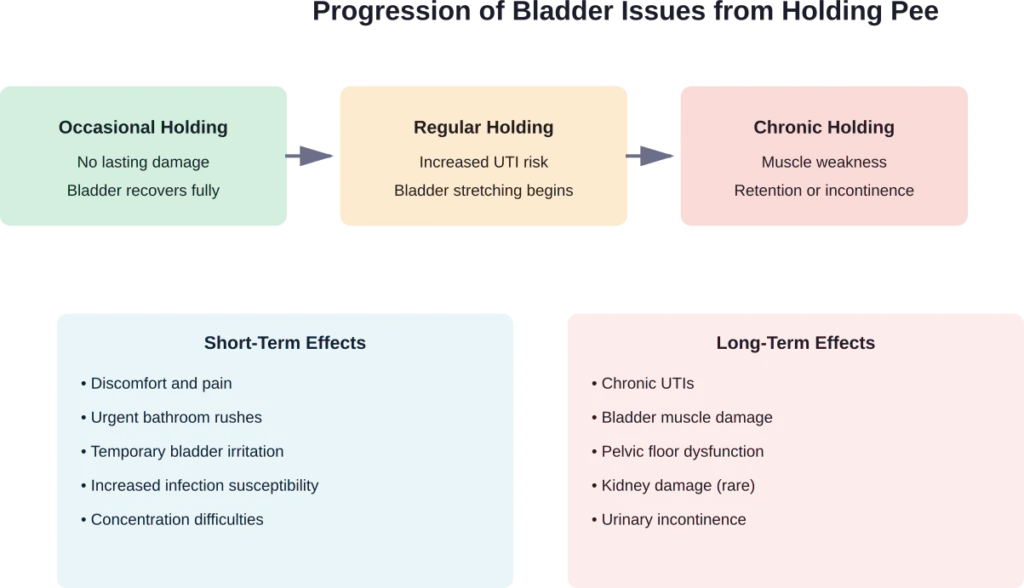
Quick Summary: Holding your pee occasionally won’t cause serious harm, but making it a habit can lead to urinary tract infections, bladder stretching, weakened pelvic floor muscles, and in rare cases, kidney damage. The average adult bladder can hold 400-600 mL of urine, and most people can safely wait 3-5 hours between bathroom breaks. However, regularly ignoring the urge to urinate can rewire your bladder’s communication with your brain, leading to chronic retention or incontinence issues.
We’ve all been there. Stuck in traffic, trapped in a meeting, or binge-watching a show when nature calls. The temptation to just hold it a little longer feels harmless enough.
But what’s actually happening inside your body when you ignore that urge?
Certain professions make holding pee practically an Olympic sport. Teachers, truck drivers, surgeons, and first responders routinely delay bathroom breaks for hours. Some even take pride in their bladder endurance. The problem? Your body wasn’t designed for this kind of repeated stress.
Here’s what medical research reveals about the consequences of making your bladder wait.
How Your Bladder Actually Works
The urinary bladder is a hollow, pear-shaped organ that stores urine until the brain gives permission to release it. Think of it as a muscular storage tank with a sophisticated alert system.
According to the National Institute of Diabetes and Digestive and Kidney Diseases (NIDDK), the typical adult bladder holds about one pint of urine—roughly 400 to 600 milliliters. When your bladder reaches about half capacity, stretch receptors send signals to your brain indicating it’s time to find a bathroom.
The first urge usually hits around 200-300 mL. You can typically ignore this comfortably for a while. But as your bladder continues filling, those signals become more insistent.
Most adults can safely hold their pee for about 3 to 5 hours under normal circumstances. That’s the sweet spot where you’re not causing damage but also not rushing to the bathroom constantly.
What Happens When You Hold It Too Long
Occasionally delaying urination won’t wreck your health. The problems emerge when holding pee becomes a regular habit.
Urinary Tract Infections Become More Likely
This is the most common consequence. According to the Urology Care Foundation, people who regularly hold their pee face increased UTI risk.
Here’s why: urine isn’t sterile. It contains waste products and bacteria that your body is trying to expel. When urine sits in your bladder for extended periods, bacteria have more time to multiply and potentially cause infection.
Women face higher UTI risk than men due to shorter urethras, which give bacteria easier access to the bladder. Dehydration and certain medications compound this risk even further.
Symptoms of a UTI include burning during urination, frequent urges to pee with little output, cloudy or bloody urine, and pelvic pain.
Your Bladder Can Stretch Beyond Normal Capacity
Your bladder is elastic, which normally allows it to expand and contract efficiently. But chronic overfilling can cause the bladder wall to stretch and weaken.
When bladder muscles become overstretched, they lose their ability to contract effectively. This creates a vicious cycle: a weakened bladder can’t empty completely, leaving residual urine that increases infection risk.
In extreme cases, medical literature documents cases of massive asymptomatic urinary retention, though specific volume details require verification from the actual case studies cited.
Pelvic Floor Muscles Take the Hit
The pelvic floor is a hammock-like group of muscles supporting your bladder, uterus (in women), and bowel. These muscles work in coordination with your bladder during urination.
When you regularly hold pee, you’re essentially forcing these muscles to work overtime. They become fatigued and can weaken over time, leading to:
- Stress incontinence (leaking when you cough, sneeze, or laugh)
- Urgency incontinence (sudden, intense urges you can’t control)
- Difficulty fully emptying your bladder
- Pelvic organ prolapse in severe cases
Physical therapists specializing in pelvic health report that many bladder and bowel issues stem from chronic holding patterns developed over years.
Kidney Damage in Rare Cases
This is uncommon, but it can happen. When urine backs up from an overfull bladder, it can create pressure that extends to the kidneys through the ureters (tubes connecting kidneys to bladder).
This backward pressure can potentially cause kidney damage over time. Medical literature documents cases where severe urinary retention led to electrolyte imbalances including hypokalemia, which can have serious complications.
Pain and Discomfort Are Warning Signs
According to NIDDK, acute urinary retention causes severe lower abdominal pain, inability to urinate despite urgent need, and visible swelling of the lower abdomen.
These symptoms require immediate medical attention. A healthcare professional will drain the bladder using a catheter to provide relief and prevent complications.
Can Your Bladder Actually Burst?
The short answer? Extremely unlikely in healthy individuals.
Your body has multiple safety mechanisms. Long before your bladder reaches bursting point, the pain becomes unbearable. Most people would pass out from pain before reaching dangerous pressure levels.
In unconscious individuals or those with nerve damage affecting bladder sensation, the sphincter muscles will eventually give way, causing involuntary urination before the bladder ruptures.
Bladder rupture is exceptionally rare and typically involves trauma (like car accidents) or underlying medical conditions, not simply holding pee too long.
The Brain-Bladder Connection Gets Rewired
Here’s where it gets interesting. Recent research suggests that regularly holding pee can actually change how your brain and bladder communicate.
When you consistently ignore urination signals, you’re training your nervous system to suppress normal bladder reflexes. Over time, this can lead to two opposite problems:
Chronic retention: Your bladder loses sensitivity, and you stop feeling the urge until your bladder is dangerously full.
Overactive bladder: Your bladder becomes hypersensitive, sending urgent signals even when only partially full.
Both conditions significantly impact quality of life and require medical intervention to correct.
Special Considerations for Different Groups
| Group | Specific Risks | Recommendations |
|---|---|---|
| Pregnant women | Increased UTI risk, added pelvic pressure | Empty bladder every 2-3 hours |
| Older adults | Weakened bladder muscles, prostate issues (men) | Don’t delay urination, stay hydrated |
| People with diabetes | Higher infection risk, nerve damage complications | Regular bathroom schedule, monitor symptoms |
| Those on certain medications | Drug-induced urinary retention possible | Discuss side effects with doctor |
Research indicates that difficulty holding urine is prevalent among older adults and correlates with multiple health conditions, functional problems, and medication use.
When Should You Actually Go?
The ideal approach is listening to your body without obsessing over bathroom frequency.
Most healthy adults typically urinate multiple times per day. Going more than 10 times daily or less than 4 times might indicate an issue worth discussing with a healthcare provider.
Bladder training—a therapeutic technique for overactive bladder—involves gradually extending the time between bathroom visits. According to Mayo Clinic guidance on bladder training, if you usually urinate every hour, try to wait for an hour and 15 minutes, then gradually increase the time between trips to the toilet until you can wait 2 to 4 hours between trips.
But there’s a difference between structured bladder training under medical guidance and habitually ignoring your body’s signals because it’s inconvenient.
Practical Tips for Healthy Bathroom Habits
Look, modern life doesn’t always cooperate with our biological needs. Here’s how to minimize damage:
- Plan ahead: Use the bathroom before long meetings, car trips, or flights
- Stay hydrated: Don’t limit fluids to avoid bathroom breaks—dehydration increases UTI risk
- Go when you first feel the urge: Don’t wait until it’s urgent
- Fully empty your bladder: Don’t rush; take time to completely void
- Practice good hygiene: Wipe front to back (for women) to prevent bacteria spread
For holiday travel or long drives, healthcare professionals recommend stopping every 2-3 hours for bathroom breaks, even if the urge isn’t strong yet.
When to See a Doctor
According to NIDDK, seek medical care if you experience:
- Inability to urinate despite feeling full
- Severe lower abdominal pain
- Blood in urine
- Frequent UTIs (more than 2-3 per year)
- Weak urine stream or difficulty starting urination
- Feeling like your bladder doesn’t empty completely
- Leaking or incontinence issues
These symptoms might indicate urinary retention, infection, or other conditions requiring professional evaluation. Healthcare professionals can diagnose the underlying cause and recommend appropriate treatment, which might include bladder drainage, medications, pelvic floor therapy, or other interventions.
Frequently Asked Questions
Most adults can safely hold urine for 3-5 hours without causing damage. However, regularly pushing this limit increases risks for UTIs, bladder stretching, and pelvic floor problems. The safest approach is urinating when you first feel the need rather than waiting until it becomes urgent.
Occasional delayed urination won’t cause lasting harm. However, chronic holding can lead to permanent bladder muscle weakening, pelvic floor dysfunction, and in rare cases, kidney damage from backward pressure. These conditions may require medical treatment and don’t always fully resolve.
Urine contains bacteria and waste products your body is eliminating. When urine sits in the bladder for extended periods, bacteria have more time to multiply and potentially cause infection. The Urology Care Foundation identifies holding pee as a risk factor for UTIs, especially when combined with dehydration or poor hygiene.
Yes, chronic overfilling can stretch bladder muscles beyond their normal capacity, causing them to weaken over time. Weakened bladder muscles lose their ability to contract effectively, leading to incomplete emptying, urinary retention, or paradoxically, incontinence issues.
Peeing every hour is more frequent than typical. Most healthy adults urinate multiple times daily. Hourly urination might indicate overactive bladder, excessive fluid intake, diabetes, UTI, or other medical conditions. If this pattern persists, consult a healthcare provider.
Bladder rupture from simply holding pee is extremely rare in healthy individuals. Pain becomes unbearable long before reaching dangerous pressure levels. In unconscious people or those with nerve damage, the sphincter releases involuntarily before the bladder ruptures. Bladder rupture typically involves trauma or underlying medical conditions.
According to NIDDK, acute urinary retention symptoms include inability to urinate, severe lower abdominal pain, urgent need to pee, and visible swelling. Chronic retention may cause few symptoms but can include weak urine stream, feeling of incomplete emptying, and frequent small voids. Both require medical evaluation.
The Bottom Line on Bladder Health
Your bladder is remarkably resilient, but it’s not invincible. Occasionally holding your pee won’t wreck your health, but turning it into a daily habit absolutely can.
The consequences range from annoying (frequent UTIs) to serious (permanent bladder damage and kidney complications). And beyond the physical effects, there’s the neurological rewiring that can create chronic bladder control problems.
Real talk: your body gives you signals for a reason. When your bladder says it’s time to go, listen.
If bathroom access is a chronic issue in your workplace, it might be worth addressing with management. If you’ve developed a pattern of ignoring urination signals and now experience bladder control problems, pelvic pain, or frequent infections, schedule an appointment with a urologist or pelvic health specialist.
Your bladder health directly impacts your quality of life. Taking a five-minute bathroom break is always worth it.