

Quick Summary: Consuming too much fiber can lead to uncomfortable digestive symptoms including bloating, gas, abdominal cramping, and constipation. While fiber is essential for health, excessive intake—especially when increased too quickly or without adequate hydration—can overwhelm the digestive system and actually worsen bowel function rather than improve it.
Fiber gets praised constantly in nutrition circles. And for good reason—it helps manage blood sugar, supports heart health, and keeps digestion running smoothly.
But here’s the thing: more isn’t always better.
When fiber intake climbs too high too fast, the digestive system can rebel. What starts as good intentions—loading up on whole grains, vegetables, and supplements—can end with uncomfortable bloating, stubborn constipation, and a bathroom situation nobody wants to discuss.
Understanding where that line exists between beneficial and excessive matters for anyone trying to eat healthier. The symptoms of fiber overload can be surprisingly counterintuitive, and knowing how to recognize and address them makes all the difference.
Understanding Fiber and How It Works
Fiber is a type of carbohydrate that the body can’t digest. Unlike other carbs that break down into sugar molecules, fiber passes through the digestive system largely intact.
That’s precisely what makes it valuable.
Two main types exist: soluble and insoluble. Soluble fiber dissolves in water, forming a gel-like substance that can help lower cholesterol and regulate blood sugar. Think oats, beans, apples, and citrus fruits.
Insoluble fiber doesn’t dissolve. According to research published in the World Journal of Gastroenterology, insoluble fiber is variably fermented in the colon, but up to 80% is excreted in normal subjects. This type adds bulk to stool and helps food move through the digestive tract. Whole grains, nuts, and many vegetables fall into this category.
The Academy of Nutrition and Dietetics recommends about 14 grams of fiber for every 1,000 calories consumed. For most adults, that translates to approximately 25 to 28 grams daily for women and 28 to 34 grams for men.
Most Americans fall far short of these targets, getting only about half the fiber needed each day. So the public health message has consistently emphasized eating more fiber-rich foods.
But that doesn’t mean unlimited amounts are harmless.
What Happens When Fiber Intake Gets Too High
The digestive system has limits. When fiber consumption exceeds what the gut can comfortably process, several mechanisms come into play.
The Fermentation Problem
Gut bacteria ferment fiber in the colon, producing beneficial short-chain fatty acids under normal circumstances. Research in the Microorganisms journal has documented the role of dietary fiber intake and gut microbiota in human health.
Excessive fiber means excessive fermentation. That creates more gas than the system can efficiently handle, leading to bloating, distension, and flatulence that ranges from uncomfortable to socially problematic.
The Bulk Overload
As the World Journal of Gastroenterology research notes, the more fiber ingested, the more stool must be passed. Insoluble fiber particularly adds significant bulk.
When that bulk exceeds the colon’s capacity to move it efficiently, the result can paradoxically be constipation rather than relief. The stool becomes too large and dry to pass comfortably, especially without adequate fluid intake.
Nutrient Absorption Interference
Fiber can bind to certain minerals including calcium, iron, zinc, and magnesium. In moderate amounts, this isn’t problematic. But excessive fiber intake may interfere with mineral absorption enough to matter, particularly for people with marginal nutrient status.
Mechanical Obstruction Risk
In extreme cases, very high fiber intake combined with insufficient fluids can create a blockage in the intestines. This is rare but represents a genuine medical emergency when it occurs.
Common Symptoms of Too Much Fiber
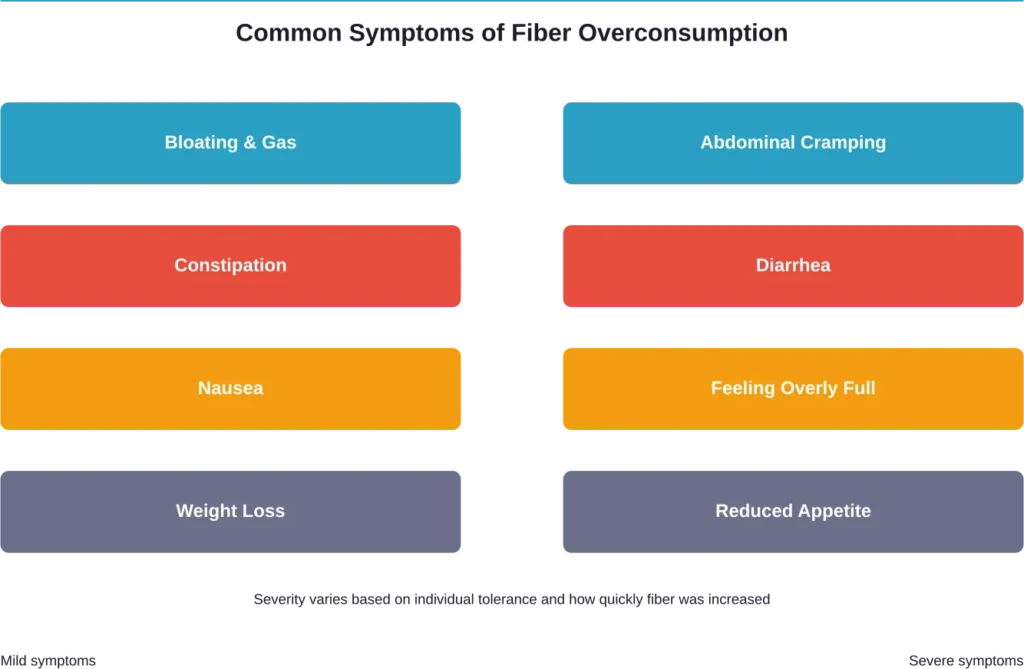
How does excessive fiber intake actually feel? The symptoms tend to cluster around digestive discomfort.
Bloating and Abdominal Distension
That tight, swollen feeling in the abdomen ranks as the most common complaint. The belly may visibly expand, and clothing around the waist feels uncomfortably snug.
Gas production from bacterial fermentation drives much of this bloating. Michigan State University Extension notes that while fiber does great things for the body, the fermentation process can create flatulence that people definitely don’t need.
Excessive Gas
Flatulence increases both in frequency and volume. The gas may be particularly odorous depending on which types of fiber-rich foods were consumed and individual gut bacteria composition.
Constipation
This surprises many people. Fiber is supposed to prevent constipation, right?
Well, yes and no. Adequate fiber with adequate fluids supports regular bowel movements. But excessive fiber without sufficient water creates dry, hard, bulky stools that are difficult to pass. Community discussions reveal this as a common problem, particularly among those who dramatically increase fiber intake quickly.
Diarrhea
On the flip side, some people experience loose stools or diarrhea from too much fiber. Soluble fiber particularly can draw water into the intestines, and excessive amounts may overwhelm the colon’s ability to reabsorb that fluid.
Abdominal Cramping and Pain
Sharp or dull cramping often accompanies the bloating. The intestines are working overtime trying to process the fiber load, and that effort translates to discomfort.
Nausea and Reduced Appetite
The persistent fullness and digestive discomfort can trigger nausea. Appetite naturally decreases when the gut feels packed and uncomfortable.
Unintentional Weight Loss
In cases of prolonged excessive fiber intake, weight loss may occur simply because the person feels too full to eat adequate calories. The fiber creates such persistent satiety that normal eating patterns get disrupted.
How Much Fiber Is Actually Too Much?
Defining an upper limit for fiber proves tricky because individual tolerance varies considerably.
No official tolerable upper intake level exists for fiber the way it does for vitamins and minerals. But practical experience and research provide some guidance.
For most adults, excessive intake significantly above recommended levels tends to cause problems. Some people experience symptoms at lower levels, particularly those with sensitive digestive systems or certain medical conditions.
The real issue isn’t usually total intake but rather the rate of increase. Jumping from 15 grams to 45 grams daily over a weekend will almost certainly cause digestive distress, even though 45 grams sits well within the healthy range for gradual adaptation.
Special Considerations
Certain conditions require fiber restriction rather than abundance. Inflammatory bowel disease during flares, bowel obstructions, gastroparesis, and certain surgical recoveries all necessitate low-fiber diets.
According to Cornell research, certain types of fiber like inulin may trigger bowel inflammation in susceptible individuals. While inulin increased beneficial Bifidobacterium levels in some studies—jumping from 6.69% to 15.07% in one case—it caused inflammatory responses in others.
Anyone with digestive disorders should work with healthcare providers before significantly changing fiber intake.
The Fiber-Water Connection
Water intake makes or breaks high-fiber diets. Fiber absorbs water in the digestive tract. That’s partly how it works—the water absorption helps create soft, bulky stools that move smoothly.
Without adequate hydration, that same fiber becomes a problem. It absorbs available moisture from the intestinal contents, leaving stools dry and difficult to pass.
General recommendations suggest drinking at least 8 cups of water daily, with higher amounts needed when fiber intake increases. Some sources recommend a specific ratio, but individual needs vary based on activity level, climate, and body size.
The practical test? Urine should be pale yellow. Dark urine suggests inadequate hydration, which becomes particularly problematic when eating high-fiber foods.
Common Causes of Fiber Overconsumption
How do people end up eating too much fiber? Several patterns emerge.
The Enthusiastic Health Kick
Someone reads about fiber benefits and decides to immediately overhaul their diet. They switch to all whole grains, add beans to every meal, start eating raw vegetables constantly, and maybe throw in a fiber supplement for good measure.
The gut had no chance to adapt. Symptoms follow within days.
Supplement Stacking
Fiber supplements can be helpful for those who struggle to get enough through food. But some people take multiple products without calculating total intake. Multiple fiber supplement sources—such as psyllium supplements, fiber-enriched protein powders, and fiber gummies—can add up quickly.
Trendy “Fibermaxxing”
According to Ohio State Health & Discovery, a social media trend called “fibermaxxing” encourages people to increase fiber consumption to reap health benefits. While the intention—getting adequate fiber—is sound, the execution sometimes goes overboard.
Misunderstanding Serving Sizes
Food labels list fiber content per serving. But many people consume multiple servings without realizing it. That “healthy” high-fiber cereal might pack 10 grams per serving, but the typical bowl holds 2-3 servings.
Medical Advice Misapplication
A doctor recommends increasing fiber for constipation or cholesterol management. The patient interprets this as “as much as possible” rather than a moderate increase.
How to Relieve Symptoms of Too Much Fiber
Already experiencing uncomfortable symptoms? Several strategies can provide relief.

Cut Back on Fiber Temporarily
The most direct approach involves reducing fiber intake for several days. Switch to lower-fiber foods temporarily—white rice instead of brown, refined grains instead of whole, cooked vegetables instead of raw.
This isn’t a permanent change, just a reset period to let the digestive system recover.
Increase Fluid Intake Dramatically
Water helps move fiber through the system and soften stools. Aim for at least 10-12 cups daily during the recovery period. Warm liquids may be particularly helpful.
Move Your Body
Gentle physical activity stimulates intestinal contractions and helps move things along. A 20-minute walk can make a noticeable difference. Avoid vigorous exercise if experiencing severe bloating or cramping.
Consider Over-the-Counter Relief
Simethicone products can help with gas and bloating. For constipation that doesn’t resolve with reduced fiber and increased water, a gentle osmotic laxative like magnesium citrate may help.
Avoid stimulant laxatives, which can create dependency.
Apply Heat
A heating pad on the abdomen can ease cramping and discomfort. The warmth relaxes intestinal muscles and provides symptomatic relief.
Give It Time
Most symptoms resolve within 2-3 days with reduced fiber intake and increased hydration. Patience matters—the digestive system needs time to work through the backlog.
Finding Your Personal Fiber Sweet Spot
The goal isn’t to avoid fiber. It’s to find the right amount for individual needs.
| Factor | Impact on Fiber Tolerance | Recommendation |
|---|---|---|
| Age | Older adults may need less fiber and more gradual increases | Start at lower end of range, increase slowly |
| Digestive Conditions | IBS, IBD, diverticulitis affect fiber needs | Work with healthcare provider for personalized targets |
| Activity Level | Higher activity supports better digestion | Active individuals often tolerate higher fiber intake |
| Current Intake | Baseline matters for planning increases | Track for 3 days to establish starting point |
| Hydration Habits | Poor hydration limits fiber tolerance | Establish good water intake before increasing fiber |
Start Low, Go Slow
The golden rule for increasing fiber involves gradual changes. Add 5 grams per week rather than making dramatic overnight shifts. This gives gut bacteria time to adapt and digestive processes time to adjust.
Track Your Intake
Use a food tracking app or keep a simple journal for a few days. Many people are surprised by how much or how little fiber they’re actually consuming. Accurate data beats guessing.
Balance Fiber Types
Both soluble and insoluble fiber matter. Relying too heavily on one type may cause problems. Aim for variety in fiber sources—fruits, vegetables, whole grains, legumes, nuts, and seeds each contribute different fiber profiles.
Listen to Your Body
Mild gas during the first week of increased fiber is normal. Persistent bloating, pain, or altered bowel habits lasting beyond two weeks suggests the increase was too much or too fast.
Adjust Based on Response
Some people thrive on 40+ grams of fiber daily. Others feel best at 25-30 grams. Neither is wrong—individual variation is real and significant.
Foods to Moderate When Managing Fiber Intake
Not all high-fiber foods affect the digestive system equally. Some tend to cause more gas and bloating than others.
High-Gas Producers
Beans, lentils, and other legumes are notorious for gas production. They contain oligosaccharides that gut bacteria ferment vigorously. Soaking beans before cooking and using digestive enzymes can help.
Cruciferous vegetables like broccoli, cauliflower, and Brussels sprouts also create substantial gas for many people.
Concentrated Fiber Sources
Bran cereals can pack 10-15 grams of fiber per serving. They’re useful for increasing intake but easy to overdo. Start with small portions.
Chia seeds and flax seeds absorb significant water. A tablespoon is plenty—more than that requires careful hydration.
Fiber Supplements
Psyllium, methylcellulose, and inulin supplements serve a purpose but require careful dosing. Start with half the recommended dose and increase gradually while monitoring response.
The Role of Gut Bacteria in Fiber Tolerance
Individual gut microbiota composition significantly affects fiber tolerance. According to research published in Microorganisms (2022), dietary fiber intake influences gut bacteria populations and composition.
People with diverse, robust gut bacteria populations generally tolerate fiber better. Those with less bacterial diversity or specific imbalances may struggle more with high-fiber foods.
Interestingly, gradually increasing fiber intake can actually improve the gut microbiome over time. The bacteria that ferment fiber multiply when fiber is consistently available. This creates a positive feedback loop—more fiber-fermenting bacteria means better fiber tolerance, which allows for more beneficial fiber intake.
But this adaptation takes weeks to months, not days. Patience remains essential.
Fiber Myths That Lead to Overconsumption
Several persistent misconceptions drive people toward excessive fiber intake.
“More Fiber Always Equals Better Health”
Not true. Adequate fiber supports health. Excessive fiber causes problems. The relationship isn’t linear—there’s a sweet spot, not an endless upward curve of benefits.
“Fiber Supplements Are Equivalent to Food Sources”
Whole foods provide fiber along with vitamins, minerals, antioxidants, and phytonutrients. Supplements provide fiber alone. They can help fill gaps but shouldn’t replace food sources entirely.
“You Can’t Eat Too Much Fiber from Whole Foods”
Actually, it’s quite possible. Community discussions include examples of people experiencing severe symptoms from eating large amounts of vegetables, whole grains, and legumes.
Whole food sources are preferable to supplements, but quantity still matters.
“Everyone Needs the Same Amount of Fiber”
Individual needs vary based on age, sex, activity level, digestive health, and gut microbiome composition. General guidelines provide starting points, not universal prescriptions.
When to Seek Medical Advice
Most cases of fiber overconsumption resolve with simple dietary adjustments. But certain symptoms warrant professional evaluation.
Seek medical care if experiencing:
- Severe abdominal pain that worsens or doesn’t improve within 24 hours
- Complete inability to pass gas or stool for more than 2-3 days
- Vomiting, particularly if accompanied by inability to keep down fluids
- Blood in the stool
- Signs of dehydration despite adequate fluid intake
- Unintentional weight loss of more than 5% of body weight
- Symptoms that persist beyond one week despite dietary modifications
These symptoms could indicate complications like bowel obstruction or other conditions requiring medical intervention.
Creating a Balanced Approach to Fiber
The healthiest relationship with fiber involves balance, not extremes.
According to research published in Nutrients (2022), fiber provides therapeutic benefits for various conditions when consumed appropriately. But as the same research notes, dietary restrictions apply in certain situations.
The CDC emphasizes that fiber helps manage diabetes and supports blood sugar control and weight management. Most adults need approximately 25-35 grams of fiber daily, with amounts varying based on individual calorie intake.
Reaching that target through varied whole foods, with gradual increases and adequate hydration, typically produces excellent results. Pushing significantly beyond those recommendations rarely adds benefit and often creates problems.
Practical Daily Strategies
Building sustainable fiber intake involves simple, consistent habits:
- Include a fiber source at each meal rather than loading up at one meal
- Choose whole fruits over juice
- Add vegetables to meals where they fit naturally
- Select whole grains over refined grains most of the time, not necessarily always
- Include legumes several times per week, not necessarily daily
- Drink water consistently throughout the day
- Pay attention to how different foods affect digestion and adjust accordingly
The best fiber intake is one that’s sustainable, well-tolerated, and sufficient to support health without causing discomfort.
Frequently Asked Questions
Excessive fiber typically doesn’t cause weight gain directly. In fact, it’s more likely to suppress appetite and reduce overall calorie intake due to the persistent fullness it creates. However, if high-fiber foods are also calorie-dense or prepared with added fats and sugars, weight gain remains possible. The fiber itself isn’t the culprit—total calorie intake matters most for weight management.
Most symptoms from eating too much fiber resolve within 2-4 days after reducing intake and increasing water consumption. Mild bloating and gas typically improve first, often within 24-48 hours. Constipation may take slightly longer to resolve, sometimes requiring 3-5 days. If symptoms persist beyond one week despite dietary changes, consult a healthcare provider.
For most people, 50 grams daily is higher than necessary and may cause digestive discomfort. Recommended intake ranges from 25-35 grams for most adults. However, some individuals tolerate 40-50 grams well if they’ve increased gradually over time and maintain excellent hydration. The key factors are individual tolerance, rate of increase, and adequate fluid intake. Start lower and increase slowly rather than jumping to high amounts.
Yes, fiber supplements can absolutely cause overconsumption symptoms, sometimes even more dramatically than whole foods. Supplements provide concentrated fiber without the water content present in fruits and vegetables. Taking too much too quickly commonly causes severe bloating, gas, and constipation. Always start with the lowest dose, increase gradually, and drink plenty of water with fiber supplements.
Cooking doesn’t significantly reduce fiber content in vegetables, though it may slightly alter the fiber structure. What changes is the volume—cooked vegetables are more compact, making it easier to consume larger quantities and thus more total fiber. Both raw and cooked vegetables contribute to fiber intake. For those managing symptoms of too much fiber, cooked vegetables may be gentler on the digestive system than raw.
Fiber causes constipation when intake is too high without adequate water. Fiber absorbs water in the digestive tract, which normally helps create soft, bulky stools. But without sufficient fluid, the fiber absorbs available moisture from the intestinal contents, leaving stools dry, hard, and difficult to pass. This is particularly common with insoluble fiber and when people dramatically increase fiber intake quickly.
Not necessarily. While certain digestive conditions require temporary low-fiber diets during acute phases, complete fiber avoidance is rarely necessary long-term. The type and amount of fiber matter more than total elimination. Work with a healthcare provider or registered dietitian to determine appropriate fiber intake for specific conditions like IBS, IBD, or diverticulitis. Many people with digestive issues tolerate soluble fiber better than insoluble fiber.
Conclusion: Balance Is Everything
Fiber deserves its reputation as a nutritional powerhouse. It supports digestive health, helps manage blood sugar, lowers cholesterol, and may reduce risk for several chronic diseases.
But like most nutrients, the relationship between fiber and health follows a curve, not a straight line. Adequate intake provides benefits. Deficient intake creates problems. And excessive intake also creates problems.
The sweet spot exists somewhere in that middle range—enough fiber to support health without overwhelming the digestive system. For most adults, that means 25-35 grams daily, increased gradually over weeks, consumed with plenty of water, and sourced primarily from varied whole foods.
Listen to what the body communicates. Persistent bloating, gas, cramping, or altered bowel habits signal that adjustments are needed. Those signals deserve attention, not dismissal.
Finding the right fiber balance supports long-term health far better than chasing extremes in either direction. Start where current intake sits, make gradual changes, stay well-hydrated, and adjust based on how the body responds.
That individualized, responsive approach beats any one-size-fits-all recommendation.