

Quick Summary: Taking 2 Allegra tablets in 24 hours means consuming 360mg of fexofenadine, which is double the standard dose but generally not life-threatening. While fexofenadine has a strong safety profile compared to older antihistamines, doubling the dose can cause side effects like headache, dizziness, drowsiness, and potentially irregular heart rhythms, especially in older adults. If this happens, monitor for symptoms and contact a healthcare provider or poison control at 1-800-222-1222 if concerning symptoms develop.
Allergy season hits hard, and when symptoms flare up, it’s tempting to reach for extra medication. But what actually happens when someone takes two Allegra tablets within a 24-hour window instead of the recommended single dose?
This isn’t an uncommon scenario. People accidentally double-dose on antihistamines for various reasons—forgetting they already took their daily pill, mixing up medication schedules, or desperately seeking stronger relief from persistent hives or allergic reactions.
Understanding what happens when fexofenadine intake exceeds recommended limits matters for safety. The good news? Allegra has a notably safer profile than many other antihistamines. But that doesn’t mean doubling up is without risks.
Understanding Allegra and Fexofenadine
Allegra’s active ingredient is fexofenadine, a second-generation antihistamine. According to the NIH, fexofenadine works by blocking histamine H1 receptors, which prevents the typical allergic response cascade that causes sneezing, itching, and watery eyes.
The standard adult dose for Allegra 24 Hour is 180mg once daily. This formulation is designed to provide continuous relief throughout a full day.
Here’s what makes fexofenadine different from older antihistamines: it doesn’t cross the blood-brain barrier as readily, which means less drowsiness. StatPearls data shows that fexofenadine exhibits approximately 60% to 70% plasma protein binding, predominantly to albumin and alpha-1 acid glycoprotein.
Maximum histamine inhibition occurs approximately 1 to 2 hours post-administration, according to NCBI research. This long-acting antihistamine is specifically recommended for daily use rather than as-needed dosing.
What 2 Allegra Tablets Means for Your Body
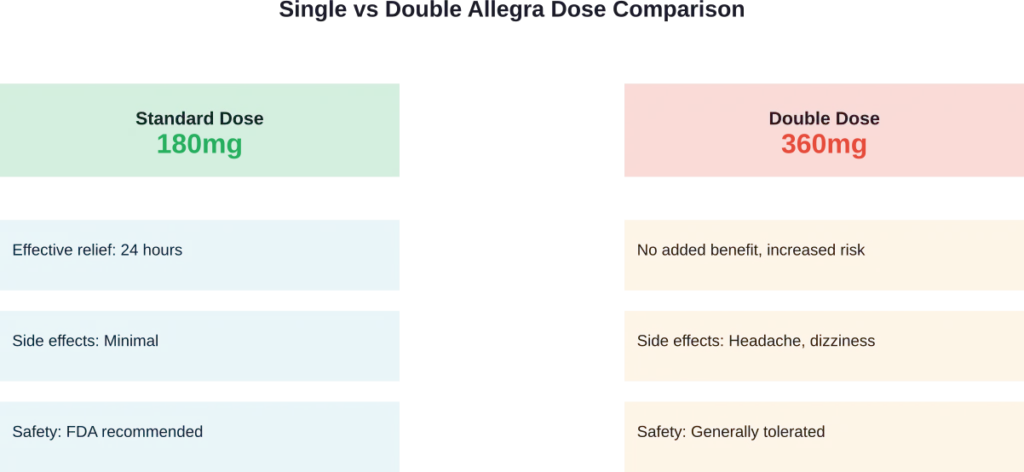
Taking two 180mg tablets delivers 360mg of fexofenadine to your system. That’s double the recommended daily dose.
But does that automatically mean danger? Not necessarily.
Research published in medical journals indicates that fexofenadine has a safety profile similar to placebo in many clinical trials. In studies of seasonal allergic rhinitis and chronic idiopathic urticaria, the type and incidence of adverse events were comparable between fexofenadine and placebo recipients.
That said, exceeding the recommended dosage increases the likelihood of experiencing side effects. The body can only process medication at a certain rate, and excess drugs can accumulate.
Potential Side Effects of Doubling Your Dose
Real talk: fexofenadine is one of the safer antihistamines when it comes to overdose scenarios. Unlike first-generation antihistamines that can cause severe anticholinergic effects, second-generation drugs like Allegra have a more forgiving safety margin.
However, taking 360mg instead of 180mg can still trigger unwanted effects.
Common side effects that become more likely with higher doses include:
- Headache
- Dizziness or lightheadedness
- Drowsiness (though less than with older antihistamines)
- Nausea or upset stomach
- Dry mouth
- Fatigue
According to AARP health experts, there’s a more serious concern for older adults. Doubling Allegra dosage may cause irregular heart rhythms, particularly in individuals over 65.
Here’s the thing though—age affects how the body processes medications. As people get older, kidney function naturally declines. Since fexofenadine is primarily eliminated through the kidneys, reduced kidney function means the drug stays in the system longer.
Excess drugs can build up in the body to potentially toxic levels when elimination is impaired. This accumulation increases risk, especially with cardiovascular side effects.
The Anticholinergic Effect Concern
While fexofenadine has minimal anticholinergic properties compared to first-generation antihistamines, the StatPearls database on antihistamine toxicity notes that the specific concern with antihistamine overdose relates to anticholinergic effects rather than H1-receptor binding alone.
Anticholinergic symptoms can include:
- Rapid heart rate
- Dilated pupils
- Fever
- Flushed skin
- Confusion or agitation (in severe cases)
These effects are more pronounced with older antihistamines like diphenhydramine (Benadryl), but any antihistamine overdose warrants monitoring.
When to Seek Medical Attention
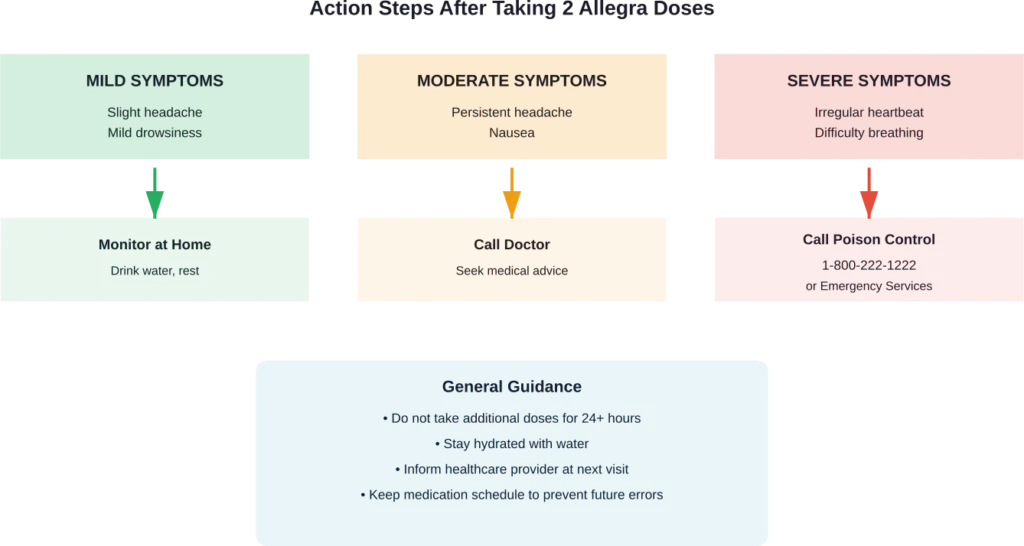
Not every instance of taking 2 Allegra tablets requires emergency intervention. But certain symptoms signal the need for professional medical evaluation.
Call the American Association of Poison Control Centers (AAPCC) at 1-800-222-1222 if experiencing:
- Irregular heartbeat or palpitations
- Severe dizziness or fainting
- Difficulty breathing
- Severe headache
- Confusion or unusual behavior
- Seizures
According to MedlinePlus, the AAPCC helpline provides immediate guidance for any suspected overdose. This service is available 24/7 and connects callers with poison control specialists.
For less severe symptoms—mild headache, slight drowsiness, minor stomach upset—monitoring at home may be sufficient. Drink plenty of water, rest, and avoid taking additional doses until the recommended 24-hour period has elapsed.
Special Considerations for Different Populations
Older Adults
Age makes a significant difference in how doubling Allegra affects the body. According to medical research on antihistamine safety, older adults face elevated risk due to age-related changes in drug metabolism.
AARP health experts specifically warn that at age 75 and above, stepping up the dose could be dangerous. The combination of reduced kidney function, potential drug interactions with other medications, and cardiovascular sensitivity creates a higher-risk scenario.
Children
Antihistamine overdose in children requires particular attention. According to NIH research on antihistamine safety in children, pediatric patients may be prescribed different doses based on age and weight.
Children aged 6 months through 16 years have different pharmacokinetic profiles. If a child accidentally takes a double dose, contact poison control immediately rather than waiting to see if symptoms develop.
Pregnant or Breastfeeding Individuals
MedlinePlus advises consulting a healthcare provider before using fexofenadine during pregnancy or while breastfeeding. Any overdose situation requires immediate medical consultation in these cases.
Why Fexofenadine Is Safer Than Older Antihistamines
Not all antihistamine overdoses carry the same risk level. The generation of antihistamine matters significantly.
First-generation antihistamines like diphenhydramine (Benadryl) and chlorpheniramine cross the blood-brain barrier readily, causing sedation and potentially dangerous anticholinergic effects when overdosed.
According to research published in medical journals, fexofenadine emerged as one of the most representative second-generation H1 antagonist drugs since the 1990s, with outstanding efficacy and appreciable safety.
The key difference? Fexofenadine doesn’t penetrate the central nervous system as effectively. This characteristic reduces drowsiness during normal use and makes overdoses less likely to cause severe neurological effects.
That said, “safer” doesn’t mean “safe to exceed recommended doses.” It simply means the margin for error is larger compared to older medications.
| Antihistamine Type | Example Drug | Sedation Risk | Overdose Severity |
|---|---|---|---|
| First-Generation | Diphenhydramine (Benadryl) | High | More severe |
| First-Generation | Chlorpheniramine | Moderate-High | More severe |
| Second-Generation | Fexofenadine (Allegra) | Low | Less severe |
| Second-Generation | Loratadine (Claritin) | Low | Less severe |
| Second-Generation | Cetirizine (Zyrtec) | Low-Moderate | Less severe |
Preventing Accidental Double Dosing
The best approach to antihistamine overdose is prevention. Accidental double-dosing of antihistamines is a documented occurrence, as evidenced by discussions on online health forums and medical question platforms.
Common scenarios include forgetting whether the morning dose was taken, keeping medications in multiple locations, or taking allergy medication along with combination cold medicines that also contain antihistamines.
Practical prevention strategies:
- Use a pill organizer with daily compartments
- Set smartphone reminders for medication times
- Keep a medication log or use tracking apps
- Store all allergy medications in one designated location
- Read labels carefully on combination medications
- Never take medication in the dark or when groggy
According to MedlinePlus guidance on over-the-counter medicines, always following printed directions and warnings is essential. Looking at the list of ingredients helps avoid accidentally combining multiple products containing the same active ingredient.
Treatment for Antihistamine Overdose
If medical attention becomes necessary after taking 2 Allegra tablets, healthcare providers have several approaches depending on symptom severity.
For mild cases, supportive care suffices. This includes hydration, monitoring vital signs, and observation until the medication clears the system naturally.
For more significant overdoses (particularly with first-generation antihistamines or much larger quantities), treatment may involve:
- Activated charcoal if taken within a few hours
- IV fluids for hydration and drug elimination support
- Cardiac monitoring for heart rhythm abnormalities
- Symptomatic treatment for specific effects
Fortunately, fexofenadine overdoses rarely require intensive intervention. The drug’s pharmacological profile makes serious complications uncommon even at doses exceeding recommendations.
Drug Interactions That Increase Risk
Taking 2 Allegra tablets becomes riskier when combined with certain other medications or substances.
According to MedlinePlus, fexofenadine can interact with:
- Antacids containing aluminum or magnesium (reduce fexofenadine absorption)
- Fruit juices, particularly apple, orange, and grapefruit juice
- Medications processed by the same liver enzymes
- Other antihistamines or cold medications
Some of these interactions reduce effectiveness rather than increasing toxicity, but combining multiple antihistamines from different products can lead to unintentional overdose.
Always inform healthcare providers about all medications being taken, including over-the-counter drugs, supplements, and herbal products.
Frequently Asked Questions
Death from fexofenadine overdose is extremely rare. Research indicates that fexofenadine has a safety profile similar to placebo in clinical trials. While taking 360mg instead of 180mg increases side effect risk, life-threatening complications are unlikely in otherwise healthy individuals. However, any concerning symptoms like irregular heartbeat or difficulty breathing warrant immediate medical attention.
Fexofenadine elimination timeframes vary by individual based on kidney function and metabolism. According to source material, the drug is eliminated primarily through the kidneys. After taking a double dose, waiting at least 24-48 hours before resuming normal dosing is advisable.
Contact poison control immediately at 1-800-222-1222 if a child takes more than the prescribed dose. Children metabolize medications differently than adults, and dosing for pediatric patients is weight-based. Do not wait for symptoms to appear. Poison control specialists can provide specific guidance based on the child’s age, weight, and amount taken.
No. Taking double the dose does not provide additional therapeutic benefit. Fexofenadine reaches maximum histamine inhibition at recommended doses. According to NCBI research, maximum effect occurs approximately 1-2 hours post-administration and lasts 24 hours. Higher doses only increase side effect risk without improving symptom relief. If standard doses aren’t controlling symptoms, consult a healthcare provider about alternative treatments.
No. Taking a second dose within 24 hours won’t provide faster or better relief. Fexofenadine needs time to reach peak effectiveness, which occurs 1-2 hours after ingestion. If symptoms persist despite taking Allegra as directed, the issue may be that fexofenadine isn’t the right antihistamine for that particular allergic response, or another underlying condition exists. Speak with a healthcare provider rather than increasing the dose.
A single instance of taking 2 Allegra tablets is unlikely to cause long-term health effects in most people. The body will metabolize and eliminate the excess medication within a few days. However, regularly exceeding recommended doses can lead to cumulative effects, particularly regarding cardiovascular function in older adults. If accidental double-dosing occurs frequently, implementing prevention strategies like pill organizers becomes essential.
Yes. Allegra D contains both fexofenadine and pseudoephedrine, a decongestant. According to MedlinePlus, pseudoephedrine carries different risks when overdosed, including increased heart rate, elevated blood pressure, and nervousness. Taking 2 Allegra D tablets is more concerning than 2 regular Allegra tablets due to the pseudoephedrine component. Extended-release formulations of pseudoephedrine should never exceed recommended dosing, with guidelines stating no more than two doses in a 24-hour period for 12-hour formulations.
Conclusion
Taking 2 Allegra tablets within 24 hours means consuming 360mg of fexofenadine—double the recommended dose. While this isn’t typically life-threatening, it does increase the risk of side effects like headache, dizziness, and nausea. Older adults face additional concerns regarding irregular heart rhythms.
Fexofenadine’s strong safety profile compared to first-generation antihistamines provides some reassurance, but exceeding recommended doses never improves effectiveness and only adds risk.
If this happens, monitor for symptoms. Mild effects can be managed at home with rest and hydration, but concerning symptoms warrant calling poison control at 1-800-222-1222 or seeking emergency care.
The best approach? Prevention through medication tracking systems and careful label reading. And remember—if standard Allegra doses aren’t controlling allergy symptoms, talk to a healthcare provider about alternatives rather than taking matters into your own hands by doubling up.