
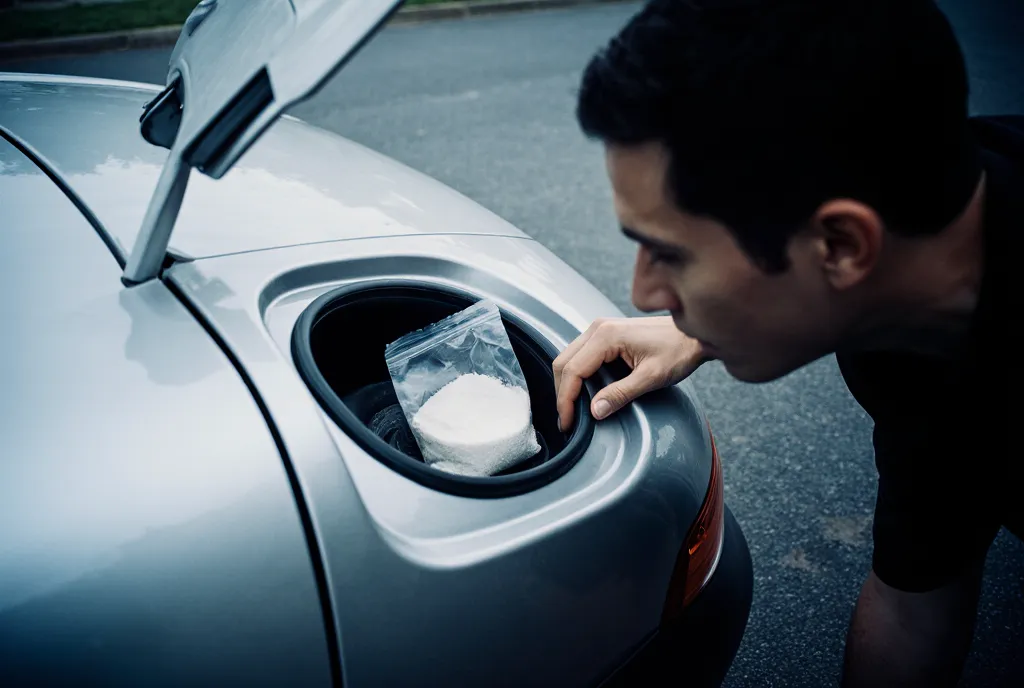
Quick Summary: Sugar in a gas tank doesn’t dissolve in gasoline and won’t caramelize or turn into a syrupy engine-killing substance as urban legend suggests. Instead, it sinks to the bottom of the tank as sediment, potentially clogging fuel filters and lines. While not the catastrophic engine destroyer myths claim, sugar contamination still requires tank draining and system cleaning to prevent fuel delivery problems.
The image of pouring sugar into someone’s gas tank has been a staple of revenge plots in movies and urban legends for decades. But does this act of automotive sabotage actually work the way most people think?
The short answer? Not really. And the science behind why reveals some interesting truths about both gasoline chemistry and modern fuel systems.
The Sugar-in-Gas-Tank Myth Explained
Here’s what most people believe happens: sugar dissolves in gasoline, flows into the engine, and caramelizes from the heat. This creates a sticky, syrupy mess that seizes pistons and destroys the motor.
Sound dramatic? That’s because it’s mostly fiction.
Sugar doesn’t dissolve in gasoline. At all. The two substances have completely incompatible chemical properties. Gasoline is a nonpolar solvent, while sugar is a polar compound that dissolves readily in water but not in petroleum products.
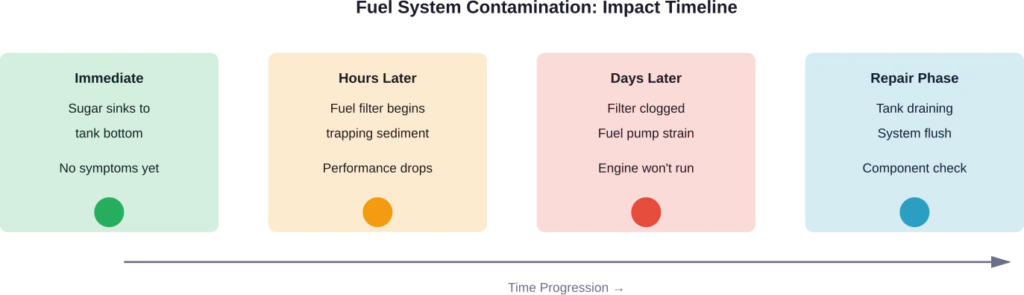
When sugar enters a gas tank, it simply sinks to the bottom as sediment. It won’t flow through the fuel lines in its solid form, and it certainly won’t reach combustion chambers to caramelize.

What Actually Happens to the Fuel System
That said, sugar in a gas tank isn’t harmless. While it won’t create the cinematic engine destruction scenarios people imagine, it does cause real problems.
The primary issue? Fuel filter clogging. Modern vehicles have fuel filters designed to catch contaminants before they reach the engine. Sugar sediment will accumulate here first, restricting fuel flow and eventually preventing the engine from running.
If enough sugar bypasses or overwhelms the filter, it can clog fuel lines and potentially damage the fuel pump. These components aren’t designed to handle solid particulate matter beyond the trace amounts found in normal gasoline.
How Fuel Filters Help
Fuel filters act as the first line of defense. They’re positioned between the gas tank and the engine specifically to trap debris, rust, and contaminants. According to EPA regulations on gasoline quality, fuel additives and contaminants are monitored to prevent fuel system damage and emissions problems.
A quality fuel filter will catch most sugar particles. But that’s a double-edged sword—the filter will clog quickly, causing performance issues like sputtering, difficulty starting, or complete failure to run.
Symptoms of Sugar Contamination
If someone did put sugar in a gas tank, what would the vehicle owner notice?
- Engine won’t start or struggles to turn over
- Rough idling and performance hesitation
- Loss of power during acceleration
- Engine stalling or dying unexpectedly
- Check engine light activation
These symptoms mirror other fuel system problems, which is why proper diagnosis matters before assuming sugar contamination.
Substances More Dangerous Than Sugar
Real talk: if causing actual engine damage were the goal, sugar would be one of the least effective choices.
Water causes far more damage. Even small amounts of water in gasoline can lead to corrosion, fuel line freeze in cold weather, and combustion problems. Water and gasoline don’t mix, creating separation that starves the engine of proper fuel.
Bleach, household cleaners, or other chemical contaminants can cause severe corrosion and chemical reactions that genuinely destroy engine components. The EPA monitors fuel quality standards precisely because contaminants pose serious risks to both vehicle operation and emissions systems.
Even dirt or sand would be more problematic than sugar, as these abrasive materials can damage fuel pumps and injectors while also passing through filters more easily than granulated sugar.
What to Do If Sugar Gets in the Tank
Suspect sugar contamination? Here’s the necessary response:
- Don’t start the engine if contamination hasn’t been confirmed yet—this prevents sugar from being pulled into the fuel system
- Have the vehicle towed to a qualified mechanic rather than driving it
- The gas tank will need to be drained completely and cleaned
- Replace the fuel filter regardless of its service life
- Flush fuel lines to remove any sediment
- Inspect the fuel pump for damage or unusual wear
The repair cost varies based on how much sugar entered the tank and how far through the system it traveled. Catching it early means lower repair bills.
Frequently Asked Questions
No, sugar doesn’t dissolve in gasoline due to incompatible chemical properties. Sugar is a polar compound that dissolves in water, while gasoline is a nonpolar solvent. The sugar simply sinks to the bottom of the tank as sediment rather than mixing with the fuel.
Sugar won’t directly ruin an engine the way myths suggest, but it can cause significant fuel system problems. The primary risk is clogging fuel filters and potentially damaging the fuel pump, which prevents the engine from running. The engine itself typically remains undamaged if the issue is addressed promptly.
Even a small amount—just a few tablespoons—can clog a fuel filter and cause performance problems. A larger quantity speeds up the process but doesn’t fundamentally change what happens. The sugar accumulates as sediment regardless of volume.
Symptoms include difficulty starting, rough idling, loss of power, engine stalling, and check engine lights. However, these symptoms match many fuel system issues. Confirmation requires draining the tank and finding sugar residue or having a mechanic inspect the fuel filter for unusual sediment.
Many comprehensive auto insurance policies cover vandalism, which would include intentional fuel contamination. Coverage depends on the specific policy terms, deductible amounts, and whether a police report documents the incident. Check with the insurance provider for specific coverage details.
Yes, fuel filters are designed to trap contaminants including sugar particles. The filter will catch most or all of the sugar, but this causes the filter to clog quickly. This is actually the desired outcome—better a clogged filter than sugar reaching fuel injectors or the combustion chamber.
Water, bleach, and chemical solvents cause far more damage than sugar. Water leads to corrosion and combustion problems, while bleach and other chemicals can corrode metal components and damage rubber seals throughout the fuel system. Even dirt or sand poses greater risks than sugar.
The Bottom Line on Sugar and Gas Tanks
The sugar-in-gas-tank myth persists because it sounds plausible and makes for dramatic storytelling. The reality is less sensational but still problematic.
Sugar won’t turn into caramel-coated engine destruction. It will, however, settle as sediment that clogs fuel filters and potentially damages the fuel delivery system. That’s inconvenient and expensive to repair, but it’s not the catastrophic engine failure that urban legends describe.
Modern fuel systems, with their filters and quality standards enforced by agencies like the EPA, provide substantial protection against contaminants. But protection doesn’t mean immunity. Any foreign substance in a gas tank requires professional attention to prevent further damage and restore proper vehicle operation.