
Quick Summary: Selling a stolen phone to ecoATM is illegal and carries serious consequences. The company’s advanced security systems, including live verification, ID scanning, law enforcement databases, and extensive transaction logging, are designed to detect and prevent stolen device sales. If a stolen phone reaches an ecoATM kiosk, law enforcement can retrieve it, and the seller faces criminal charges for receiving stolen property.
The idea of turning old phones into quick cash sounds appealing. But what happens when someone tries selling a stolen device to an ecoATM kiosk?
The answer isn’t pretty. These machines aren’t the easy targets some criminals assume they are.
ecoATM kiosks process thousands of transactions daily, and the company has built extensive security measures specifically to deter phone thieves and assist law enforcement. According to the official ecoATM website, the kiosks use state-of-the-art technology including advanced machine vision, electronic diagnostics, and artificial intelligence.
But here’s the thing—behind that seemingly automated kiosk is a robust security system designed to catch exactly this kind of illegal activity.
How ecoATM Security Systems Detect Stolen Phones
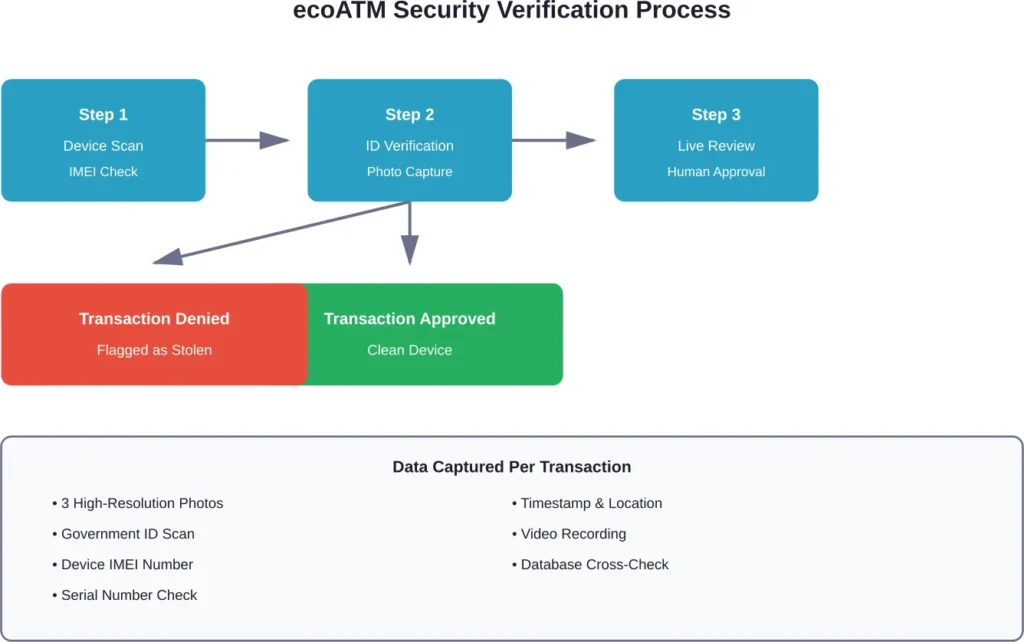
ecoATM machines aren’t operating on autopilot. Despite appearing fully automated, every single transaction requires approval from a live verifier.
The kiosk captures three high-resolution images of the seller using multiple cameras. These photos, combined with scanned government ID, create a detailed record of who’s selling what device.
The security measures include:
- Live video verification by trained personnel
- Government-issued ID scanning and verification
- IMEI and serial number checks against stolen device databases
- Transaction logging with timestamps and location data
According to the official ecoATM law enforcement page, the company is ISO 27001 certified, meaning their security protocols meet international standards for information security management.
The live verification process is crucial. Real talk: no transaction completes without a human being reviewing the seller’s face, ID, and device details. If anything looks suspicious, the transaction gets flagged immediately.
What Happens When Law Enforcement Gets Involved
ecoATM maintains close cooperation with police departments nationwide. When someone reports a phone stolen, officers can contact ecoATM directly.
According to the official law enforcement FAQ page, police can call the ecoATM Support Line at 858-255-4111 and select the Law Enforcement option.
Here’s how device recovery works:
If the phone is still in the kiosk, ecoATM will remotely unlock it for verified law enforcement. The company collects crucial information including credentials verification before providing access.
Once identity is confirmed, a technician remotely opens the kiosk and directs officers to the stored device. The whole process typically happens within hours of a report being filed.
If the device is already in transit, law enforcement can email [email protected] (monitored Monday through Friday during PST business hours). The company tracks every device through their supply chain, making recovery possible even after it leaves the kiosk.
Around 1.4 million phones were reported stolen across the US in 2023 alone, according to ecoATM’s blog. But law enforcement estimates only about 30% of stolen phones actually get reported to databases.
That gap creates problems. A phone could be stolen and still show up as clean if the victim hasn’t filed a police report yet.
Legal Consequences for Selling Stolen Devices
Selling a stolen phone isn’t just wrong—it’s a crime. Multiple crimes, actually.
The seller faces charges for receiving and selling stolen property. These aren’t minor offenses. Depending on the phone’s value and state laws, charges can range from misdemeanors to felonies.
The extensive documentation ecoATM collects becomes evidence. Those high-resolution photos? Police use them for identification. The ID scan? That’s proof of who attempted the transaction.
Community discussions on platforms like Reddit document cases where people attempted to sell stolen phones to ecoATM. The machines don’t just reject the transaction—they alert authorities.
Some sellers claim they didn’t know the phone was stolen. That defense rarely holds up when the phone was reported stolen days or weeks earlier and shows up in multiple databases.
Criminal Penalties Vary by State
Different jurisdictions treat stolen property crimes differently. Generally speaking, the value of the stolen phone determines charge severity.
High-end smartphones worth $800 or more often trigger felony charges. Budget phones might result in misdemeanor charges, but that still means jail time, fines, and a criminal record.
Repeat offenders face harsher penalties. Many experts suggest that organized phone theft rings specifically target these kiosks, assuming they’re easier than selling to individuals who might ask questions.
They’re wrong.
How Victims Can Recover Their Stolen Phones
If someone steals a phone and sells it to ecoATM, the rightful owner can file a claim to get it back.
The process requires specific information:
| Required Information | Purpose |
|---|---|
| Device Description | Identify the specific phone model and condition |
| Full Name of Owner | Verify legal ownership |
| Mailing Address | Ship recovered device |
| Email Address | Communication and updates |
| Phone Number | Direct contact for verification |
| Police Report Number | Confirm theft was reported |
If ecoATM locates the device, their Claims department contacts the owner with next steps. According to the official FAQ, owners must mail in a US Money Order for $20.00 to cover processing and shipping costs.
That’s substantially cheaper than replacing the phone. And it includes getting back photos, contacts, and data that might not have been backed up.
The recovery process takes time, though. PayPal payments from rejected transactions can take up to six months to be returned, according to ecoATM’s payment policies. Device recovery timelines vary based on where the phone is in the supply chain.
Why Criminals Still Target ecoATM Kiosks
Despite extensive security measures, phone thieves continue attempting to sell stolen devices at ecoATM kiosks. Why?
The promise of instant cash drives many criminals. Traditional fencing operations require connections and negotiations. ecoATM kiosks are accessible, visible, and appear automated.
Some thieves genuinely don’t understand the security systems in place. They see a machine, assume there’s no human oversight, and think they can beat the system.
Others are desperate. Addiction, financial crisis, or other pressures push people to make terrible decisions. They know it’s risky but try anyway.
Some victims have reported tracking stolen phones to ecoATM kiosks using device tracking tools. These stories highlight how quickly stolen devices end up at kiosks.
But here’s where it gets interesting. The same tracking technology that leads victims to kiosks also provides law enforcement with evidence. When police arrive and review kiosk footage, they have the thief on camera attempting the transaction.
Can Someone Unknowingly Sell a Stolen Phone?
This scenario happens more often than people realize. Someone buys a used phone from Facebook Marketplace or Craigslist, then later tries selling it to ecoATM.
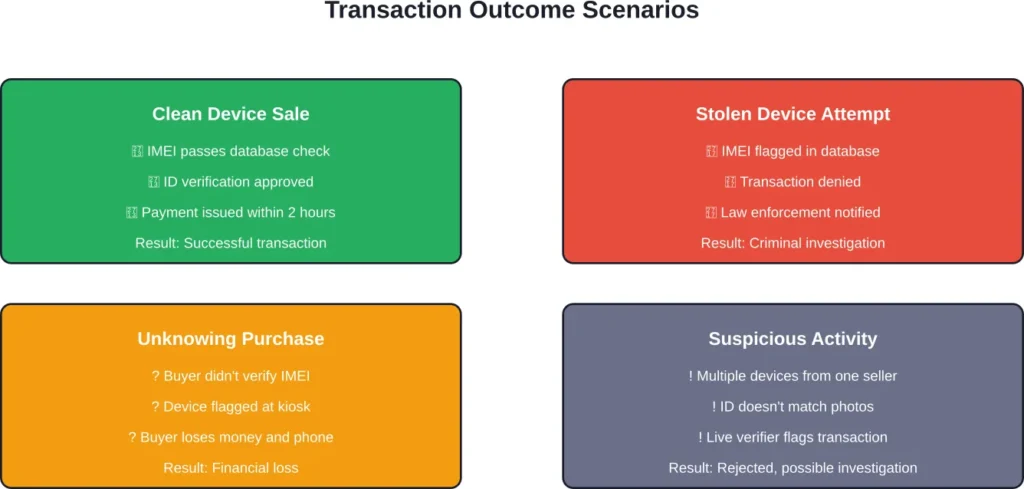
The phone gets flagged as stolen. The current seller had no idea they bought stolen property.
According to ecoATM’s blog post on checking if a used phone was reported stolen, buyers should verify a phone’s status before purchasing. The IMEI number can be checked against databases to confirm the device is clean.
When someone tries selling a phone they unknowingly bought stolen, ecoATM typically denies the transaction. The seller loses both the phone and the money they paid for it.
In practice, the buyer has to wait around for law enforcement to investigate. What should be a routine transaction turns into a criminal investigation.
The financial loss is bad enough. The cash is gone, the phone is gone, and in most cases there’s not much recourse for getting money back through legal channels.
ecoATM’s Commitment to Theft Prevention
The company takes stolen device prevention seriously. ISO 27001 certification isn’t easy to obtain—it requires demonstrating comprehensive information security management systems.
ecoATM maintains partnerships with law enforcement agencies nationwide. The company provides training materials, access protocols, and dedicated support lines for officers investigating phone theft.
Transaction data gets stored for extended periods, allowing police to investigate cases weeks or months after the fact. Those high-resolution photos don’t disappear after a transaction completes.
The kiosks are integrated with stolen property databases and law enforcement reporting systems. These systems aggregate reports from carriers, insurance companies, and law enforcement to create comprehensive stolen device registries.
But wait. No security system is perfect. Some stolen phones slip through, especially if they haven’t been reported yet or if someone uses a fake ID that passes initial verification.
That’s why continuous improvement matters. ecoATM regularly updates security protocols, adds new database checks, and trains verification staff to spot suspicious behavior.
Frequently Asked Questions
No. ecoATM checks device IMEI numbers against stolen property databases during every transaction. If a phone was reported stolen, the kiosk will deny the transaction and may alert law enforcement. The extensive security measures are specifically designed to prevent stolen device sales.
ecoATM requires government or US state-issued ID cards. They accept driver’s licenses and state IDs, but do not accept Military IDs, passport books, passport cards, or enhanced driver’s licenses. Sellers must be 18 years or older to complete a transaction.
Yes. Every ecoATM transaction captures three high-resolution photos of the seller, scans their government ID, and logs the exact time and location. Law enforcement can access this information by contacting ecoATM’s support line at 858-255-4111 and selecting the Law Enforcement option.
Recovery timelines vary based on where the device is in ecoATM’s system. If the phone is still in the kiosk, law enforcement can retrieve it immediately by having the kiosk remotely unlocked. If the device is in transit, owners must file a claim and pay a $20 processing fee for return shipping.
The transaction will be denied once the device is flagged as stolen. The current seller loses both the phone and the money they paid for it. Law enforcement may investigate to determine if the seller was involved in the original theft or simply an unknowing buyer.
For approved transactions with clean devices, ecoATM offers instant cash or digital payment options. Venmo or PayPal payments typically appear within 2 hours for active and verified accounts, though some payments may take up to 24 hours to reflect.
Using a fake ID at ecoATM is extremely risky and unlikely to succeed. Live verifiers examine the ID alongside high-resolution photos of the seller. Any discrepancies trigger immediate rejection. Using fraudulent identification compounds criminal charges beyond just selling stolen property.
Bottom Line: Don’t Risk It
Selling a stolen phone to ecoATM is a terrible idea that ends badly. The security systems are too comprehensive, the documentation too thorough, and the legal consequences too severe.
For legitimate sellers with clean devices, ecoATM offers a convenient way to turn old phones into cash. The company accepts cell phones, MP3 players, and tablets regardless of condition.
For thieves, these kiosks represent a trap. The instant cash promise lures criminals into creating detailed evidence of their crime, complete with photos and timestamps.
For victims of phone theft, ecoATM provides recovery options through law enforcement cooperation. Filing a police report and contacting the company directly gives owners the best chance of retrieving stolen devices.
Anyone buying used phones should verify the IMEI number before completing the purchase. That simple step prevents unknowingly buying stolen property and losing money when trying to resell it later.
The technology behind these kiosks continues evolving. Security measures get tighter, databases get more comprehensive, and cooperation with law enforcement gets stronger.
If someone offers a phone at an unbelievably low price, there’s probably a reason. Check the device status before buying, and never attempt selling something that doesn’t legitimately belong.