

Quick Summary: Missing a single dose of prednisone usually does not cause serious harm. Take it as soon as you remember on the same day, but skip it if it’s almost time for the next dose—never double up. Missing multiple doses can trigger symptom flare-ups or adrenal insufficiency, especially if you’ve been on prednisone long-term.
Prednisone is a synthetic glucocorticoid that millions take daily for conditions ranging from rheumatoid arthritis to asthma. It works by suppressing inflammation and modulating immune responses. But here’s the thing—missing a dose happens to everyone at some point.
The real question isn’t whether you’ll forget occasionally. It’s what to do when it happens and whether that missed dose puts your health at risk.
Understanding How Prednisone Works in Your Body
According to NIH StatPearls, prednisone is a synthetic glucocorticoid converted in the liver to the active metabolite prednisolone. This metabolite binds to glucocorticoid receptors throughout the body, reducing inflammation and suppressing immune activity.
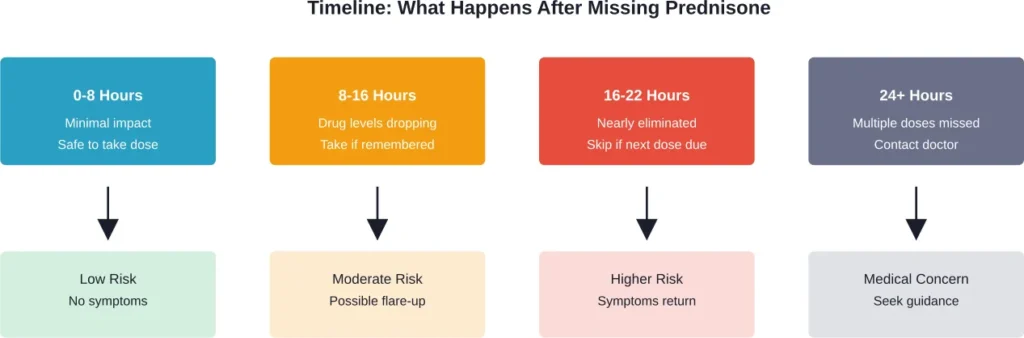
The medication typically remains detectable in the body for 16 to 22 hours after ingestion. However, the anti-inflammatory effects can persist longer depending on the dose and individual metabolism.
Prednisone treats diverse conditions including endocrine disorders, allergic reactions, dermatologic problems, respiratory diseases, and autoimmune conditions. The dosage varies widely—from 1 mg daily for mild conditions to 60 mg or more for severe inflammation.
What Actually Happens When You Miss a Dose
Missing one dose rarely causes immediate medical problems. The body doesn’t instantly react to a single skipped pill.
That said, what happens depends on several factors:
- How long you’ve been taking prednisone
- Your current dosage
- The condition being treated
- Whether you’re tapering off or on a stable dose
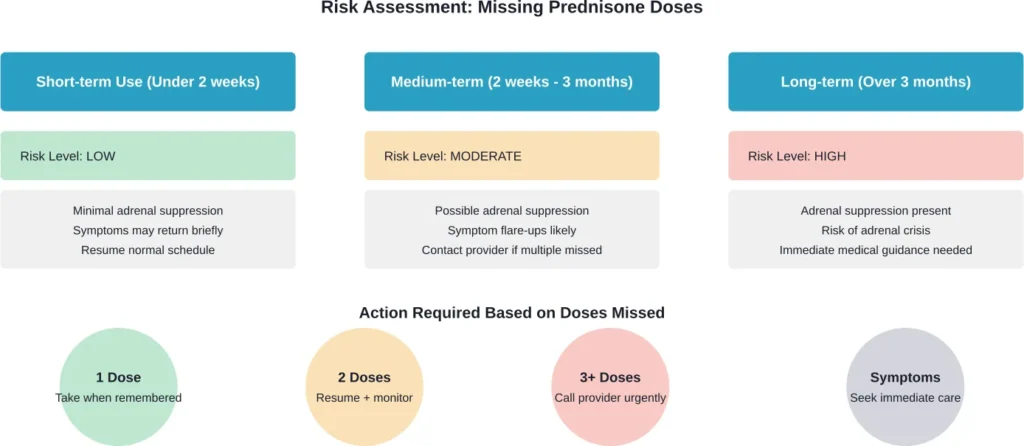
For short-term users (less than two weeks), missing a dose might slightly delay symptom relief. The inflammation being treated could resurface temporarily, but serious complications remain unlikely.
Long-term users face different concerns. When taken for extended periods, prednisone suppresses the adrenal glands’ natural cortisol production. Missing doses can theoretically trigger symptoms of adrenal insufficiency, though this typically requires missing multiple consecutive doses.
Step-by-Step: What to Do When You Miss a Dose
According to MedlinePlus, the general protocol for missed steroid doses follows a simple rule: timing determines action.
If You Remember on the Same Day
Take the missed dose as soon as possible. This applies whether it’s been two hours or ten since your scheduled time.
Most prescribers recommend taking it immediately unless the next scheduled dose falls within the next few hours.
If It’s Almost Time for Your Next Dose
Skip the missed dose entirely. Never take two doses at once to compensate.
Doubling up increases the risk of side effects like elevated blood sugar, fluid retention, and mood changes without providing additional therapeutic benefit.
If You Vomited After Taking the Dose
If you vomit within about 30 minutes of taking your steroid, it is typically treated like a missed dose. Wait until nausea subsides, then take another pill.
Contact a healthcare provider if vomiting persists or occurs repeatedly after medication.
The Dangers of Missing Multiple Doses
Missing several consecutive doses creates more significant problems than a single skipped pill.
For conditions like rheumatoid arthritis or inflammatory bowel disease, symptoms can return within 24 to 48 hours. Joint pain, swelling, digestive inflammation, or breathing difficulties may resurface as the medication’s anti-inflammatory effects wear off.
But the more concerning risk involves adrenal insufficiency. Long-term prednisone use suppresses the hypothalamic-pituitary-adrenal axis. The adrenal glands essentially stop producing cortisol because the medication provides it externally.
According to a systematic review published in the European Journal of Clinical Pharmacology (2020), 52% of POMs had no instructions on missed doses in their patient information leaflets or summaries of product characteristics. This gap in patient education contributes to inconsistent adherence patterns.
Signs of Adrenal Insufficiency
Watch for these symptoms after missing multiple doses:
- Extreme fatigue or weakness
- Nausea and vomiting
- Low blood pressure
- Dizziness or fainting
- Abdominal pain
- Confusion or altered mental state
These symptoms require immediate medical attention. Adrenal crisis is rare but potentially life-threatening.
Does Missing Prednisone Cause Withdrawal?
True withdrawal typically occurs when stopping prednisone abruptly after prolonged use, not from missing one or two doses.
The body needs time to restart natural cortisol production. That’s why doctors taper prednisone gradually rather than stopping cold turkey.
Missing occasional doses during a taper might delay the weaning process slightly but doesn’t typically trigger acute withdrawal. However, missing doses during a rapid taper (reducing by large amounts quickly) poses greater risk.
Preventing Missed Doses: Practical Strategies
Adherence improves with systems, not just willpower.
Set phone alarms for medication times. Many smartphones now include dedicated medication reminder features that persist until acknowledged.
Use pill organizers with daily compartments. Visual confirmation that today’s dose was taken eliminates uncertainty.
Link medication to existing habits. Take prednisone with breakfast or immediately after brushing teeth in the morning. Habit stacking creates automatic routines.
Keep a backup supply in commonly visited places—your desk at work, the car, a travel bag. This prevents missed doses due to forgotten bottles at home.
When to Contact Your Healthcare Provider
Certain situations require professional guidance rather than self-management.
Call the prescribing physician if:
- Three or more consecutive doses were missed
- Symptoms of the underlying condition return aggressively
- Signs of adrenal insufficiency appear
- Confusion exists about how to resume the medication schedule
- Missing doses becomes a recurring pattern
For patients on a tapering schedule, even one missed dose might warrant consultation. Tapers follow precise schedules to safely restart adrenal function, and disruptions can complicate the process.
Special Considerations for Different Conditions
The stakes vary depending on why prednisone was prescribed.
For transplant recipients taking prednisone as an immunosuppressant, missed doses increase rejection risk. These patients should contact their transplant team immediately.
Those with severe asthma might experience breathing difficulties within 24 hours of a missed dose. Have rescue inhalers readily available and monitor peak flow measurements.
Patients with rheumatoid arthritis or lupus might notice joint pain and swelling returning, but immediate danger remains minimal for most.
Frequently Asked Questions
No, never double up on doses. Taking two doses simultaneously increases side effect risks without improving therapeutic outcomes. If it’s close to your next scheduled dose, skip the missed one and continue the regular schedule.
Prednisone typically remains detectable for 16 to 22 hours after the last dose. However, the anti-inflammatory effects may persist slightly longer depending on dosage and individual metabolism. This relatively short half-life means missed doses create gaps in therapeutic coverage fairly quickly.
Missing a single dose rarely triggers withdrawal. True withdrawal typically occurs when stopping prednisone abruptly after prolonged use. However, patients who’ve been on high doses for months might notice mild symptoms like fatigue or malaise even after missing one dose.
Contact the prescribing physician immediately. Tapering schedules are designed to gradually restart adrenal function. Missing multiple days during a taper might require restarting at a higher dose before attempting to taper again. Never resume a taper independently after missing several doses.
Generally yes, if you remember on the same day. However, taking prednisone late in the evening can cause insomnia in some patients. If it’s past 6 PM and you’re sensitive to sleep disruption, consult a pharmacist or provider about whether to take it late or skip it.
Yes, but inconsistently. Prednisone elevates blood glucose, so missing doses might actually cause temporary drops in diabetic patients. Conversely, inconsistent dosing makes blood sugar harder to manage overall. Diabetics should monitor glucose closely after missed doses.
Yes, taking prednisone with food is generally acceptable regardless of normal routine. Food can actually reduce stomach irritation, a common side effect. The timing matters more than whether it’s taken with or without food, though delayed-release formulations should follow label instructions.
Final Thoughts on Managing Missed Doses
Missing a prednisone dose doesn’t require panic. For most patients, taking it as soon as remembered solves the problem without complications.
The key is understanding the difference between an isolated mistake and a pattern of non-adherence. One missed dose is human. Repeatedly missing doses signals the need for better systems or possibly a medication regimen that better fits daily life.
Talk to healthcare providers about challenges with adherence. Sometimes switching to a delayed-release formulation or adjusting timing makes consistency easier. The goal is therapeutic control of the underlying condition with minimal disruption to daily routine.
Document missed doses and any symptoms that follow. This information helps providers adjust treatment plans and identify whether the current regimen fits lifestyle realities.
Remember that prednisone is a powerful medication with both benefits and risks. Consistent dosing maximizes the former while minimizing the latter. When in doubt about a missed dose, reach out to a healthcare professional for personalized guidance.