
Quick Summary: Taking a double dose of antibiotics accidentally is rarely dangerous for most people. The most common effects include stomach upset, nausea, and diarrhea. However, certain antibiotics can cause serious side effects at higher doses, including neurological symptoms or kidney problems. If someone takes a double dose, they should contact their healthcare provider or poison control rather than skipping the next dose.
Medication errors happen. Someone takes their morning antibiotic, gets distracted, and an hour later can’t remember if they took it. So they take another one just to be safe.
But what actually happens when a person accidentally takes a double dose of antibiotics? The answer depends on several factors, including the specific antibiotic, the dosage, and individual health conditions.
According to CDC FastStats on Medication Safety Data, adverse drug events (ADEs) are a serious public health threat. An ADE occurs when a medication causes harm to someone. The risk increases with certain medications and patient populations, particularly older adults taking multiple medicines.
The Immediate Risks of Antibiotic Overdose
Here’s the thing though—most single antibiotic overdoses aren’t medically dangerous. Medical literature on antibiotic overdoses indicates that many cases result in limited adverse effects.
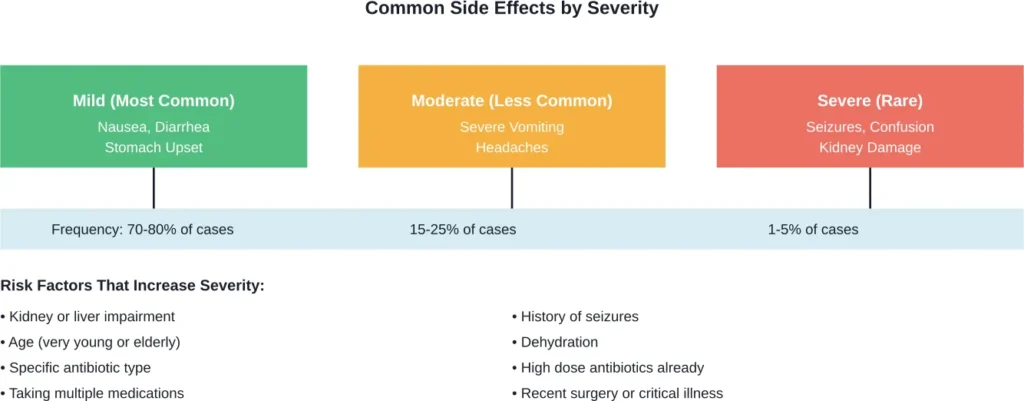
The most frequent side effects of taking extra doses include:
- Stomach upset and abdominal pain
- Nausea and vomiting
- Diarrhea
- Headache
- Loss of appetite
These gastrointestinal symptoms can be uncomfortable but typically resolve on their own within 24 to 48 hours. They don’t usually require medical intervention beyond supportive care.
That said, not all antibiotics carry the same overdose risk profile.
When Double Dosing Becomes Dangerous
Certain antibiotics can cause serious complications at higher doses. The specific antibiotic matters significantly.
Neurological Toxicity
Beta-lactam antibiotics, which include penicillins and cephalosporins, can cause neuropsychiatric toxicity when blood levels become too high. According to medical research, approximately 10–15% of ICU patients receiving beta-lactam antibiotics develop neurotoxicity, but this usually soon resolves after discontinuation or dose reduction.
The proconvulsive effect varies dramatically between specific antibiotics. Research indicates that cefepime has a proconvulsive effect estimated to be ten to fifteen times as high when compared with meropenem and piperacillin.
Symptoms of antibiotic-induced neuropsychiatric toxicity include:
- Confusion and disorientation
- Seizures or convulsions
- Hallucinations
- Severe agitation
- Uncontrollable muscle movements
The overall prevalence of psychosis as an adverse drug reaction for individual antibiotics has been estimated to range from 0.3% to 3.8% according to the FDA Adverse Event Reporting System (FAERS).
Kidney Damage
Some antibiotics are particularly hard on the kidneys. Medical literature documents cases where large oral doses of amoxicillin have been associated with kidney effects in pediatric patients.
While accidental ingestions of oral penicillins are usually considered nontoxic, these cases demonstrate that adverse effects following large oral doses are possible, particularly affecting kidney function.
Cardiac Risks
Certain antibiotics like erythromycin carry cardiac risks. Research on oral erythromycin shows it can increase the risk of sudden death from cardiac causes, particularly when combined with medications that inhibit CYP3A enzymes.
What to Do After Taking a Double Dose
Real talk: don’t panic, but don’t ignore it either.
The recommended approach depends on when the error was discovered and which antibiotic was involved.
Immediate Steps
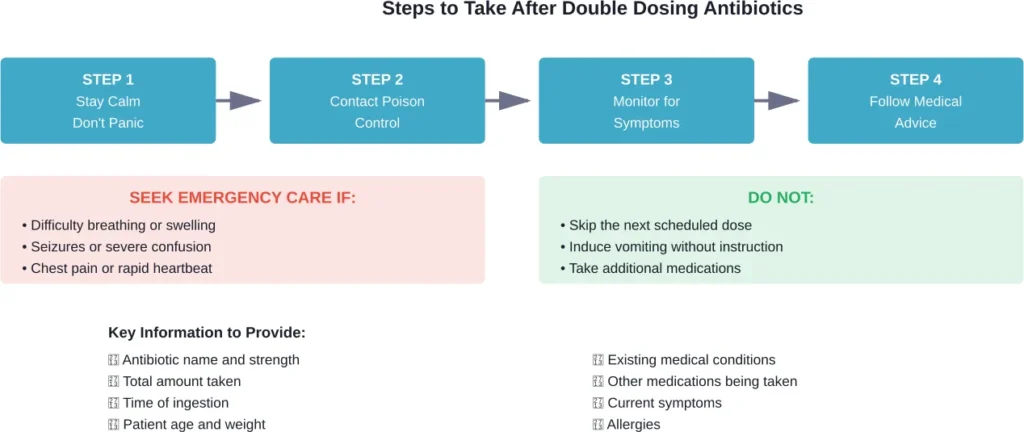
Contact Poison Control or a healthcare provider immediately. The poison control hotline (1-800-222-1222) provides free, confidential expert guidance. The webPOISONCONTROL online tool also offers help for these situations.
Phone emergency services or go to A&E if someone experiences:
- Rapid heartbeat or chest pain
- Difficulty breathing caused by swelling and tightening of the lips, tongue, or neck
- A sudden intense feeling of apprehension and fear
- Seizures or loss of consciousness
- Severe confusion or hallucinations
These symptoms could indicate anaphylaxis or serious toxicity requiring immediate medical attention.
What NOT to Do
Don’t try to “balance out” the overdose by skipping the next scheduled dose. This creates uneven antibiotic levels in the bloodstream and can contribute to treatment failure and antimicrobial resistance.
According to the CDC, using antibiotics appropriately helps combat antimicrobial resistance. Erratic dosing patterns—whether from missed doses or intentional skipping after overdose—undermine effective treatment.
The Bigger Picture: Antibiotic Resistance
Beyond immediate overdose risks, inappropriate antibiotic use contributes to a global health crisis: antimicrobial resistance.
According to medical research, the overall consumption of antibiotics shows a wide variation according to region, ranging from 4.4 to 64.4 defined daily doses per 1000 inhabitants. In some countries, antibiotics in the World Health Organization’s watch category may account for more than 50% of use.
Medication errors—including double dosing—represent just one aspect of inappropriate use. But they matter.
Preventing Medication Errors
Prevention beats treatment every time. According to FDA guidance on medication errors, a medication error is defined as ‘any preventable event that may cause or lead to inappropriate medication use or patient harm while the medication is in the control of the health care professional, patient, or consumer.’
Strategies to prevent double dosing include:
- Using a medication tracking app or chart
- Setting phone alarms for scheduled doses
- Using a pill organizer with daily compartments
- Taking medications at the same time each day in the same location
- Immediately marking down when a dose is taken
Store all antibiotics where children cannot see or reach them. Finding and eating or drinking medicines without adult supervision is the main cause of emergency visits for adverse drug events among children aged 5 years and younger, according to CDC FastStats: Medication Safety Data.
Special Considerations for Different Populations
The risks of antibiotic overdose aren’t distributed evenly across populations.
Older Adults
According to CDC data, older adults (65 years or older) visit emergency departments more than 600,000 times each year for adverse drug events, more than twice as often as younger people. Changes in kidney and liver function with age mean that antibiotics are cleared from the body more slowly, potentially increasing toxicity risk.
Children
Pediatric dosing is weight-based, making accidental overdoses potentially more serious. A dose that might cause mild symptoms in an adult could be dangerous for a child.
Critically Ill Patients
Research on beta-lactam dosing in critical patients shows that those with sepsis and septic shock face unique challenges. Standard dosing may be inadequate, but higher doses increase toxicity risk. The BULLSEYE study is a multicenter randomized controlled trial examining standard versus double dosing of beta-lactam antibiotics in critically ill patients with sepsis.
| Antibiotic Class | Common Examples | Primary Overdose Risks | Severity Level |
|---|---|---|---|
| Penicillins | Amoxicillin, Ampicillin | GI upset, possible kidney effects at very high doses | Generally Low |
| Cephalosporins | Cefepime, Cephalexin | Neurological symptoms, seizures (especially cefepime) | Moderate to High |
| Macrolides | Erythromycin, Azithromycin | Cardiac arrhythmias, GI distress | Moderate |
| Fluoroquinolones | Ciprofloxacin, Levofloxacin | CNS effects, tendon damage | Moderate |
| Tetracyclines | Doxycycline | Liver toxicity, muscle damage in high doses | Moderate |
FAQ About Double Dosing Antibiotics
No. Skipping the next dose creates uneven antibiotic levels and can reduce treatment effectiveness. Contact a healthcare provider or poison control for guidance on adjusting your schedule rather than making changes on your own.
Gastrointestinal symptoms like nausea typically appear within 1-4 hours. Neurological symptoms may take longer, sometimes appearing 24-48 hours after ingestion, particularly with antibiotics that accumulate in the body.
Yes. Cephalosporins like cefepime carry higher neurological risks. Macrolides like erythromycin can affect heart rhythm. Antibiotics cleared primarily by the kidneys pose greater risks for people with kidney disease. The specific antibiotic and individual health factors both matter.
Food may slow absorption and reduce stomach upset, but it won’t prevent toxicity from an overdose. Some antibiotics should be taken with food, others on an empty stomach. Follow the prescription instructions regardless.
Provide the antibiotic name, strength, total amount taken, time of ingestion, patient age and weight, existing medical conditions, other medications, current symptoms, and known allergies. Having the prescription bottle available helps.
Most single accidental overdoses don’t cause permanent damage. However, severe cases involving kidney damage, seizures, or cardiac events can potentially cause lasting effects. Early intervention significantly reduces this risk.
No. Never induce vomiting unless specifically instructed by poison control or a healthcare provider. For many medications, vomiting can cause additional complications and doesn’t effectively remove the drug once it’s been absorbed.
Conclusion
Taking a double dose of antibiotics typically causes uncomfortable but not dangerous symptoms like nausea and diarrhea. However, certain antibiotics can cause serious neurological, cardiac, or kidney complications, especially in vulnerable populations.
The safest approach? Contact poison control or a healthcare provider immediately after any medication error. Don’t try to self-correct by skipping doses.
And look—the best strategy is prevention. Use medication tracking tools, establish consistent routines, and store antibiotics safely away from children. Completing antibiotic courses as prescribed helps treat infections effectively while reducing the global threat of antimicrobial resistance.
When in doubt, make that call. Expert guidance is free and confidential, and could prevent serious complications.