

Quick Summary: Expired flour can still be safe to use if stored properly and shows no signs of spoilage, but whole wheat and nut flours go rancid faster than refined varieties. Check for off smells, discoloration, or insects before use. According to the CDC, flour can harbor harmful bacteria like Salmonella and E. coli, so never taste raw flour regardless of expiration date.
Finding a bag of flour in the back of your pantry that’s months past its best-by date is pretty common. Before you toss it in the trash and head to the store, you might wonder whether that flour is actually unsafe or just past its prime.
The answer isn’t straightforward. It depends on the type of flour, how it was stored, and what signs of spoilage you’re seeing.
Here’s what actually happens when flour expires, how to tell if it’s gone bad, and whether you can still use it safely.
Does Flour Actually Expire?
Flour doesn’t expire the way milk does. That date stamped on the bag is a best-by date, not a hard expiration.
Best-by dates indicate peak quality, not safety. Most flour remains usable well beyond this date if stored correctly. But there’s a catch.
Flour contains natural oils that oxidize over time. This process happens faster in whole-grain flours because they retain the oil-rich germ and bran. Refined flours like all-purpose have most of these oils removed, so they last considerably longer.
The Bacterial Risk
According to the FDA, flour is a raw agricultural product. Grains grown in fields can be exposed to harmful bacteria during harvesting and processing.
The CDC has documented multiple outbreaks linked to flour contaminated with Salmonella and E. coli. A multistate outbreak of Shiga toxin-producing E. coli infected 56 people across 24 states, with infection significantly associated with the use of one brand of flour.
As of June 7, 2023, 14 people infected with Salmonella Infantis were reported from 13 states, linked to Gold Medal brand flour. General Mills issued a recall on April 28, 2023. Of those interviewed, 88% reported eating raw dough or batter, and all who provided brand information had used Gold Medal flour.
These incidents highlight an important point: flour can carry bacteria regardless of its age or expiration date. The risk isn’t about the flour being old—it’s about the flour being raw.
How Long Different Types of Flour Last
Not all flour ages the same way. Storage conditions and flour type make a huge difference.
All-Purpose and Refined Flour
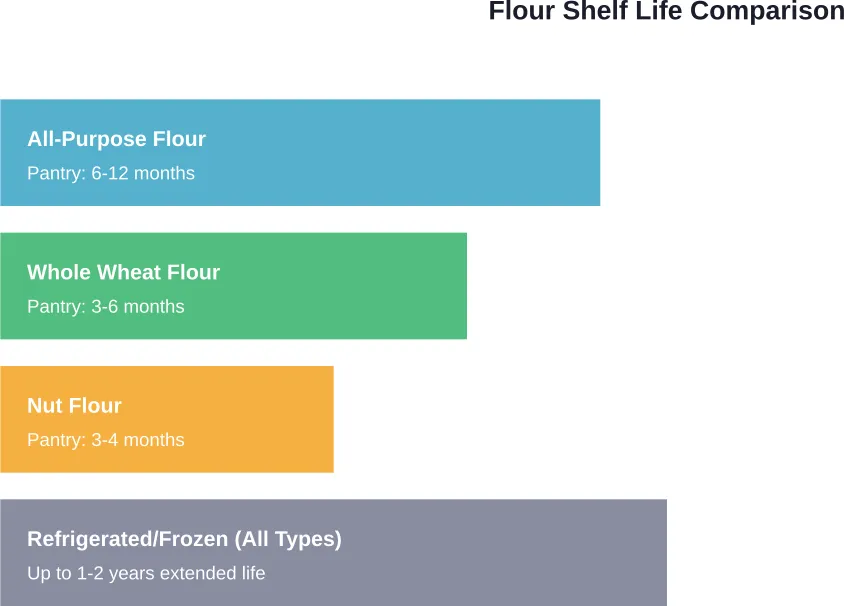
All-purpose flour typically lasts 6 to 12 months in the pantry when stored in a cool, dry place. Because the bran and germ are removed during processing, there’s minimal oil content to go rancid.
Stored in an airtight container away from heat and moisture, refined flour can remain usable even longer.
Whole Wheat Flour
Whole wheat flour contains the entire grain kernel, including the oil-rich germ. This makes it far more susceptible to oxidation.
Whole wheat flour typically lasts 3-6 months in the pantry when stored properly. Many bakers store it in the refrigerator or freezer to extend its life to a year or more.
Nut and Alternative Flours
Almond flour, coconut flour, and other nut-based varieties have high fat content and typically last 3-4 months in the pantry.
Refrigeration is practically mandatory for these flours if you won’t use them within a month.
Signs Your Flour Has Gone Bad
Don’t rely solely on the date. Your senses are better indicators.
Smell Test
Fresh flour smells neutral or slightly sweet. Rancid flour has a sharp, sour, or musty odor that’s hard to miss.
If your flour smells off, it’s gone bad. The oils have oxidized, and the flavor will be unpleasant in whatever you bake.
Visual Inspection
Look for discoloration or visible mold. Fresh flour should be uniform in color—white for refined varieties, tan for whole wheat.
Check for insects or webbing. Pantry moths and weevils love flour. If you see bugs or fine webs, the entire bag is compromised.
Texture Changes
Flour that’s absorbed moisture may clump together. Small clumps can sometimes be broken up, but if the flour feels damp or sticky, moisture has created conditions for mold growth.
Taste (Only If Cooked)
Never taste raw flour due to bacterial risks. But if you’ve baked something and it tastes bitter or off, the flour was likely rancid.
What Actually Happens If You Use Expired Flour
So you’ve determined your flour is past its date. What’s the worst that can happen?
Rancidity Affects Flavor, Not Safety
Rancid flour won’t make you sick in the traditional sense. The oxidized oils taste terrible and can ruin your baked goods, but they aren’t toxic.
Your cookies or bread will have an unpleasant, bitter aftertaste. That’s the main consequence of using flour that’s gone rancid—wasted ingredients and disappointing results.
Bacterial Contamination Is the Real Concern
According to the CDC, the primary health risk from flour isn’t its age—it’s bacterial contamination. Raw flour can harbor E. coli, Salmonella, and other pathogens.
Baking at proper temperatures (typically 350°F or higher) kills these bacteria. The risk comes from consuming raw or undercooked flour in cookie dough, cake batter, or homemade play dough.
The FDA explicitly warns against eating raw dough or batter. Even flour that’s well within its best-by date can carry harmful bacteria.
When Expired Flour Is Probably Fine
If your all-purpose flour is a few months past its date, stored in a sealed container, and passes the smell and visual tests, it’s almost certainly safe to use in baked goods.
The USDA notes that shelf-stable foods like flour can remain safe indefinitely if stored properly, though quality degrades over time.
| Condition | Safe to Use? | Notes |
|---|---|---|
| 6 months past date, neutral smell, no insects | Yes | Baking quality should be fine |
| 1 year past date, stored in pantry, smells normal | Probably | Check carefully; may have slight quality loss |
| Any timeframe, sour or musty smell | No | Rancid oils will ruin flavor |
| Any timeframe, visible insects or mold | No | Discard immediately |
| Whole wheat, 1 year past date, room temp storage | Unlikely | High oil content means faster spoilage |
How to Store Flour Properly
Storage makes all the difference between flour that lasts months and flour that goes bad in weeks.
Use Airtight Containers
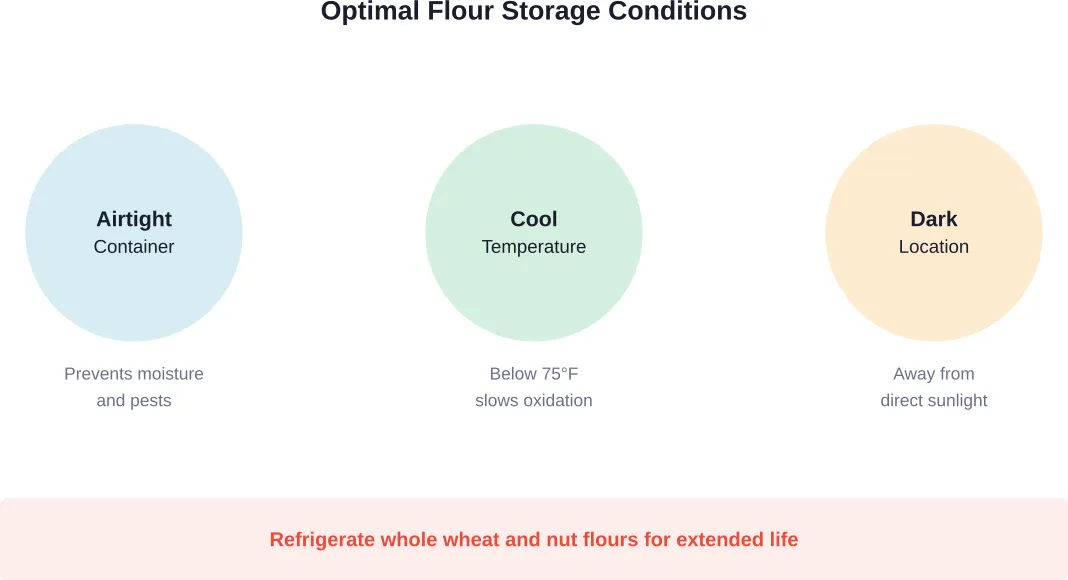
Transfer flour from the original paper bag to an airtight container. Glass jars, plastic bins with tight-sealing lids, or food-grade buckets all work well.
This keeps out moisture, insects, and odors from other foods.
Keep It Cool and Dark
Store flour in a cool pantry away from the stove, dishwasher, or any heat source. Heat accelerates the oxidation process.
A dark cupboard is ideal. Light exposure can also degrade quality over time.
Consider Refrigeration or Freezing
For whole wheat, nut flours, or any flour you won’t use within a few months, refrigeration extends shelf life significantly.
Freezing works even better. Flour can be used directly from the freezer in most recipes, though bringing it to room temperature first improves performance in yeasted breads.
Label and Date Everything
When you transfer flour to a container, write the purchase date or best-by date on the outside. This simple step prevents the guessing game later.
When You Should Definitely Throw It Out
Some situations aren’t worth the risk.
If your flour smells rancid, toss it. No amount of careful baking will fix that bitter, off flavor. If you see insects, webs, or mold, the entire container is contaminated. Don’t try to salvage it.
Whole wheat or nut flours stored at room temperature for more than a year are almost certainly rancid, even if they don’t smell strongly yet.
When in doubt, the cost of a new bag of flour is far less than the disappointment of ruined baked goods or a potential stomachache.
Frequently Asked Questions
Expired flour itself won’t make you sick if it’s just past its best-by date and stored properly. The real health risk comes from bacterial contamination like Salmonella or E. coli, which can be present in flour regardless of age. Always cook flour thoroughly and never consume raw dough or batter. Rancid flour tastes terrible but isn’t toxic.
Check for a sour, musty, or sharp smell—fresh flour smells neutral or slightly sweet. Look for discoloration, clumping, visible mold, or insects. If the flour passes the smell and visual tests and has been stored properly, it’s likely still usable even past its date.
Yes, considerably longer. All-purpose flour lasts 6 to 12 months in the pantry because the oil-rich germ and bran are removed during processing. Whole wheat flour retains these components and typically lasts 3-6 months in the pantry when stored properly before the oils go rancid.
It depends on the type and storage conditions. Refined all-purpose flour stored in an airtight container in a cool, dry place might still be usable. Smell it carefully—if there’s any off odor, discard it. Whole wheat or nut flours are almost certainly rancid after two years at room temperature.
Refrigeration or freezing significantly extends shelf life, especially for whole wheat and nut flours. All flour types can be refrigerated or frozen. Use airtight containers to prevent the flour from absorbing moisture or odors. Frozen flour can be used directly in most recipes.
No. The CDC and FDA warn against consuming any raw dough or batter, regardless of the flour’s age. Raw flour can harbor harmful bacteria like E. coli and Salmonella. The expiration date doesn’t affect bacterial contamination—only proper cooking does.
Use airtight containers in a cool, dark, dry location. For storage beyond six months, refrigerate or freeze flour in sealed containers. Label containers with dates. Whole-grain and nut flours should always be refrigerated if not used within a month or two of purchase.
The Bottom Line on Expired Flour
That bag of flour past its best-by date isn’t automatically garbage. If it’s all-purpose or another refined variety, stored properly in a sealed container, and passes the smell test, it’s almost certainly fine for baking.
Whole wheat and nut flours are a different story. Their higher oil content means they spoil faster, and anything stored at room temperature for more than a year is probably rancid.
The real safety concern isn’t the age of the flour—it’s bacterial contamination. According to the CDC and FDA, raw flour can carry dangerous pathogens regardless of its expiration date. Cook all flour-based foods thoroughly, and never taste raw dough.
When in doubt, trust your nose. A rancid smell means the flour will ruin whatever you’re making. But if it smells fine, looks normal, and has been stored well, expired flour can still turn out perfectly good baked goods.