
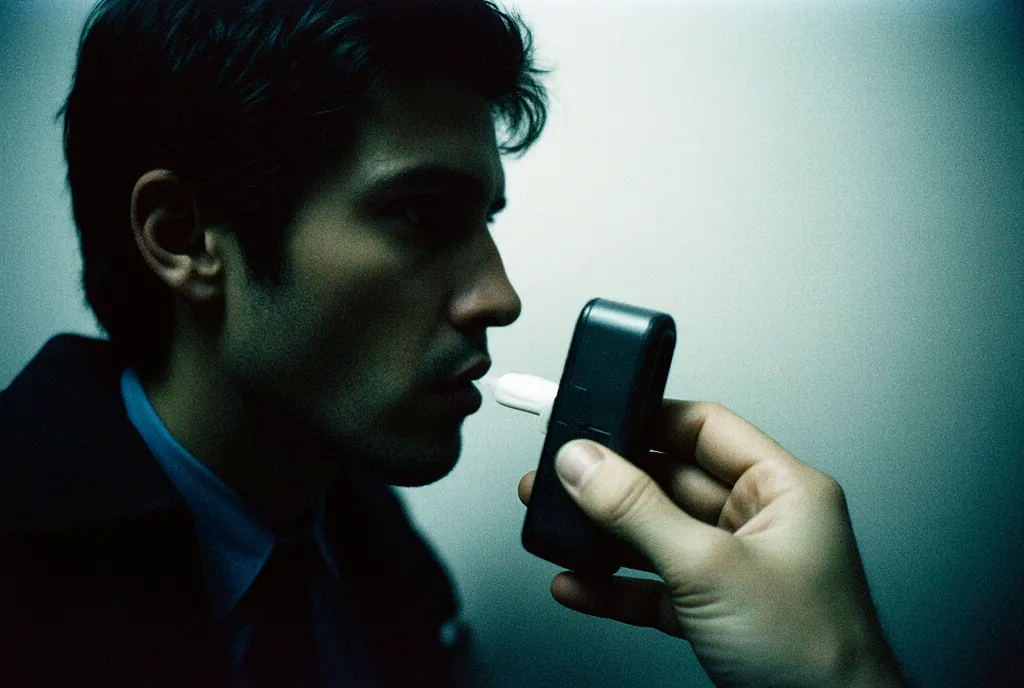
Quick Summary: Refusing a breathalyzer test triggers automatic penalties under implied consent laws, typically resulting in immediate license suspension ranging from 6 months to 3 years depending on prior offenses. According to NHTSA data, approximately one in four drivers arrested for DUI refuse the test, but refusal doesn’t prevent criminal charges—prosecutors can still pursue DUI convictions using officer observations, field sobriety tests, and driving behavior. While refusal eliminates direct BAC evidence, it often results in harsher administrative penalties than test failure would impose.
The blue and red lights flash in your rearview mirror. Your heart races. The officer asks if you’ve been drinking, then produces a breathalyzer device.
What happens next depends entirely on your choice—and that choice carries consequences many drivers don’t fully understand.
Refusing a breathalyzer isn’t a simple way to avoid a DUI charge. It’s a decision that triggers its own set of legal penalties, often more severe than what test failure would bring. But here’s what makes this confusing: the laws vary dramatically by state, and the officer probably won’t explain all the ramifications during your traffic stop.
Let’s break down exactly what refusing a breathalyzer means for your license, your criminal case, and your future driving privileges.
Understanding Implied Consent Laws
Every state operates under what’s called implied consent law. The concept is straightforward: by obtaining a driver’s license and operating a vehicle on public roads, drivers automatically agree to submit to chemical testing if arrested for suspected impaired driving.
This isn’t a physical contract anyone signs. It’s a legal framework embedded in state motor vehicle codes.
According to Washington State’s RCW 46.20.308, any person who operates a motor vehicle is deemed to have given consent to breath testing for alcohol concentration if arrested for an offense where the officer has reasonable grounds to believe the driver was impaired. Similar statutes exist across all 50 states.
The U.S. Supreme Court clarified in Birchfield v. North Dakota that warrantless breath testing of impaired driving suspects is permissible under the Fourth Amendment as a search incident to arrest. However, the Court also ruled that criminalizing refusal to submit to a blood test without a warrant violates constitutional protections.
Here’s the thing though—breath tests and blood tests receive different legal treatment. Breath tests are generally considered less invasive, which is why states can impose administrative penalties for refusing them without constitutional issues.
Immediate Consequences of Breathalyzer Refusal
The moment a driver refuses chemical testing, administrative penalties kick in automatically. These happen independently of any criminal DUI charges.
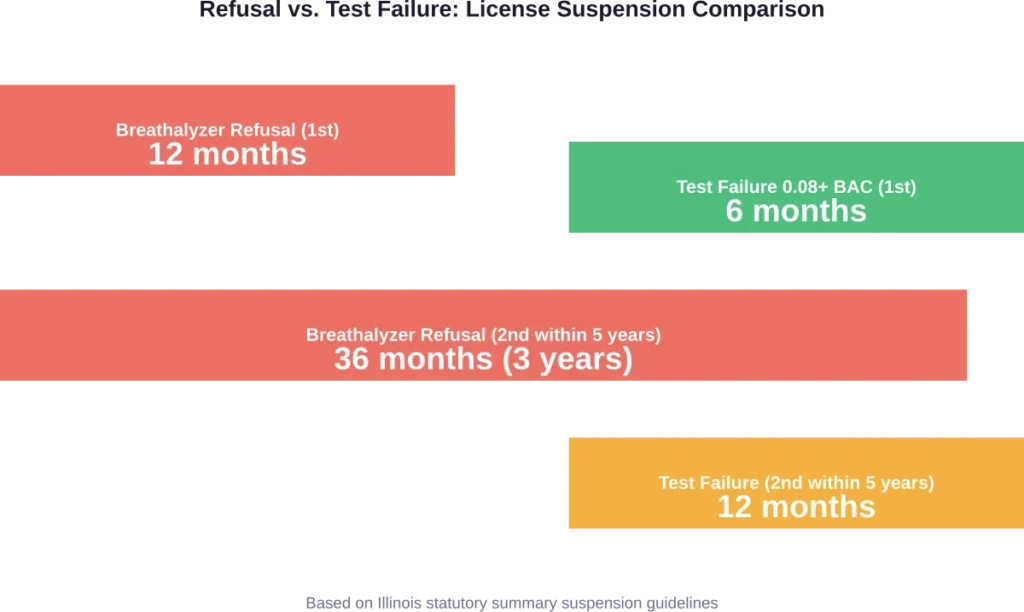
License suspension starts immediately in most jurisdictions. According to University of Illinois Student Legal Services, refusal results in driving privileges being suspended for 1 year for a first offense, and 3 years if it’s a second offense within 5 years.
In Illinois specifically, refusing a breathalyzer triggers a 12-month suspension for first-time refusers. That’s double the 6-month suspension imposed when a driver takes the test and fails with a BAC of 0.08 or higher.
But wait. The suspension isn’t the only consequence.
Administrative vs. Criminal Penalties
This is where drivers get confused. Refusing a breathalyzer creates two separate legal tracks:
Administrative Track: The Department of Motor Vehicles (or equivalent state agency) suspends driving privileges automatically. This happens whether criminal charges are filed or not. It’s a civil administrative action, not a criminal penalty.
Criminal Track: The prosecutor can still file DUI charges based on other evidence. The refusal itself can be introduced in court, and in some states, it becomes an additional criminal offense.
Colorado State Patrol emphasizes that “refusal is a separate mistake” because it adds consequences on top of potential DUI charges rather than replacing them.
Can Prosecutors Still Charge DUI Without Breathalyzer Results?
Absolutely. And they do it regularly.
According to NHTSA research, approximately one in four drivers arrested for DWI refuse the BAC test—a figure that ranges from 1% to 82% depending on the state. Yet refusal doesn’t create immunity from prosecution.
Prosecutors build DUI cases using multiple evidence sources:
- Officer observations of driving behavior (weaving, speeding, erratic braking)
- Physical appearance indicators (bloodshot eyes, alcohol odor, slurred speech)
- Field sobriety test performance (walk-and-turn, one-leg stand, horizontal gaze nystagmus)
- Dash camera or body camera footage
- Witness statements
- Admission statements made to the officer
Some prosecutors actually view refusal as consciousness of guilt—an indication the driver knew they were impaired and tried to hide evidence.
Real talk: breathalyzers can detect alcohol on the breath for up to 24 hours according to defense attorneys’ case reviews. That means even drivers who stopped drinking hours before the traffic stop might register a BAC reading. In those situations, having no test result might seem beneficial.
But the flip side? Field sobriety tests are notoriously subjective. Officer testimony about “failing” these tests often carries significant weight with juries, even without chemical test confirmation.
The Refusal Penalty Structure Across States
Penalties for breathalyzer refusal aren’t uniform nationwide. State legislatures set their own administrative sanctions.
| State Factor | First Refusal | Second Refusal | Additional Penalties |
|---|---|---|---|
| Illinois | 12-month suspension | 36-month suspension | Refusal admissible in court |
| General Pattern | 6-12 months suspension | 1-3 years suspension | Varies by jurisdiction |
| Enhanced Penalties | Prior DUI convictions increase suspension length | Some states impose criminal charges for refusal | Ignition interlock requirements common |
According to research published in the Journal of Safety Research, arrested drivers can legally refuse the test by accepting a period of suspension under implied consent law in an effort to avoid the more severe penalties associated with a DUI conviction: jail time, fines, mandatory treatment programs, and vehicle sanctions.
That calculation made sense in some jurisdictions where refusal penalties were minimal. But states have progressively increased refusal sanctions specifically to discourage this strategy.
Challenging a License Suspension After Refusal
Drivers don’t have to accept suspension without question. Administrative hearings provide an opportunity to challenge the suspension.
The challenge process typically requires:
- Filing a petition within a strict deadline (often 30-45 days)
- Paying required filing fees (commonly $50 according to state records)
- Submitting documentation to the state Secretary of State’s Office
- Attending a formal administrative hearing
At the hearing, the burden is on the state to prove:
- The officer had reasonable grounds to believe the driver was impaired
- The driver was lawfully arrested
- The driver was properly warned about refusal consequences
- The driver actually refused testing
Now, this is where it gets interesting. If the officer failed to properly explain implied consent warnings, or if the arrest itself was unlawful, the suspension might be overturned.
Sound familiar? Many drivers don’t realize the officer must follow specific procedural requirements when requesting chemical testing.
Restricted Driving Permits After Refusal
Total driving prohibition creates hardship—getting to work, medical appointments, or family obligations becomes impossible without a license.
Most states offer restricted driving permits (also called hardship licenses or Monitoring Device Driving Permits) that allow limited driving during suspension.
These permits typically require:
- Waiting period after suspension begins (often 30-90 days)
- Proof of financial responsibility (SR-22 insurance)
- Installation of an ignition interlock device
- Restriction to specific purposes (work, school, medical, alcohol treatment)
According to CDC data, ignition interlocks reduce driving while impaired repeat offenses by about 70% while they’re installed. That’s why states increasingly require them as a condition for restricted permits.
The catch? Ignition interlock devices aren’t free. Installation and monitoring costs vary by jurisdiction. Over a suspension period, that can add up to substantial expense.

Should Anyone Refuse a Breathalyzer Test?
That’s the question defense attorneys debate constantly. The answer isn’t simple.
Arguments in favor of refusal:
- Eliminates the most direct evidence of intoxication (BAC number)
- Breathalyzers can produce false positives from mouth alcohol, medical conditions, or device malfunction
- Creates reasonable doubt in criminal prosecution
- For drivers with very high BAC levels, refusal might avoid enhanced penalties that kick in at 0.15 or 0.20
Arguments against refusal:
- Automatic administrative penalties often exceed test-failure penalties
- Prosecutors and juries may interpret refusal as guilt
- Doesn’t prevent criminal prosecution
- Some states impose separate criminal charges for refusal itself
- Longer license suspension periods
Here’s the thing: for truly sober drivers, taking the test makes sense. A 0.00 or very low BAC reading provides powerful exculpatory evidence, even though some drivers still get arrested based on officer suspicion of drug impairment.
For drivers who are clearly impaired? The calculation becomes more complex. Legal counsel often can’t be obtained during the traffic stop itself, when the decision must be made.
The Role of Defense Attorneys in Refusal Cases
Legal representation becomes critical after a breathalyzer refusal. Defense attorneys approach these cases differently than standard DUI charges.
Defense strategies in refusal cases include:
- Challenging the legality of the initial traffic stop
- Questioning whether the officer had reasonable grounds for arrest
- Examining whether proper implied consent warnings were given
- Attacking the reliability of field sobriety tests
- Challenging officer credibility regarding impairment observations
- Negotiating reduced charges based on absence of chemical evidence
The lack of BAC evidence actually gives defense counsel more room to create reasonable doubt. Without a specific number like “0.12 BAC,” prosecutors must rely on subjective observations that skilled attorneys can effectively challenge.
But wait. That doesn’t mean refusal cases are easier to defend. The automatic administrative suspension still applies, and many prosecutors pursue refusal cases aggressively precisely because they view it as an attempt to conceal evidence.
Common Misconceptions About Breathalyzer Refusal
Misconception: Refusing means no DUI charge can be filed.
Reality: Prosecutors regularly convict drivers who refused testing based on other evidence.
Misconception: Refusal is protected by the Fifth Amendment right against self-incrimination.
Reality: Courts have consistently ruled that implied consent laws don’t violate Fifth Amendment protections because they impose civil penalties, not criminal compulsion.
Misconception: Roadside preliminary breath tests (PBT) and evidentiary breathalyzers are the same.
Reality: Portable roadside devices are screening tools. Refusal consequences typically apply to evidentiary tests conducted at the police station on calibrated equipment.
Misconception: Asking for an attorney before deciding about the test is allowed.
Reality: Most states don’t recognize a right to counsel before deciding on chemical testing. The decision must typically be made immediately.
Future Implications of Breathalyzer Refusal
A breathalyzer refusal creates lasting consequences beyond immediate suspension.
Insurance companies typically classify refusals similarly to DUI convictions. That means SR-22 insurance requirements and significantly increased premiums. These elevated rates typically continue for an extended period.
Professional licenses can be affected. Commercial drivers face federal regulations that treat refusal as equivalent to a positive test result. CDL holders who refuse testing face disqualification from commercial driving.
Employment background checks often reveal license suspensions. Jobs requiring driving or security clearances may become unavailable.
Future DUI offenses receive enhanced penalties if prior refusals exist in the driving record. The refusal itself doesn’t count as a DUI conviction, but it typically appears on the driver’s record and can be considered by courts during sentencing.
Frequently Asked Questions
No, police cannot physically force a driver to blow into a breathalyzer device. However, refusal triggers automatic administrative penalties under implied consent laws. For blood tests, officers can obtain a warrant and use reasonable force to draw blood, but breath tests cannot be forcibly administered.
Absolutely not. According to NHTSA, approximately one in four arrested drivers refuse testing, yet prosecutors routinely secure DUI convictions using officer observations, field sobriety test results, driving behavior, and other evidence. Refusal eliminates BAC evidence but doesn’t prevent criminal prosecution.
This varies by state, but refusals typically remain on driving records for 5-10 years. The suspension itself and the refusal notation both appear, potentially affecting insurance rates, employment opportunities, and penalties for any future DUI offenses during that period.
Generally speaking, once a driver refuses and the officer documents that refusal, offering to take the test later doesn’t reverse the administrative consequences. Some states allow a “reasonable time” for the driver to decide, but what counts as reasonable is narrowly defined—typically minutes, not hours.
No. Portable preliminary breath test devices used during traffic stops are screening tools. The evidentiary breath test—the one that triggers refusal penalties—is typically administered at the police station on calibrated equipment. Drivers can refuse the roadside PBT in many states without automatic suspension, but refusing the evidentiary test carries full implied consent penalties.
For truly sober drivers, taking the test is almost always the better choice. A 0.00 BAC or reading well below the legal limit provides powerful evidence of sobriety. Refusal when sober eliminates this exculpatory evidence and subjects the driver to longer suspension periods than test failure would impose.
Most states don’t recognize a right to have an attorney present before deciding whether to submit to chemical testing. The U.S. Supreme Court has ruled that implied consent laws don’t violate the right to counsel because the decision must typically be made immediately. Drivers can contact an attorney after the arrest, but delaying the decision to consult counsel is usually treated as refusal.
Making the Right Decision at the Traffic Stop
Look, the decision to refuse a breathalyzer must be made in seconds, under stress, without legal counsel. That’s an impossible position.
The data shows refusal doesn’t prevent prosecution but does trigger harsher administrative penalties. For the average driver stopped after having a couple of drinks, taking the test and facing a 6-month suspension typically beats refusing and facing a 12-month suspension—plus dealing with prosecutors who view refusal as consciousness of guilt.
For drivers with extremely high BAC levels facing enhanced penalties, or those with prior DUI convictions where any conviction means mandatory jail time, the calculation changes. These situations require nuanced legal strategy that can’t be formulated during a traffic stop.
The best approach? Never drive after consuming alcohol or impairing substances. The CDC emphasizes that impaired driving remains dangerous and illegal regardless of the substance involved—alcohol, cannabis, prescription medications, or illegal drugs all create impairment risks.
If arrested for DUI, whether after refusing testing or taking it, immediately consult a qualified DUI defense attorney. The consequences—license suspension, criminal record, insurance costs, employment impact—are too severe to navigate without experienced legal representation.
State laws change. Penalties vary. But the fundamental reality remains constant: refusing a breathalyzer creates immediate, automatic consequences that often exceed the penalties for test failure. Understanding these consequences before making the decision can mean the difference between recovering driving privileges in months versus years.