

Quick Summary: When you call someone who has blocked you, the call won’t go through normally. Depending on their device and carrier settings, you’ll hear one ring followed by voicemail, a busy signal, or a message stating the person is unavailable. The blocked person won’t receive any notification of your call attempt, and it won’t appear in their call history.
Getting blocked stings. But the uncertainty can feel even worse.
When calls suddenly start going straight to voicemail or ringing once before disconnecting, it’s natural to wonder what’s happening on the other end. Understanding how call blocking actually works can provide clarity and help determine the next steps.
According to the Federal Communications Commission, billions of unwanted calls are blocked every year through mobile carriers and third-party call-blocking services. Call blocking has become a standard privacy feature on every major smartphone platform, giving people control over who can reach them.
But what actually happens when someone blocks a number and the blocked person tries to call?
How Call Blocking Works on Different Devices
Call blocking isn’t universal across all devices and carriers. The experience varies depending on whether the person uses an iPhone, Android device, or specific carrier-level blocking features.
iPhone Blocking Features
According to Apple Support documentation, when someone blocks a number on iPhone, blocked callers won’t receive any notification that they’ve been blocked. The blocking happens at the device level, preventing calls, messages, and FaceTime requests from coming through.
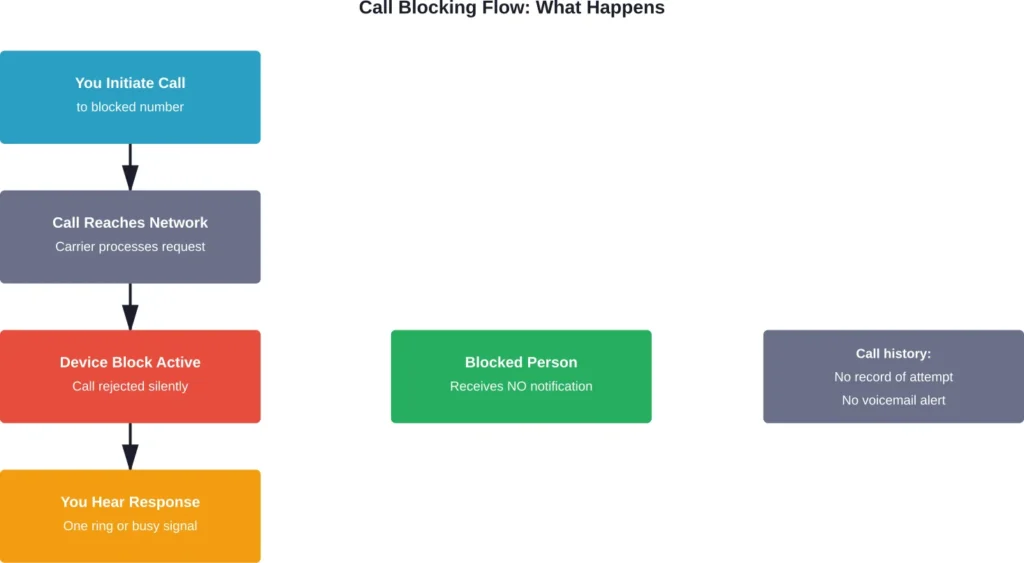
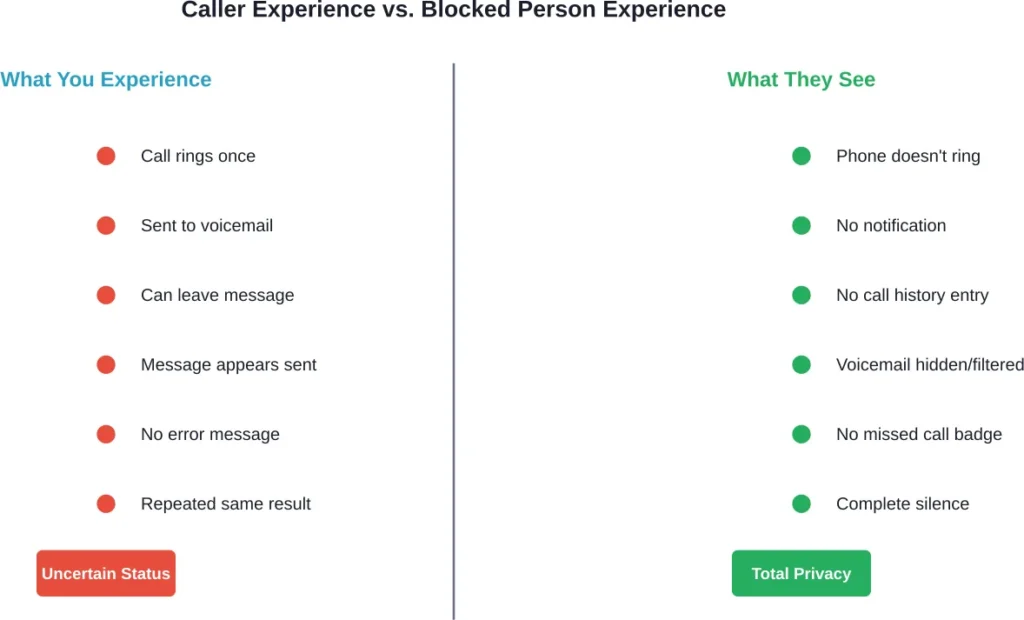
Here’s what happens from the blocked caller’s perspective: The call typically rings once, sometimes half a ring, then immediately redirects to voicemail. The person who blocked the number won’t see the call in their recent calls list, won’t get a notification, and won’t see any voicemail messages left by the blocked number in their regular voicemail inbox.
Some carriers route blocked voicemails to a separate “Blocked Messages” folder, but this varies by provider.
Android Blocking Mechanisms
Android devices handle blocking similarly but with some variation across manufacturers. Samsung, Google Pixel, and other Android phones all include native blocking features.
When a blocked number calls an Android device, the caller usually hears a standard message like “The person you’re calling is not available” or gets sent directly to voicemail after minimal ringing. Google’s Phone app includes spam detection and blocking features that work alongside manual blocks.
The blocked calls may appear in a “Blocked calls” log on some Android devices, but the recipient receives no active notification.
Carrier-Level Blocking
Mobile carriers like T-Mobile, Verizon, and AT&T also offer network-level blocking services. These work before the call even reaches the recipient’s device, intercepting blocked numbers at the network level.
The Federal Communications Commission has empowered carriers to implement robust call-blocking tools to combat illegal robocalls and spam. When carrier-level blocking is active, callers might hear different messages depending on the specific service configuration.
What You’ll Experience When Calling a Blocked Number
The exact experience varies, but several common patterns emerge when calling someone who has blocked a number.
The Single Ring Pattern
Most commonly, the call will ring once—sometimes just a partial ring—before redirecting to voicemail. This happens because the device initially accepts the connection before the blocking mechanism kicks in and rejects it.
This single-ring pattern is the most reliable indicator across both iPhone and Android devices. It’s different from when someone actively declines a call, which usually shows two rings before going to voicemail.
Immediate Voicemail
Some blocking configurations send calls directly to voicemail without any ringing at all. The caller hears the standard voicemail greeting immediately after dialing.
This can also happen when the phone is powered off or in airplane mode, so it’s not definitive proof of blocking on its own.
Busy Signal or Error Message
Certain carrier-level blocking services or third-party apps generate a busy signal or automated message stating the call cannot be completed. Messages vary but often sound like: “The person you are calling is not accepting calls at this time” or “This number is not available.”
According to Apple Support documentation on blocking features, the specific response depends on carrier settings and how the blocking was implemented.
Repeated Behavior Pattern
The key differentiator is consistency. If every call attempt over multiple days results in the same pattern—one ring to voicemail, immediate voicemail, or the same error message—blocking becomes increasingly likely.
Network issues or the person being busy would show more variation in call behavior.
Signs That Someone Has Blocked Your Number
No single indicator definitively proves blocking, but several signs together paint a clear picture.
| Sign | What It Means | Reliability |
|---|---|---|
| Consistent one ring then voicemail | Call is being rejected immediately | High |
| Messages never show “Delivered” | Messages aren’t reaching recipient | High (iPhone only) |
| No response to multiple contact attempts | Person may be avoiding contact | Medium |
| Immediate voicemail every time | Phone off, blocked, or Do Not Disturb | Medium |
| Previously normal contact suddenly changes | Settings or blocking changed recently | Medium |
| Social media also shows blocking | Deliberate disconnection across platforms | High |
Text Message Behavior on iPhone
iMessage provides additional clues. When someone blocks a number on iPhone, messages from that number won’t show the “Delivered” status beneath them. The messages appear to send normally on the sender’s end, but without the delivery confirmation.
However, if the blocked person has iMessage disabled or their phone is off, messages automatically convert to SMS, which don’t show delivery status anyway. This makes the signal less reliable.
Do Not Disturb vs. Blocking
There is confusion between Do Not Disturb mode and actual blocking. Do Not Disturb silences calls but doesn’t block them—the calls still come through and appear in the call history.
According to Apple Support, when Do Not Disturb is active, calls from numbers not in the allowed contacts list get silenced, but they’re logged in recent calls and can still leave voicemail notifications.
Blocking is more absolute. The blocked number’s attempts don’t appear anywhere in the recipient’s phone.
Multiple Contact Method Testing
Testing across different contact methods can provide clarity. If calls go to voicemail after one ring, texts don’t show delivered, and social media messages go unanswered, the evidence points toward intentional blocking rather than technical issues.
But here’s the thing—sometimes people just need space without formally blocking anyone.
What Happens to Your Voicemail
When a blocked caller leaves voicemail, the handling varies by device and carrier.
On iPhone, according to Apple Support documentation, voicemails from blocked numbers typically go to a separate section called “Blocked Messages” or don’t generate any notification at all. The recipient can access these voicemails if they specifically look for them, but they won’t receive alerts.
On Android devices, blocked voicemails might appear in a “Spam and blocked” folder within the voicemail app, depending on the specific phone model and carrier.
Some carriers delete blocked voicemails entirely after a short period without the recipient ever seeing them.
From the caller’s perspective, the voicemail system behaves normally. The greeting plays, the beep sounds, and the message appears to record successfully. There’s no indication the message will be filtered or hidden.
Can Someone Tell If You Try to Call While Blocked?
No. This is perhaps the most important thing to understand about call blocking.
When someone blocks a number, they receive absolutely no notification of call attempts from that number. The blocked calls don’t appear in call history, don’t trigger missed call notifications, and don’t create any visible record on the device.
According to Apple Support’s documentation on blocking features, this complete silence is intentional—designed to give the blocking person total control over their communication without ongoing reminders of blocked attempts.
The only exception would be if the person manually checks their blocked messages folder or spam call log, where some systems store records of blocked attempts. But this requires active effort and isn’t something most people regularly review.
Other Reasons Calls Might Not Go Through
Before jumping to conclusions about blocking, consider other legitimate reasons calls might behave strangely.
Network and Technical Issues
According to Apple Support documentation on call issues, several technical problems can mimic blocking behavior. Poor network coverage, carrier outages, or software bugs can all cause calls to drop immediately or go straight to voicemail.
If calls to other contacts work normally but one specific number shows issues, technical problems become less likely—but they’re still possible.
Phone Powered Off or Dead Battery
When a phone is completely powered off or has a dead battery, calls go directly to voicemail without ringing. This produces the same experience as some blocking configurations.
The difference is timing. A dead battery or powered-off phone would eventually turn back on, and call behavior would return to normal. Blocking remains consistent indefinitely.
Airplane Mode or No Service
Phones in airplane mode or without cellular service also send calls directly to voicemail. Again, this would be temporary unless the person is traveling in an area with no coverage.
Call Forwarding Settings
Custom call forwarding rules can route calls to voicemail under specific conditions. Someone might forward all calls to voicemail during work hours or when busy.
This explains temporary patterns but not permanent changes in call behavior.
Do Not Disturb Schedule
Many people run Do Not Disturb on a schedule—during sleep hours or work meetings. If calls consistently go to voicemail only during specific times, Do Not Disturb is more likely than blocking.
Real talk: Sometimes people are just busy or going through something that has nothing to do with specific individuals.
Privacy and Ethical Considerations
Understanding the mechanics of blocking is one thing. Respecting someone’s decision to block contact is another.
Why Call Blocking Exists
The Federal Communications Commission has prioritized call blocking as a critical consumer protection tool. According to FCC data, stopping unwanted and illegal robocalls remains their top consumer complaint category.
But blocking isn’t just about spam. It’s also about personal boundaries, safety, and mental health.
People block numbers for many legitimate reasons: ending toxic relationships, protecting themselves from harassment, maintaining boundaries with ex-partners, or simply needing space from someone.
The Legal Framework
The TRACED Act, implemented by the FCC, gives phone companies expanded authority to block illegal calls before they reach consumers. This legislation recognized call blocking as a fundamental right for phone users.
While this focuses on commercial and spam calls, the principle extends to personal blocking. People have the legal right to control who can contact them through their personal devices.
When Blocking Becomes Concerning
There are scenarios where being blocked might indicate a serious concern: co-parenting communication being cut off, elderly relatives becoming unreachable, or business partners suddenly going silent on legitimate matters.
In these cases, finding alternative communication methods or involving appropriate third parties might be necessary. But attempting to circumvent blocking through technical workarounds crosses ethical and potentially legal boundaries.
Respecting Digital Boundaries
If someone has blocked a number, they’ve sent a clear message about their boundaries. Attempting to bypass that block—using different numbers, apps, or technical tricks—violates their stated wishes.
In some jurisdictions, continued attempts to contact someone who has explicitly cut off communication can constitute harassment, regardless of intent.
What to Do If You Think You’re Blocked
So what are the appropriate next steps if blocking seems likely?
Respect the Decision
The most important response is acceptance. If someone has blocked contact, they’ve made a choice about their boundaries. Honoring that choice, even when it’s painful, is the right thing to do.
Self-Reflection
Consider what might have led to the blocking. Was there conflict? Miscommunication? Boundary violations? Understanding the context can provide closure even without direct communication.
Alternative Communication for Urgent Matters
If there’s a genuinely urgent matter—shared custody responsibilities, business obligations, or emergency situations—consider appropriate alternative channels. Email, mutual contacts, or formal legal communication might be necessary.
But “I want to talk” isn’t an emergency that justifies circumventing blocking.
Move Forward
Sometimes relationships end. Sometimes people need permanent distance. Processing that reality and focusing energy on healthy relationships and personal growth serves everyone better than fixating on blocked communication.
When to Seek Help
If being blocked triggers intense emotional distress, especially in the context of relationship endings or family conflicts, speaking with a therapist or counselor can provide valuable perspective and coping strategies.
Technical Workarounds: Why They’re Problematic
Various methods exist to potentially call someone who has blocked a number: using caller ID blocking codes like *67, calling from different numbers, using internet calling services, or using communication apps.
These technical possibilities don’t make them appropriate.
Using workarounds to contact someone who has blocked you violates their clearly expressed boundary. It can escalate situations, cause additional distress, and potentially create legal problems.
According to guidance on personal safety from Apple Support, blocking tools exist specifically to help people maintain boundaries and feel safe. Circumventing these tools undermines their purpose.
In professional contexts where legitimate business needs require contact despite blocking, proper channels include formal written communication, legal representatives, or mediation services—not technical tricks to bypass phone blocks.
The Psychology Behind Blocking
Understanding why blocking happens can provide context, even if it doesn’t change the outcome.
People block numbers for various reasons: ending relationships cleanly, protecting mental health, preventing manipulation or guilt trips, avoiding conflict, establishing firm boundaries after repeated violations, or responding to harassment.
Sometimes blocking isn’t personal—it’s self-preservation.
The finality of blocking can feel harsh, especially compared to simply not answering calls. But for many people, that finality is exactly the point. It eliminates ongoing decision-making about whether to respond, reduces anxiety about seeing contact attempts, and clearly communicates that the communication channel is closed.
Blocking is often the last resort after other boundary-setting attempts have failed.
Moving Forward After Being Blocked
Getting blocked forces a reckoning with rejection and loss of control. Neither feels good.
But acceptance opens the door to growth. Recognizing that other people’s boundaries aren’t about punishing you—they’re about protecting themselves—can shift perspective.
Focus on what’s controllable: personal growth, learning from relationship patterns, investing in current relationships, and respecting others’ autonomy even when it’s uncomfortable.
The digital age makes connection easy and disconnection equally simple. Someone exercising their right to disconnect doesn’t diminish personal worth or negate the value of trying to communicate.
It just means that particular communication channel has closed. And sometimes, that closure is exactly what both people need.
Frequently Asked Questions
No, they won’t receive any notification. When someone blocks a number on iPhone or Android, attempted calls from that number don’t appear in their call history, don’t trigger notifications, and leave no visible record on their device. The blocking happens silently from their perspective.
Do Not Disturb silences calls but still logs them in call history and allows voicemail notifications. The recipient can see who called when they check their phone. Blocking completely prevents calls from coming through—no history, no notifications, no voicemail alerts. Blocking is permanent until manually removed, while Do Not Disturb is usually temporary or scheduled.
Usually yes, the voicemail system will still accept your message. However, depending on the device and carrier, blocked voicemails may be filtered into a separate folder the recipient rarely checks, or deleted automatically. Some carriers route blocked voicemails to a separate folder, but this varies by provider.
One ring or less before going to voicemail is the most common sign of blocking. Normal calls typically ring 4-6 times before voicemail. However, immediate voicemail can also mean the phone is off, in airplane mode, or has no service. The pattern must be consistent over multiple days to suggest blocking rather than temporary conditions.
Blocking is device-specific, not number-specific. If someone blocks a number on their iPhone, that block only applies to their iPhone. If they have an Android tablet or other device with the same phone number, the blocking doesn’t automatically transfer unless they separately configure blocking on that device. Most people only use one primary phone though, so blocking on that device effectively blocks all calls to them.
On iPhone, iMessages to a blocked number won’t be delivered and won’t show a “Delivered” status. The sender sees their message appear to send normally, but it never reaches the recipient. On Android, SMS blocking behavior varies by manufacturer, but generally blocked texts are filtered into spam or blocked message folders without notifying the recipient.
While calling a blocked number isn’t automatically illegal, repeated unwanted contact after someone has clearly indicated they don’t want communication can constitute harassment under many state and local laws. Using technical workarounds to bypass blocking can strengthen harassment claims. The legal threshold varies by jurisdiction, but respecting blocking is both the ethical and legally safer choice.
Conclusion: Understanding the Signals and Respecting Boundaries
When someone blocks a number, the experience from the caller’s side is designed to be uncertain rather than explicit. Calls ring once or go immediately to voicemail. Messages appear to send but never confirm delivery. The blocking person receives no notifications whatsoever.
This asymmetry is intentional. It gives people control over their communication while avoiding confrontation.
Recognizing the signs of blocking—consistent one-ring patterns, undelivered messages, complete silence across communication attempts—provides closure even without explicit confirmation. But more importantly, those signs communicate something clear: this person has chosen to close this communication channel.
The appropriate response isn’t to find workarounds or demand answers. It’s to respect that boundary, reflect on the circumstances, and direct energy toward relationships where communication is mutual and welcome.
Call blocking exists for good reasons. From protecting against harassment to maintaining mental health boundaries to simply ending relationships that have run their course, blocking serves an important function in digital communication.
If the signs point to being blocked, acceptance and moving forward serve everyone better than attempting to force communication where it’s not wanted. That’s not defeat—it’s respect for autonomy, both others’ and your own.