

Quick Summary: Taking ibuprofen without food is generally safe at standard over-the-counter doses (up to 1200 mg daily for short-term use). Research shows that low-dose ibuprofen taken on an empty stomach actually provides faster pain relief than when taken with food, though it may cause mild stomach discomfort in some people. Higher doses or long-term use increases the risk of gastrointestinal side effects, so taking it with food becomes more important in those cases.
There’s a persistent belief that you absolutely must take ibuprofen with food to protect your stomach. But is that actually true?
Turns out, the answer is more nuanced than most people think. The common advice to always take ibuprofen with meals isn’t necessarily backed by evidence for standard doses.
Here’s what actually happens when you take ibuprofen on an empty stomach, when you should be concerned, and how to use this common pain reliever safely.
The Surprising Truth About Ibuprofen and Food
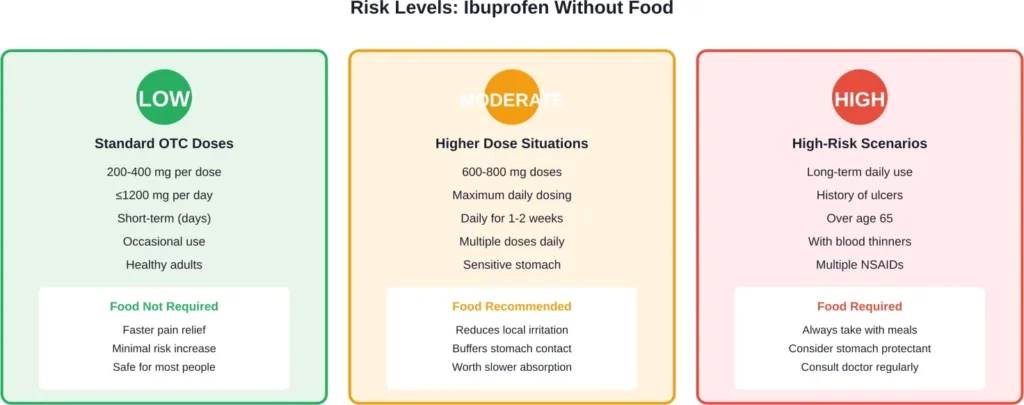
According to medical research, you can safely take low-dose ibuprofen on an empty stomach. Specifically, doses up to 1200 mg daily taken in divided amounts for 1 to 7 days don’t require food.
Here’s the thing though—taking ibuprofen without food actually provides faster pain relief than taking it with meals. Food slows down how quickly the medication enters your bloodstream, which delays the pain-relieving effects.
So why does everyone insist you need food?
The concern stems from how nonsteroidal anti-inflammatory drugs (NSAIDs) like ibuprofen work. These medications can irritate the stomach lining, particularly at higher doses or with long-term use. But at standard over-the-counter doses for short periods, the risk is relatively low for most people.
What Dose Counts as “Low-Dose”?
When medical sources reference low-dose ibuprofen, they’re typically talking about:
- 200-400 mg per dose
- Up to 1200 mg total per day
- Use for 1 to 7 days (or up to 10 days for some guidelines)
- Taken as needed, not continuously
At these levels, the evidence shows taking ibuprofen without food poses minimal risk for healthy adults. The NIH/NCBI LiverTox resource notes that ibuprofen is “considered to be among the safest NSAIDs and is generally well tolerated.”
How Ibuprofen Affects Your Stomach
Understanding what happens in your digestive system helps explain both the risks and why they’re often overstated.
Ibuprofen works by blocking enzymes called COX-1 and COX-2. These enzymes produce prostaglandins, which are involved in inflammation, pain, and fever. That’s why ibuprofen reduces these symptoms effectively.
But prostaglandins also serve protective functions. COX-1-dependent prostaglandins help maintain the protective mucus layer in your stomach that shields the lining from harsh stomach acid.
When ibuprofen inhibits COX-1, it reduces these protective prostaglandins. This makes the stomach lining more vulnerable to acid damage. Some NSAIDs also have a direct irritant effect on stomach tissue beyond this prostaglandin mechanism.
The Two Ways NSAIDs Cause Stomach Issues
Research published in Pharmaceuticals (2025) analyzing the FDA Adverse Event Reporting System database identifies how NSAIDs cause gastrointestinal problems:
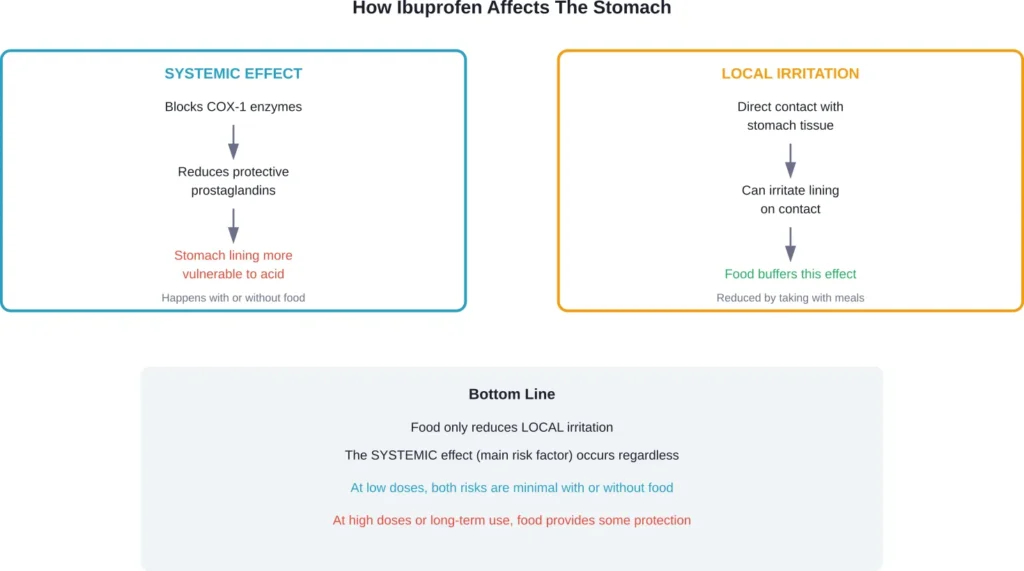
- Systemic effect: Blocking COX-1 reduces protective prostaglandins throughout your body, not just in your stomach
- Local irritation: Direct contact between the medication and stomach lining can cause irritation
The systemic effect happens whether you take ibuprofen with food or not. Food only helps with the local irritation component.
This explains why taking ibuprofen with food doesn’t eliminate stomach risks—it just slightly reduces them by minimizing direct contact with the stomach lining.
What Actually Happens When You Skip Food
So what can you expect if you take ibuprofen on an empty stomach?
For most healthy adults taking standard doses, nothing concerning happens. The medication absorbs quickly, pain relief kicks in faster, and you go about your day.
Some people experience mild stomach discomfort, which might include:
- Slight stomach pain or cramping
- Mild heartburn
- Nausea
- Indigestion
According to NIH/NCBI LiverTox, side effects from ibuprofen “are not common” and dyspepsia (indigestion) and nausea appear on the list of possible but uncommon effects.
These symptoms, when they occur, are usually mild and temporary. They don’t necessarily indicate serious damage to your stomach.
When Empty-Stomach Use Becomes Risky
The risk equation changes significantly in certain situations:
- Higher doses: Prescription-strength ibuprofen (typically 800 mg per dose)
- Long-term use: Taking ibuprofen daily for weeks or months
- Frequent use: Multiple doses every day rather than occasional use
- Maximum dosing: Consistently taking the highest allowed amount
In these scenarios, taking ibuprofen with food becomes more important. The cumulative effect of higher exposure increases the likelihood of gastrointestinal issues.
Side Effects to Watch For
Whether you take ibuprofen with or without food, staying alert to potential side effects matters.
Common side effects that are usually manageable include:
- Stomach pain or heartburn
- Nausea or vomiting
- Dizziness or headache
- Ringing in the ears
These tend to be mild and often lessen over time. But watch for more serious warning signs.
Serious Symptoms That Require Medical Attention
Stop taking ibuprofen and contact a healthcare provider if you experience:
- Severe stomach pain or cramping
- Black, tarry, or bloody stools
- Vomiting blood or material that looks like coffee grounds
- Unexplained weight gain or swelling
- Yellowing of skin or eyes
- Unusual fatigue or weakness
These can indicate serious gastrointestinal bleeding or liver problems. While rare with short-term use, they require immediate evaluation.
The FDA warns that NSAIDs can cause serious cardiovascular and gastrointestinal events. Though the absolute risk at standard doses remains low, awareness helps you respond quickly if problems develop.
Who Should Always Take Ibuprofen With Food
Certain people face higher risks from NSAIDs and should consistently take ibuprofen with food or avoid it altogether.
Take ibuprofen with food if you:
- Have a history of stomach ulcers or gastrointestinal bleeding
- Are over age 65
- Take blood thinners like warfarin or aspirin
- Use corticosteroids
- Take other NSAIDs simultaneously
- Have inflammatory bowel disease
- Consume three or more alcoholic drinks daily
- Need higher doses (600-800 mg)
- Require daily use for chronic conditions
For these groups, the protective benefit of food outweighs any advantage from faster absorption.
When to Avoid Ibuprofen Completely
Some people shouldn’t take ibuprofen at all, regardless of food:
- History of allergic reaction to ibuprofen or other NSAIDs
- Active stomach or intestinal ulcers
- Severe kidney disease
- Severe heart failure
- About to have or recently had heart bypass surgery
- Pregnancy at 30 weeks or later (due to risks of fetal renal dysfunction)
According to medication guides from DailyMed, NSAIDs increase the risk of serious cardiovascular events and gastrointestinal bleeding, which can be fatal. People in high-risk categories need alternative pain management approaches.
How to Take Ibuprofen Safely
Whether you choose to take ibuprofen with or without food, following safe use guidelines minimizes risks.
Dosage Guidelines for Adults
Standard over-the-counter recommendations include:
| Form | Dose Per Use | Frequency | Maximum Daily |
|---|---|---|---|
| Regular tablets (200 mg) | 1-2 tablets | Every 4-6 hours | 6 tablets (1200 mg) |
| Prescription strength | 400-800 mg | Every 6-8 hours | 3200 mg (medical supervision) |
| Liquid-filled capsules | 1-2 capsules (200 mg each) | Every 4-6 hours | 6 capsules (1200 mg) |
The smallest effective dose should always be used. Don’t automatically take the maximum just because it’s allowed.
Timing and Duration Matters
How long you take ibuprofen affects safety as much as the dose:
- Short-term: 1-10 days for acute pain (headache, minor injury, dental pain)
- Intermediate: 1-2 weeks for conditions like menstrual cramps or minor sprains
- Long-term: Only under medical supervision for chronic conditions
If you need pain relief for more than 10 days, consult a healthcare provider. Extended use significantly increases gastrointestinal and cardiovascular risks.
What Not to Take With Ibuprofen
Certain combinations amplify risks:
- Other NSAIDs: Don’t combine ibuprofen with aspirin, naproxen, or other anti-inflammatory drugs
- Alcohol: Increases stomach bleeding risk
- Blood thinners: Warfarin, clopidogrel, and similar medications
- Corticosteroids: Prednisone and related drugs
- SSRIs/SNRIs: Certain antidepressants increase bleeding risk
These interactions exist whether you take ibuprofen with food or not. Food doesn’t negate drug-drug interactions.
Alternatives and Additional Protection
If you’re concerned about stomach effects but need regular pain relief, consider these approaches.
Stomach-Protective Medications
For people who need long-term NSAID use, doctors sometimes prescribe protective medications:
- Proton pump inhibitors (omeprazole, esomeprazole)
- H2 blockers (famotidine, ranitidine)
- Misoprostol (specifically protects against NSAID-induced ulcers)
Some ibuprofen products combine the NSAID with famotidine for built-in stomach protection. According to prescribing information for ibuprofen and famotidine tablets, these combination products are designed for people who need both pain relief and gastrointestinal protection.
Alternative Pain Relief Options
Depending on your pain type, other medications might work without the stomach risks:
- Acetaminophen: Effective for pain and fever, minimal stomach effects
- Topical NSAIDs: Gels or creams applied to skin over painful areas
- COX-2 selective NSAIDs: Like celecoxib, which may have lower GI risk
- Non-drug approaches: Ice, heat, physical therapy, stretching
Each option has trade-offs. Acetaminophen doesn’t reduce inflammation. Topical NSAIDs work only for pain near the skin surface. COX-2 inhibitors may carry cardiovascular concerns.
Special Situations and Considerations
Certain scenarios require modified approaches to ibuprofen use.
Taking Ibuprofen Before Exercise or Sports
Athletes sometimes take ibuprofen before workouts to prevent soreness. This practice carries specific risks.
Taking NSAIDs before intense exercise, especially endurance activities, may increase kidney stress. The combination of dehydration, physical exertion, and reduced prostaglandins affects kidney function.
If exercise-related pain relief is needed, take ibuprofen after activity with plenty of water and food, not before.
Ibuprofen With Other Medical Conditions
Existing health conditions change how safely you can use ibuprofen:
- High blood pressure: NSAIDs can increase blood pressure and reduce effectiveness of blood pressure medications
- Kidney disease: Even mild kidney impairment increases risk from NSAIDs
- Heart disease: NSAIDs may increase risk of heart attack and stroke
- Asthma: Some people with asthma are sensitive to NSAIDs
- Liver disease: Though rare, ibuprofen can cause liver injury, particularly at high doses
According to the NIH/NCBI LiverTox resource (National Institute of Diabetes and Digestive and Kidney Diseases), ibuprofen is generally well tolerated but “can, nevertheless, rarely cause clinically apparent and serious acute liver injury particularly when given in high therapeutic doses.”
Age-Related Considerations
Both young and older adults need adjusted approaches:
Older adults (65+): Higher risk for gastrointestinal bleeding, kidney problems, and cardiovascular events. Use the lowest effective dose for the shortest time, always with food.
Younger adults: Generally tolerate ibuprofen well at standard doses. Empty-stomach use poses minimal risk for healthy individuals in this age group.
What the Research Actually Shows
Looking at the scientific evidence helps separate myths from facts about ibuprofen and food.
Studies examining NSAID-induced gastrointestinal injury show that serious complications are relatively uncommon with appropriate use. Research using the FDA Adverse Event Reporting System database found that while GI events do occur with NSAIDs, the incidence varies by drug, dose, and patient factors.
The evidence supports these key points:
- Low-dose, short-term ibuprofen use carries minimal GI risk
- Taking ibuprofen without food provides faster pain relief
- Food reduces but doesn’t eliminate stomach-related risks
- Higher doses and longer duration substantially increase risks
- Individual patient factors matter more than food timing alone
This doesn’t mean risks don’t exist—they do. But the blanket advice to “always take with food” isn’t supported for standard over-the-counter use in healthy adults.
Practical Tips for Safe Use
Real talk: Most people will continue taking ibuprofen as needed for headaches, muscle pain, and other common discomforts. Here’s how to do it safely.
If You Choose Empty-Stomach Dosing
- Stick to standard OTC doses (200-400 mg)
- Take with a full glass of water
- Remain upright for 15-30 minutes after taking
- Use only for short-term relief (days, not weeks)
- Stop immediately if stomach discomfort develops
- Don’t combine with alcohol
If You Take It With Food
You don’t need a full meal. A small snack works fine:
- Crackers with cheese
- A piece of toast
- Yogurt
- A banana
- Half a sandwich
The goal is simply to have something in your stomach to buffer the medication, not to consume a specific amount of food.
Hydration Matters
Regardless of food, always take ibuprofen with plenty of water. This helps with:
- Proper dissolution and absorption
- Reducing direct contact with stomach lining
- Supporting kidney function
- Preventing dehydration, which compounds risks
Aim for at least 8 ounces of water with each dose.
When to See a Doctor
Some situations require professional medical evaluation rather than self-treatment with over-the-counter ibuprofen.
Consult a healthcare provider if:
- Pain persists beyond 10 days
- You need ibuprofen daily for chronic pain
- Standard doses don’t provide adequate relief
- You develop new symptoms while taking ibuprofen
- You have existing medical conditions and need regular pain relief
- You’re taking multiple medications and unsure about interactions
- You experience any signs of gastrointestinal bleeding
Chronic pain deserves proper evaluation and a comprehensive treatment plan, not just ongoing self-medication with NSAIDs.
The Bottom Line on Ibuprofen and Food
The widely-held belief that you must always take ibuprofen with food isn’t entirely accurate.
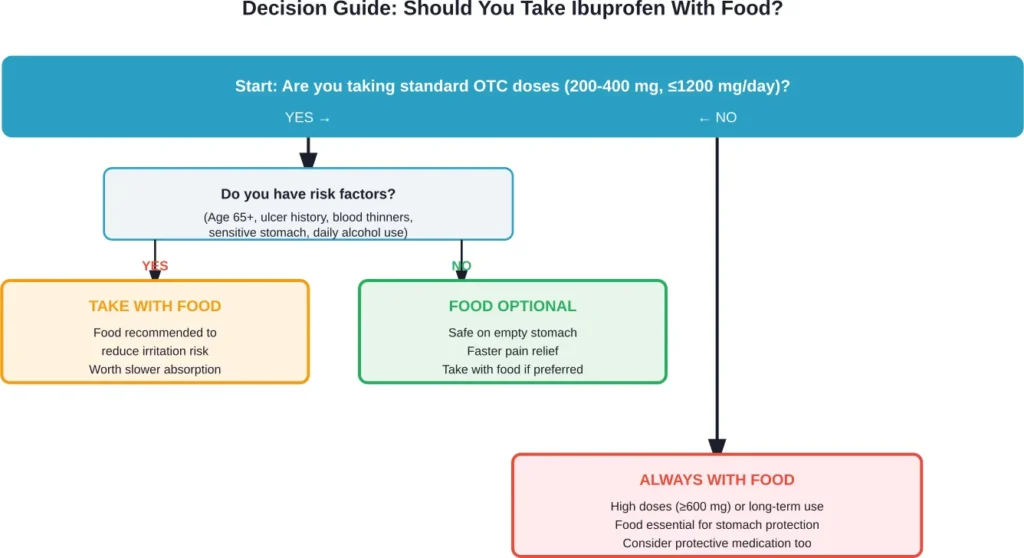
For healthy adults taking standard over-the-counter doses (up to 1200 mg daily) for short periods, taking ibuprofen without food is safe and provides faster pain relief. Food only addresses one component of how NSAIDs affect the stomach—the local irritation—while the systemic prostaglandin-blocking effect occurs regardless.
That said, taking ibuprofen with food makes sense for certain people and situations: higher doses, long-term use, older adults, those with stomach sensitivities, or anyone taking medications that increase bleeding risk.
The key is matching your approach to your specific circumstances. A young, healthy adult taking 400 mg for an occasional headache faces different risks than someone taking 800 mg three times daily for chronic arthritis.
Listen to your body. If taking ibuprofen on an empty stomach causes discomfort, add food next time. If you need pain relief quickly and have no risk factors, skipping food is fine.
Most importantly, use the lowest effective dose for the shortest time necessary, stay hydrated, and consult a healthcare provider for ongoing pain management needs.
Frequently Asked Questions
Daily ibuprofen use, even at low doses, increases gastrointestinal and cardiovascular risks over time. If you need daily pain relief, consult a doctor for proper evaluation and a safer long-term plan. Daily use warrants taking ibuprofen with food to minimize stomach irritation, but food doesn’t eliminate the increased risks from chronic use.
Ibuprofen taken on an empty stomach typically begins working within 20-30 minutes, with peak effects around 1-2 hours. Taking it with food delays absorption and can push the onset of pain relief to 30-60 minutes or longer, though the total pain-relieving effect remains similar.
A single 800 mg dose on an empty stomach isn’t an emergency for most people, though it’s not ideal. Drink a full glass of water and consider eating something light. Watch for stomach pain, nausea, or other discomfort. If you experience severe symptoms like stomach cramping, bloody stools, or vomiting, seek medical attention. Going forward, take higher doses with food.
Water is generally recommended for taking ibuprofen. While milk provides some buffering effect similar to food, it’s not necessary and doesn’t offer significant additional protection. Some people find milk helpful if they have mild stomach sensitivity. The most important thing is adequate fluid—at least 8 ounces—regardless of whether it’s water or milk.
Taking ibuprofen at bedtime on an empty stomach is safe for most healthy adults at standard doses. However, lying down shortly after taking it may increase the risk of heartburn or reflux. If taking it at bedtime, drink a full glass of water and remain upright for 15-30 minutes before lying down, or take it with a light snack.
Food delays how quickly ibuprofen works but doesn’t significantly reduce its overall effectiveness. The total amount of pain relief remains roughly the same—it just takes longer to kick in. For immediate pain relief (like a sudden headache), empty stomach is faster. For ongoing pain management where timing is less critical, taking it with food is fine.
You don’t need a large meal—a small snack is sufficient. Good options include crackers, toast, yogurt, a banana, or a small sandwich. Avoid very spicy or acidic foods if you have stomach sensitivity. The goal is simply to have some food present to buffer the medication’s contact with your stomach lining, not to consume specific nutrients or quantities.