
Quick Summary: Taking 2 Viagra tablets (200mg total) in 24 hours exceeds the maximum recommended daily dose of 100mg and significantly increases the risk of serious side effects including dangerously low blood pressure, vision problems, and prolonged erections. The standard safe dosing is one tablet per day, taken as needed, with effects lasting 4-5 hours.
The temptation to take more than prescribed Viagra is understandable when the first dose doesn’t deliver expected results. But here’s the thing—doubling up on sildenafil within a 24-hour window doesn’t double effectiveness. Instead, it multiplies risk.
According to NHS guidance, sildenafil tablets for erectile dysfunction come in strengths ranging from 25mg to 100mg, with the usual starting dose at 50mg. The critical rule: do not take it more than once a day.
What actually happens when someone takes 200mg of sildenafil in one day? The answer involves understanding how this medication works, what the maximum safe dosage looks like, and why exceeding it creates genuine medical risks.
Understanding Viagra Dosage Limits
Sildenafil citrate, sold under the brand name Viagra, is an effective and well-tolerated treatment for erectile dysfunction when used correctly. Research published on PubMed confirms that oral sildenafil taken as required—not more than once daily—significantly improves erection quality and satisfaction with sex life.
The standard dosing protocol is straightforward. The usual dose starts at 50mg, taken approximately 30 to 60 minutes before sexual activity. Depending on effectiveness and tolerance, doctors may increase this to 100mg or decrease it to 25mg.
But the maximum daily dose remains firm at 100mg within any 24-hour period.
| Dose Level | Typical Use | Maximum Frequency |
|---|---|---|
| 25mg | Starting dose for older adults or those with certain health conditions | Once per 24 hours |
| 50mg | Standard starting dose for most men | Once per 24 hours |
| 100mg | Maximum recommended dose | Once per 24 hours |
| 200mg | EXCEEDS SAFE LIMIT | NOT RECOMMENDED |
Taking 2 doses within 24 hours means ingesting anywhere from 100mg to 200mg total—the latter being double the maximum recommended amount.
How Viagra Works in Your System
Sildenafil works by improving blood flow to the penis, helping men achieve and maintain an erection when sexually stimulated. It belongs to a class of medications called PDE5 inhibitors.
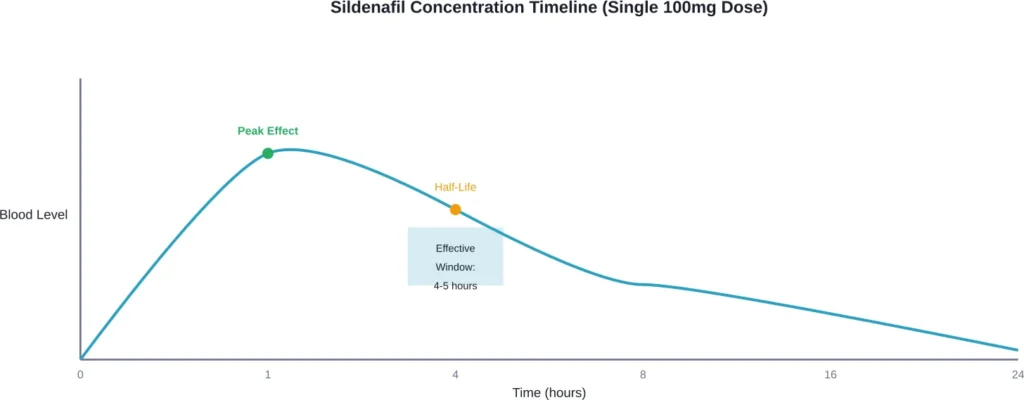
The medication typically starts working within 30 to 60 minutes and remains effective for around four to five hours. Some men may experience effects for longer periods, but this doesn’t mean the entire time involves an erection—sildenafil only facilitates blood flow when sexual arousal occurs.
The drug’s half-life (the time it takes for half the medication to leave the system) is approximately 3-5 hours. However, traces remain in the bloodstream for up to 24 hours, which is precisely why medical guidance emphasizes the once-daily limit.
What Happens When You Take Two Doses
Taking a second Viagra tablet before the first has cleared the system creates a cumulative effect. The blood concentration of sildenafil essentially stacks, pushing levels far beyond what’s considered safe or therapeutic.
Immediate Physical Effects
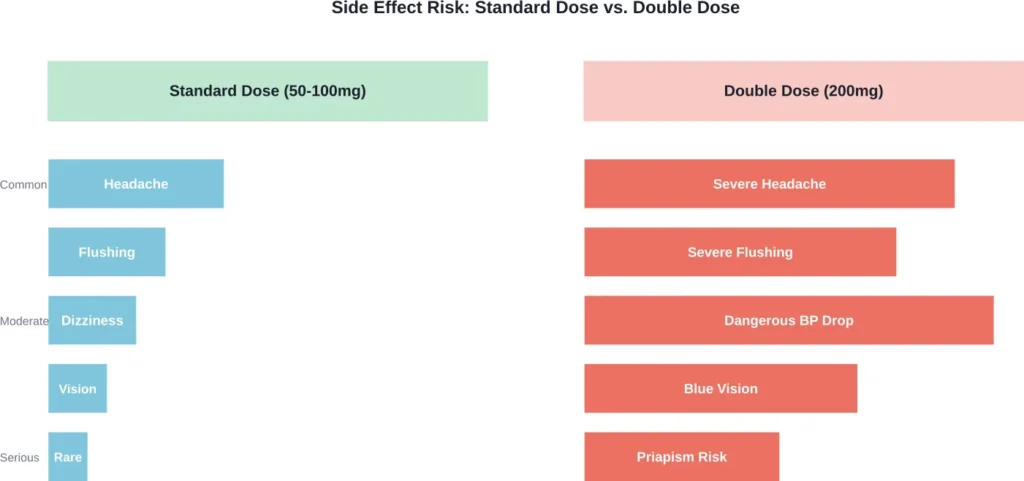
Research on sildenafil overdose, including a case study published on Academia.edu, documents common symptoms when the medication is taken excessively. The most frequently reported side effects include skin flushing, dizziness, headache, and tachycardia (rapid heart rate).
More concerning effects include blue-tinted vision (cyanopsia), a documented side effect that becomes more pronounced at higher doses. This occurs because sildenafil can affect a similar enzyme in the retina.
Cardiovascular Risks
The most serious risk involves blood pressure. Sildenafil works by dilating blood vessels—that’s how it improves blood flow to the penis. But this vasodilation affects the entire cardiovascular system.
At double the recommended dose, blood pressure can drop to dangerously low levels, particularly in men taking nitrate medications for heart conditions. This combination can be life-threatening.
That said, research examining sildenafil’s effects on myocardial infarction and sudden cardiac death found that when used appropriately, the medication doesn’t increase these risks. The keyword: appropriately.
Priapism Risk
Priapism—a painful erection lasting more than four hours—represents a medical emergency requiring immediate treatment. While rare at standard doses, the risk increases significantly when dosing limits are exceeded.
Untreated priapism can cause permanent damage to penile tissue, resulting in long-term erectile dysfunction. Real talk: the condition requiring emergency room intervention isn’t what anyone wants when seeking better sexual performance.
Why More Isn’t Better for Effectiveness
Here’s what many men don’t realize: taking 200mg of sildenafil won’t produce twice the erectile function of 100mg. The relationship between dose and effect isn’t linear.
Clinical trials have established that 100mg represents the optimal balance between effectiveness and safety. Studies show that sildenafil is effective and well-tolerated across various etiologies of erectile dysfunction, but increasing beyond the maximum dose doesn’t enhance results—it only amplifies adverse effects.
If the standard dose isn’t working, the issue often lies elsewhere. Several factors affect how Viagra works, including timing (taking it on a full stomach delays absorption), psychological factors, underlying health conditions, or medication interactions.
What to Do If You’ve Already Taken Two
Accidentally or intentionally taking two Viagra tablets within 24 hours requires immediate assessment. The response depends on total dosage and timing.
For someone who took two 25mg tablets (50mg total), the risk is minimal—this falls within normal dosing range. But two 100mg tablets create a genuine medical concern.
Immediate Steps
Contact a healthcare provider or poison control immediately if total intake exceeds 100mg. Don’t wait for symptoms to appear.
Monitor for warning signs including severe headache, chest pain, vision changes, irregular heartbeat, or an erection lasting more than two hours. Any of these warrant emergency medical attention.
Stay hydrated and avoid alcohol, which can compound blood pressure effects. Don’t take any additional medications without medical guidance.
Safe Alternatives and Solutions
When the prescribed Viagra dose isn’t delivering desired results, several legitimate options exist beyond simply taking more.
Dosage Adjustment Through Medical Consultation
A healthcare provider might appropriately increase the dose from 50mg to 100mg if the lower dose proves ineffective. This adjustment happens under medical supervision with proper evaluation.
Timing and Administration Optimization
Sildenafil works best when taken on an empty stomach or after a light meal. Taking it after heavy, high-fat meals significantly delays absorption and reduces effectiveness. Timing the dose 30-60 minutes before anticipated sexual activity, rather than immediately before, allows for optimal blood concentration.
Alternative ED Medications
Other PDE5 inhibitors like tadalafil (Cialis) offer different pharmacokinetic profiles. Tadalafil remains effective for up to 36 hours, providing a longer window. Research from UTMB found that both tadalafil and sildenafil are associated with significant health benefits beyond erectile function, including 34% reduction in mortality with tadalafil and 24% with sildenafil over a three-year follow-up period.
Daily low-dose options exist for men who prefer continuous medication rather than on-demand dosing.
| Medication | Duration of Effect | Dosing Frequency | Key Benefit |
|---|---|---|---|
| Sildenafil (Viagra) | 4-5 hours | As needed, max once daily | Fast-acting, well-studied |
| Tadalafil (Cialis) | Up to 36 hours | As needed or daily low-dose | Longer window, spontaneity |
| Vardenafil | 4-5 hours | As needed, max once daily | Works with food better |
Understanding Why Viagra Might Not Work
Studies cited by Cleveland Clinic show that nearly 40% of men are affected by erectile dysfunction by age 40, though the condition can occur at any age. When sildenafil doesn’t produce expected results, several factors might be at play.
Psychological factors—stress, anxiety, depression—can override physiological improvements from medication. Relationship issues or performance anxiety create barriers that medication alone can’t solve.
Underlying health conditions like diabetes, cardiovascular disease, or hormonal imbalances may require additional treatment beyond ED medication. Low testosterone, for instance, often needs hormone therapy alongside PDE5 inhibitors.
Medication interactions can reduce sildenafil effectiveness. Alpha-blockers, certain antifungals, and some antibiotics interfere with how the body processes sildenafil.
Long-Term Safety Considerations
Research confirms that sildenafil is safe and effective for long-term use when taken as directed. Research on ocular safety of sildenafil when administered chronically has examined the medication’s safety profile for extended treatment periods.
Evidence also shows that sildenafil remains effective and well-tolerated regardless of patient age, including men at least 75 years old, according to research examining efficacy and safety of sildenafil by age in men.
But these safety profiles apply specifically to recommended dosing. Chronic overdosing creates cumulative risks that negate the medication’s established safety record.
Frequently Asked Questions
No. The maximum safe dose is 100mg in any 24-hour period, regardless of spacing. Sildenafil remains in the system for up to 24 hours, so doses taken 12 hours apart create cumulative blood levels that exceed safe limits.
Consult a healthcare provider before increasing dosage. Effectiveness can be improved by taking the medication on an empty stomach, allowing adequate time (30-60 minutes) before sexual activity, and ensuring adequate sexual stimulation. The dose might be adjusted to 100mg if currently taking 50mg, but only under medical supervision.
While the effective window lasts 4-5 hours, sildenafil’s half-life means it takes approximately 24 hours for the medication to be substantially eliminated from the bloodstream. Traces may remain slightly longer depending on metabolism, age, and liver function.
No. The maximum approved dose for erectile dysfunction is 100mg. Doses of 200mg are not medically recommended and significantly increase the risk of serious adverse effects without improving efficacy.
Overdose symptoms include severe headache, extreme dizziness, fainting, vision changes (especially blue-tinted vision), irregular or rapid heartbeat, chest pain, and priapism (erection lasting more than four hours). Any of these symptoms require immediate medical attention.
Standard Viagra is designed for as-needed use, not daily administration. However, low-dose daily sildenafil (typically 25mg) exists as an alternative treatment approach for some men. Daily use requires medical supervision and prescription specifically for that purpose.
No. The duration of effectiveness is determined by the medication’s pharmacokinetics, not the dose amount. Taking 200mg instead of 100mg doesn’t extend the 4-5 hour effective window—it only increases side effect severity and risk.
Conclusion
Taking 2 Viagra tablets in 24 hours crosses the boundary from therapeutic use to dangerous overdose territory. The maximum 100mg daily limit exists for critical safety reasons, backed by extensive clinical research.
When sildenafil isn’t delivering expected results, the solution isn’t more medication—it’s better optimization of timing, addressing underlying factors, or exploring alternative treatments under medical guidance. Research from institutions like UTMB demonstrates that when used appropriately, erectile dysfunction medications offer significant health benefits beyond sexual function.
If current treatment isn’t working, schedule a consultation with a healthcare provider. Proper medical evaluation can identify why the medication isn’t effective and determine the safest, most effective path forward. The risks of self-medicating with excessive doses far outweigh any potential benefits.
Sexual health matters, but it should never come at the expense of overall health and safety.