

Quick Summary: Chitosan is a generally safe dietary supplement derived from shellfish, but excessive intake may cause digestive issues, interfere with fat-soluble vitamin absorption, and pose risks for people with shellfish allergies. Most research shows chitosan is well-tolerated at recommended doses (1-3 grams daily), though prolonged high-dose use could potentially affect nutrient absorption and liver function in susceptible individuals.
Chitosan has become a popular dietary supplement, marketed for weight loss and cholesterol management. This marine-derived polysaccharide comes from chitin—the same material that forms shellfish shells—and it’s showing up in everything from diet pills to agricultural applications.
But here’s the thing: just because something is natural doesn’t mean you can take unlimited amounts. So what actually happens when you get too much chitosan?
What Is Chitosan and How Does It Work?
Chitosan is a cationic polysaccharide obtained through partial deacetylation of chitin under high temperatures and alkaline conditions. Its chemical structure resembles cellulose, with hydroxyl groups at position C-2 replaced by acetamido groups.
The supplement works by binding to fats in the digestive system. Think of it like a sponge that soaks up dietary fat before your body can absorb it. This fat-binding property is why chitosan gets promoted as a weight-loss aid.
Research on chitosan nanoparticles has examined antimicrobial and immunomodulatory properties in various biomedical applications. Marine bio-sourced chitosan nanoparticles showed an 80% relative percent survival (RPS) in fish disease models, though these results are from animal studies rather than human clinical applications. The material’s primary amine groups give it the ability to neutralize reactive oxygen species in various microenvironments.
Recommended Chitosan Dosage: How Much Is Safe?
Most clinical studies use chitosan doses ranging from 1 to 3 grams daily. This amount appears generally safe for short-term use in healthy adults.
The challenge? There’s no universally established upper limit for chitosan supplementation. Unlike vitamins where we have clear toxicity thresholds, chitosan safety data remains relatively limited for long-term, high-dose use.
Generally speaking, supplement manufacturers recommend taking 1-1.5 grams before meals, twice daily. That puts you at the 2-3 gram daily range that most research has examined.
Digestive Side Effects of Too Much Chitosan
The most common problems from excessive chitosan intake affect your digestive system. And they can be pretty uncomfortable.
Gastrointestinal Distress
Taking too much chitosan frequently causes:
- Bloating and gas
- Constipation (the most reported side effect)
- Stomach cramps
- Nausea
- Diarrhea in some cases
Why does this happen? Chitosan is essentially a fiber that doesn’t get digested. When you overload your system with it, you’re asking your gut to process large amounts of indigestible material.
The constipation issue makes sense when you consider that chitosan binds not just to fats but also to water. Too much can create a thick, gel-like mass in your intestines that slows everything down.
Fat-Soluble Vitamin Depletion
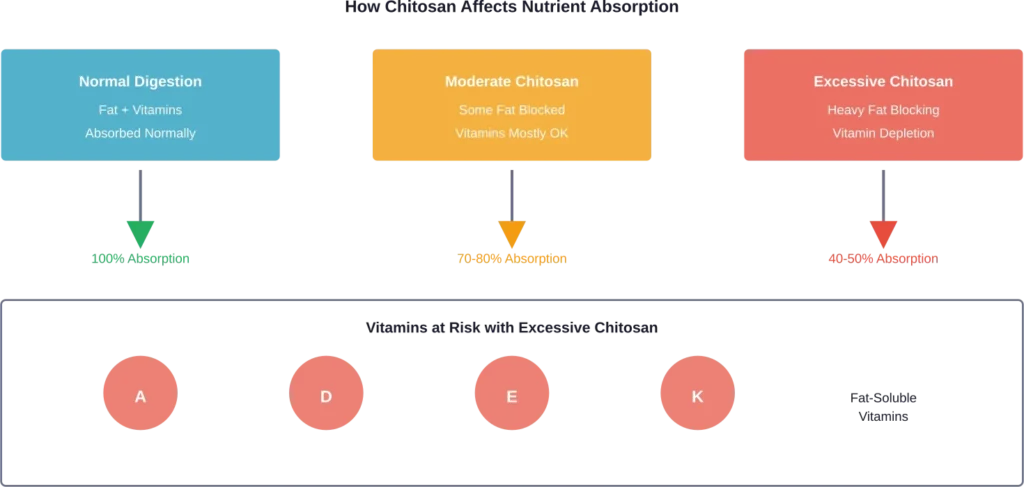
Here’s where things get more serious. Chitosan doesn’t discriminate—it binds to all fats, including the ones carrying essential vitamins.
Vitamins A, D, E, and K are fat-soluble. Your body needs dietary fat to absorb them properly. When chitosan traps too much fat, it can take these vitamins along for the ride—straight out of your system before you absorb them.
Over time, this could lead to deficiencies. Vitamin D deficiency alone has been linked to bone health problems, immune dysfunction, and mood disorders. Vitamin K deficiency can affect blood clotting.
Mineral Absorption Interference
Chitosan doesn’t just bind fats. Its positive charge means it can also interact with negatively charged minerals.
Research on chitosan combined with polyaluminum chloride in water treatment applications showed flocculant mixtures reduced copper ion concentrations by 58%, demonstrating chitosan’s mineral-binding capacity. While that study focused on water treatment, it demonstrates chitosan’s mineral-binding capacity.
Excessive chitosan intake could potentially interfere with absorption of:
- Calcium
- Magnesium
- Iron
- Zinc
The clinical significance? Prolonged use at high doses might contribute to mineral deficiencies, particularly in people whose diets are already borderline low in these nutrients.
Potential Organ Toxicity: What Research Shows
Here’s where we need to look at the research carefully. Most human studies on chitosan show it’s well-tolerated, but animal research raises some questions about high-dose effects.
Liver and Muscle Concerns
Research on hepatic and skeletal muscle effects has been examined in animal models, though detailed results are limited in available summaries. The fact that researchers are investigating potential mitochondrial toxicity suggests this is an area that deserves attention.
Research has examined biotinylated chitosan nanoparticle formulations for toxicity in animal models, with some formulations showing favorable safety profiles under specific tested conditions. But the research focused on specific formulations, not massive oral doses of standard chitosan.
Nanoparticle Formulations
Chitosan nanoparticles represent a different category worth mentioning. Research has examined mesoporous silica nanoparticle formulations for potential drug delivery applications in animal models.
While chitosan nanoparticle-based therapies showed promising results—including an 80% relative percent survival in fish disease models—the safety profile of engineered nanoparticles differs from bulk chitosan supplements.
That said, studies on chitosan/zinc oxide nanocomposites indicated minimal organ-specific toxicity when properly formulated, described as “safe” for intended applications.
Special Risk Groups: Who Should Avoid High Doses?
Some people face higher risks from excessive chitosan intake.
Shellfish Allergy Sufferers
Chitosan comes from shellfish shells. While the processing removes most proteins (the actual allergen), trace amounts might remain. People with severe shellfish allergies could experience allergic reactions.
Symptoms might range from mild (hives, itching) to severe (anaphylaxis in extreme cases). Real talk: if you have a shellfish allergy, chitosan probably isn’t worth the risk.
People on Blood Thinners
Chitosan might affect how blood-thinning medications work. The mechanism isn’t entirely clear, but it could relate to vitamin K absorption interference or direct interactions with the drugs.
Anyone taking warfarin or similar anticoagulants should consult their doctor before using chitosan supplements.
Pregnant and Breastfeeding Women
There’s insufficient safety data for chitosan use during pregnancy or breastfeeding. Many experts suggest avoiding it during these periods as a precautionary measure.
Drug Interaction Risks
Chitosan can potentially interfere with medication absorption. Its fat-binding properties might affect fat-soluble drugs, and its charge could interact with various pharmaceutical compounds.
Medications that might be affected include:
- Fat-soluble vitamins and supplements
- Some antibiotics
- Thyroid medications
- Diabetes medications
The safest approach? Take chitosan at least 2-4 hours apart from any medications, and inform healthcare providers about supplement use.
| Chitosan Dose | General Safety | Common Effects | Risk Level |
|---|---|---|---|
| 1-3 grams/day | Well-tolerated | Mild digestive changes | Low |
| 3-6 grams/day | Moderately safe short-term | Constipation, bloating, possible vitamin interference | Moderate |
| 6+ grams/day | Not recommended | Significant digestive issues, nutrient depletion risk | High |
| Long-term high dose | Poorly studied | Unknown organ effects, deficiency risk | Unknown/High |
Signs You’re Taking Too Much Chitosan
How do you know if you’ve overdone it? Watch for these warning signs:
Immediate symptoms: Severe constipation that doesn’t respond to increased water intake, persistent bloating, stomach pain, greasy or floating stools (indicating excessive fat in stool).
Longer-term signs: Fatigue (possible vitamin deficiency), easy bruising (vitamin K deficiency), bone pain (vitamin D or calcium issues), vision problems (vitamin A deficiency).
If you experience these symptoms while taking chitosan, reduce your dose or stop taking it. Consult a healthcare provider if symptoms persist.
What to Do If You’ve Taken Too Much
Accidentally took way more chitosan than recommended? Here’s what to do.
First, don’t panic. Acute chitosan overdose isn’t typically life-threatening. The most likely scenario involves uncomfortable digestive symptoms for 24-48 hours.
Steps to take:
- Stop taking chitosan immediately
- Drink plenty of water to help move things through your system
- Eat normally—don’t try to fast or restrict food
- Consider taking a multivitamin to offset potential nutrient binding
- Monitor symptoms and seek medical attention if severe abdominal pain, vomiting, or allergic reactions occur
For ongoing high-dose use, work with a healthcare provider to check vitamin and mineral levels through blood tests.
Balancing Benefits and Risks
Chitosan offers potential benefits for weight management and cholesterol reduction. Some research supports modest effects when combined with calorie restriction.
But the key word is “modest.” Chitosan isn’t a miracle supplement, and taking more doesn’t necessarily mean better results.
The research supporting chitosan’s efficacy typically uses standard doses (1-3 grams daily). There’s no evidence that mega-doses provide superior benefits—but there is evidence they cause more side effects.
Sound familiar? It’s the same pattern we see with vitamins and minerals. More isn’t always better, and sometimes it’s actively worse.
Frequently Asked Questions
Current research hasn’t established clear liver toxicity from standard chitosan doses in humans. Animal studies have examined hepatic effects, but clinical evidence of liver damage in people taking recommended doses is lacking. However, anyone with existing liver conditions should consult a doctor before using chitosan supplements.
Chitosan isn’t absorbed by the body—it passes through the digestive system and is eliminated in feces, typically within 24-48 hours. Because it’s not absorbed, it doesn’t accumulate in tissues or organs like some supplements might.
Many people take chitosan daily at recommended doses (1-3 grams) without apparent problems in short-term studies. However, long-term daily use (months to years) hasn’t been extensively studied. The main concern is potential vitamin and mineral depletion over time.
Chitosan could theoretically reduce absorption of oral contraceptives since it binds fats and some medications. To be safe, take chitosan at least 2-4 hours apart from birth control pills, and consider using backup contraception if taking high doses of chitosan.
Chitin is the raw material found in shellfish shells and insect exoskeletons. Chitosan is derived from chitin through a chemical process called deacetylation. Chitosan is more bioactive and soluble than chitin, which is why it’s used in supplements.
There’s no strong evidence linking chitosan to kidney stone formation. However, if chitosan significantly reduces calcium absorption, the body might pull calcium from bones, and changes in calcium metabolism could theoretically affect kidney stone risk in susceptible individuals.
Some research suggests chitosan might help with blood sugar control, but it could also interact with diabetes medications. Diabetics should consult their healthcare provider before using chitosan, and monitor blood sugar levels carefully when starting supplementation.
The Bottom Line
Too much chitosan primarily causes digestive discomfort and nutrient absorption issues. While it’s generally safe at recommended doses (1-3 grams daily), excessive intake can lead to constipation, vitamin depletion, and mineral absorption problems.
The research shows chitosan is well-tolerated in moderate amounts for short-term use. But we don’t have robust long-term safety data for high-dose supplementation.
If you’re considering chitosan supplements, stick to recommended dosages, take them with plenty of water, and consider supplementing with fat-soluble vitamins if using long-term. And as with any supplement, check with a healthcare provider—especially if you have allergies, take medications, or have existing health conditions.