
Quick Summary: Washing your hair every day is generally safe if you use the right products and technique. According to medical research published in the NIH’s Skin Appendage Disorders journal, daily washing doesn’t harm hair health—what matters most is using gentle, sulfate-free shampoos suited to your hair type. Daily washing may actually benefit those with oily scalps or active lifestyles, while others may prefer washing 2-3 times weekly based on individual needs.
There’s a persistent myth that washing hair daily will strip it of natural oils and cause damage. But here’s the thing—the science tells a different story.
Research from medical journals shows that wash frequency itself is not inherently harmful. What matters is how and what products are used during washing.
The American Academy of Dermatology confirms that proper hair care starts with understanding individual hair type and scalp condition. Some people thrive with daily washes, while others do better spacing them out.
The Science Behind Daily Hair Washing
A comprehensive study published in the journal Skin Appendage Disorders examined the impact of shampoo wash frequency on scalp and hair conditions. The research revealed surprising insights about how often people actually wash their hair.
According to epidemiological data from the study published in Skin Appendage Disorders (2021), washing patterns vary by age group:
| Age Range | Daily (7×/week) | 5-6×/week | 3-4×/week | 2×/week | ≤1×/week |
|---|---|---|---|---|---|
| 18-30 years | 68% | 79% | 20% | 2% | 0% |
| 31-45 years | 24% | 15% | 27% | 15% | 7% |
| 46-60 years | 7% | 6% | 43% | 55% | 56% |
| 61-75 years | 1% | 0% | 10% | 28% | 37% |
Younger adults wash significantly more frequently than older demographics. This pattern reflects lifestyle factors, activity levels, and changing scalp sebum production with age.
The research emphasized that neither extreme—overwashing nor underwashing—is inherently problematic. Overcleaning can lead to surface damage if harsh products are used, while undercleaning may contribute to buildup and scalp issues.
What Actually Happens to Hair With Daily Washing
So what physiological changes occur when hair is washed every day?
Scalp Oil Production and Balance
Contrary to popular belief, frequent washing doesn’t train the scalp to produce more oil. According to dermatological research, sebum production is regulated by hormones and genetics, not washing frequency.
The scalp naturally secretes sebum to protect and moisturize the skin. This oily substance makes hair feel greasy over time.
Daily washing removes this accumulated oil, which some hair types benefit from while others don’t need as frequently.
Hair Shaft and Cuticle Effects
The outer layer of each hair strand—the cuticle—can be affected by washing, but the impact depends almost entirely on product choice and technique.
Gentle, sulfate-free shampoos maintain cuticle integrity even with daily use. Harsh detergents, hot water, and aggressive scrubbing cause the real damage.
Research published in the International Journal of Trichology indicates that proper shampooing technique matters more than frequency for maintaining hair health.
Scalp Condition and Microbiome
The scalp maintains a delicate balance of bacteria and fungi that contribute to overall health. According to studies on scalp transepidermal water loss, appropriate washing frequency helps maintain this balance.
For women wearing hijab, research from Universitas Indonesia found that hair wash frequency correlated with scalp hydration levels, suggesting that individual lifestyle factors should guide washing schedules.
Who Should Wash Hair Daily (And Who Shouldn’t)
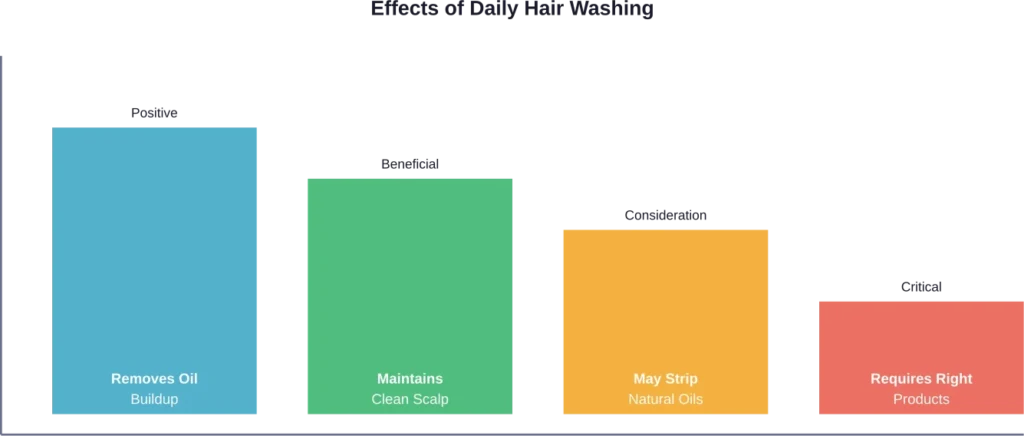
Not everyone benefits equally from daily washing. Hair type, scalp condition, and lifestyle all play roles.
Good Candidates for Daily Washing
Daily shampooing works well for:
- People with fine or thin hair that shows oil quickly
- Those with oily scalps or seborrheic dermatitis
- Active individuals who exercise daily and sweat heavily
- People living in humid climates or polluted environments
- Those who use heavy styling products regularly
The American Academy of Dermatology notes that oily hair types benefit from frequent cleansing to prevent buildup and maintain volume.
Who Should Wash Less Frequently
Spacing out washes makes sense for:
- People with dry, coarse, or textured hair
- Those with color-treated or chemically processed hair
- Individuals with dry scalp conditions
- People with very long hair that tangles easily
- Those over 50, when sebum production naturally decreases
Research on aging changes in hair from MedlinePlus indicates that hair follicles produce less melanin and sebum with age, making frequent washing unnecessary for many older adults.
The Product Matters More Than the Frequency
Here’s what medical research emphasizes repeatedly: what products are used matters significantly more than how often hair is washed.
Gentle Shampoo Characteristics
Daily washing requires gentle formulations. Look for shampoos that:
- Are sulfate-free (avoid sodium lauryl sulfate and sodium laureth sulfate)
- Have a balanced pH (4.5-5.5, close to hair’s natural pH)
- Contain moisturizing ingredients like glycerin or panthenol
- Avoid harsh detergents and alcohol
The distinction between daily-safe and occasional-use shampoos is critical. Clarifying shampoos and volumizing formulas often contain stronger cleansers suitable for weekly, not daily, use.
Proper Washing Technique
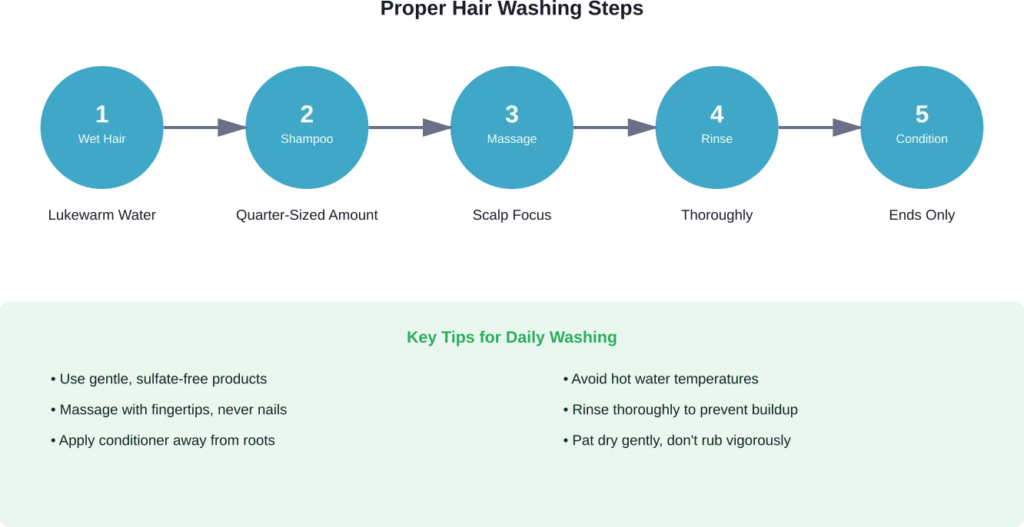
According to dermatologist recommendations from the American Academy of Dermatology, proper technique includes:
- Wetting hair thoroughly with lukewarm (not hot) water
- Using a quarter-sized amount of shampoo for short to medium hair
- Massaging scalp gently with fingertips, not nails
- Focusing cleanser on the scalp, not hair lengths
- Rinsing completely—leftover product causes buildup
- Applying conditioner only to mid-lengths and ends
- Using cool water for the final rinse to seal cuticles
Hot water and aggressive scrubbing cause more damage than daily washing itself.
Research on Hair Conditions and Washing Frequency
Medical studies have examined specific hair conditions in relation to washing patterns.
Frontal Fibrosing Alopecia Study
Interesting findings emerged from case-control research on frontal fibrosing alopecia (FFA) published in 2025. The study found that daily washing was actually protective against this hair loss condition.
In dichotomized models, daily washing showed an adjusted odds ratio of 0.31 (p = 0.012), suggesting frequent cleansing was protective against FFA risk. Meanwhile, cosmetic procedures and leave-in products increased risk significantly.
This challenges assumptions that frequent washing harms hair follicles.
Scalp Oxidative Stress
Research published in the International Journal of Trichology examined how scalp condition impacts hair growth via oxidative stress. The findings emphasized that maintaining a clean, healthy scalp environment supports hair retention.
Buildup from infrequent washing can contribute to scalp inflammation and oxidative stress, potentially affecting the hair growth cycle.
Alternatives and Adjustments for Daily Washers
For those who feel they need daily cleansing but want to minimize potential issues, several strategies help.
Co-Washing Method
Conditioner-only washing (co-washing) cleanses hair gently without traditional shampoo. This works particularly well for dry or curly hair types.
Alternating Product Strength
Some people alternate between gentle daily shampoos and even milder cleansing conditioners. This provides variety while maintaining cleanliness.
Scalp-Only Washing
Focusing shampoo exclusively on the scalp and letting it rinse through hair lengths minimizes dryness in the ends while keeping roots fresh.
Dry Shampoo for Extension
According to the American Academy of Dermatology, dry shampoo absorbs oil between washes. However, it shouldn’t replace regular shampooing with water entirely, as buildup from dry shampoo alone can lead to conditions like seborrheic dermatitis.
Signs Daily Washing Isn’t Working
How can someone tell if their daily washing routine is causing problems?
Watch for these indicators:
- Persistent dryness or brittle texture despite conditioning
- Increased breakage or split ends
- Scalp irritation, redness, or itching
- Hair becoming increasingly difficult to manage
- Color fading rapidly (for dyed hair)
These symptoms suggest either product choice needs adjustment or washing frequency should decrease.
On the flip side, signs that daily washing is beneficial include:
- Hair maintains volume throughout the day
- Scalp feels comfortable without itching
- No visible flaking or excessive oil
- Hair styles hold better
- Overall scalp and hair appear healthy
Frequently Asked Questions
No, daily washing does not cause hair loss. Normal daily hair shedding occurs, and these hairs often collect during washing, making it seem like shampooing causes loss. Medical research shows that daily washing with gentle products doesn’t damage follicles or increase shedding.
No, this is a myth. Sebum production is controlled by hormones and genetics, not washing patterns. Dermatological research confirms that reducing wash frequency doesn’t retrain oil glands to produce less sebum.
Generally speaking, sweat and increased oil production from exercise make daily washing beneficial for most active individuals. Use a gentle, sulfate-free shampoo and focus on the scalp rather than hair lengths to prevent dryness.
This varies by individual factors. Many experts suggest most people should wash at least 2-3 times weekly to prevent buildup, though some hair types tolerate less frequent washing. The epidemiological data shows washing patterns ranging from daily to weekly across different populations.
No. The scalp continuously produces sebum. While shampooing removes oil temporarily, production resumes immediately. Using gentle products ensures the scalp’s protective barrier remains intact even with daily cleansing
Either time works—it depends on personal preference and schedule. Morning washing provides fresh styling, while evening washing removes daily buildup before bed. Neither timing is inherently better for hair health.
For some dandruff types, yes. Seborrheic dermatitis, according to MedlinePlus, can benefit from frequent washing with appropriate anti-dandruff shampoos. However, overly dry scalps may worsen with daily washing, so individual assessment matters.
Making the Right Choice for Your Hair
The bottom line? Daily hair washing isn’t inherently harmful or beneficial—it’s highly individual.
Medical research consistently shows that product selection, washing technique, and understanding personal hair needs matter far more than strict frequency rules.
Younger adults with fine, oily hair often benefit from daily washing. Those with dry, textured, or chemically treated hair typically do better with 2-3 washes weekly. Active lifestyles, climate, and styling product use all influence optimal frequency.
The key is listening to what scalp and hair communicate. Comfortable, healthy-looking hair indicates the current routine works. Dryness, irritation, or excessive oil suggests adjustments are needed.
Experiment with gentle, sulfate-free products if washing daily. Focus cleansing on the scalp, condition only the ends, and use lukewarm water.
And remember—there’s no universal “correct” answer. What matters is finding the washing frequency and products that keep individual hair looking and feeling its best.
Start paying attention to how hair responds over a few weeks with different approaches. That hands-on observation provides better guidance than any rigid rule about daily washing.