

Quick Summary: Holding in poop occasionally is generally safe, but doing it regularly can lead to serious complications like chronic constipation, fecal impaction, and loss of bowel control. When stool remains in the colon too long, water gets reabsorbed, making it harder and more difficult to pass. Over time, frequent holding can weaken the signals between the rectum and brain, potentially causing fecal incontinence.
Everyone has experienced that moment when nature calls but there’s no bathroom in sight. Maybe there’s a long line at the restroom, or perhaps the meeting just started. While holding in poop occasionally won’t cause lasting damage, making it a regular habit can lead to serious digestive complications.
The gastrointestinal tract is a complex system, and disrupting its natural rhythm has consequences. Understanding what happens inside the body when bowel movements are delayed helps explain why listening to those urges matters more than most people realize.
What Normally Happens During a Bowel Movement
The digestive process ends with waste material moving through the colon and into the rectum. According to medical sources, normal stool is typically made up of about 75% water, with the remainder consisting of bacteria, fiber, and other waste products.
When stool enters the rectum, nerve endings send signals to the brain indicating the need for a bowel movement. The puborectalis muscle and external anal sphincter work together to control when stool is released. These muscles relax during defecation, allowing waste to pass through.
This coordination between the brain, nerves, and muscles creates a sophisticated system. But what happens when someone repeatedly ignores those signals?
The Immediate Effects of Holding in Poop
When a bowel movement is delayed, stool remains in the colon longer than intended. During this time, the colon continues doing what it does best—absorbing water and nutrients.
As more water gets reabsorbed from the stool, it becomes progressively harder and drier. This makes the next bowel movement more difficult and potentially painful to pass. The stool that was soft and easy to eliminate becomes a hardened mass.
Here’s the thing though—the body is remarkably adaptable. Occasional holding doesn’t typically cause problems. The digestive system can handle these temporary delays without lasting consequences.
When Holding Becomes a Chronic Problem
Regular postponement of bowel movements creates a cascade of complications. The most immediate risk is constipation, which according to the NIDDK, constipation is characterized by having fewer than three bowel movements a week, along with stools that are hard, dry, or difficult to pass.
Chronic constipation affects a significant portion of the population. According to the University of Utah Health, chronic constipation is present in up to 27% of the population and is more common in women and older adults. The Tufts University Nutrition Letter reports that chronic constipation affects up to 40% of adults over age 60.
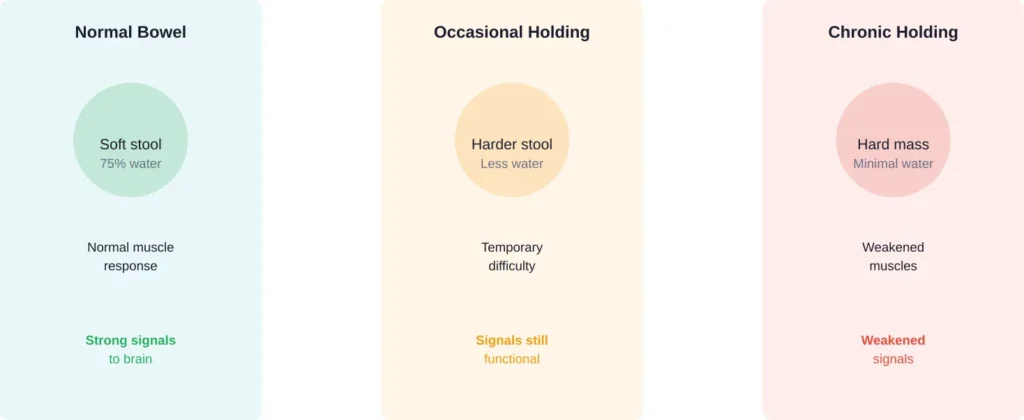
But the problems don’t stop at constipation. When holding becomes habitual, the body starts losing the natural urge to defecate. The rectum stretches to accommodate the increasing stool volume, and nerve sensitivity decreases.
Fecal Impaction: A Serious Complication
One of the most severe consequences of chronic holding is fecal impaction. This occurs when a hard, dry mass of stool becomes stuck in the colon or rectum and cannot be pushed out through normal bowel movements.
Fecal impaction requires medical intervention. Sometimes newer, liquid stool can leak around the impacted mass, creating what appears to be diarrhea—but the underlying problem is severe constipation.
The condition can cause significant abdominal pain, bloating, and discomfort. In severe cases, intestinal complications can escalate to dangerous levels requiring emergency care.
The Paradox of Fecal Incontinence
Sound familiar? People who regularly hold in their poop may eventually lose control over their bowel movements entirely. This condition, called fecal incontinence or bowel incontinence, involves accidental passing of solid or liquid stool.
The connection seems counterintuitive. How does holding in stool lead to losing control? The answer lies in muscle and nerve damage.
Chronic stretching of the rectum weakens the muscles that control defecation. The puborectalis muscle and external anal sphincter may lose tone and strength. Additionally, the nerve pathways between the rectum and brain become less responsive.
According to medical sources, fecal incontinence can manifest in different ways. Some people experience sudden urges they cannot control. Others leak stool without sensing the need to go at all.
Impact on Children and Stool Withholding
Stool withholding is particularly common in childhood and can start very soon after birth. Medical research has documented stool withholding in children as presenting with various symptoms.
Children may hold in poop for various reasons—fear of painful bowel movements, discomfort with unfamiliar bathrooms, or being too engaged in play to stop. When this becomes a pattern, it creates a vicious cycle where harder stools make bowel movements more painful, leading to more withholding.
Some medical research indicates that children with autism spectrum disorder may establish patterns of holding urine and stool.
Additional Health Complications
The ripple effects of chronic stool retention extend beyond the digestive system. Medical research has identified fecal retention as a common causative factor in several conditions.
Hemorrhoids often develop from straining during bowel movements. When stool becomes hard from prolonged holding, the increased straining pressure can cause swollen blood vessels in the rectal area.
Interestingly, the NIDDK notes that regularly holding urine—a related behavior—can wear out bladder muscles and increase the risk of urinary retention and urinary tract infections. Similar principles apply to bowel function.
| Complication | Cause | Severity |
|---|---|---|
| Constipation | Water reabsorption from stool | Mild to Moderate |
| Fecal Impaction | Hardened stool mass becomes stuck | Severe |
| Fecal Incontinence | Muscle and nerve damage | Moderate to Severe |
| Hemorrhoids | Straining during bowel movements | Mild to Moderate |
| Rectal Prolapse | Chronic straining weakens support | Severe |
How Long Can Someone Safely Hold It?
There’s no universal answer to how long is too long. Bowel movement frequency varies widely among healthy individuals. According to gastroenterology experts, some people have several bowel movements daily while others go only a few times per week.
According to the NIDDK, constipation is characterized by having fewer than three bowel movements a week. However, this varies by individual baseline patterns.
Real talk: occasional holding for a few hours won’t cause problems for most people. The danger lies in making it a regular habit or consistently ignoring the urge for extended periods.
When holding becomes frequent or when bowel movements are routinely delayed for days, the risks multiply significantly.
Recognizing When to Seek Medical Care
Certain symptoms indicate that holding poop has progressed beyond minor inconvenience into medical territory. Abdominal pain that’s severe or persistent warrants evaluation.
Other warning signs include:
- Inability to pass stool despite strong urges
- Accidental stool leakage
- Blood in stool
- Severe bloating or abdominal distension
- Constipation lasting more than three weeks
Chronic idiopathic constipation is a common clinical diagnosis requiring proper evaluation and management. Treatment options range from dietary modifications and over-the-counter supplements to prescription medications.
Prevention and Healthy Bowel Habits
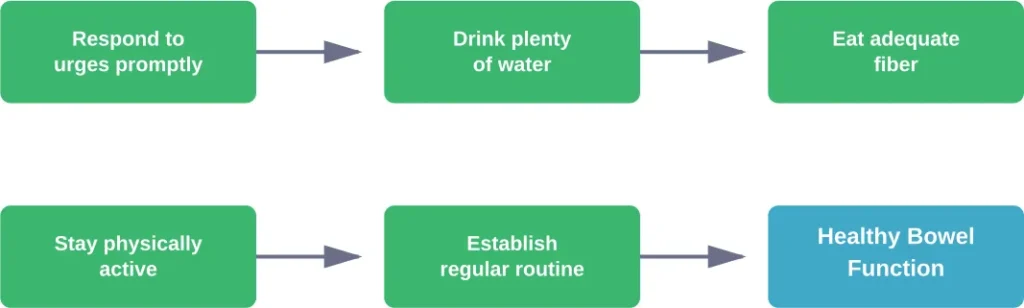
The best approach involves responding to the body’s signals promptly. When the urge to defecate occurs, heading to the bathroom soon prevents complications.
Certain lifestyle factors support healthy bowel function. Adequate hydration keeps stool soft. The NIDDK emphasizes that water content determines stool consistency, so drinking sufficient fluids matters.
Dietary fiber helps maintain regular bowel movements. Joint clinical practice guidelines recommend evidence-based treatments for chronic constipation, including magnesium oxide and senna as first-line agents.
Physical activity also promotes healthy digestion and regular bowel movements. Even moderate exercise helps stimulate intestinal contractions.
Special Considerations for Certain Populations
Some groups face particular challenges with bowel management. Older adults experience higher rates of chronic constipation due to factors like reduced mobility, medications, and age-related changes in digestive function.
People with certain medical conditions may have limited bowel control even without a history of chronic holding. Conditions affecting nerves or muscles, such as hereditary spastic paraplegia, can cause both constipation and fecal incontinence.
Healthcare workers, teachers, and others with limited bathroom access during work hours face occupational challenges. Finding strategies to access bathrooms during the workday becomes essential for long-term digestive health.
Frequently Asked Questions
Holding poop for a few hours occasionally is generally safe for most people. The risk comes from making it a regular habit or consistently delaying bowel movements for extended periods. If someone routinely goes more than three days without a bowel movement, constipation may be developing and medical advice should be sought.
Chronic, repeated holding can lead to lasting complications including weakened bowel muscles, reduced nerve sensitivity, and chronic constipation. In severe cases, this can result in fecal incontinence where bowel control is permanently affected. However, occasional holding typically doesn’t cause permanent damage.
The colon’s primary function includes absorbing water from waste material. When stool remains in the colon longer than normal, more water gets reabsorbed, making the stool progressively harder and drier. According to medical sources, normal stool is about 75% water, but this percentage decreases the longer stool is retained.
Fecal impaction occurs when a hard, dry mass of stool becomes stuck in the colon or rectum and cannot be passed through normal bowel movements. This is a serious condition requiring medical intervention, as the impacted stool won’t pass on its own. Symptoms include severe abdominal pain, bloating, and sometimes liquid stool leaking around the blockage.
Yes, stool withholding is particularly problematic in children and can start very early in life. When children repeatedly hold in poop, often due to fear of painful bowel movements, it creates a cycle where stools become harder and more painful to pass. Medical research has documented cases where chronic stool withholding caused significant health issues in children.
Warning signs include severe or persistent abdominal pain, inability to pass stool despite strong urges, accidental stool leakage, blood in stool, severe bloating, or constipation lasting more than three weeks. Any of these symptoms warrant medical evaluation.
Yes, chronic stool retention can contribute to hemorrhoids from straining, and in severe cases may affect urinary function. The NIDDK notes that people who regularly hold urine face increased risks of urinary retention and infections, and similar holding behaviors with bowel movements create analogous digestive complications.
Conclusion: Listen to What the Body Says
The digestive system sends clear signals when it’s time for a bowel movement. While modern life sometimes makes responding to those signals inconvenient, regularly ignoring them carries real health consequences.
Occasional holding won’t cause lasting problems for most people. But when it becomes a pattern—whether from work constraints, bathroom anxiety, or simple habit—the risks escalate from minor constipation to serious complications like fecal impaction and incontinence.
The solution involves prioritizing bowel health through responsive bathroom habits, adequate hydration, sufficient fiber intake, and regular physical activity. For anyone experiencing persistent constipation, abdominal pain, or changes in bowel control, consulting a gastroenterologist provides access to effective treatments.
The body knows what it needs. Listening to those signals prevents a cascade of complications that are far more difficult to address than simply heading to the bathroom when nature calls.