

Quick Summary: Eating honey daily may provide antioxidants, support wound healing, and offer natural antibacterial properties. However, honey is still a free sugar — consuming more than 1-2 tablespoons daily can increase calorie intake, raise blood sugar levels, and contribute to weight gain. Moderation is key to enjoying honey’s benefits without exceeding recommended daily sugar limits.
Honey has been a kitchen staple for thousands of years. It’s drizzled on toast, stirred into tea, and praised for its natural sweetness. But does eating honey every day actually benefit your health, or is it just another form of sugar?
The answer isn’t simple. According to a comprehensive review published in Nutrients, honey contains antioxidant, anti-inflammatory, and antimicrobial compounds — mainly phenolic compounds — that distinguish it from regular table sugar. Worldwide, 1,779.6 metric tons of honey are produced annually, with China producing nearly 28% of the global supply.
Here’s the thing though — honey is still classified as a free sugar by the WHO. That means it counts toward your daily sugar limit, just like white sugar or corn syrup. So what actually happens to your body when you eat honey daily?
The Nutritional Reality of Honey
Honey is approximately 95-99% sugar by dry matter. Natural honey contains about 200 substances, including amino acids, vitamins, minerals, and enzymes, but sugar and water dominate its composition.
The principal carbohydrate constituents are fructose (averaging 32-56%) and glucose, with smaller amounts of other sugars. One teaspoon of honey (7g) contains roughly 21 calories and 6 grams of sugar — compared to regular sugar’s 16 calories and 4 grams per teaspoon.
| Nutrient | Honey (1 tsp / 7g) | White Sugar (1 tsp / 4g) |
|---|---|---|
| Calories | 21 | 16 |
| Total Carbs | 6g | 4g |
| Sugars | 6g | 4g |
| Protein | 0g | 0g |
| Fat | 0g | 0g |
| Vitamins/Minerals | Trace amounts | None |
Real talk: honey does contain trace vitamins and minerals, but in such small quantities that you’d need to consume massive amounts to meet daily requirements. The British Heart Foundation notes that honey provides negligible nutritional value beyond calories.
Health Benefits: What the Research Actually Shows
Despite being a free sugar, research from NIH sources demonstrates several beneficial properties when honey is consumed in controlled amounts.
Antioxidant and Anti-Inflammatory Effects
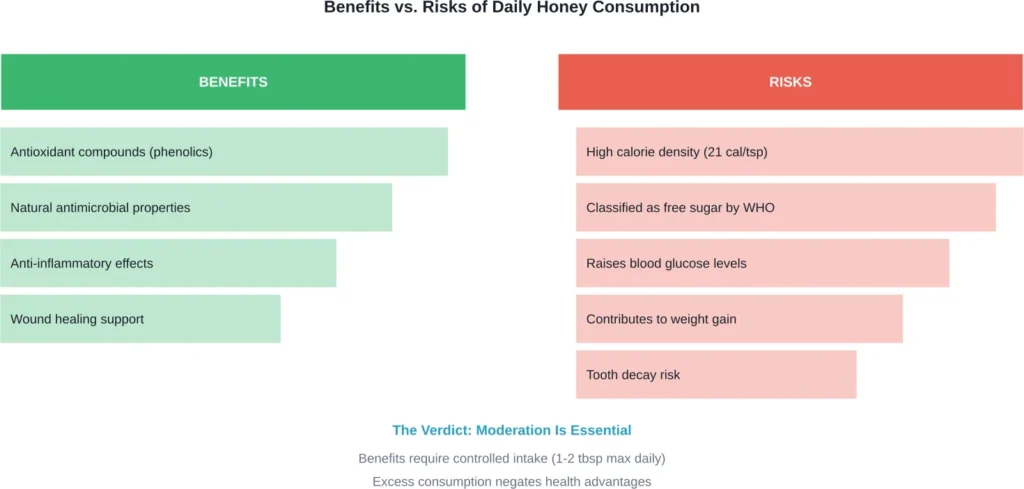
A 2021 study in BMC Complementary Medicine and Therapies confirmed that honey contains phenolic compounds that perform synergistically as antioxidants. These compounds may help reduce inflammation, though the effect depends heavily on honey type and origin.
Most honeys worldwide share 80% of physical properties and chemical composition, but variations exist. Darker honeys generally contain higher concentrations of antioxidants than lighter varieties.
Antimicrobial Properties
Research published in the Iranian Journal of Basic Medical Sciences documented honey’s ability to help kill bacteria, viruses, and fungi. This antimicrobial activity has made honey useful for wound care and topical applications.
One laboratory study recorded improved hemoglobin concentration and elevated hematocrit in subjects consuming honey, though these were controlled research conditions — not daily tablespoon consumption at home.
Cardiovascular and Metabolic Considerations
A systematic review and meta-analysis in Nutrition Reviews (2022) examined honey’s effect on cardiometabolic risk factors using the GRADE approach. The findings were nuanced: honey is generally regarded as healthier than refined sugars, but it’s still a free sugar implicated in obesity and diabetes epidemics.
Cardiovascular diseases account for 31% of all global deaths. A common presentation, myocardial infarction, occurs when coronary blood supply is restricted. Research on honey’s cardioprotective effects shows promise in laboratory settings, but human trials remain limited.
The Sugar Problem: Why Honey Isn’t a Free Pass
Here’s where things get tricky. The WHO defines free sugars as monosaccharides and disaccharides added to foods by manufacturers, cooks, or consumers, plus sugars naturally present in honey, syrups, fruit juices, and fruit juice concentrates.
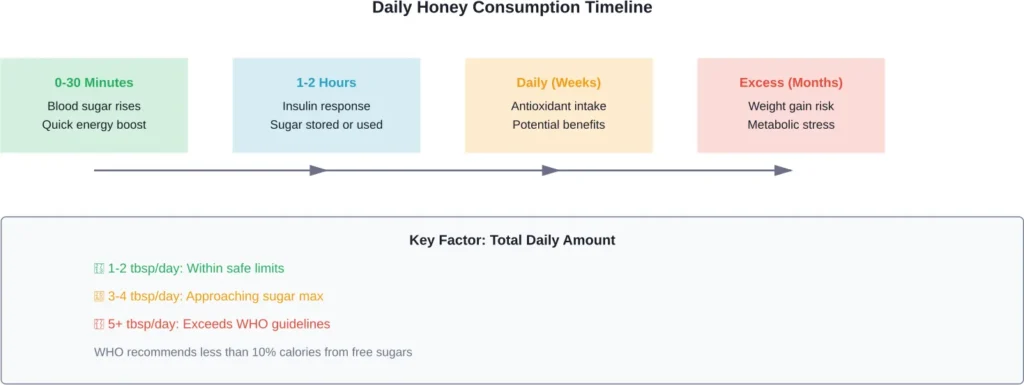
That classification matters. The WHO recommends reducing free sugar intake to less than 10% of total energy intake — with further reduction to below 5% (roughly 25 grams or 6 teaspoons daily) providing additional health benefits.
One tablespoon of honey contains approximately 17 grams of sugar. Two tablespoons puts you at 34 grams — already exceeding the stricter WHO recommendation and approaching the 10% threshold for most adults.
Blood Sugar Impact
Honey raises blood glucose levels similarly to other sugars. While it has a slightly lower glycemic index than white sugar due to its fructose content, the difference is marginal in practical consumption.
For people with diabetes or prediabetes, daily honey consumption can complicate blood sugar management. The insulin response triggered by honey is substantial, regardless of its natural origin.
Weight Gain and Metabolic Syndrome
Excess calories from free sugars are implicated in epidemics of obesity and type 2 diabetes. In the United States, ultra-processed foods comprised about 60% of total calories in the diet, with added sugars as a major contributor.
Metabolic syndrome — a cluster including obesity, diabetes, dyslipidemia, and hypertension — affects approximately 33% of U.S. adults. While research shows honey may have protective effects against metabolic syndrome in controlled doses, overconsumption contributes to the same problems as refined sugar.
The math is simple: consuming 2 tablespoons of honey daily adds 126 calories. Over a year, that’s 45,990 calories — potentially 13 pounds of weight gain if not offset by reduced intake elsewhere or increased activity.
How Much Honey Is Actually Safe Daily?
Based on WHO guidelines and nutritional research, safe honey consumption depends on your total daily calorie and sugar intake.
| Daily Calorie Intake | Max Free Sugars (10%) | Max Free Sugars (5%) | Honey Equivalent |
|---|---|---|---|
| 1,600 calories | 40g (10 tsp) | 20g (5 tsp) | 1-1.5 tbsp max |
| 2,000 calories | 50g (12.5 tsp) | 25g (6 tsp) | 1.5 tbsp max |
| 2,400 calories | 60g (15 tsp) | 30g (7.5 tsp) | 2 tbsp max |
Remember: these limits include all free sugars in your diet — not just honey. If you consume other sweetened foods, beverages, or processed items, your honey allowance shrinks accordingly.
Potential Side Effects of Daily Honey Consumption
Beyond sugar-related concerns, daily honey consumption carries specific risks.
Dental Health
Honey’s high sugar content and sticky texture make it particularly problematic for teeth. It clings to enamel, providing prolonged exposure to cavity-causing bacteria. Studies show added sugars significantly increase cavity risk.
Allergic Reactions
Some people experience allergic reactions to pollen or bee proteins in raw honey. Symptoms range from mild itching to severe anaphylaxis in rare cases.
Infant Botulism Risk
Honey should never be given to children under 12 months. It can contain Clostridium botulinum spores that cause infant botulism — a potentially fatal condition.
Digestive Issues
Large amounts of fructose can cause digestive discomfort, bloating, and diarrhea in some individuals, particularly those with fructose malabsorption.
Is Honey Better Than Regular Sugar?
This is the question everyone asks. The British Heart Foundation’s senior dietitian Tracy Parker addresses it directly: honey is marginally better due to trace nutrients and antioxidants, but the difference is minimal in typical consumption amounts.
Both honey and sugar are free sugars. Both raise blood glucose. Both contribute calories without substantial nutrition. The American Heart Association recommends limiting added sugars to less than 25 grams (6 teaspoons) per day for optimal heart health.
Sound familiar? That’s because honey falls under the same guidelines as table sugar, brown sugar, and corn syrup.
Frequently Asked Questions
Most adults can safely consume 1-2 tablespoons of honey daily as part of their total free sugar allowance. This assumes no other significant sources of added sugars in the diet. Exceeding this amount risks weight gain, elevated blood sugar, and metabolic complications.
No. Honey contains approximately 64 calories per tablespoon. While it may have metabolic benefits in controlled research settings, daily consumption adds calories that can promote weight gain unless offset by reduced intake elsewhere. Honey is not a weight loss food.
Nutritionally, this swap provides minimal benefit. Both are free sugars that count toward WHO daily limits. While honey offers trace antioxidants, the amounts are too small to significantly impact health. Focus on reducing total free sugar intake rather than simply substituting honey for sugar.
Raw honey may contain slightly higher levels of antioxidants and enzymes since it’s not heat-processed. However, it also carries potential contamination risks and should never be given to infants. The health difference between raw and processed honey is modest for most adults.
Honey raises blood sugar similarly to white sugar, though the glycemic response varies slightly based on fructose-to-glucose ratio. For diabetes management, treat honey as you would any concentrated sugar source — it requires insulin response and impacts blood glucose control.
Never give honey to infants under 12 months of age. Honey can contain bacterial spores that cause infant botulism, a potentially life-threatening condition. Children’s digestive systems aren’t developed enough to handle these spores safely until after their first birthday.
Research shows honey has antimicrobial properties and contains antioxidants that may support immune function. However, these effects are modest and don’t justify high daily consumption. A balanced diet with fruits, vegetables, and whole grains provides far more comprehensive immune support than honey alone.
The Bottom Line
So what actually happens if you eat honey every day? You’ll consume beneficial antioxidants and antimicrobial compounds — but you’ll also add significant free sugars to your diet.
The key is amount. One to two tablespoons daily fits within health guidelines for most adults and allows you to enjoy honey’s modest benefits. Beyond that, you’re simply consuming excess sugar with all its associated risks: weight gain, elevated blood glucose, increased cardiovascular disease risk, and dental problems.
Honey isn’t a superfood, and it’s not a health supplement. It’s a sweetener with some beneficial properties when used sparingly. The WHO, NIH research, and cardiovascular health organizations all agree: free sugars — including honey — should be limited for optimal health.
Want to enjoy honey’s benefits? Use it mindfully, account for it in your daily sugar budget, and remember that no amount of antioxidants justifies exceeding recommended sugar limits. Your body will thank you for the moderation.