
Quick Summary: Touching or accidentally bumping a baby’s soft spot (fontanelle) will not cause harm under normal circumstances. The membrane covering the fontanelle is thick and durable enough to protect the brain during everyday care like washing, patting, or gentle touching. However, significant trauma or impact to the soft spot requires immediate medical evaluation.
New parents often feel a surge of panic the first time they notice their baby’s soft spot pulsating or accidentally bump it during diaper changes. That fear is completely understandable.
But here’s the thing: those soft spots aren’t nearly as fragile as they appear.
The fontanelles play a critical role in infant development, and understanding what they are—and what actually happens when they’re touched or bumped—can eliminate a lot of unnecessary worry.
What Are Fontanelles and Why Do Babies Have Them?
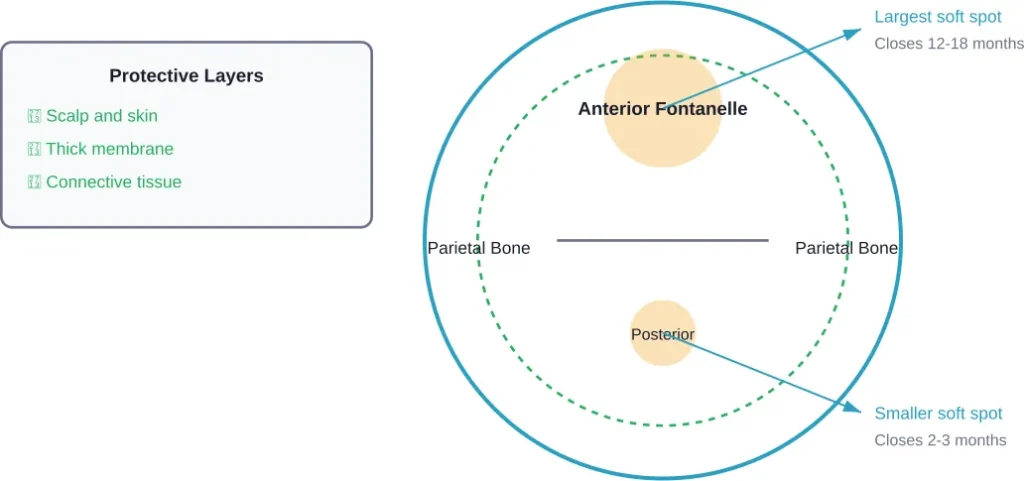
At birth, the newborn’s skull consists of five major bones (two frontal, two parietal, and one occipital) that are separated by connective tissue junctions known as cranial sutures.
The gaps between these bones are the fontanelles—often called soft spots.
Babies are born with multiple fontanelles, though parents typically notice two main ones. The anterior fontanelle sits at the top of the head where the frontal and parietal bones meet. The posterior fontanelle is located at the back of the head.
Research published in Public Health Reviews found that the pooled mean size of the anterior fontanelle among newborns was 2.58 cm (95% CI: 2.31, 2.85 cm), with regional variations. African newborns averaged 3.15 cm, while European newborns averaged 2.01 cm.
Why do these gaps exist? Two critical reasons:
First, fontanelles allow the baby’s head to compress and mold during passage through the birth canal. Without this flexibility, vaginal delivery would be significantly more difficult or impossible.
Second, they accommodate rapid brain growth during infancy. The brain grows more during the first year of life than at any other time, and the skull needs room to expand.
The Structure Protecting Your Baby’s Brain
Here’s what many parents don’t realize: the fontanelle isn’t just an open hole in the skull.
The gap is covered by a thick, durable membrane made of connective tissue. This membrane is tough—much tougher than it looks or feels.
Think of it like the lid of a drum. It’s flexible enough to move slightly, but strong enough to protect what’s underneath.
That visible pulsation parents often notice? That’s normal. It reflects the baby’s heartbeat and blood flow, not weakness in the structure.
What Actually Happens When You Touch or Bump the Soft Spot
During normal care—washing your baby’s hair, patting their head, or accidentally bumping the fontanelle during a diaper change—nothing harmful happens.
The membrane is designed to withstand everyday contact and gentle pressure.
Parents can safely:
- Wash and shampoo their baby’s hair directly over the soft spot
- Gently pat or stroke the top of the head
- Brush the baby’s hair
- Apply gentle pressure while burping or holding the baby
These routine activities won’t damage the brain or cause any injury. The fontanelle exists precisely to allow normal handling and care.
Real talk: if the soft spot were truly that fragile, human babies wouldn’t have survived as a species for thousands of years.
When a Bump to the Soft Spot Becomes Concerning
That said, not all impacts are created equal.
Significant trauma to the head—including the fontanelle area—requires medical evaluation. This includes falls from elevated surfaces, car accidents, or forceful impacts.
According to the World Health Organization, road traffic injuries are the leading cause of death for children aged 5-29 years globally, with many injuries occurring in younger children as well.
Watch for these warning signs after any head injury:
| Warning Sign | What It Means | Action Required |
|---|---|---|
| Loss of consciousness | Possible concussion or brain injury | Emergency medical care immediately |
| Bulging fontanelle when upright and calm | Increased intracranial pressure | Call pediatrician or go to ER |
| Sunken fontanelle with other symptoms | Possible dehydration | Contact pediatrician promptly |
| Persistent vomiting after impact | Possible head trauma | Seek medical evaluation |
| Unusual sleepiness or difficulty waking | Potential concussion | Emergency medical attention |
| Clear fluid from nose or ears | Possible skull fracture | Emergency care immediately |
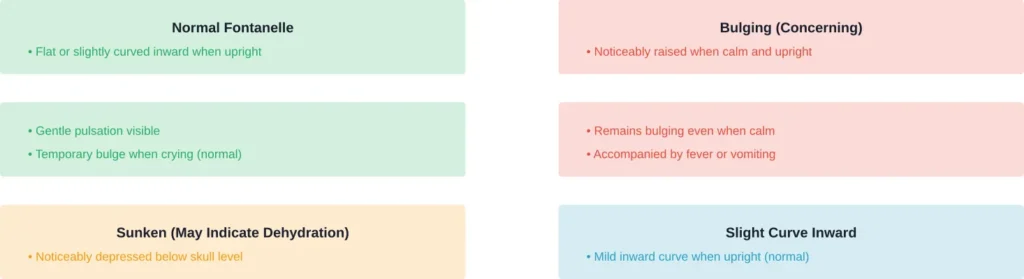
A bulging fontanelle can indicate increased pressure inside the skull. This might happen with infections, head injuries, or other medical conditions requiring prompt treatment.
Conversely, a sunken fontanelle often signals dehydration. When combined with fewer than six wet diapers in 24 hours or a dry mouth, medical attention is needed.
Normal Fontanelle Appearance and Changes
Understanding what’s normal helps parents distinguish between harmless variations and genuine concerns.
A healthy fontanelle should appear relatively flat when the baby is upright and calm. It might curve inward slightly when the baby is sitting or standing.
The soft spot may bulge temporarily when the baby cries, coughs, or lies down. This is completely normal and resolves once the baby calms down or sits up.
That visible pulsation? Also normal. Many parents find it unnerving, but it simply reflects blood flow and the baby’s heartbeat beneath the membrane.
When Fontanelles Close
The posterior fontanelle typically closes around 2-3 months of age. Some babies are born with this fontanelle already closed.
The anterior fontanelle remains open much longer, generally closing between 12-18 months of age, though some variation is normal. Closing anywhere between 9 months and 2 years can still fall within healthy ranges.
Interestingly, research published in StatPearls notes that a third fontanelle between the anterior and posterior fontanelles correlates with certain conditions like Down syndrome and congenital infections such as rubella, with a reported frequency of 6.4% in an unselected population of 1020 newborns.
Early or Late Fontanelle Closure
Sometimes fontanelles close earlier or later than typical timelines.
Early closure can indicate craniosynostosis—a condition where skull bones fuse prematurely. According to the CDC, craniosynostosis affects approximately 1 in every 2,500 babies in the United States. This condition can restrict brain growth and requires medical intervention.
Late closure might signal underlying conditions affecting bone development. Healthcare providers monitor fontanelle size and closure timing during regular well-baby checkups.
Neither early nor late closure automatically means something is wrong, but both warrant evaluation by a pediatrician.
Protecting Your Baby’s Head During Daily Activities
While the fontanelle can handle normal care, basic precautions make sense.
Always support the baby’s head and neck during the first few months when neck muscles are still developing. This isn’t specifically about protecting the soft spot—it’s about supporting the entire head.
Use appropriate car seats installed correctly. According to WHO data, proper child restraints reduce injury risk significantly during vehicle accidents.
Prevent falls by never leaving babies unattended on elevated surfaces like changing tables, beds, or sofas. Even young infants can surprise parents with sudden rolling movements.
Skip headbands or hats that apply pressure directly to the fontanelle. While brief wear won’t cause harm, constant pressure isn’t ideal.
Myths About Baby Soft Spots
Several persistent myths create unnecessary anxiety for new parents.
Myth: Touching the soft spot will damage the baby’s brain.
Reality: The protective membrane is tough and designed for normal contact.
Myth: The fontanelle should never move or pulsate.
Reality: Visible pulsation reflecting the heartbeat is completely normal.
Myth: All babies’ fontanelles close at exactly the same time.
Reality: Significant variation exists in normal closure timing.
Myth: Sunken fontanelles always mean dehydration.
Reality: A slightly inward curve when upright is normal; sunken fontanelles combined with other dehydration symptoms require attention.
When Medical Evaluation Is Necessary
Most bumps and touches to the soft spot require nothing more than comforting the baby.
But seek immediate medical care if:
- The baby loses consciousness after a head impact
- Clear fluid drains from the nose or ears following trauma
- The fontanelle remains bulging when the baby is calm and upright
- The baby experiences persistent vomiting after head trauma
- Unusual drowsiness or difficulty waking occurs
- Seizures develop after head injury
Contact the pediatrician within 24 hours if:
- The fontanelle appears sunken along with signs of dehydration
- Swelling develops at the impact site
- Behavior changes persist after a bump
- Concerns about fontanelle size or appearance arise
Healthcare providers can assess whether imaging or further evaluation is needed.
Frequently Asked Questions
No. Gentle touching, washing, patting, or normal handling of the soft spot won’t cause injury. The membrane covering the fontanelle is thick and durable enough to protect the brain during routine care.
For minor bumps during normal care, simply comfort the baby. Monitor for unusual symptoms like persistent crying, vomiting, or changes in behavior. If the impact was forceful or the baby shows concerning symptoms, contact a healthcare provider.
The pulsation reflects blood flow and the baby’s heartbeat beneath the fontanelle membrane. This is completely normal and not a sign of weakness or vulnerability.
Seek medical attention if the fontanelle remains bulging when the baby is calm and upright, appears significantly sunken with other dehydration symptoms, or if concerning symptoms develop after head trauma. Also consult a pediatrician if the fontanelle closes very early or remains open beyond 18-24 months.
Yes. Gentle brushing over the soft spot is safe and won’t cause harm. The fontanelle membrane can handle the light pressure from hairbrushes or combs.
Signs of concussion in infants include loss of consciousness, persistent vomiting, unusual sleepiness, difficulty waking, changes in eating or sleeping patterns, inconsolable crying, or loss of balance. Any of these symptoms after head trauma warrant immediate medical evaluation.
Fontanelle size varies normally between babies and across different populations. Research shows the average anterior fontanelle measures about 2.58 cm, but healthy variation exists. Pediatricians track fontanelle size during checkups to ensure appropriate growth and development.
The Bottom Line
The soft spot on a baby’s head serves critical developmental functions—allowing passage through the birth canal and accommodating rapid brain growth during infancy.
While the fontanelle may look vulnerable, it’s protected by a tough membrane designed to withstand normal handling and care. Parents can safely wash, brush, pat, and touch their baby’s head without fear of causing injury.
Accidental minor bumps during routine care don’t require panic. The real concerns arise from significant trauma, persistent symptoms after impact, or abnormal fontanelle appearance combined with other warning signs.
Understanding the difference between normal variation and genuine medical concerns empowers parents to care for their babies confidently while knowing when professional evaluation is necessary. When in doubt, healthcare providers are available to assess any concerns and provide peace of mind.