

Quick Summary: Touching elemental mercury briefly with intact skin poses minimal immediate risk, as skin absorbs less than 1% of the metal. However, mercury vapor from spills is dangerous when inhaled, and prolonged or repeated skin contact can lead to absorption and poisoning. The real danger comes from breathing mercury fumes, not from brief contact.
Mercury has a dangerous reputation. It’s one of the only metals that’s liquid at room temperature, and it’s been used in everything from thermometers to dental fillings. But what actually happens if you touch it?
The answer might surprise you. Brief contact with elemental mercury isn’t the instant death sentence many people imagine. That said, this doesn’t mean mercury is safe to handle, and there are very real dangers that come with exposure.
Understanding the actual risks helps you respond appropriately if you ever break a mercury thermometer or encounter this toxic metal.
Understanding Mercury and Its Different Forms
Not all mercury is created equal. According to the EPA, mercury exists in several forms, and each one affects the human body differently.
Elemental mercury is the shiny, silvery liquid found in old thermometers and some medical equipment. It’s also called metallic mercury or quicksilver. This form has specific properties that make it behave differently than you might expect.
Inorganic mercury compounds form when mercury combines with elements like chlorine, sulfur, or oxygen. These are found in some industrial processes and older medical treatments.
Organic mercury compounds, particularly methylmercury, are what you find in contaminated fish. This is actually the most common way people in the United States are exposed to mercury, according to the EPA.
The form matters tremendously. Methylmercury from fish is readily absorbed through the digestive system. Elemental mercury? Not so much.
What Actually Happens When Skin Contacts Elemental Mercury
Here’s where things get interesting. When you touch liquid mercury with intact skin, very little is actually absorbed.
According to Poison Control, the risk of poisoning from touching mercury from a broken thermometer is low if appropriate cleanup measures are taken. The skin simply doesn’t absorb elemental mercury efficiently.
If mercury spills on your skin, the immediate response is straightforward: rinse the exposed area with water. That’s it. No dramatic medical intervention needed for brief contact.
But wait. This doesn’t mean mercury is harmless.
Prolonged or repeated skin contact is a different story. Some mercury can be absorbed through the skin over time, especially with damaged skin or repeated exposure. Studies documented in medical research have shown cases of mercury poisoning from skin-lightening creams containing mercury, where prolonged daily application led to systemic absorption.
The real danger isn’t the brief touch—it’s what happens next.
The Real Danger: Mercury Vapor
Mercury vapor is where the serious health risks begin. And this is what most people don’t understand about mercury spills.
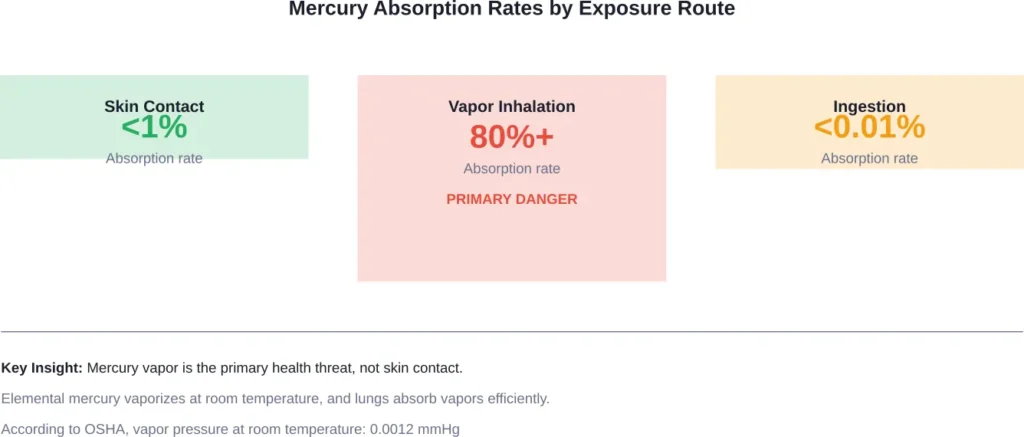
Elemental mercury evaporates at room temperature. According to OSHA, mercury has a vapor pressure of 0.0012 mmHg at standard conditions. This means that liquid mercury sitting exposed will continuously release vapors into the air.
These vapors? Your lungs absorb them efficiently. The CDC identifies mercury as a neurotoxin that affects the cardiovascular system, nervous system, kidneys, and immune system.
A broken mercury thermometer might only contain about 0.5 to 1.5 grams of mercury. That doesn’t sound like much, but when that mercury spreads across your floor and starts evaporating, it creates an inhalation hazard.
According to the CDC and EPA, they do not recommend the use of uncontained metallic mercury in homes, schools, offices, or other public buildings for exactly this reason.
The symptoms of mercury vapor poisoning can include tremors, emotional changes, insomnia, weakness, muscle atrophy, twitching, headaches, and cognitive difficulties. In severe cases documented by the Agency for Toxic Substances and Disease Registry, exposure can affect kidney function and breathing.
What If You Swallow Mercury?
This scenario comes up surprisingly often. Someone breaks a thermometer, and a child or pet might ingest some of the tiny beads.
The good news? Swallowing elemental mercury is actually a terrible way for the body to absorb it. Less than 0.01 percent of elemental mercury is absorbed by the gut, according to available research data.
This doesn’t mean swallowing mercury is safe or recommended. If mercury gets into the eye, flush the eye with water for 15 to 20 minutes according to Poison Control protocols, then seek medical guidance.
The bigger concern with swallowing mercury isn’t immediate toxicity from the liquid itself, but rather the possibility that it could remain in the digestive system where it slowly releases vapors or causes mechanical obstruction.
Any ingestion of mercury should prompt a call to poison control at 1-800-222-1222 for expert guidance.
Mercury Poisoning Symptoms and Health Effects
Mercury affects multiple organ systems. According to the CDC, affected systems include:
- Neurological system (nervous system)
- Renal system (kidneys)
- Cardiovascular system (heart and blood vessels)
- Immunological system (immune function)
- Reproductive system
- Developmental systems (particularly concerning for pregnant women and children)
Symptoms vary depending on the exposure level and duration. Acute high-level exposure produces different effects than chronic low-level exposure.
Common symptoms documented in medical literature include:
- Tremors (especially in hands)
- Mood changes and irritability
- Memory problems and difficulty concentrating
- Insomnia and fatigue
- Muscle weakness
- Headaches
- Metallic taste in mouth
- Kidney damage in severe cases
Children are particularly vulnerable. The CDC documented cases where children exposed to mercury in homes developed serious symptoms including pain in extremities, tachycardia, hypertension, increased sweating, behavioral changes, and weight loss.
| Exposure Type | Primary Risk | Absorption Rate | Immediate Action |
|---|---|---|---|
| Brief skin contact | Low | <1% | Rinse with water |
| Prolonged skin contact | Moderate | Variable | Wash thoroughly, monitor symptoms |
| Vapor inhalation | High | 80%+ | Evacuate area, ventilate, seek medical care |
| Ingestion (elemental) | Low to moderate | <0.01% | Call poison control immediately |
| Methylmercury ingestion | High | ~95% | Seek immediate medical attention |
Who Is Most Vulnerable to Mercury Exposure?
Not everyone faces the same level of risk from mercury exposure. Certain populations require extra caution.
Pregnant women face particular concerns. Mercury can cross the placental barrier and affect fetal brain development. The EPA specifically warns about methylmercury consumption during pregnancy.
Young children are more vulnerable than adults. Their developing nervous systems are more susceptible to mercury’s neurotoxic effects. Medical research has documented severe poisoning in children from indirect exposure through skin-to-skin contact with adults who handled mercury.
Infants can be exposed through breast milk if the mother has elevated mercury levels. Studies on skin-lightening creams containing mercury have shown risks to both pregnant and lactating mothers.
Workers in certain industries face occupational exposure risks. OSHA maintains specific standards for mercury exposure in workplaces, including the chlor-alkali industry, dental offices, and facilities handling hazardous waste.
People with kidney disease may be at increased risk, as the kidneys are a primary target organ for mercury toxicity and also play a role in mercury elimination from the body.
What to Do If You Touch Mercury or Break a Thermometer
Real talk: accidents happen. Someone drops an old thermometer, and suddenly you’ve got tiny silver beads rolling across the floor.
Here’s the protocol that actually works:
If mercury touches your skin: Rinse the affected area with water immediately. That’s the extent of immediate treatment needed for brief contact. If you notice any symptoms or had prolonged contact, contact a healthcare provider.
For a mercury spill:
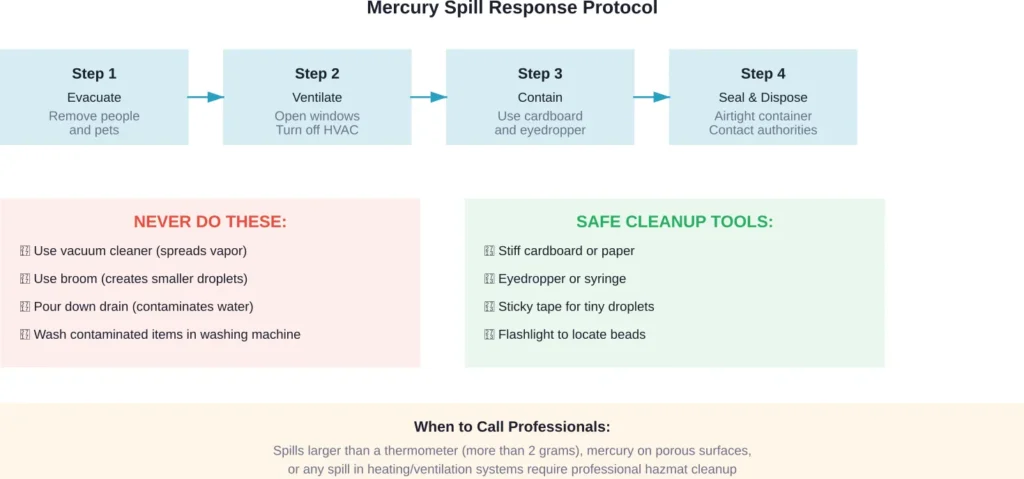
First, evacuate everyone from the room, especially children and pregnant women. Mercury vapor concentrations are highest near the spill.
Ventilate the area. Open windows and turn off central heating or air conditioning to prevent vapor circulation throughout the building.
Never use a vacuum cleaner. This aerosolizes the mercury and spreads vapor throughout your home. Never use a broom, which breaks mercury into smaller droplets that are harder to clean and vaporize faster.
For small spills from a thermometer, use stiff paper or cardboard to carefully push mercury beads together. Use an eyedropper to collect the beads. Sticky tape can pick up the smallest droplets.
Place all mercury and contaminated materials in a sealed container. Many local health departments have specific disposal protocols for mercury waste.
For larger spills, contact your local health department or environmental agency. Some mercury spills require professional cleanup.
Mercury in Fish and Dietary Exposure
While touching elemental mercury carries relatively low risk, eating mercury-contaminated fish is another story entirely.
Methylmercury, the organic form found in fish, is absorbed efficiently through the digestive system. The EPA identifies this as the most common exposure route for Americans.
Fish and shellfish with high mercury levels include shark, king mackerel, swordfish, orange roughy, and certain types of tuna. These large predatory fish accumulate mercury throughout their lifetimes.
The FDA and EPA provide joint guidance on fish consumption, particularly for pregnant women, nursing mothers, and young children. The advice isn’t to avoid fish entirely—fish provides important nutrients. The guidance is to choose low-mercury options and limit consumption of high-mercury species.
Mercury in Products and Ongoing Exposure Risks
Mercury still appears in various consumer products and industrial applications, creating potential exposure scenarios.
According to the EPA, products that traditionally contain mercury include some thermometers, barometers, blood pressure monitors, fluorescent and compact fluorescent light bulbs, dental amalgam fillings, and some electrical switches.
Dental amalgam deserves specific mention. These “silver fillings” contain approximately 40-50% mercury, along with silver and other metals. The mercury is bound in the amalgam and exposure from dental fillings is generally considered minimal for most people.
Compact fluorescent bulbs (CFLs) contain small amounts of mercury vapor. Breaking a CFL requires careful cleanup similar to a mercury thermometer, though the amount is typically smaller.
Some skin-lightening creams, particularly those manufactured outside regulated markets, have been found to contain dangerous mercury levels. The CDC documented cases of mercury poisoning among users of such products, with elevated blood mercury levels causing various health problems.
Medical Treatment for Mercury Poisoning
Treatment depends on the exposure type, severity, and timing. Medical professionals assess mercury poisoning through blood and urine tests that measure mercury levels.
For acute high-level exposure, chelation therapy may be used. Chelating agents bind to mercury in the body and help eliminate it through urine. Common chelating agents include dimercaprol, succimer, and penicillamine.
Supportive care addresses specific symptoms. Kidney function monitoring, neurological assessment, and respiratory support may be necessary depending on the exposure severity.
The prognosis varies. Low-level chronic exposure effects may improve once exposure stops, though some neurological damage can be permanent. Severe acute poisoning can have lasting consequences.
Prevention remains far more effective than treatment. Avoiding unnecessary exposure and responding appropriately to accidents prevents the need for medical intervention.
Preventing Mercury Exposure in Daily Life
Several practical steps reduce mercury exposure risk:
Replace mercury thermometers with digital alternatives. Modern digital thermometers are accurate, affordable, and eliminate spill risk entirely.
Choose low-mercury fish options. Salmon, sardines, tilapia, and other smaller fish generally contain lower mercury levels than large predators.
Handle CFLs carefully. Store them safely and clean up breaks according to EPA protocols. Consider LED bulbs as mercury-free alternatives.
Avoid unregulated cosmetics. Skin-lightening creams from unknown sources may contain mercury. Purchase cosmetics only from regulated, reputable manufacturers.
Dispose of mercury-containing items properly. Many communities have hazardous waste collection programs that accept mercury thermometers, CFLs, and other mercury-containing items.
Educate children. Kids should never play with mercury or old thermometers. They need to understand that mercury isn’t a toy, despite its interesting appearance.
Frequently Asked Questions
Brief skin contact with elemental mercury is extremely unlikely to cause death. The skin absorbs less than 1% of elemental mercury from brief contact. The primary danger comes from breathing mercury vapor, not from touching the liquid metal itself. However, any mercury exposure should be taken seriously and appropriate cleanup measures followed.
Mercury elimination time depends on the type. Elemental mercury is eliminated from the body over time. Methylmercury from fish has a longer half-life. Complete elimination can take months to over a year depending on exposure levels and individual factors.
Evacuate the room immediately, especially children and pregnant women. Open windows to ventilate. Never use a vacuum or broom. Use stiff cardboard to push mercury beads together, then collect them with an eyedropper. Use sticky tape for tiny droplets. Place all mercury and contaminated materials in a sealed container and contact your local health department for disposal guidance.
No. Fish contain methylmercury, an organic mercury compound that the digestive system absorbs efficiently. Thermometers contain elemental mercury, which the gut absorbs poorly (less than 0.01%). This is why eating mercury-contaminated fish is more dangerous than swallowing small amounts of elemental mercury from a broken thermometer.
Dental amalgam fillings contain 40-50% mercury bound with silver and other metals. For most people, exposure from dental fillings is minimal. The mercury is stable in the amalgam, though small amounts of vapor can be released during chewing. Regulatory agencies generally consider amalgam fillings safe for most people, though some individuals may choose alternative filling materials.
Early symptoms often include tremors (especially in hands), mood changes, irritability, memory problems, insomnia, and fatigue. Some people report a metallic taste. Headaches and difficulty concentrating are common. Symptoms can be subtle initially and may be mistaken for other conditions. Anyone with suspected mercury exposure and these symptoms should seek medical evaluation.
Blood and urine tests measure mercury levels. Blood tests are better for recent exposures, while urine tests can indicate ongoing or chronic exposure. Hair analysis can show exposure over time, as mercury accumulates in hair. These tests help determine exposure levels and guide treatment decisions. If you suspect mercury exposure, contact your healthcare provider or poison control at 1-800-222-1222.
Conclusion: Understanding Mercury Risk in Perspective
The question “what happens if you touch mercury” has a more nuanced answer than most people expect. Brief skin contact with elemental mercury isn’t the immediate catastrophe many fear, but mercury absolutely deserves its dangerous reputation.
The real threat comes from vapor inhalation, not from touching liquid mercury. This is why proper spill cleanup matters so much. It’s why the EPA and CDC warn against keeping uncontained mercury in homes and public spaces.
Understanding the actual risks helps you respond appropriately. Brief contact requires washing with water. Spills require ventilation, careful cleanup, and proper disposal. Symptoms require medical attention.
The best approach? Eliminate mercury from your home entirely. Replace old thermometers with digital ones. Handle CFLs carefully and consider LED alternatives. Choose fish wisely. These simple steps reduce risk far more effectively than knowing how to handle exposure.
If you do experience mercury exposure, don’t panic—but don’t ignore it either. Contact poison control at 1-800-222-1222 for expert guidance specific to your situation. They’re available 24/7 and can provide immediate, personalized advice.
Stay informed, stay safe, and remember that prevention beats treatment every time.