
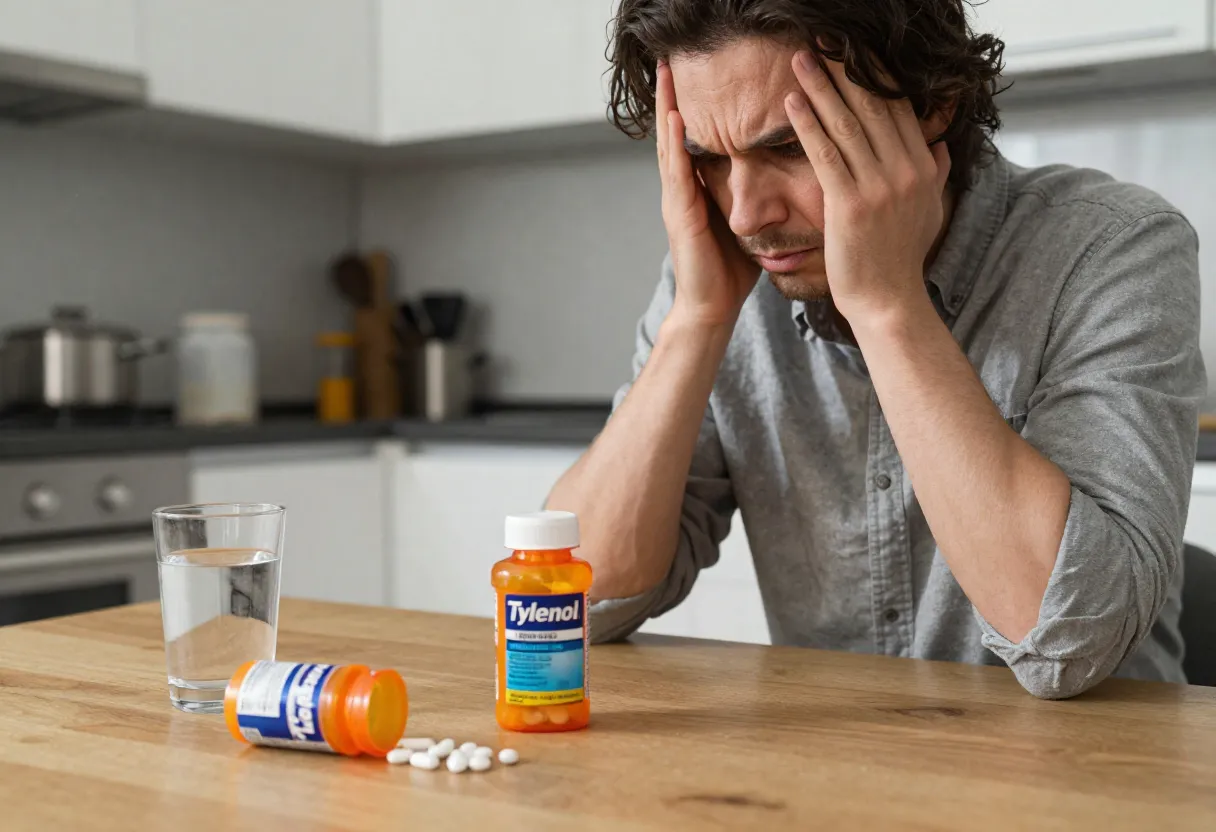
Quick Summary: Taking expired Tylenol is generally not dangerous, but the medication may lose potency over time. While acetaminophen rarely becomes toxic after expiration, it might not effectively relieve pain or fever. For safety and effectiveness, it’s best to use medications before their expiration date and dispose of expired drugs properly.
You’ve got a headache. You reach for the Tylenol in your medicine cabinet, only to notice the date on the bottle passed six months ago. Sound familiar?
Most of us have been there, staring at an expired medication and wondering whether it’s safe to take or destined for the trash. The expiration date can feel like a hard deadline, but the reality is more nuanced.
Here’s what actually happens when you take expired Tylenol—and when you should think twice.
What Expiration Dates Really Mean
Since 1979, the U.S. Food and Drug Administration has required expiration dates on both prescription and over-the-counter medicines. But what does that date actually indicate?
The expiration date reflects the time period during which the product is known to remain stable—meaning it retains its strength, quality, and purity when stored according to labeled conditions. It’s not necessarily the date the medication becomes harmful.
Drug manufacturers establish these dates through stability testing in specific environmental conditions. The average medicine has a shelf life of 2-3 years, though this varies by formulation and storage.
That said, expired medications can lose potency. Research on medications stored at the International Space Station found that four of nine (44%) tested medications met United States Pharmacopeia requirements eight months post-expiration. Some lost effectiveness even 2-3 months before their labeled expiration date.
Is Expired Tylenol Dangerous or Just Less Effective?
The short answer? Expired Tylenol is rarely dangerous, but it might not work as well as you need it to.
According to Poison Control, while expired medications are generally not toxic, if the drug loses its potency, the medical problem you’re taking it for may not be adequately treated. That’s where the real harm comes in.
Acetaminophen—the active ingredient in Tylenol—doesn’t typically produce harmful degradation products. Unlike some medications that break down into toxic compounds, Tylenol that’s a few months or even a year past expiration is unlikely to hurt you.
But here’s the thing: it might not deliver full pain or fever relief either. Drugs that are a few years expired could be approximately 80% as effective, meaning you’re not getting the dose you think you’re taking.

Liquid vs. Solid Forms: Does It Matter?
Yes, formulation makes a difference.
Liquid medications—like children’s Tylenol oral suspension—tend to degrade faster than tablets or capsules. The liquid formulation is more sensitive to temperature changes, light exposure, and contamination once opened.
If you’ve got expired children’s Tylenol in your cabinet, it’s especially important to replace it. Kids need accurate dosing, and reduced potency could mean undertreating a fever or pain.
Solid forms like tablets and caplets are generally more stable, but they’re not immune to degradation. Moisture, heat, and light all accelerate the breakdown of acetaminophen.
| Formulation | Typical Stability | Risk After Expiration |
|---|---|---|
| Tablets/Caplets | 2-3 years | Low toxicity, gradual potency loss |
| Liquid Suspension | 1-2 years (less when opened) | Faster degradation, contamination risk |
| Gel Caps | 2-3 years | Moderate potency loss over time |
How Storage Affects Tylenol Shelf Life
Where you store medications matters as much as the expiration date printed on the bottle.
Most people keep medicines in the bathroom cabinet—one of the worst places possible. Heat and humidity from showers accelerate drug degradation.
Optimal storage means keeping medications in a cool, dry place away from direct sunlight. A bedroom drawer or kitchen pantry (away from the stove) works better than the bathroom.
Real talk: improper storage can shorten a medication’s effective life well before its expiration date.
Best Practices for Storing Acetaminophen
- Keep in original container with lid tightly closed
- Store at room temperature (68-77°F)
- Avoid bathrooms, windowsills, and areas near heat sources
- Keep out of reach of children and pets
- Don’t transfer to unmarked containers
When Expired Medications Become Risky
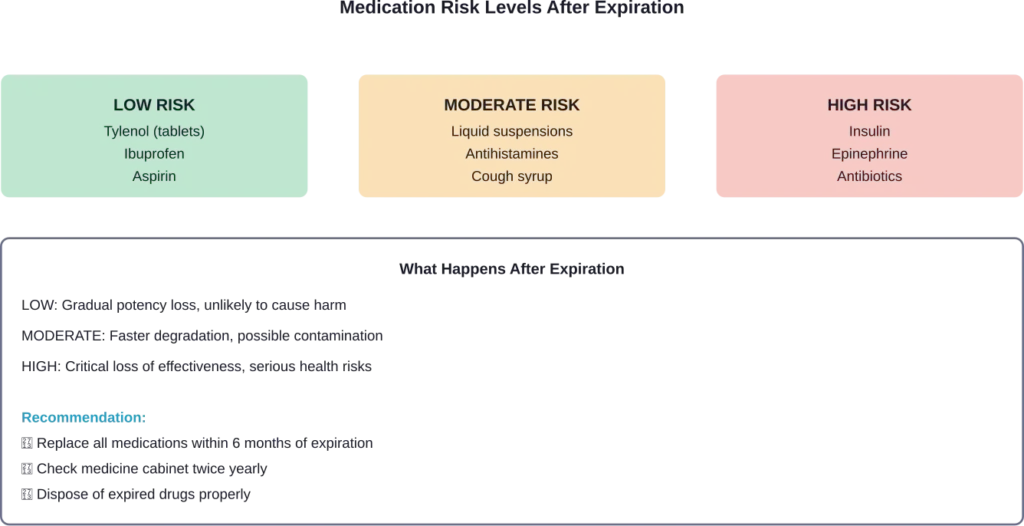
While Tylenol is relatively low-risk after expiration, not all medications are created equal.
Certain drug classes can become dangerous or significantly less effective past their expiration dates:
- Insulin and epinephrine: Critical medications that lose potency rapidly
- Antibiotics: May not fully treat infections, leading to antibiotic resistance
- Nitroglycerin: Heart medication that becomes ineffective
- Liquid formulations: Higher contamination and degradation risk
For these medications, the expiration date is a hard stop. Don’t risk it.
Proper Disposal of Expired Tylenol
Once you’ve identified expired medications, don’t just toss them in the trash or flush them down the toilet.
The FDA recommends several safe disposal methods:
Drug take-back programs are the best option. Drug take-back locations can be found at local pharmacies, hospitals, or law enforcement agencies where you can drop off unused or expired medications safely.
If a take-back program isn’t available, you can dispose of most medications (including Tylenol) in household trash by following these steps:
- Mix medicine with an undesirable substance like dirt, cat litter, or coffee grounds
- Place mixture in a sealed bag or container
- Remove or black out personal information on the prescription label
- Throw container in household trash
Never flush Tylenol down the toilet unless specific disposal instructions say to do so. Flushing medications can contaminate water supplies.
Check, Toss, Restock: A Simple Routine
Making medication cabinet checks part of your routine prevents the expired Tylenol dilemma in the first place.
Set a reminder twice a year—say, when you change your clocks or at the start of each season—to go through your medicines. Check expiration dates and properly dispose of anything that’s expired or no longer needed.
Then restock. Having fresh, effective medications on hand means you’re prepared when headaches, fevers, or pain strike.
Frequently Asked Questions
Tylenol that’s six months past expiration is unlikely to be harmful, but it may have lost some potency. For best results, use medications before their expiration date. If it’s the only option available and you need pain relief, it’s generally considered safe—but replacing it is the better choice.
While there’s no definitive answer, studies suggest some medications retain effectiveness for months after expiration when stored properly. Tylenol tablets stored in cool, dry conditions might maintain potency for several months post-expiration, though effectiveness gradually declines. Liquid formulations degrade faster.
Acetaminophen rarely becomes toxic after expiration. The primary concern is reduced effectiveness rather than harm. However, if expired Tylenol fails to adequately treat pain or fever, that inadequate treatment could be problematic—especially in children or for serious conditions.
Expired Tylenol tablets might show discoloration, crumbling, or an unusual odor. Liquid suspensions may change color, separate, or develop particles. Any visible changes in appearance, texture, or smell indicate the medication should be discarded immediately, regardless of the expiration date.
It’s not recommended. Children require accurate dosing, and liquid formulations degrade faster than tablets. Reduced potency could mean undertreating a child’s fever or pain. Always use fresh children’s Tylenol and check expiration dates carefully before administering to kids.
Store Tylenol in a cool, dry place away from heat, moisture, and direct sunlight. Avoid bathroom cabinets due to humidity from showers. A bedroom drawer or kitchen pantry away from the stove works well. Keep in the original container with the lid tightly closed.
The best method is using a drug take-back program at pharmacies or law enforcement agencies. If unavailable, mix the medication with an undesirable substance like coffee grounds, seal in a container, and dispose in household trash. Don’t flush Tylenol unless disposal instructions specifically recommend it.
The Bottom Line on Expired Tylenol
Taking expired Tylenol won’t likely land you in the emergency room, but it might not give you the relief you’re counting on either.
The expiration date exists for good reason—it’s the manufacturer’s guarantee that the medication will work as intended. While acetaminophen doesn’t typically become dangerous after expiration, reduced potency means you’re not getting the full therapeutic benefit.
Make it a habit to check your medicine cabinet regularly, dispose of expired medications properly, and keep your supply fresh. When you need pain or fever relief, you want medications that actually work.
Got expired Tylenol sitting in your cabinet right now? Take five minutes today to check those dates, safely dispose of what’s expired, and restock with fresh medication. Your future self—the one with a headache at 2 AM—will thank you.