
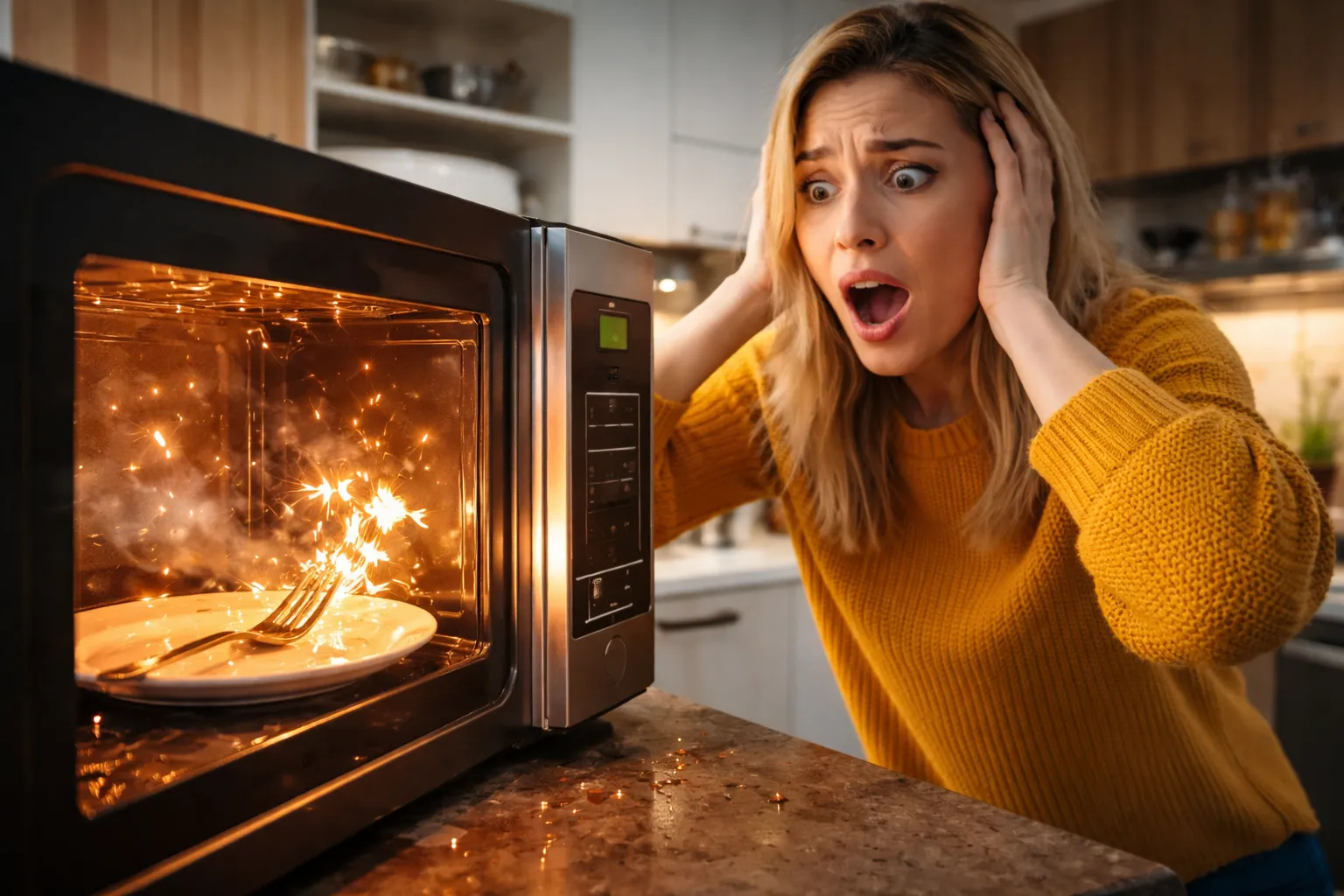
Quick Summary: When metal is placed in a microwave, it reflects electromagnetic waves rather than absorbing them, potentially causing sparks, arcing, and fire hazards. However, not all metal is equally dangerous—smooth, flat metals like those in microwave-safe packaging are generally safe, while crumpled foil or metal with sharp edges can create dangerous electrical arcs.
You’ve probably heard the warning a thousand times: never put metal in the microwave. But what actually happens when metal meets those invisible electromagnetic waves? And here’s the thing—sometimes metal in the microwave doesn’t cause a fireworks display at all.
The reality is more nuanced than the blanket “no metal” rule suggests. Understanding the science behind microwave ovens and how they interact with different materials can help you use your appliance safely and avoid costly mistakes.
The Science Behind Microwaves and Metal
Microwave ovens generate electromagnetic radiation using a device called a magnetron. These microwaves pulse back and forth inside the oven cavity at a carefully calibrated frequency, typically around 2.45 gigahertz.
According to Caroline A. Ross, Toyota Professor of Materials Science and Engineering at MIT, it’s “counterproductive to put something metallic inside your microwave oven if you want to heat it up.” The reason? Metal behaves fundamentally different from food when exposed to microwaves.
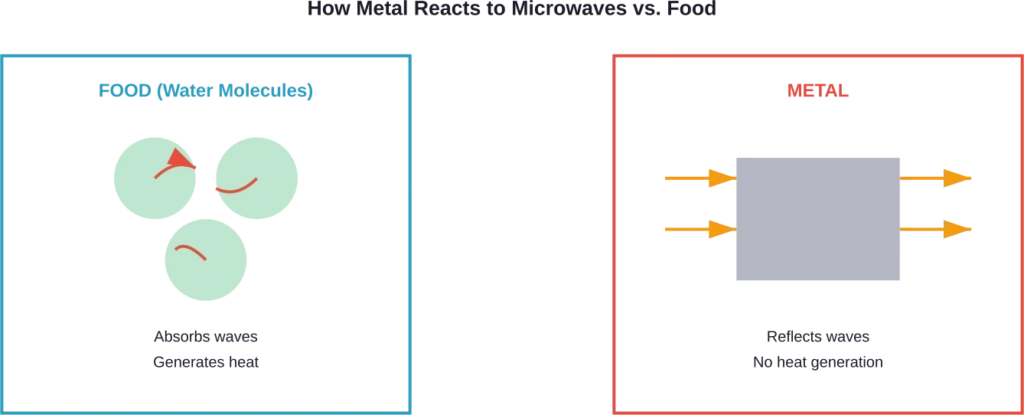
Food contains water molecules that absorb microwave energy. These molecules rotate rapidly when hit by electromagnetic waves, creating friction that generates heat. That’s how your leftovers get warm.
Metal, however, reflects microwaves rather than absorbing them. The electromagnetic waves bounce off metal surfaces, potentially concentrating energy in unexpected ways.
What Causes the Sparks and Arcing
When microwaves hit metal, they cause electrons to move rapidly across the metal’s surface. This electron movement is called an electrical current.
On smooth, flat metal surfaces, these currents flow harmlessly. But when metal has sharp edges, points, or crumpled areas, the electrical charge can build up intensely at these spots. Eventually, this concentrated energy discharges as visible sparks—a phenomenon called arcing.
Think of it like lightning. The electrical charge needs somewhere to go, and it jumps through the air to reach another surface, creating that dramatic flash you might’ve seen when accidentally microwaving a fork.
What Actually Happens When You Microwave Metal
The consequences of putting metal in the microwave range from absolutely nothing to genuine fire hazards. The outcome depends on several factors.
Immediate Visual Effects
Sparks are the most common and dramatic result. These electrical arcs appear as bright flashes, often accompanied by crackling sounds. Community discussions reveal that many people have accidentally microwaved a spoon or fork and witnessed this phenomenon.
The sparks themselves aren’t necessarily dangerous in small amounts, but they’re a warning sign that energy is discharging unpredictably.
Potential Damage to the Microwave
Repeated arcing can damage the magnetron—the expensive component that generates microwaves. It can also burn or pit the interior walls of the microwave cavity.
In some cases, metal can cause the microwave to concentrate energy in specific spots. The U.S. Consumer Product Safety Commission has documented cases where microwave malfunctions led to fire hazards, including a recall of at least 57,645 Microtronics brand units sold under brand names Astro Chef, Classic, and La Chef that retailed for about $300.
Fire Risk
Real talk: fires can start when metal creates sustained arcing near combustible materials. If you’re heating food in a container with metal trim, or if crumpled aluminum foil is near paper packaging, the sparks can ignite a fire.
The CPSC has documented multiple microwave-related fire incidents, though not all involved metal. According to the Association of Home Appliance Manufacturers (AHAM), unattended cooking is the leading cause of cooking fires in the U.S. and Canada, and microwave incidents often involve multiple risk factors.
Not All Metal is Equally Dangerous
Here’s where things get interesting. Some metal objects are specifically designed to be microwave-safe.
When Metal is Actually Safe
Smooth, flat metal without sharp edges or points generally doesn’t cause problems. That’s why some frozen dinner trays come with thin metal bases—they’re designed to be smooth and unlikely to arc.
The metal racks that come with some microwave ovens are also safe because they’re specifically engineered for that appliance. They’re positioned carefully and have rounded edges.
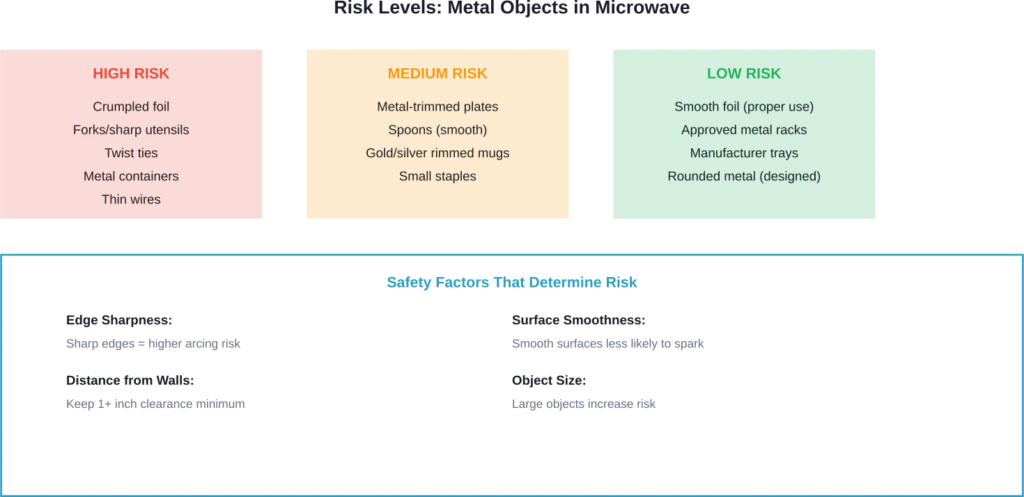
| Metal Type | Risk Level | Why |
|---|---|---|
| Crumpled aluminum foil | High | Sharp edges and points cause arcing |
| Forks, knives, spoons | Medium to High | Tines and edges can spark |
| Metal twist ties | High | Thin wires with exposed ends |
| Metal-trimmed dishes | Medium | Decorative metal can arc |
| Smooth metal pans (rounded) | Low | No sharp edges for charge buildup |
| Manufacturer-approved racks | Very Low | Designed specifically for the unit |
The Shape and Size Factor
Small pieces of smooth foil used to shield specific food areas during defrosting can be safe if used correctly. The key is keeping the foil smooth and at least one inch from the microwave walls.
Large metal objects that nearly touch the walls are particularly dangerous because they create a more direct path for electrical discharge.
Materials That Are Actually Microwave-Safe
Understanding what you can safely microwave matters just as much as knowing what to avoid.
Glass and Ceramic
Plain glass and ceramic containers without metallic decorations are generally safe. They allow microwaves to pass through to the food while staying relatively cool themselves.
Watch out for metallic paint or trim on decorative dishes—even a thin gold line can cause sparking.
Microwave-Safe Plastics
Containers labeled “microwave-safe” have been tested to withstand microwave heating without melting or releasing harmful chemicals. Not all plastic is created equal, though.
Checking for microwave-safe symbols on containers (usually wavy lines or the words ‘microwave safe’) is a reliable way to confirm safety.
Paper Products
Plain paper plates, napkins, and parchment paper are generally safe for short heating periods. Avoid printed paper products, as some inks can contain metal particles.
What to Do If You’ve Already Microwaved Metal
So you accidentally started the microwave with a spoon in your coffee. Now what?
Stop the microwave immediately if you see sparks. Let the microwave sit for a few minutes before opening the door—this allows any residual energy to dissipate.
Inspect the interior for any burn marks or damage. Small, one-time incidents typically don’t cause permanent damage. User experiences from community discussions suggest that many microwaves continue working fine after a brief sparking incident.
However, if you notice unusual sounds, burning smells, or uneven heating afterward, the magnetron may have been damaged. In such cases, professional inspection is worth considering.
Frequently Asked Questions
Small amounts of smooth aluminum foil can be used to shield specific food areas during defrosting, but it must be smooth (not crumpled), kept at least one inch from microwave walls, and used sparingly. Many manufacturers allow this practice in their user manuals, but the foil should never cover more than one-quarter of the food.
These specially designed trays use smooth, thin metal that’s engineered not to arc in microwaves. The metal is carefully shaped without sharp edges or points, and the packaging includes specific heating instructions to ensure safe use. Always follow the manufacturer’s directions exactly.
A single brief incident typically won’t cause permanent damage. Most microwaves can handle small sparking events without suffering lasting effects. However, repeated arcing or prolonged metal exposure can damage the magnetron or interior coating over time.
The most serious risk is fire, especially if sparks ignite nearby combustible materials like paper towels or food packaging. Sustained arcing can also permanently damage the microwave’s magnetron, requiring expensive repairs or replacement. In extreme cases, electrical components can fail catastrophically.
Look for a microwave-safe symbol on the bottom of containers—usually wavy lines or the words “microwave safe.” Glass and ceramic without metallic decoration are generally safe. When in doubt, test an empty container by microwaving it for 30 seconds; if it gets hot, it’s not microwave-safe.
Yes, metal can interfere with cooking by reflecting microwaves away from food, even without creating visible arcs. This is why it’s counterproductive to heat metallic items—the food won’t heat properly, and you risk creating “hot spots” where energy concentrates unpredictably.
No, stainless steel and other metal travel mugs should never go in the microwave. They’ll reflect microwaves, prevent the contents from heating, and can cause arcing. Always transfer liquids to glass or ceramic mugs for reheating.
The Bottom Line on Metal and Microwaves
Metal in the microwave isn’t always an instant disaster, but it’s definitely a risk not worth taking in most situations. The electromagnetic waves that heat your food interact with metal in ways that can cause sparks, damage your appliance, and potentially start fires.
The simple rule? When in doubt, leave it out. Stick to glass, ceramic, and microwave-safe plastic containers. Check dishes for metallic trim before heating. And if you accidentally microwave metal briefly, don’t panic—just stop the microwave, assess any damage, and be more careful next time.
Understanding the science behind why metal causes problems helps you make smarter decisions about what goes in your microwave. Keep your kitchen safe by following manufacturer guidelines and using common sense when selecting containers for microwave use.