

Quick Summary: Sexual abstinence does not cause significant negative physical health effects in most people. The body naturally adapts to periods without sexual activity, though some may experience changes in libido, vaginal lubrication, or stress levels. Research from medical institutions shows that while regular sexual activity offers certain health benefits, celibacy is a valid choice with no inherent medical dangers.
The human body doesn’t require sexual activity to function properly. Many people live fulfilling lives without ever engaging in sexual intercourse, whether by choice or circumstance.
But what actually happens physically when someone never has sex? The question comes loaded with cultural assumptions and outdated myths. Let’s examine what medical research actually reveals.
The Physical Reality of Sexual Abstinence
According to WHO definitions of sexual health, well-being relates to positive approaches to sexuality, not mandatory participation in sexual acts. The body doesn’t break down without sex.
Here’s the thing though—regular sexual activity does trigger certain physiological responses. When those activities stop or never occur, the body simply doesn’t experience those specific stimuli. That’s different from damage or dysfunction.
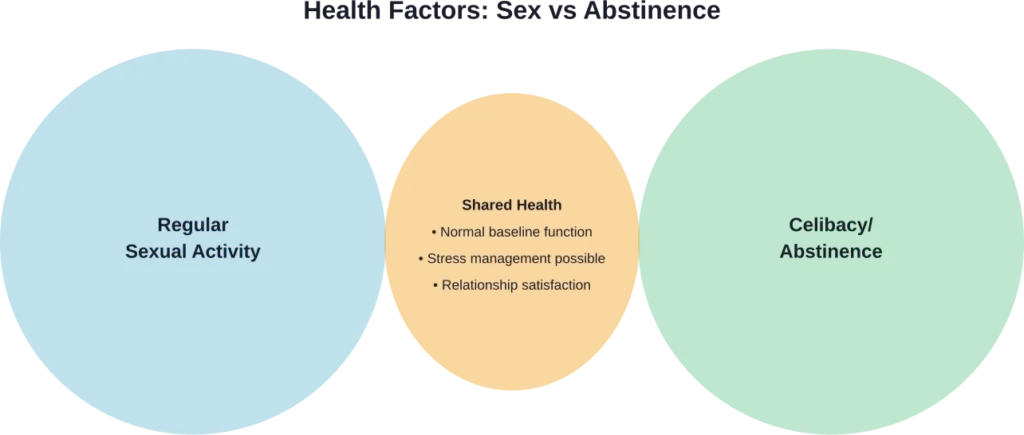
Research from academic institutions studying abstinence periods shows the body maintains baseline function regardless of sexual activity frequency. The cardiovascular system, immune response, and hormonal regulation continue operating through other mechanisms.
What Changes Actually Occur
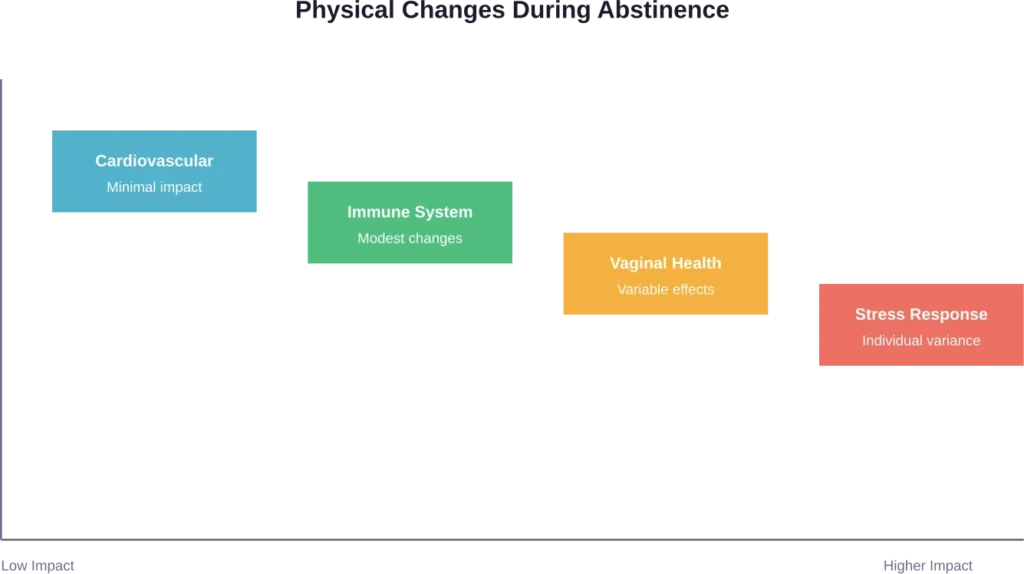
Some measurable differences do emerge. Blood pressure regulation can be affected, as sexual activity provides cardiovascular exercise benefits similar to moderate physical activity.
The immune system may miss out on modest boosts associated with regular sexual activity. But this doesn’t mean immunity becomes compromised—it simply doesn’t receive that particular stimulus.
For individuals with vaginas, reduced sexual activity can affect vaginal tissue elasticity and natural lubrication over time. Vaginal walls may become less flexible without regular stimulation, though this varies significantly between individuals and can be addressed through other means.
Mental and Emotional Considerations
The psychological effects vary dramatically based on individual circumstances. Someone who’s asexual experiences abstinence entirely differently than someone who desires sexual connection but lacks opportunity.
Stress levels can be affected either way. Some people experience increased anxiety without sexual release, while others find celibacy reduces relationship stress and provides mental clarity.
Research examining abstinence from masturbation and hypersexuality, published in Archives of Sexual Behavior (2020), indicates that perceived problems often stem more from cultural narratives than physiological necessity. The study found that feelings of guilt or loss of control frequently drive concerns rather than actual health consequences.
The Stress Connection
Sexual activity triggers endorphin release and can temporarily reduce cortisol levels. Without this mechanism, stress management requires other outlets—exercise, meditation, social connection, creative pursuits.
Many people successfully manage stress without sexual activity. The body doesn’t become incapable of stress regulation; it simply uses different pathways.
Relationship Dynamics and Social Health
Sexual health encompasses more than physical acts. WHO emphasizes that sexual well-being includes respectful approaches to relationships and the possibility of pleasurable experiences—not mandatory participation.
People in long-term relationships who stop having sex face different dynamics than lifelong celibates. Relationship satisfaction depends on mutual expectations and communication, not sexual frequency alone.
Community discussions frequently note that mismatched libidos create more relationship strain than abstinence itself. When both partners feel satisfied with their level of intimacy—whether that includes sex or not—relationship health typically remains stable.
| Body System | With Regular Sex | With Abstinence |
|---|---|---|
| Cardiovascular | Mild exercise benefit | Normal function, benefits from other exercise |
| Immune Response | Modest temporary boosts | Baseline function maintained |
| Hormonal | Activity-triggered releases | Baseline regulation continues |
| Vaginal/Genital | Enhanced elasticity and lubrication | Potential reduction, highly individual |
| Mental Health | Endorphin releases available | Alternative stress management needed |
Medical Myths Worth Debunking
Let’s address some persistent misconceptions. No, abstinence doesn’t cause prostate cancer. Research examining frequency of sexual activity and prostatic health found no definitive causative relationship.
The immune system doesn’t collapse without sex. While some research indicates that sexual activity correlates with temporary boosts in certain immune markers including immunoglobulin A, baseline immunity functions perfectly well in celibate individuals.
Vaginal walls don’t “seal up” or become permanently damaged. Tissue changes from reduced sexual activity are typically reversible and can be managed through various means if someone later chooses to become sexually active.
What About Reproductive Health?
For individuals concerned about future fertility, research on ejaculatory abstinence periods shows that sperm quality actually varies with abstinence duration. A study analyzing 2,458 semen samples found that abstinence duration affects certain sperm parameters, but these changes don’t indicate permanent reproductive damage.
Fertility potential remains intact regardless of whether someone has ever had sex. The reproductive system maintains readiness for potential use, activated when and if that becomes relevant.
When Abstinence Is a Choice
Asexual individuals—those who experience little or no sexual attraction—demonstrate that humans can thrive without sexual activity. Studies on lifetime abstention from sexual intercourse in middle-aged and older adults show no inherent health crisis from celibacy.
Religious celibacy, practiced across cultures and throughout history, further confirms that sexual abstinence doesn’t create medical emergencies. The body adapts to the conditions it experiences.
Real talk: the biggest challenges faced by people who never have sex often stem from social stigma and cultural pressure rather than physiological problems.
Practical Health Considerations
If someone chooses abstinence or finds themselves without sexual activity for extended periods, certain practices support overall health:
- Maintain regular exercise for cardiovascular benefits that sexual activity might otherwise provide
- Develop effective stress management techniques—meditation, physical activity, creative outlets
- For vaginal health, pelvic floor exercises and regular gynecological care remain important regardless of sexual activity
- Build strong social connections and intimate relationships that don’t require sexual components
- Address any distress about abstinence through counseling if the situation causes significant anxiety
The goal isn’t replacing sex with equivalents—it’s maintaining holistic health through various means.
FAQs
Sexual activity may provide modest temporary immune boosts, but abstinence doesn’t compromise baseline immune function. The immune system maintains normal operation through numerous other mechanisms unrelated to sexual activity.
Changes in vaginal elasticity and lubrication from reduced sexual activity are typically reversible. Pelvic floor exercises and regular gynecological care support vaginal health regardless of sexual activity levels. Permanent damage is not an expected outcome of abstinence.
Sexual abstinence doesn’t damage reproductive capability. Research on abstinence periods and sperm quality shows parameters fluctuate with ejaculatory frequency, but fertility potential remains intact whether someone has ever had sex or not.
Medical research examining prostatic health and sexual frequency has not established a definitive causative relationship between abstinence and prostate disease. Multiple factors influence prostate health beyond sexual activity alone.
Mental health impacts vary dramatically based on individual circumstances, personal values, and whether abstinence is voluntary. Studies indicate that distress typically stems from unmet expectations or social pressure rather than physiological necessity for sexual activity.
Sexual dysfunction typically relates to difficulties during desired sexual activity. For individuals who never attempt sexual activity, the concept doesn’t apply in the same way. If someone later chooses to become sexually active, bodies generally adapt, though patience and sometimes medical guidance may help.
Asexuality describes experiencing little or no sexual attraction—it’s an orientation. Celibacy represents a behavioral choice to abstain from sexual activity regardless of attraction levels. Both can involve never having sex, but the underlying motivation differs significantly.
The Bottom Line
The human body doesn’t require sexual activity to maintain health. While regular sex offers certain benefits—cardiovascular exercise, stress relief, immune stimulation—these advantages can be obtained through other means.
Never having sex won’t cause medical emergencies or permanent damage for most people. The body simply operates without that particular set of stimuli.
What matters most is whether someone feels satisfied with their life circumstances. Sexual health, as defined by WHO and supported by medical research, centers on well-being, respect, and safety—not mandatory participation in specific acts.
For those concerned about health impacts of abstinence, focus on holistic wellness: regular exercise, stress management, strong relationships, and preventive medical care. These fundamentals support health regardless of sexual activity status.