

Quick Summary: Vagisil products are designed for external use only on the vulva and should never be inserted inside the vagina. The anti-itch creams contain local anesthetics like benzocaine that can mask symptoms of infections, disrupt vaginal pH, and cause irritation to internal tissues. If you’ve accidentally applied Vagisil internally, rinse gently with water and monitor for adverse reactions.
The confusion surrounding Vagisil and where to apply it is surprisingly common. Many people don’t realize there’s a critical difference between treating external vaginal skin and the internal vaginal canal.
According to the official Vagisil website, their Maximum Strength Anti-Itch Creme is specifically formulated to “relieve even the most painful itch fast and form a protective barrier over intimate skin.” The key phrase here? Over intimate skin, not inside it.
Here’s the thing though—not everyone understands the anatomical distinction between the vulva (external) and vagina (internal). This confusion leads to misuse that can actually worsen symptoms rather than relieve them.
Understanding What Vagisil Actually Is
Vagisil is an over-the-counter topical product designed to provide temporary relief from external vaginal itching and irritation. The formulations vary in strength, but they all share one critical feature: they’re meant for external application only.
According to WebMD, Vagisil products contain local anesthetics as their primary active ingredients. The regular-strength version contains 5% benzocaine and 2% resorcinol, while the maximum-strength formula increases benzocaine to 20% and resorcinol to 3%.
These ingredients work by numbing the skin surface to temporarily block pain signals. Benzocaine is the same anesthetic used in throat lozenges and topical pain relievers. Resorcinol acts as a mild antiseptic and keratolytic agent.
But wait—these are surface treatments. They’re designed for skin, not mucous membranes.
The Vulva vs. Vagina Distinction
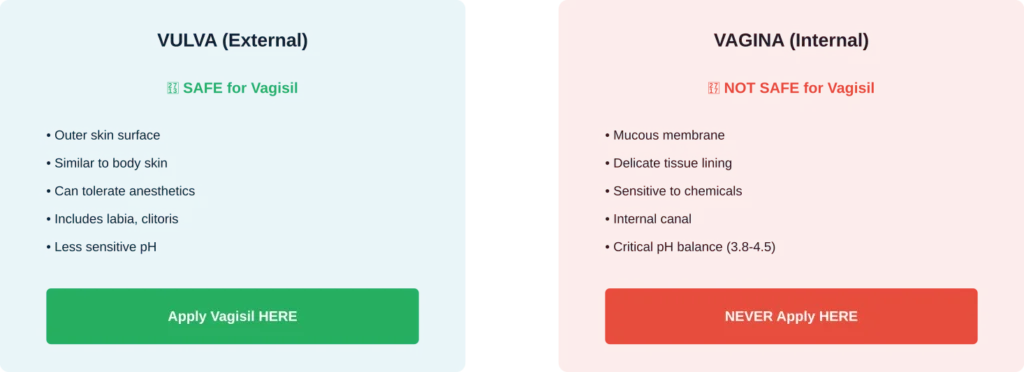
This matters more than you might think. The vulva encompasses all external genital structures: the labia majora, labia minora, clitoris, and the external opening. The vagina is the internal muscular canal.
WebMD clarifies that Vagisil products “are used in women to help reduce itching, irritation, and burning of the external part of the genitals called the vulva.” That specificity isn’t accidental—it’s a safety requirement.
The skin of the vulva is similar to skin elsewhere on the body, albeit more sensitive. The vaginal lining, however, consists of delicate mucous membranes with a carefully balanced ecosystem of bacteria and a specific pH range.
What Actually Happens If You Put Vagisil Inside
So what happens if someone applies Vagisil internally, either accidentally or thinking it’ll provide faster relief? Several problems can occur.
Chemical Irritation and Burning
The most immediate reaction is often intense burning or stinging. Benzocaine and resorcinol aren’t formulated for contact with mucous membranes. The vaginal lining is far more permeable and sensitive than external skin.
Internal application can cause sharp, intense discomfort that may exceed the original itching.
pH Disruption
The vagina maintains a naturally acidic pH between 3.8 and 4.5, which protects against harmful bacteria and yeast overgrowth. Vagisil creams aren’t pH-balanced for internal use.
Introducing these products internally can disrupt this delicate balance, potentially creating conditions that favor infections rather than preventing them. The FDA’s guidance on vaginal drug products emphasizes that internal vaginal formulations require specific pH considerations.
Masking Underlying Infections
Here’s where it gets dangerous. Vaginal itching isn’t just annoying—it’s often a symptom of an infection that needs proper treatment. Yeast infections, bacterial vaginosis, and trichomoniasis all cause itching.
By numbing the area, Vagisil can mask these symptoms temporarily. You might think the problem is resolved when actually the infection continues to progress untreated. Healthcare providers emphasize that symptom relief does not constitute treatment of underlying infections.
Allergic Reactions
Benzocaine can trigger allergic reactions, a condition called contact dermatitis. When applied to the more sensitive internal tissue, this risk increases. Symptoms include redness, swelling, and paradoxically, more intense itching.
According to MedlinePlus drug information resources, allergic reactions to topical anesthetics can range from mild to severe and may require medical intervention.
Potential Absorption Issues
The vaginal mucosa absorbs substances far more readily than external skin. While benzocaine absorption from proper external use is minimal, internal application could lead to higher systemic absorption.
In rare cases, excessive benzocaine absorption can cause methemoglobinemia, a serious blood disorder. While this is uncommon with topical use, internal application increases the theoretical risk.
What to Do If You’ve Already Applied Vagisil Internally
Okay, so what if you’ve already put Vagisil inside? Don’t panic, but do take action.
First, stop using the product immediately. Don’t apply more thinking it’ll help—you’ll only compound the problem.
Gently rinse the area with lukewarm water. Don’t douche or use soap internally, as this can further disrupt the vaginal pH. External rinsing with clean water is sufficient.
Monitor for reactions. If you experience severe burning, swelling, unusual discharge, or symptoms that worsen over the next few hours, contact a healthcare provider. These could indicate an allergic reaction or infection that needs treatment.
Most people who accidentally apply a small amount won’t experience severe complications, but vigilance is important. The vagina is generally good at self-cleaning, but introduced chemicals can cause issues.
Why External-Only Instructions Matter
Product labeling isn’t arbitrary. The FDA’s regulatory framework for over-the-counter vaginal drug products requires specific testing and formulation standards for internal use.
Products intended for internal vaginal application undergo different safety assessments than those for external skin. They must demonstrate compatibility with vaginal tissue, appropriate pH levels, and safety for mucous membrane contact.
Vagisil hasn’t undergone this testing for internal use because it’s not designed for it. Using it internally means using a product in a way that hasn’t been evaluated for safety or efficacy in that application.
| Product Type | Application Area | Active Ingredients | Intended Use |
|---|---|---|---|
| Vagisil Regular Strength | External vulva only | 5% benzocaine, 2% resorcinol | Temporary itch relief |
| Vagisil Maximum Strength | External vulva only | 20% benzocaine, 3% resorcinol | Severe external itch relief |
| Miconazole (antifungal) | Internal vaginal use approved | 2-4% miconazole nitrate | Yeast infection treatment |
| Clotrimazole (antifungal) | Internal vaginal use approved | 1-2% clotrimazole | Yeast infection treatment |
Safe Alternatives for Internal Vaginal Itching
If the itching is actually coming from inside the vagina, Vagisil isn’t the answer. Several FDA-approved options exist for internal symptoms.
Antifungal Medications
For yeast infections, MedlinePlus recommends medications like miconazole or clotrimazole specifically formulated for vaginal use. These come as suppositories or internal creams with applicators designed for safe insertion.
These products are pH-balanced for vaginal use and have been tested for safety on mucous membranes. They actually treat the infection rather than just numbing symptoms.
Prescription Treatments
Bacterial vaginosis, trichomoniasis, and other infections require prescription medications. According to ACOG’s recent guidance, recurrent bacterial vaginosis may even require concurrent partner treatment for effective resolution.
MedlinePlus resources document several prescription options including metronidazole and clindamycin vaginal formulations specifically designed for internal use.
When to See a Healthcare Provider
See a doctor if symptoms persist beyond a few days, if discharge changes in color or smell, if you develop a fever, or if over-the-counter treatments don’t provide relief within the timeframe indicated on the package.
First-time yeast infection symptoms should always be evaluated by a provider. Many conditions can mimic yeast infections, and self-diagnosis isn’t always accurate.

Common Misconceptions About Vaginal Health Products
Several myths persist about feminine hygiene products and treatments. Let’s address them.
Myth: Vaginal Probiotics Cure All Issues
Vaginal probiotics have gained popularity, but the evidence doesn’t support the hype. According to Harvard T.H. Chan School of Public Health analysis, “current scientific evidence does not necessarily support” the claims that vaginal probiotic products promote health and treat infections.
A Harvard Health article similarly noted that vaginal probiotics lack robust evidence of benefit compared to gut probiotics.
Myth: The Vagina Needs Cleaning Products
The vagina is self-cleaning. It doesn’t need douches, washes, or internal cleaning products. These can actually harm the natural bacterial balance and increase infection risk.
External gentle cleansing of the vulva with mild soap and water is sufficient for hygiene.
Myth: All Itching Means a Yeast Infection
Vaginal itching has many causes beyond yeast infections. Bacterial vaginosis, trichomoniasis, contact dermatitis from soaps or detergents, lichen sclerosus, and even stress can trigger symptoms.
Assuming it’s always yeast and self-treating repeatedly can delay proper diagnosis and treatment of other conditions.
How to Properly Use Vagisil (External Application)
If external vulvar itching is the issue and you’ve ruled out infections requiring treatment, Vagisil can be used safely when applied correctly.
Proper external application includes: washing hands thoroughly, gently cleaning the external genital area with mild soap and water, patting dry completely, and applying a thin layer of cream only to the external affected area.
Don’t apply more than directed on the package—typically 3-4 times daily. Use only as long as symptoms persist, generally not exceeding 7 days without consulting a doctor.
If symptoms don’t improve within 7 days or worsen, discontinue use and see a healthcare provider. Prolonged itching usually indicates an underlying condition that needs proper treatment.
Understanding Side Effects Even with Proper Use
Even when used correctly on external skin, Vagisil can cause side effects. WebMD notes potential reactions including skin irritation, redness, or worsening symptoms.
Serious allergic reactions are rare but possible. Signs include severe rash, swelling (especially of face, tongue, or throat), severe dizziness, or difficulty breathing. These require immediate medical attention.
Some people develop sensitivity to benzocaine specifically. If you’ve had reactions to other benzocaine-containing products (certain sunburn treatments, teething gels, or throat sprays), mention this to a pharmacist before using Vagisil.
The Role of Vaginal pH in Health
Understanding vaginal pH helps explain why internal application of non-formulated products causes problems. A healthy vaginal pH stays between 3.8 and 4.5—quite acidic.
This acidity is maintained by beneficial Lactobacillus bacteria that produce lactic acid. This environment inhibits growth of harmful bacteria and yeast. When pH rises (becomes less acidic), harmful organisms can flourish.
Products not specifically formulated for vaginal use typically have neutral or alkaline pH, which can disrupt this protective acidity. That’s why even “gentle” or “natural” products can cause problems when used internally without proper formulation.
Special Considerations and Precautions
Certain groups should be especially cautious with any vaginal symptom self-treatment.
Pregnant individuals should consult healthcare providers before using any vaginal products, even those available over-the-counter. Some infections during pregnancy require prompt treatment to prevent complications.
People with diabetes experience higher rates of yeast infections and may need prescription-strength or prolonged treatment. Self-treatment may not be sufficient.
Anyone with compromised immune systems (HIV, chemotherapy, immunosuppressant medications) should see a provider for vaginal symptoms rather than self-treating, as infections can be more severe or caused by unusual organisms.
Reading Product Labels Carefully
The labeling on Vagisil products explicitly states “for external use only.” This warning appears for important medical and legal reasons.
Other key label information includes the active ingredient concentrations, which help distinguish regular from maximum strength formulations. According to available product information, regular strength contains 5% benzocaine while maximum strength contains 20%.
Contraindications and warnings sections list who shouldn’t use the product and what situations require medical consultation. Always read these sections completely before first use.
Frequently Asked Questions
No. Vagisil only provides temporary symptom relief by numbing the area—it doesn’t treat the underlying yeast infection. You need an antifungal medication like miconazole or clotrimazole to actually eliminate the infection. Using Vagisil alone can mask symptoms while the infection worsens.
Most people report that burning sensations subside within 30 minutes to 2 hours after rinsing with water. If intense burning persists beyond 2-3 hours or worsens, contact a healthcare provider as this may indicate an allergic reaction or significant irritation requiring medical attention.
No. None of the Vagisil anti-itch cream products are formulated or approved for internal vaginal use. All Vagisil creams are designed exclusively for external application to the vulva. For internal symptoms, use products specifically labeled for vaginal insertion, such as antifungal suppositories.
Vulvar itching occurs on the external genital skin (labia, clitoral hood, perineum) and often results from irritation from soaps, fabrics, or skin conditions. Vaginal itching is felt internally within the vaginal canal and typically indicates infection like yeast or bacterial vaginosis. The location determines appropriate treatment.
Yes, Vagisil can be used on external skin during menstruation, but it won’t address internal discomfort. Avoid applying it to sanitary products or inserting it internally. If menstrual products cause irritation, consider switching to fragrance-free or hypoallergenic options rather than masking symptoms with topical anesthetics.
Some healthcare providers discourage Vagisil use because it masks symptoms without treating underlying causes, potentially delaying proper diagnosis of infections. The numbing effect can hide worsening conditions. Additionally, some doctors find that patients misuse it internally or become reliant on it instead of addressing root causes of chronic itching.
When applied correctly to external skin, Vagisil typically provides relief within 5-15 minutes as the benzocaine numbs the area. Relief is temporary, usually lasting 1-4 hours depending on the strength used. If relief doesn’t occur or symptoms return immediately after the numbing wears off, the itching likely has an underlying cause requiring different treatment.
Conclusion: External Use Only for Good Reason
The bottom line is straightforward: Vagisil products are formulated exclusively for external use on the vulva, and internal application can cause chemical irritation, pH disruption, masked infections, and potential allergic reactions.
If itching is truly internal, the appropriate response is using products specifically designed for vaginal use—typically antifungal treatments for yeast infections or prescription medications for bacterial conditions. When symptoms persist or uncertainty exists about the cause, professional medical evaluation is the safest approach.
The vagina’s delicate ecosystem requires respect and proper care. Using products as directed protects this balance and ensures symptoms receive appropriate treatment rather than just temporary masking.
Experiencing vaginal symptoms that concern you? Schedule an appointment with a healthcare provider for proper diagnosis and treatment. Don’t rely on self-treatment when the underlying cause remains unclear.