

Quick Summary: Taking too much semaglutide can cause severe gastrointestinal symptoms including persistent nausea, vomiting, and diarrhea, with some cases requiring hospitalization. The FDA has received reports of adverse events from dosing errors with compounded semaglutide products, often resulting from incorrect measurement or miscalculation by patients or healthcare providers. Symptoms are typically dose-dependent and may last several days due to the medication’s long half-life.
Semaglutide has become one of the most talked-about medications for weight loss and diabetes management. Sold under brand names like Ozempic, Wegovy, and Rybelsus, this GLP-1 receptor agonist has changed how many people approach metabolic health.
But what happens when things go wrong?
The FDA has raised concerns about a troubling trend: people are accidentally taking too much semaglutide, sometimes with serious consequences. According to the FDA, reports of adverse events related to semaglutide overdoses have been increasing, with some cases requiring hospitalization.
Understanding what happens when someone takes too much of this medication isn’t just academic. It’s essential information for anyone using semaglutide or considering it.
How Semaglutide Overdoses Happen
The FDA has documented several specific ways that dosing errors occur with semaglutide. These aren’t theoretical risks—they’re real incidents that have sent people to emergency rooms.
Compounded semaglutide products present particular challenges. Unlike FDA-approved prefilled pens from manufacturers like Novo Nordisk, compounded versions come in vials that require manual measurement. This creates multiple opportunities for error.
Here’s where things go wrong:
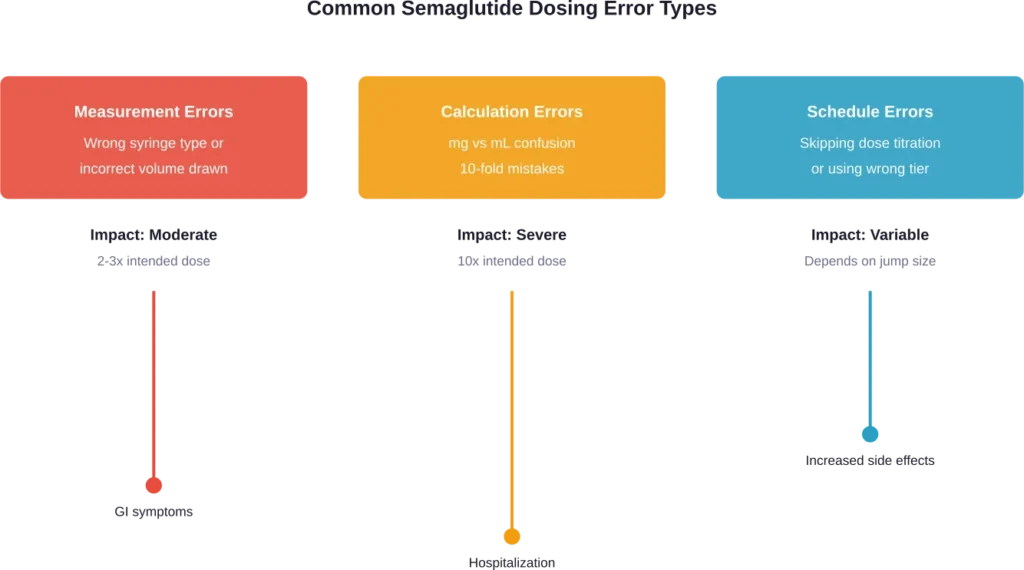
- Patients measure incorrect doses when drawing medication from vials
- Healthcare providers miscalculate dosing instructions
- Confusion between milligrams and milliliters leads to 10-fold dosing errors
- Use of syringes not calibrated for semaglutide concentrations
- Misunderstanding dose escalation schedules
According to research published on PubMed, compounded semaglutide vials don’t include the safety features built into manufactured prefilled pens, making large overdoses physically possible where they wouldn’t be with standard products.
The most common error? A patient or provider confusing units of measurement. Someone might inject 1 mL thinking it’s equivalent to their 1 mg dose, when the vial concentration actually delivers 10 times that amount.
Symptoms of Semaglutide Overdose
What actually happens in the body when someone takes too much semaglutide?
The symptoms are primarily gastrointestinal, but they’re significantly more severe and prolonged than standard side effects. According to official prescribing information, the most common adverse reactions reported in ≥5% of patients include nausea, vomiting, diarrhea, abdominal pain, and constipation.
An overdose amplifies these effects dramatically.
Immediate Gastrointestinal Symptoms
Research published on PubMed describes cases where patients experienced severe, persistent nausea and vomiting after taking excessive semaglutide. In one documented case study, a patient who took an intentional overdose experienced symptoms that were surprisingly mild and self-limiting, but this isn’t the universal experience.
Another case report detailed a 67-year-old diabetic patient who developed progressive weakness, loss of appetite, epigastric pain, massive watery diarrhea, bloody diarrhea, and even a syncopal episode after overdose. This patient experienced multiorgan complications.
Typical overdose symptoms include:
- Severe, unrelenting nausea lasting multiple days
- Persistent vomiting leading to dehydration
- Intense abdominal pain and cramping
- Profuse diarrhea, sometimes bloody
- Significant weakness and fatigue
- Dizziness or fainting from fluid loss
Why Symptoms Last So Long
Here’s the thing though—semaglutide has a long half-life. This means the medication stays in the system for an extended period.
When someone takes too much, they can’t simply wait a few hours for it to wear off. Symptoms may persist for days or even longer, since there’s no quick way to clear the excess medication from the body.
Serious Complications
While many semaglutide overdose cases result in uncomfortable but manageable symptoms, some patients require hospitalization. The FDA explicitly mentions that reports have included adverse events serious enough to require hospital admission.
Potential serious complications include:
- Severe dehydration from fluid loss
- Electrolyte imbalances
- Acute kidney injury from dehydration
- Hypoglycemia (low blood sugar), especially in diabetic patients
- Pancreatitis in rare cases
- Gastrointestinal bleeding
According to Poison Control, while semaglutide overdoses can cause significant symptoms, fatal outcomes are extremely rare in the medical literature.
| Symptom Category | Mild Overdose | Severe Overdose | Duration |
|---|---|---|---|
| Nausea | Moderate, manageable | Severe, persistent, unrelenting | 3-7 days |
| Vomiting | Occasional episodes | Frequent, leading to dehydration | 2-5 days |
| Diarrhea | Loose stools | Profuse, watery, sometimes bloody | 3-7 days |
| Abdominal Pain | Mild cramping | Severe, debilitating pain | 2-6 days |
| Systemic Effects | Mild weakness | Dehydration, electrolyte issues, hospitalization | Variable |
How Much Semaglutide Is Too Much?
There’s no universally established toxic dose of semaglutide because the medication’s effects are highly individual. What causes severe symptoms in one person might produce milder effects in another.
However, the standard dosing schedules provide important context.
Semaglutide formulations use gradual dose titration protocols specific to each product and indication.
The key word here? Gradually.
These medications require slow dose escalation specifically because higher doses cause more pronounced gastrointestinal effects. Patients need time to build tolerance. Jumping from a starting dose directly to a maintenance dose—even without technically overdosing—can cause severe symptoms.
Community discussions on platforms like Reddit frequently mention accidental double-dosing scenarios. Someone forgets they already injected their weekly dose and takes another, effectively doubling their intended amount. Even this 2x error can trigger significant symptoms.
Ten-fold errors, as documented in FDA reports, represent true medical emergencies.
What to Do If You’ve Taken Too Much
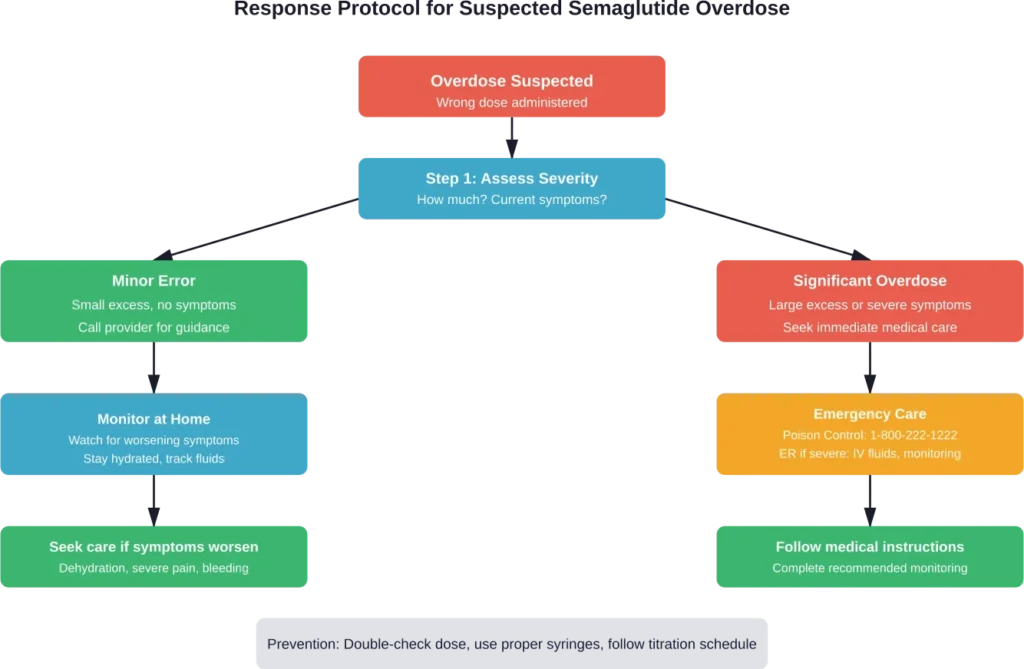
Real talk: if there’s any possibility of a significant semaglutide overdose, seek medical attention immediately.
Call your healthcare provider right away or contact Poison Control at 1-800-222-1222. In cases of severe symptoms—persistent vomiting, signs of dehydration, fainting, severe abdominal pain—go to the emergency room or call 911.
There’s no antidote for semaglutide overdose. Treatment focuses on managing symptoms and supporting the body while the medication clears naturally.
Medical Management
Healthcare providers typically address semaglutide overdose through supportive care:
- IV fluids to correct dehydration and electrolyte imbalances
- Anti-nausea medications (though effectiveness may be limited)
- Monitoring blood sugar levels, especially in diabetic patients
- Monitoring kidney function
- Hospitalization for observation in severe cases
According to case studies published on PubMed, some overdose patients remained asymptomatic despite taking significantly elevated doses. Others required days of supportive hospital care. The variability underscores why medical evaluation is essential—there’s no way to predict severity without professional assessment.
At-Home Monitoring
For confirmed minor overdoses where a healthcare provider has advised home monitoring, watch for these warning signs that require immediate medical attention:
- Inability to keep down any fluids for more than 12 hours
- Signs of severe dehydration (dark urine, dizziness when standing, confusion)
- Severe or worsening abdominal pain
- Blood in vomit or stool
- Symptoms of hypoglycemia in diabetic patients
- Any symptom that feels concerning or unusual
Preventing Semaglutide Dosing Errors
Prevention matters far more than treatment. And the FDA’s warnings make clear that many overdoses are entirely preventable.
For Patients Using Compounded Semaglutide
Compounded semaglutide requires extra caution. The FDA specifically recommends that patients and compounders carefully verify:
- The exact concentration of semaglutide in the vial
- The correct syringe type for that concentration
- Clear instructions on how many units or mL equal the prescribed dose
- Understanding the difference between milligrams (drug amount) and milliliters (volume)
Before each injection, double-check the dose. Better yet, have a pharmacist demonstrate the first dose and watch while confirming the technique.
For All Semaglutide Users
Whether using compounded products or brand-name prefilled pens:
- Keep a medication log noting each dose and date
- Set phone reminders for weekly injections
- Mark the calendar immediately after injecting
- Never skip the gradual dose titration schedule
- Store pens and vials in a dedicated location to avoid confusion
- Read all pharmacy instructions carefully
- Ask questions if anything is unclear
Healthcare providers should provide written dosing instructions, not just verbal ones. Miscommunication accounts for a significant portion of dosing errors.
Understanding Normal Side Effects vs. Overdose Symptoms
How do you distinguish between expected semaglutide side effects and signs of overdose?
This matters because GLP-1 receptor agonists cause gastrointestinal symptoms even at therapeutic doses. According to official prescribing information, the most common adverse reactions reported in ≥5% of patients include nausea, vomiting, diarrhea, abdominal pain, and constipation.
The difference lies in severity and persistence.
| Characteristic | Normal Side Effects | Overdose Symptoms |
|---|---|---|
| Onset | Gradual, often during dose increases | Sudden, shortly after incorrect dose |
| Intensity | Mild to moderate, manageable | Severe, debilitating |
| Duration | Improves within days as body adjusts | Persists for extended period (days to week) |
| Impact on Daily Life | Inconvenient but can function | Unable to maintain normal activities |
| Response to Management | Responds to dietary changes, anti-nausea meds | Limited response to interventions |
Normal side effects typically peak when starting semaglutide or increasing doses, then improve as the body adjusts. Overdose symptoms appear suddenly after a dosing error and remain severe throughout the medication’s extended presence in the system.
Special Considerations for Different Semaglutide Formulations
Semaglutide comes in multiple forms, each with specific overdose risk profiles.
Injectable Forms (Ozempic, Wegovy)
Prefilled pens from manufacturers include built-in safety mechanisms that limit how much can be injected at once. But these aren’t foolproof—someone could still administer multiple pen doses.
Compounded injectable semaglutide in vials presents the highest overdose risk because there’s no physical limit on how much can be drawn.
Oral Form (Rybelsus)
Semaglutide oral tablets are available in multiple fixed doses. The tablets must be taken correctly—on an empty stomach with minimal water, at least 30 minutes before food or other medications. According to DailyMed prescribing information, tablets should not be split, crushed, or chewed.
Long-Term Effects and Recovery
What about lasting consequences from a semaglutide overdose?
Most patients recover fully once the excess medication clears from their system. The body doesn’t suffer permanent damage from a single overdose event in the majority of cases.
That said, severe complications during the overdose period could potentially cause lasting effects. Acute kidney injury from severe dehydration, for instance, might require extended recovery time. Pancreatitis, if it occurs, would need appropriate follow-up care.
After recovering from an overdose, patients can typically resume semaglutide therapy if it’s medically appropriate. Healthcare providers usually restart at a lower dose and retitrate gradually.
FDA Warnings and Regulatory Response
The FDA has taken the unusual step of issuing specific public warnings about semaglutide dosing errors. This reflects the seriousness and frequency of reported incidents.
According to the FDA alert, the agency encourages patients to talk with healthcare providers or compounders about correct dosing and proper administration techniques. The warning specifically targets awareness of measurement errors and calculation mistakes.
Healthcare providers and compounding pharmacies have a responsibility to provide clear instructions and appropriate measurement tools. But patients also need to advocate for clarity and ask questions when something doesn’t make sense.
FAQs About Semaglutide Overdose
Fatal semaglutide overdoses are extremely rare in medical literature. While overdoses can cause serious symptoms requiring hospitalization, death is not a common outcome. However, severe complications like extreme dehydration or electrolyte imbalances could theoretically be life-threatening if not treated.
Contact your healthcare provider or Poison Control (1-800-222-1222) immediately to report the error. Monitor for symptoms like severe nausea, vomiting, diarrhea, or abdominal pain. Stay well-hydrated and seek emergency care if symptoms become severe or if you experience signs of dehydration or hypoglycemia.
Due to semaglutide’s long half-life, overdose symptoms can persist for several days or longer. Patients may experience severe gastrointestinal symptoms for 3-7 days or more, depending on the amount taken. There’s no way to quickly eliminate the excess medication from the body.
Most patients recover fully from semaglutide overdoses without permanent damage. However, severe complications during the overdose period—such as acute kidney injury from dehydration or pancreatitis—could potentially require extended recovery. Long-term effects are uncommon but possible in cases involving serious complications.
The FDA has specifically warned about dosing errors with compounded semaglutide products. Compounded vials allow for larger measurement errors compared to prefilled manufacturer pens with built-in safety features. The risk isn’t necessarily that compounded semaglutide is more dangerous, but that dosing errors are more likely to occur.
This depends entirely on the severity. Minor overdoses with mild symptoms might be manageable at home under medical guidance, but you should always contact a healthcare provider first. Significant overdoses, especially those causing severe vomiting, dehydration, or other concerning symptoms, require professional medical evaluation and potentially hospitalization.
Both can cause severe symptoms, but they’re technically different situations. Taking too much at once is a true overdose. Escalating doses too quickly (skipping the gradual titration schedule) isn’t an overdose per se, but it overwhelms the body’s tolerance and produces similar severe gastrointestinal effects. Both require medical attention if symptoms are significant.
Moving Forward Safely
Semaglutide has transformed diabetes management and weight loss for millions of people. When used correctly, it’s generally safe and effective.
But the medication isn’t without risks, especially when dosing errors occur. The FDA’s warnings about overdoses aren’t meant to scare people away from semaglutide—they’re meant to promote safer practices.
If you’re using semaglutide or considering it, take these lessons seriously. Verify doses carefully. Use the correct syringes and measurement tools. Follow titration schedules exactly. Keep detailed records. And never hesitate to ask questions when something seems unclear.
The difference between therapeutic benefit and overdose symptoms often comes down to careful attention to detail.
Talk to your healthcare provider about proper dosing techniques specific to your semaglutide formulation. If you’re using compounded semaglutide, request a demonstration of proper measurement and administration. Consider having a family member or friend learn the process too, providing an extra set of eyes to catch potential errors.
Your safety depends on understanding exactly how to use this powerful medication correctly. The few extra minutes spent double-checking could prevent days of severe symptoms or a trip to the emergency room.
Have concerns about your current semaglutide dosing? Don’t wait. Contact your healthcare provider today to review your administration technique and ensure you’re using the medication safely.