
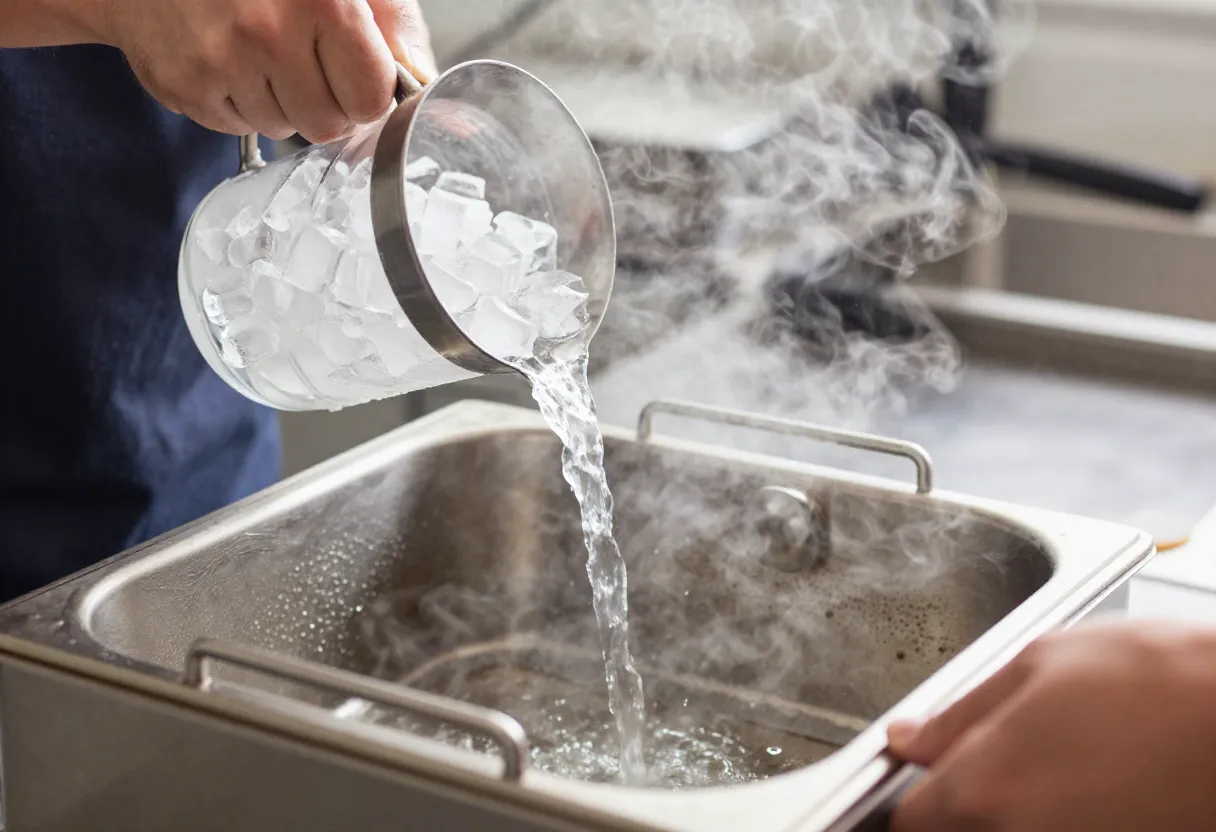
Quick Summary: Putting ice in a deep fryer causes a violent reaction where ice rapidly converts to steam, expanding 1,700 times in volume and explosively ejecting boiling oil. This creates serious burn risks, potential fires, and kitchen damage. Never add ice, frozen foods with ice crystals, or water to hot oil.
The internet is filled with videos showing what happens when someone drops ice into a deep fryer. Spoiler: it’s spectacularly dangerous.
The ice, upon coming in contact with boiling oil, quickly melts and changes to steam. That steam expands violently, carrying boiling oil along with it in an explosive eruption that can cause severe burns, kitchen fires, and property damage.
But why does this happen? And what’s the science behind this kitchen disaster?
The Science Behind Ice Meeting Hot Oil
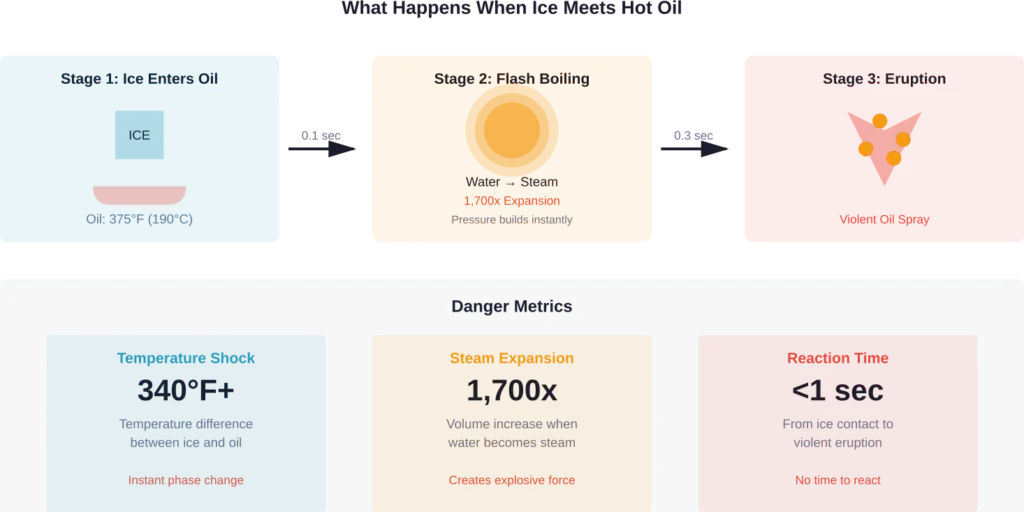
When ice touches oil heated to frying temperatures (typically 350-375°F or 175-190°C), several things happen simultaneously — and none of them are good.
First, the extreme temperature difference creates an instant phase change. Ice at 32°F (0°C) meets oil at 375°F (190°C). That’s a temperature differential of over 340°F.
The ice doesn’t gradually melt. It flash-converts to water, then immediately boils into steam.
The Explosive Power of Steam Expansion
Here’s where things get dangerous. When water converts to steam, it expands approximately 1,700 times its original volume.
A single ice cube contains enough water to create a massive volume of steam in milliseconds. That steam has to go somewhere, and it expands upward with tremendous force.
The rapidly expanding steam doesn’t just rise peacefully. It carries boiling oil along with it, creating a violent eruption that sprays hot oil several feet in every direction.
Why Water and Oil Don’t Mix
Beyond the temperature issue, water and oil have fundamentally incompatible properties.
Oil and water have different densities. Water is denser, so ice sinks below the oil surface before it melts. This means the steam forms beneath the oil layer, forcing the oil upward and outward with tremendous pressure.
Research on physical properties of food oils indicates frying oil degrades via exposure to heat, oxygen, and water. The water from melting ice doesn’t just create an explosion — it degrades the oil quality rapidly.
The Real Dangers of Ice in Hot Oil
Community discussions and safety demonstrations consistently highlight three primary dangers.
Severe Burn Risk
Hot oil can reach temperatures of 375°F or higher. When that oil is explosively ejected from the fryer, it can cause third-degree burns on contact.
The oil spray can travel several feet, meaning bystanders aren’t safe either. Burns to the face, hands, and arms are common in ice-in-fryer incidents.
Kitchen Fire Hazard
According to the National Fire Protection Association (NFPA), cooking fires are a leading cause of home fires and injuries.
When boiling oil sprays across a kitchen, it can ignite on contact with hot surfaces, open flames from gas stoves, or electrical elements. These grease fires are classified as Class K fires.
The NFPA notes that Class K fire extinguishers are specifically designed for putting out grease fires and are commonly found in commercial kitchens. Standard fire extinguishers won’t effectively combat a grease fire — and water makes it catastrophically worse.
Property Damage
Even if fire is avoided, the oil spray creates a mess that’s difficult and expensive to clean. Hot oil on walls, cabinets, floors, and appliances can permanently stain or damage surfaces.
What About Frozen Food?
Here’s the thing though — people fry frozen foods all the time. So what’s different?
The key is ice crystals versus frozen solid food. A properly prepared frozen french fry or chicken nugget has minimal ice on its surface. The food itself acts as insulation, and any small amount of ice melts gradually.
But frozen food covered in frost or ice crystals? That’s dangerous. The ice reacts the same way a solid ice cube would, just on a smaller scale.
| Food Type | Safety Level | Why |
|---|---|---|
| Commercially frozen fries | Generally Safe | Minimal surface ice, designed for frying |
| Frost-covered frozen food | Dangerous | Ice crystals cause small eruptions |
| Food with ice coating | Very Dangerous | Reacts like solid ice |
| Pure ice cubes | Extremely Dangerous | Maximum water content, violent reaction |
| Wet food | Dangerous | Water flash-boils, causes splattering |
The Dry Ice Question
Some online experiments show people putting dry ice (frozen carbon dioxide) into deep fryers. The reaction is different but still dangerous.
Dry ice sublimates — it goes directly from solid to gas without becoming liquid. When placed in hot oil, it rapidly converts to carbon dioxide gas, creating vigorous bubbling and oil overflow.
While not as explosively violent as regular ice, dry ice still displaces oil and can cause burns from splashing. It’s another kitchen experiment that belongs in the “don’t try this” category.
Deep-Fried Ice Cream: How Is That Possible?
Wait — if ice and hot oil are such enemies, how does deep-fried ice cream exist?
The secret is insulation. Deep-fried ice cream uses a thick coating of cake, cookie crumbs, or tempura batter that completely encases the ice cream. The coating is often frozen solid before frying.
When the coated ice cream hits the oil, only the outer layer cooks. The frying time is extremely brief — typically 10-15 seconds. The coating browns and crisps, but the ice cream inside stays frozen.
Real talk: this only works because the ice cream never directly contacts the hot oil. The insulating barrier prevents the explosive water-to-steam reaction.
Safe Deep Frying Practices
According to NFPA restaurant fire protection guidelines, commercial kitchens must follow strict protocols for deep fryer safety.
Here’s what home cooks should know:
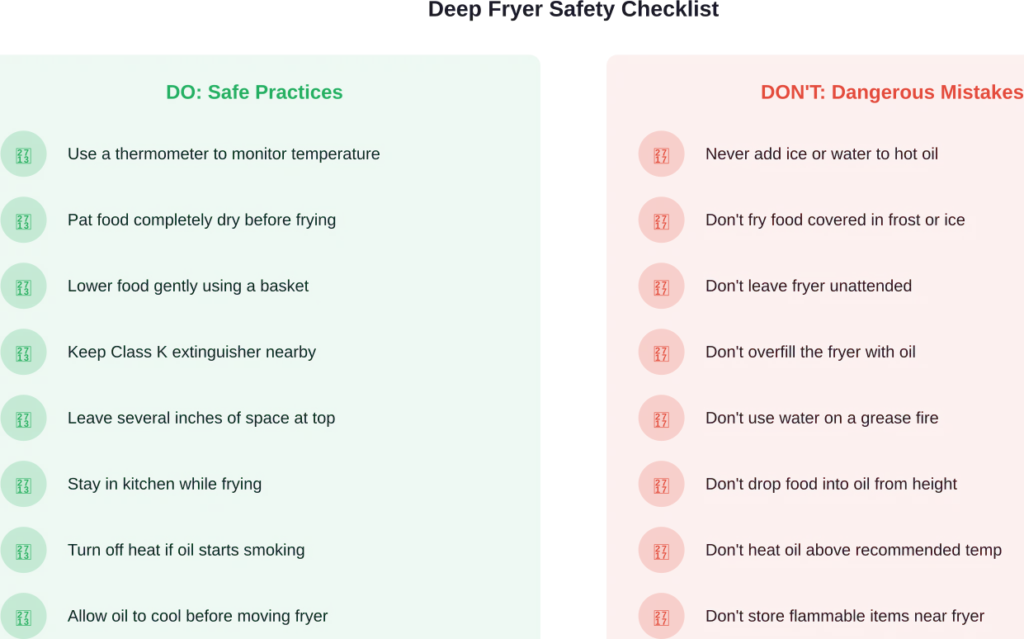
- Never leave a deep fryer unattended
- Keep the area around the fryer clear of combustible materials
- Use a thermometer to monitor oil temperature precisely
- Don’t overfill the fryer with oil — leave several inches of space
- Pat food completely dry before frying
- Lower food gently into oil using a basket or slotted spoon
- Keep a Class K fire extinguisher within reach
- Never use water on a grease fire
What To Do If Oil Ignites
If the worst happens and oil catches fire, knowing the correct response can prevent serious injury.
First rule: never use water. Water on a grease fire causes the same explosive reaction as ice in a fryer, spreading burning oil everywhere.
For small fires, turn off the heat source immediately. If it’s a stovetop fryer, carefully slide a metal lid over the pot to smother the flames. Don’t try to carry the pot outside — sloshing burning oil is extremely dangerous.
For larger fires, use a Class K fire extinguisher if available. These extinguishers are specifically formulated for grease fires and work by creating a barrier between the fuel and oxygen.
If the fire is spreading or can’t be controlled immediately, evacuate and call emergency services. Property can be replaced — lives can’t.
The Chemistry of Combustion
Understanding why oil fires are so dangerous requires basic combustion chemistry.
Cooking oil has a flash point (the temperature where it can ignite) around 600°F, well above normal frying temperatures. But when oil is violently sprayed into the air — as happens with ice-induced eruptions — the surface area increases dramatically.
That increased surface area combined with high temperature creates ideal conditions for combustion. The oil droplets suspended in air have maximum oxygen exposure, and any ignition source can trigger widespread burning.
This is why the ice-in-fryer reaction is so hazardous. It doesn’t just spray hot oil — it creates an aerosol of fuel at temperatures close to ignition.
Common Myths Debunked
Several misconceptions about ice and deep fryers persist online.
Myth: A small amount of ice won’t cause problems.
Reality: Even a single ice cube contains enough water to create a dangerous eruption. Size matters, but all ice is risky.
Myth: The ice will cool the oil and make frying safer.
Reality: The ice doesn’t have time to cool anything. It flash-converts to steam before any cooling effect occurs.
Myth: If the fryer has a lid, the reaction is contained.
Reality: The pressure from steam expansion can blow lids off or force oil through ventilation holes. Lids don’t make this safe.
Frequently Asked Questions
Generally speaking, commercially prepared frozen fries are designed for direct frying. They have minimal surface ice. However, if the fries have visible frost or ice crystals, shake them off first or let them thaw slightly. The small amount of ice on properly frozen fries typically causes only minor splattering, not violent eruptions.
Most deep frying happens between 350-375°F (175-190°C). Frying in the 350-375°F range is standard for optimal heat transfer during cooking. Using a thermometer is essential — oil that’s too cool produces greasy food, while oil that’s too hot can ignite.
The NFPA requires commercial kitchens to implement multiple safety measures: automatic fire suppression systems above fryers, Class K fire extinguishers within easy reach, regular equipment maintenance, and staff training on safe operation. Commercial fryers also have built-in thermostats to prevent overheating.
No. While dry ice doesn’t create the explosive reaction that water ice does, it rapidly sublimates into carbon dioxide gas, causing vigorous bubbling and oil displacement. This can still cause hot oil to overflow and create burn hazards. There’s no legitimate reason to put dry ice in a fryer.
Deep-fried ice cream works because the ice cream never directly touches the oil. A thick coating of batter, cake, or cookie crumbs completely encases the ice cream, acting as insulation. The frying time is extremely brief (10-15 seconds), just long enough to brown the coating while the ice cream stays frozen inside.
If water spills into hot oil, immediately step back to avoid the eruption. Don’t try to cover the fryer or pour more liquid in. Turn off the heat source if possible without getting closer. Let the reaction settle on its own — it typically lasts only a few seconds. Never lean over the fryer to inspect damage until the oil has cooled.
Absolutely. According to the NFPA, cooking fires are a leading cause of home fires. Hot oil sprayed across a kitchen can ignite on contact with other heat sources, and burning oil can spread to cabinets, curtains, and other combustible materials. This is why immediate action — using a lid to smother flames or a Class K extinguisher — is critical.
Conclusion
The short answer? Never put ice in a deep fryer. Ever.
The violent reaction between ice and hot oil happens in milliseconds, creating explosive steam expansion that ejects boiling oil in all directions. The risks — severe burns, kitchen fires, and property damage — far outweigh any curiosity about what might happen.
Understanding the science helps explain why this reaction is so dangerous: the 340°F+ temperature differential causes instant phase change, water expands 1,700 times when becoming steam, and the density difference forces oil upward explosively.
Safe deep frying requires dry food, proper temperature control, constant attention, and appropriate safety equipment. Never leave a deep fryer unattended, and keep a Class K fire extinguisher nearby — these simple precautions can prevent injuries and save lives.
If online videos make the ice-in-fryer reaction look entertaining, remember: those demonstrations typically cause burns, fires, and kitchen damage. The videos showing safe outcomes are either heavily edited or involve small quantities under controlled conditions with safety equipment nearby.
Keep ice for cooling drinks, not experimenting with hot oil. The chemistry doesn’t lie — water and boiling oil are mortal enemies.
Stay safe in the kitchen: Follow NFPA safety guidelines, keep a Class K fire extinguisher accessible, and treat deep fryers with the respect they deserve. These simple precautions can prevent injuries and save lives.