

Quick Summary: Taking 2 Zyrtec (cetirizine) in 24 hours exceeds the recommended dosage and may increase side effects like drowsiness, dizziness, and dry mouth. While generally not life-threatening in healthy adults, doubling the dose should only occur under medical supervision. Contact Poison Control at 1-800-222-1222 if accidental overdose occurs or symptoms worsen.
Allergy season can be brutal, and when symptoms hit hard, the temptation to take extra medication is real. But what actually happens if you accidentally take 2 Zyrtec tablets within 24 hours instead of the recommended single dose?
The short answer? It’s generally not a medical emergency for most healthy adults, but it’s not recommended either. Cetirizine can stay in the bloodstream for up to 24 hours after it is taken, and doubling up increases the risk of side effects without necessarily improving symptom relief.
Here’s what the science says, what symptoms to watch for, and when medical attention becomes necessary.
Understanding Zyrtec and Its Recommended Dosage
Cetirizine, sold under the brand name Zyrtec, is a second-generation antihistamine initially approved by the FDA in 1995 as a prescription-only medication. It gained over-the-counter status in 2007 and has since become one of the most popular allergy medications available.
The standard dosage for adults and children 6 years and older is one 10mg tablet daily (every 24 hours). This dosing schedule exists for good reason—cetirizine has a long half-life and remains active in your system throughout the day.
According to Poison Control, cetirizine is relatively well-tolerated but is associated with side effects such as drowsiness, dizziness, and dry mouth. Because of this, use with alcohol and other sedating medications should be avoided.
How Cetirizine Works in Your Body
Cetirizine is a highly selective H1 receptor antagonist with marked antiallergic properties. When allergens trigger histamine release, these molecules bind to H1 receptors and cause symptoms like sneezing, itching, and watery eyes.
Cetirizine blocks these receptors, preventing histamine from causing allergic reactions. But here’s the thing—approximately 98% binding to proteins occurs in the bloodstream, creating a reservoir that provides 24-hour coverage.
Taking a second dose doesn’t necessarily double the effectiveness. Instead, it increases drug concentration beyond the therapeutic window, raising the likelihood of adverse effects.
Immediate Effects of Taking Two Zyrtec Tablets
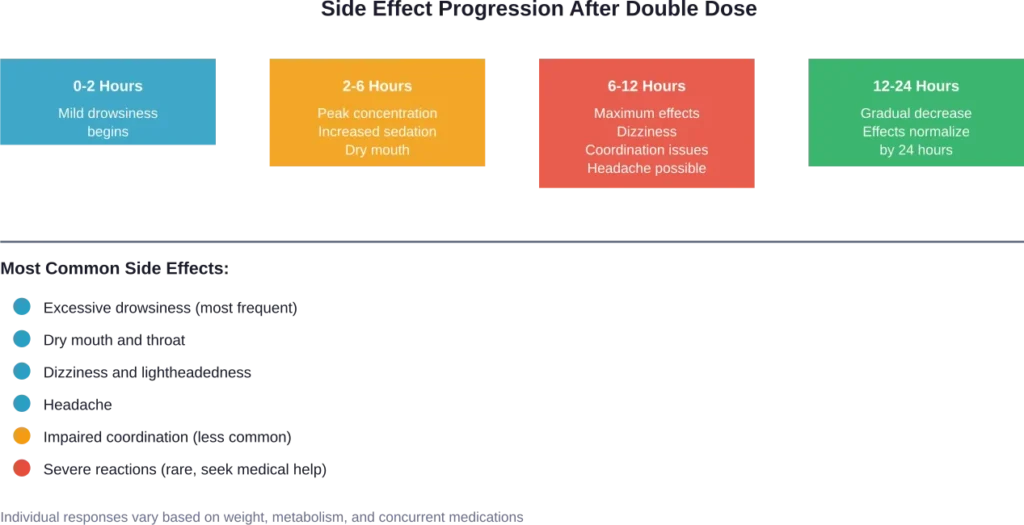
So what actually happens in the hours after taking a double dose? The effects vary based on individual factors like body weight, metabolism, and whether other medications are in your system.
Most Common Side Effects
When taking double the recommended cetirizine dose, these symptoms occur most frequently:
- Excessive drowsiness: This is the most reported side effect. The sedating properties intensify with higher doses.
- Dry mouth: Anticholinergic effects become more pronounced, leading to increased thirst and discomfort.
- Dizziness: Impaired coordination and judgment can occur, making activities like driving dangerous.
- Headache: Some individuals experience headaches as drug concentration peaks.
- Fatigue: Beyond simple drowsiness, a general feeling of exhaustion may persist for hours.
Research indicates that double dose of cetirizine hydrochloride may be effective for patients with certain conditions who don’t respond adequately to standard dosing. However, this should only occur under medical supervision, not as self-medication.
When Double Dosing Becomes Dangerous
Real talk: for most healthy adults, accidentally taking 2 Zyrtec tablets won’t require emergency care. But certain situations escalate the risk.
The concern with antihistamine toxicity isn’t just the H1-receptor binding—it’s the anticholinergic effects. According to StatPearls, antihistamines are highly lipid-soluble, with approximately 98% binding to proteins, and their volume of distribution ranging from 0.5-30 L/kg.
High-Risk Groups
| Population | Risk Level | Primary Concerns |
|---|---|---|
| Children under 6 | High | Seizures, respiratory depression, cardiac effects |
| Elderly (65+) | Moderate-High | Increased sensitivity, fall risk, confusion |
| Pregnant/Nursing | Moderate | Fetal effects, drug transfer through breast milk |
| Liver/Kidney Disease | High | Impaired drug clearance, accumulation |
| Concurrent Medications | Moderate-High | Drug interactions, additive sedation |
Warning Signs Requiring Medical Attention
Contact Poison Control at 1-800-222-1222 or seek emergency care if these symptoms develop:
- Difficulty breathing or shortness of breath
- Rapid or irregular heartbeat
- Severe dizziness or fainting
- Confusion or disorientation
- Seizures
- Inability to wake the person
- Severe agitation or hallucinations
The FDA warns about serious concerns with cetirizine, particularly regarding patients stopping the medication after long-term use. While this relates to discontinuation rather than overdose, it highlights that cetirizine affects the body more profoundly than many realize.
What Medical Research Says About Higher Doses
Interestingly, some clinical contexts do involve higher cetirizine doses. Research indicates that double dose of cetirizine hydrochloride may be effective for patients with certain conditions who don’t respond adequately to standard dosing.
According to medical research, higher doses of cetirizine may be considered in specific cases of chronic urticaria—but only under medical supervision.
A retrospective pharmacovigilance study based on the FDA adverse event reporting system database (published September 2024) examined high-risk drug adverse events associated with cetirizine. The analysis revealed that while cetirizine is generally safe, adverse events do occur, particularly with improper dosing.
The Difference Between Medical Supervision and Self-Dosing
Here’s where it gets important. When healthcare providers prescribe higher cetirizine doses, they:
- Evaluate individual patient factors (weight, age, health conditions)
- Monitor for adverse reactions systematically
- Adjust doses based on response and tolerance
- Screen for drug interactions
- Provide guidance on timing and duration
Self-medicating with double doses lacks these safeguards. What works in a controlled clinical setting doesn’t translate to safe at-home experimentation.
Interactions That Amplify Risk
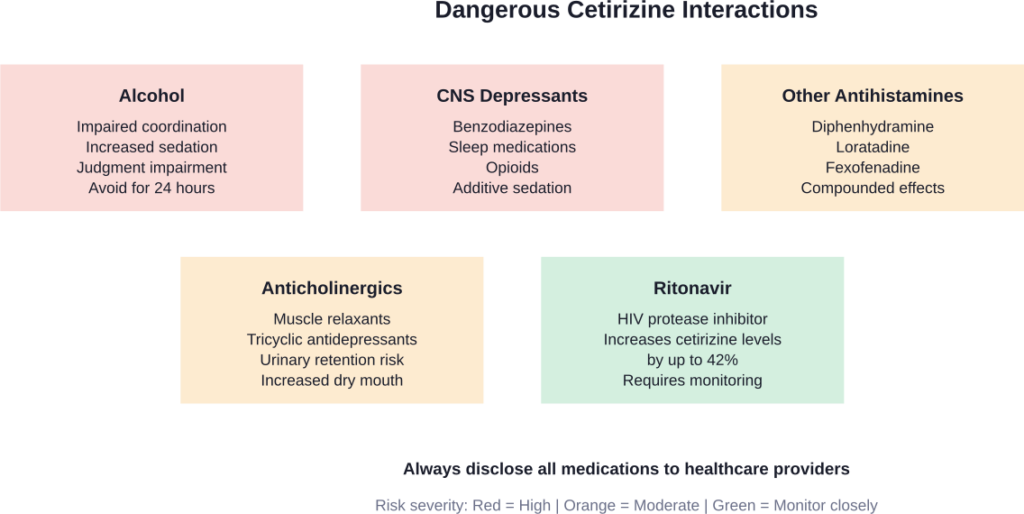
Taking 2 Zyrtec becomes significantly more problematic when combined with other substances or medications.
Alcohol and Cetirizine
When taken together, the combination of alcohol and cetirizine can lead to impairment in coordination and judgment. Since cetirizine can stay in the bloodstream for up to 24 hours after it is taken, it is recommended to avoid any alcohol consumption during this time.
With a double dose, alcohol’s effects amplify even further. Tasks requiring alertness—driving, operating machinery, even walking down stairs—become significantly more dangerous.
What to Do If You’ve Taken Two Zyrtec
Okay, so what if it’s already happened? Here’s the practical action plan.
Immediate Steps
For accidental double dosing within a few hours:
- Don’t panic. For most healthy adults, this isn’t a medical crisis.
- Contact Poison Control at 1-800-222-1222 for personalized guidance. They provide free, confidential, expert advice 24/7.
- Monitor for symptoms: drowsiness, dizziness, dry mouth, headache.
- Stay hydrated. Drink water to help with dry mouth and support kidney function.
- Avoid alcohol, driving, or operating machinery for at least 24 hours.
- Don’t take another dose for at least 24 hours from the last pill.
- Rest in a safe environment where monitoring can occur.
If symptoms become severe:
Seek immediate medical attention if difficulty breathing, chest pain, severe dizziness, fainting, seizures, or confusion develop. These symptoms, while rare, require emergency evaluation.
What Healthcare Providers May Do
In clinical settings, treatment for antihistamine overdose focuses on supportive care. There’s no specific antidote for cetirizine overdose.
Medical intervention might include:
- Monitoring vital signs (heart rate, blood pressure, breathing)
- Activated charcoal if ingestion occurred within 1-2 hours
- IV fluids for hydration and drug elimination
- Symptomatic treatment for specific complications
- Observation until symptoms resolve
Prevention Strategies
The best approach? Preventing accidental double dosing in the first place.
| Strategy | Implementation | Effectiveness |
|---|---|---|
| Medication Log | Write down each dose with time/date | High |
| Pill Organizer | Pre-sort daily medications weekly | High |
| Phone Reminder | Set daily alarm at consistent time | Medium-High |
| Routine Anchoring | Take with specific daily activity | Medium |
| Single Location | Store medication in one place only | Medium |
Many people forget whether they’ve taken their daily dose. Creating systems eliminates guesswork.
Long-Term Considerations
If standard Zyrtec dosing isn’t controlling allergy symptoms adequately, double dosing isn’t the solution. Several alternatives exist.
When Standard Dosing Isn’t Enough
Healthcare providers may recommend:
- Different antihistamine: Switching to loratadine, fexofenadine, or levocetirizine might provide better results.
- Combination therapy: Adding a nasal corticosteroid spray addresses inflammation more directly.
- Timing adjustments: Taking medication at different times may optimize effectiveness.
- Allergy testing: Identifying specific triggers enables targeted avoidance.
- Immunotherapy: Allergy shots or sublingual tablets treat underlying sensitivity rather than just symptoms.
According to medical guidelines, supervised higher dosing of cetirizine may be appropriate for chronic urticaria that’s refractory to standard treatment. But this requires medical evaluation and monitoring.
FDA Safety Communication
The FDA has issued warnings about cetirizine, particularly regarding severe itching (pruritus) that can occur when stopping the medication after long-term daily use. Patients who used these medicines daily, typically for at least a few months and often for years, have reported this issue.
This underscores an important point: cetirizine affects body systems more significantly than many realize. It’s not just a benign allergy pill—it’s a medication that requires respect and proper usage.
Frequently Asked Questions
No, not without medical guidance. The standard dose is once every 24 hours for good reason—cetirizine remains active in your system throughout the day. If symptoms aren’t controlled, consult a healthcare provider about alternative treatments rather than self-medicating with double doses. They may recommend combining antihistamines with nasal sprays or considering different medications entirely.
Cetirizine has an elimination half-life in adults, meaning a portion of the drug is eliminated within that timeframe. However, cetirizine can stay in the bloodstream for up to 24 hours after consumption. Complete elimination typically takes 2-3 days. In individuals with kidney impairment, this process takes considerably longer, which is why dose adjustments are necessary for these patients.
Contact Poison Control immediately at 1-800-222-1222. Children are at higher risk for serious complications from antihistamine overdose, including seizures and respiratory depression. Do not wait to see if symptoms develop—get expert guidance right away. Keep the medication bottle handy so you can provide information about the exact product and dosage.
No. Cetirizine doesn’t work faster at higher doses—it just increases side effect risk. The medication takes roughly 1 hour to start working regardless of dose, with peak effects at 2-3 hours. If rapid relief is needed, fast-acting antihistamines like diphenhydramine may be more appropriate, though they come with stronger sedation. Discuss options with a healthcare provider.
Absolutely not. Zyrtec-D contains both cetirizine and pseudoephedrine (a decongestant). The recommended dose is one tablet every 12 hours, maximum two tablets in 24 hours. Taking more than directed can cause dangerous cardiovascular effects from the pseudoephedrine, including rapid heartbeat, elevated blood pressure, and heart palpitations. Overdosing on combination products is particularly risky.
Yes. Elderly individuals, children, people with liver or kidney disease, and those taking multiple medications face higher risks. Additionally, individuals with certain genetic variations in drug metabolism may process cetirizine more slowly, leading to accumulation. If experiencing unusual sensitivity to standard doses (extreme drowsiness, coordination issues), discuss with a healthcare provider before taking subsequent doses.
Both are antihistamines, but their overdose profiles differ. Diphenhydramine (Benadryl) is a first-generation antihistamine with stronger anticholinergic effects, making overdose more dangerous. Cetirizine is a second-generation antihistamine with fewer anticholinergic properties and less central nervous system penetration. While cetirizine overdose primarily causes sedation, diphenhydramine overdose can cause hallucinations, seizures, and serious cardiac effects at lower relative doses.
The Bottom Line
Taking 2 Zyrtec tablets within 24 hours exceeds the recommended dosage and increases the risk of side effects like drowsiness, dizziness, dry mouth, and impaired coordination. For most healthy adults, accidental double dosing isn’t life-threatening but requires monitoring and precautions.
The key points to remember:
- Standard dosing is one 10mg tablet every 24 hours
- Cetirizine remains active in your system for up to 24 hours
- Doubling the dose doesn’t double effectiveness—it increases side effects
- Contact Poison Control (1-800-222-1222) for guidance if accidental overdose occurs
- Seek emergency care for severe symptoms like difficulty breathing, seizures, or loss of consciousness
- Never combine double-dose cetirizine with alcohol or sedating medications
- Higher doses should only occur under medical supervision
If standard Zyrtec dosing isn’t controlling symptoms, don’t self-medicate with extra doses. Consult a healthcare provider about alternative treatments, combination therapies, or supervised higher dosing protocols. Evidence-based medicine offers numerous effective allergy management strategies beyond simply taking more medication.
Medication safety isn’t about fear—it’s about informed decisions. Understanding what happens when dosing goes off-track empowers better choices and safer outcomes. When in doubt, reach out to medical professionals rather than guessing. Poison Control and healthcare providers exist precisely for these situations.
Store medications safely, create systems to prevent accidental double dosing, and remember that more isn’t always better when it comes to pharmaceuticals. Effective allergy management requires the right approach, not just a higher dose.