

Quick Summary: Not drinking enough water with creatine can lead to dehydration, muscle cramps, reduced supplement effectiveness, and potential kidney stress. Research shows proper hydration (3-4 liters daily) is essential for creatine absorption and helps prevent side effects like gastrointestinal distress and diminished athletic performance.
Creatine monohydrate has become one of the most researched and widely used supplements in the fitness world. Athletes, bodybuilders, and fitness enthusiasts rely on it to boost strength, enhance muscle mass, and improve overall performance.
But here’s the thing—creatine doesn’t work in isolation.
The supplement’s effectiveness is deeply intertwined with proper hydration. When water intake falls short, the body’s ability to utilize creatine efficiently becomes compromised. And the consequences? They range from uncomfortable to potentially problematic.
How Creatine and Water Work Together
Understanding the relationship between creatine and hydration requires looking at how this supplement functions at the cellular level.
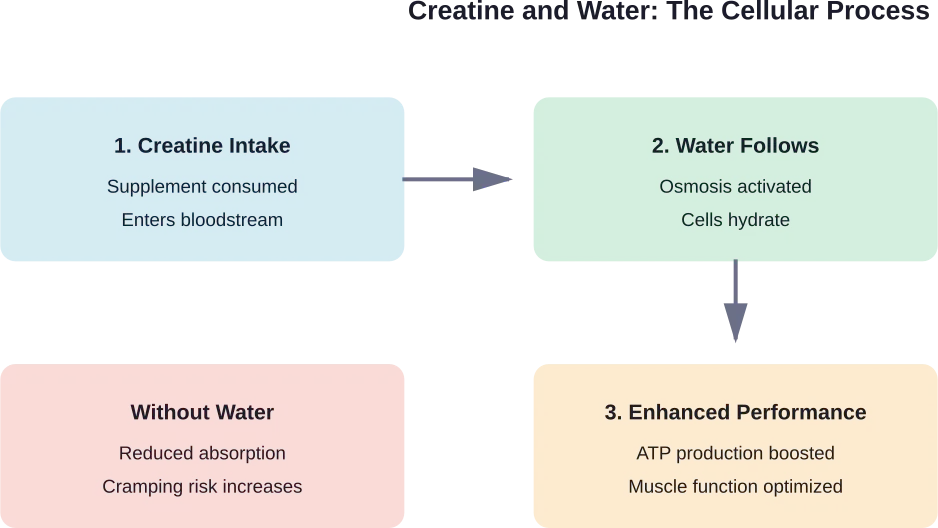
Creatine pulls water into muscle cells through a process called osmosis. This intracellular water retention isn’t just about making muscles look fuller—it’s fundamental to how creatine enhances performance. According to research, creatine supplementation increases the body’s total creatine pool, particularly in skeletal muscle, where it is spontaneously degraded into creatinine at a rate of approximately 2% per day.
The mechanism is straightforward. When creatine enters muscle cells, water follows. This creates an anabolic environment that supports protein synthesis and cellular function. Without adequate water, this process gets disrupted.
Recent studies published in Food Science & Nutrition examined dietary creatine and hydration biomarkers in populations over a 24-year period. The research highlighted the connection between creatine intake and overall hydration status at the population level.
The Science Behind Cellular Hydration
Creatine doesn’t just sit in muscles waiting to be used. It actively participates in the phosphocreatine energy system, which provides rapid ATP (adenosine triphosphate) regeneration during explosive movements.
This energy transfer system functions optimally when cells maintain proper fluid balance. Dehydration disrupts this balance, reducing creatine’s ergogenic benefits.
What Actually Happens Without Enough Water
The consequences of inadequate hydration while taking creatine aren’t just theoretical. They’re physiological realities backed by research and countless user experiences.
Dehydration and Performance Decline
When fluid intake doesn’t match creatine’s demands, dehydration becomes a real concern. A study examining creatine use and exercise heat tolerance in dehydrated men found that subjects consuming 21.6 grams daily of creatine monohydrate required careful hydration monitoring, especially during physical activity.
Dehydration symptoms can manifest quickly:
- Increased thirst and dry mouth
- Fatigue and reduced energy levels
- Decreased exercise capacity
- Dizziness or lightheadedness
- Dark-colored urine
The impact on athletic performance is measurable. Without proper hydration, the ergogenic benefits that make creatine so popular—strength gains, power output, muscle endurance—all diminish.
Muscle Cramps and Digestive Issues
One of the most commonly reported side effects of creatine combined with poor hydration is muscle cramping. While a comprehensive review in Frontiers in Nutrition addressed various safety concerns regarding creatine ingestion, the connection between hydration status and muscle function remains clear.
Gastrointestinal distress also escalates when water intake is insufficient. Creatine can cause stomach discomfort, bloating, and nausea—problems that worsen significantly in a dehydrated state.
Kidney Function Concerns
The relationship between creatine and kidney health has been extensively studied. According to a systematic review and meta-analysis published in BMC Nephrology, creatine supplementation doesn’t impair kidney function in healthy individuals when used appropriately.
However, proper hydration remains protective. Creatine metabolism produces creatinine, a waste product filtered by the kidneys. Adequate water intake supports this filtration process and prevents unnecessary stress on renal function.
Research shows that creatine supplementation increases serum creatinine levels. The systematic review in BMC Nephrology found creatine supplementation was associated with a small but statistically significant increase in serum creatinine in meta-analysis of 12 studies (177 participants in creatine group, 263 in control). This is particularly relevant when combined with high protein intake, which elevates blood urea nitrogen. Proper hydration helps maintain healthy kidney function and accurate biomarker readings.
How Much Water Do You Actually Need
The standard recommendation is straightforward but important: 3-4 liters of water daily when taking creatine.
This isn’t arbitrary. It’s based on the supplement’s osmotic properties and the body’s increased fluid requirements during supplementation.
| Creatine Phase | Daily Creatine Dose | Recommended Water Intake | Frequency |
|---|---|---|---|
| Loading Phase | 20-25 grams | 4-5 liters | Split into 4-5 servings |
| Maintenance Phase | 3-5 grams | 3-4 liters | Once daily |
| High-Intensity Training Days | 3-5 grams | 4-5+ liters | Throughout the day |
During a loading phase—when intake reaches 20-25 grams daily—water needs increase proportionally. The body is saturating muscle creatine stores rapidly, which demands more fluid for proper absorption and cellular function.
Individual Factors That Matter
Water requirements aren’t one-size-fits-all. Several variables affect how much hydration is necessary:
- Body weight and composition
- Activity level and training intensity
- Climate and environmental temperature
- Diet composition and sodium intake
- Concurrent supplement use
Athletes training in hot environments or engaging in prolonged exercise sessions need significantly more water. Research on marathon participants noted that 40% of runners showed evidence of acute kidney injury (based on increase in serum creatinine) immediately following races, which resolved within 24 hours.
Practical Hydration Strategies for Creatine Users
Knowing you need more water is one thing. Actually drinking it consistently? That’s where many people struggle.
Here are evidence-based strategies that work:
Track and Schedule Water Intake
Setting phone alarms for water breaks every 60-90 minutes creates consistent hydration habits. This approach removes guesswork and ensures regular fluid intake throughout waking hours.
Carrying a reusable water bottle provides both a visual reminder and convenient access. Opt for bottles with measurement markings to track daily progress toward hydration goals.
Optimize Timing Around Workouts
Pre-workout hydration matters. Drinking 16-20 ounces of water 2-3 hours before training ensures adequate baseline hydration. Follow with another 8-10 ounces 15-20 minutes before exercise begins.
During workouts, sip 7-10 ounces every 10-20 minutes of activity. Post-exercise, replace 150% of fluid lost through sweat—this typically means 24 ounces for every pound of body weight lost during training.
Enhance Hydration Quality
While plain water works perfectly well, adding electrolytes during intense training sessions supports better fluid retention and cellular function. Sodium, potassium, and magnesium help maintain proper hydration balance, especially during extended or high-intensity workouts.
Foods with high water content contribute to overall hydration status. Watermelon, cucumbers, oranges, and leafy greens provide both fluids and nutrients that support optimal performance.

Debunking Common Hydration Myths
Misinformation about creatine and water circulates widely in fitness communities. Let’s address the most persistent myths.
Myth: Creatine Causes Dangerous Dehydration
Research analyzing creatine safety found that 13,452 participants in 652 studies ingested placebos, while 12,839 participants in 685 studies consumed creatine. The research indicates creatine supplementation has a favorable safety profile regarding dehydration concerns when hydration guidelines are followed.
The key phrase: when proper hydration practices are followed.
Myth: Water Retention Means You’re Drinking Too Much
Some water retention is expected and beneficial with creatine use. This intramuscular water storage is precisely how the supplement enhances cellular function and muscle fullness.
Concerning water retention—the kind that causes excessive bloating or discomfort—typically indicates poor hydration practices or individual sensitivity, not excessive water intake.
Myth: Coffee and Tea Don’t Count Toward Hydration
While caffeinated beverages have mild diuretic effects, they still contribute to overall fluid intake. The water content outweighs the diuretic impact for most people consuming moderate amounts.
That said, plain water remains the optimal choice for meeting increased hydration needs during creatine supplementation.
Recognizing Dehydration Warning Signs
Awareness of dehydration symptoms allows for quick corrective action before problems escalate.
Early warning signs include:
- Dry mouth and increased thirst
- Reduced urination frequency or dark urine
- Headaches and difficulty concentrating
- Fatigue beyond normal training tiredness
Advanced dehydration symptoms require immediate attention:
- Extreme thirst and very dark urine
- Rapid heartbeat and breathing
- Dizziness, confusion, or irritability
- No urination for 8+ hours
Anyone experiencing severe symptoms should stop creatine supplementation temporarily and consult a healthcare provider.
Frequently Asked Questions
Technically possible, but not advisable. Taking creatine without increasing water intake significantly raises the risk of dehydration, muscle cramps, gastrointestinal issues, and reduced supplement effectiveness. The osmotic properties of creatine require additional fluid for proper cellular function.
Dehydration symptoms can manifest within hours of inadequate fluid intake, especially during a loading phase or on training days. Individual factors like climate, activity level, and baseline hydration status affect timing. Most people notice increased thirst and reduced energy within 4-6 hours of insufficient hydration.
According to systematic reviews and meta-analyses, including research published in BMC Nephrology, creatine supplementation does not cause kidney damage in healthy individuals when used appropriately. Proper hydration and following recommended dosing guidelines are essential. Individuals with pre-existing kidney conditions should consult healthcare providers before supplementing.
Both. Drinking 8-16 ounces of water with creatine helps with absorption and dissolution. Continue drinking water consistently throughout the day to maintain proper hydration status. Timing matters less than total daily water intake reaching the 3-4 liter target.
While rare, hyponatremia (water intoxication) can occur from excessive water consumption that dilutes blood sodium levels. For most people taking creatine, this isn’t a practical concern unless consuming extreme amounts (6+ liters) in short time periods without electrolyte replacement. Stick to recommended guidelines of 3-4 liters daily, increasing as needed for training intensity.
Creatine will still provide some benefits with 2 liters daily, but effectiveness diminishes compared to proper hydration. Absorption decreases, side effect risks increase, and performance benefits may not reach their full potential. Aim for at least 3 liters minimum to support optimal creatine function.
Mild dehydration typically resolves within 1-2 hours of resuming adequate fluid intake. More significant dehydration may require 4-6 hours of consistent hydration. Electrolyte-enhanced beverages can accelerate rehydration compared to plain water alone. Prevention through consistent hydration habits remains the best approach.
Final Thoughts on Creatine and Hydration
The relationship between creatine and water isn’t complicated, but it is non-negotiable for anyone wanting to maximize results while minimizing risks.
Inadequate hydration while supplementing with creatine leads to predictable problems: reduced effectiveness, increased side effects, and potentially compromised kidney function markers. Research consistently shows that proper hydration practices prevent these issues while supporting optimal supplement performance.
Three to four liters of water daily isn’t excessive—it’s appropriate for the physiological demands creatine places on the body. Setting hydration reminders, tracking intake, and adjusting for activity level transforms this requirement from challenging to manageable.
The bottom line? Creatine works. But only when hydration supports its cellular mechanisms. Treat water intake as seriously as the supplement itself, and the benefits will follow without the complications.