
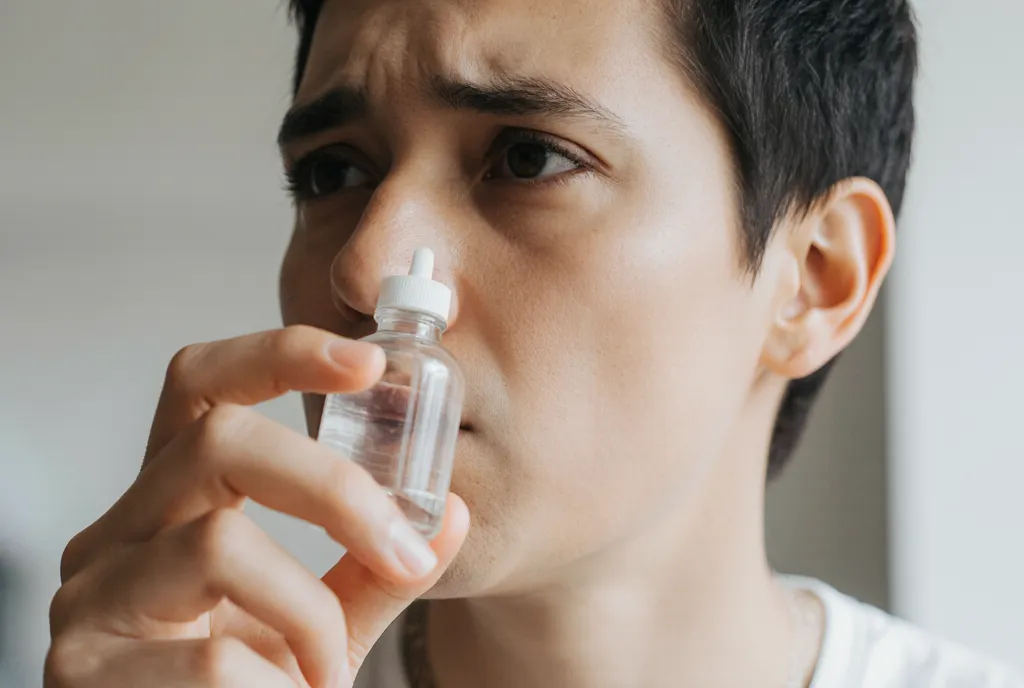
Quick Summary: Drinking eye drops containing tetrahydrozoline can cause severe poisoning and potentially death. According to Poison Control, symptoms include drowsiness, slow heartbeat, breathing difficulty, and in serious cases, coma. In 2023, 771 exposures to tetrahydrozoline eye drops were reported to US poison centers, with 40% involving children 5 years or younger.
Over-the-counter eye drops seem harmless. They’re sold without child-resistant packaging in most cases, sit on bathroom counters, and millions of people use them daily without incident.
But here’s the thing: what’s safe for your eyes can be deadly in your stomach.
The active ingredient in many redness-relieving eye drops—tetrahydrozoline—becomes a serious poison when swallowed. Not the urban legend kind where someone gets a bit of diarrhea. The real kind that sends people to emergency rooms and, in documented cases, has caused death.
What Makes Eye Drops Poisonous When Swallowed
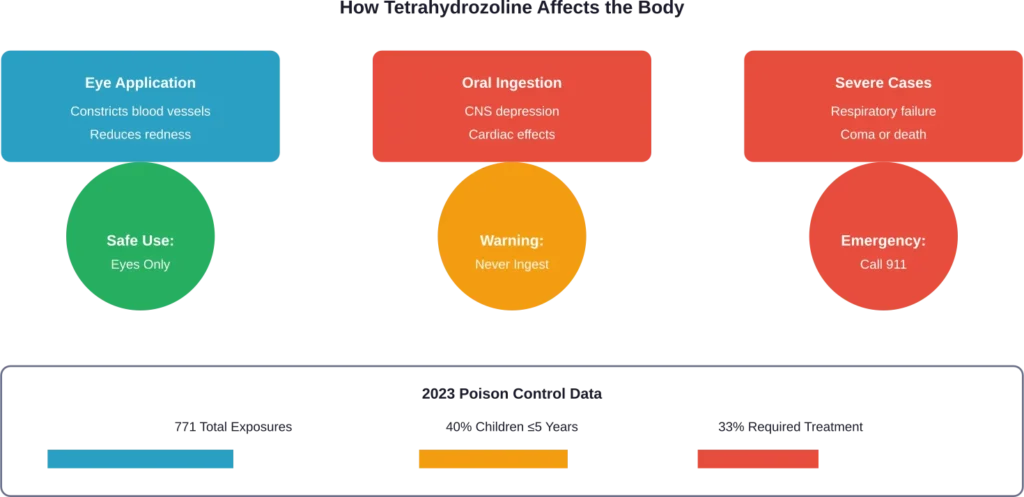
Tetrahydrozoline belongs to a class of medications called imidazoline derivatives. On the eye’s surface, it constricts blood vessels to reduce redness. Simple enough.
Once it enters the digestive system, though, it acts as a powerful alpha-2 adrenergic receptor agonist. According to medical research, up to 80% of the applied drug may diffuse into the systemic circulation by crossing the highly vascularized nasopharyngeal mucosa.
When swallowed intentionally or accidentally, this absorption rate becomes even more dangerous. The chemical affects the central nervous system, cardiovascular system, and respiratory function simultaneously.
Symptoms of Eye Drop Poisoning
After swallowing tetrahydrozoline, symptoms of poisoning usually appear within 15 to 60 minutes. The speed depends on how much was swallowed and whether there was food in the stomach.
Early signs include:
- Drowsiness and extreme fatigue
- Slowed heart rate (bradycardia)
- Low blood pressure
- Difficulty breathing
- Hypothermia
As poisoning progresses, more severe symptoms develop. These include confusion, vomiting, seizures, and loss of consciousness. In the worst cases, victims slip into a coma.
Poison Control emphasizes that symptoms have been reported in cases where tetrahydrozoline eye drops reached the gastrointestinal tract by draining down tear ducts.
The Myth About Visine and Diarrhea
Here’s what needs to be cleared up immediately: Visine does NOT cause harmless diarrhea when added to someone’s drink.
That urban legend has circulated for years, portrayed in movies and discussed as a prank. Real talk: it’s dangerous misinformation.
According to Pharmacist’s Letter, people have been severely harmed after ingesting Visine as part of what someone thought was a practical joke. The active ingredient tetrahydrozoline is a vasoconstrictor that causes serious internal effects, not just digestive upset.
A documented case involved a 64-year-old man found dead in his home with a high concentration of tetrahydrozoline in his system; his wife was convicted of voluntary manslaughter and tampering with a food or drug for adding eye drops to his food.
Children Are at Highest Risk
In 2023, 771 exposures to tetrahydrozoline eye drops were reported to US poison centers. About 40% were children 5 years of age or younger. This makes sense when considering how these products are packaged and stored.
Most anti-redness eye drops are sold without child-resistant packaging. They’re small, colorful bottles that might look like toys or juice to a toddler. They’re often left on bathroom counters, in purses, or in medicine cabinets that aren’t locked.
Even small amounts can cause serious toxicity in children. Their smaller body weight means the same dose has a more concentrated effect.
| Age Group | Percentage of Exposures | Common Scenarios |
|---|---|---|
| Children ≤5 years | 40% | Accidental ingestion, accessible storage |
| Adults | 33% | Intentional misuse, suicide attempts |
| Teens | 27% | Pranks, self-harm, accidental |
What to Do If Someone Drinks Eye Drops
Time matters critically. Don’t wait to see if symptoms develop.
If someone collapses, has a seizure, has trouble breathing, or can’t be awakened: Call 911 immediately.
For all other situations, contact Poison Control right away through two options:
- Call 1-800-222-1222 to speak with a poison specialist
- Use the webPOISONCONTROL online tool for immediate guidance
Both services are free, confidential, and available 24 hours a day. The specialists will ask about the specific product, amount ingested, time of ingestion, and current symptoms.
Do NOT try to make the person vomit. Do NOT give them anything to eat or drink unless Poison Control specifically instructs otherwise.
If going to an emergency room, bring the eye drop container. The specific formulation and concentration information helps medical staff provide appropriate treatment.
Safe Storage Prevents Poisoning
Prevention is straightforward but requires conscious effort.
Store all eye drops in locked cabinets, out of reach and sight of children. Don’t leave them on nightstands, bathroom counters, or in purses that children can access.
Never transfer eye drops into unmarked containers. The original packaging provides critical information for medical professionals if poisoning occurs.
And obviously: never use eye drops as a prank or put them in someone’s food or drink. That’s not just dangerous—it’s criminal assault in many jurisdictions.
Frequently Asked Questions
Yes, ingesting even small amounts of eye drops containing tetrahydrozoline can cause severe poisoning and has resulted in documented deaths. The toxic dose varies by individual factors like body weight and overall health.
After swallowing strychnine, symptoms of poisoning usually appear within 15 to 60 minutes. However, the onset time depends on the amount swallowed and whether food was present in the stomach.
No, this is a dangerous myth. According to Pharmacist’s Letter, Visine does NOT cause harmless diarrhea. Instead, it causes serious toxicity affecting the nervous system, heart, and breathing.
Call Poison Control immediately at 1-800-222-1222 or use webPOISONCONTROL online. If the child is unconscious, having seizures, or having trouble breathing, call 911 first.
Not all eye drops contain tetrahydrozoline, but many over-the-counter redness-relieving drops do. Other types of eye drops may contain different ingredients that can also be harmful when ingested. Always treat any eye drop ingestion as a potential poisoning emergency.
There’s no safe amount to ingest. Toxicity depends on concentration, amount ingested, and individual factors. According to Poison Control, even drainage from tear ducts into the gastrointestinal tract has caused symptoms in some cases.
Yes, medical treatment is available but must be started quickly. Treatment may include supportive care, medications to counteract the effects, and monitoring of vital signs. About a third were treated in healthcare facilities.
The Bottom Line
Eye drops are medicine, not toys or prank tools. When used correctly—applied to the eyes as directed—they’re safe and effective for reducing redness.
When swallowed, they become a serious poison that can cause life-threatening complications or death.
Store them securely, use them only as directed, and keep Poison Control’s number (1-800-222-1222) easily accessible. If anyone ingests eye drops, don’t wait to see what happens. Get professional help immediately.