

Quick Summary: Taking too much trazodone at once can lead to serious health complications including hypotension, QT prolongation, seizures, cardiac arrhythmias, and in rare cases, death. Medical research documents that doses over 600mg significantly increase overdose risk, with symptoms ranging from drowsiness and dizziness to life-threatening cardiac events. Immediate medical attention is critical if overdose is suspected, as supportive care and cardiac monitoring can prevent fatal outcomes.
Trazodone is a commonly prescribed antidepressant that belongs to the serotonin antagonist and reuptake inhibitor class of medications. While it’s generally considered safe when taken as prescribed, taking too much trazodone at once creates potentially life-threatening situations that require immediate medical intervention.
The medication is primarily used to treat major depressive disorder, though doctors frequently prescribe it off-label for insomnia due to its sedative properties. But what exactly happens when someone takes more than the recommended amount?
Understanding Trazodone and Normal Dosing
Trazodone tablets come in 50mg, 100mg, and 150mg strengths, while capsules are available in 50mg and 100mg. For depression treatment, the typical therapeutic dose is 150mg daily, though doctors may start patients on lower amounts and gradually increase.
The liquid formulation contains either 10mg or 20mg of trazodone per 1ml. Healthcare providers tailor doses to individual patient needs, but staying within prescribed limits is crucial for safety.
What Constitutes a Trazodone Overdose
Medical research indicates that taking over 600mg of trazodone in a single day significantly increases overdose risk. The threshold varies based on individual factors like body weight, metabolism, other medications, and overall health status.
Here’s the thing though—even amounts below 600mg can cause serious complications in certain individuals, particularly children. Research on unintentional trazodone ingestions in children demonstrates that doses of 6mg/kg or higher warrant immediate medical evaluation.
Trazodone overdose occurs when someone takes more than the normal or recommended amount, either accidentally or intentionally. Since trazodone became widely available, physicians have documented numerous overdose cases through voluntary reporting systems.
Immediate Physical Effects of Taking Too Much Trazodone
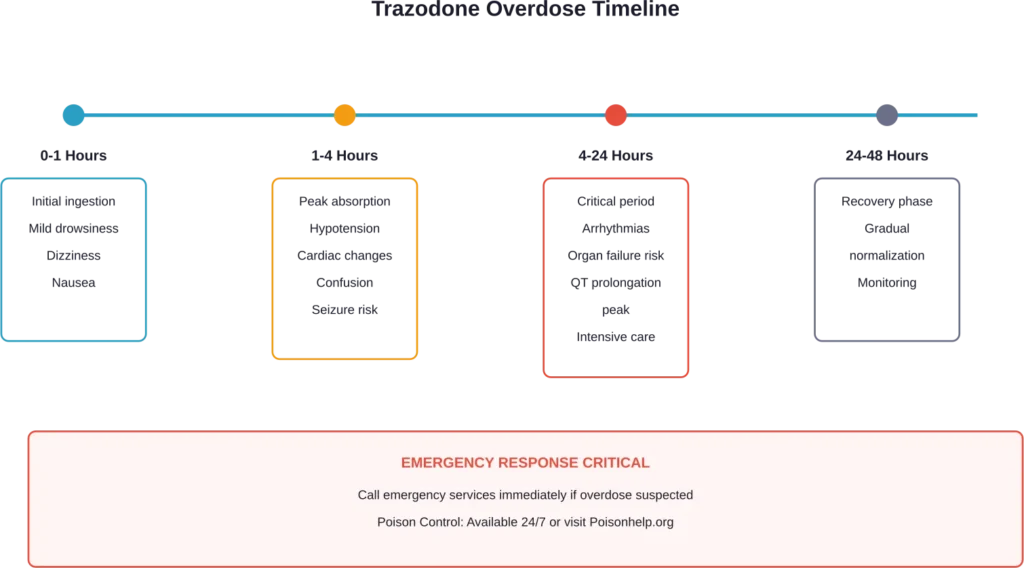
The body responds to excessive trazodone in multiple ways. Initial symptoms typically appear within 3-4 hours after ingestion.
Cardiovascular Complications
Cardiac effects represent some of the most dangerous consequences of trazodone overdose. Medical case reports document several serious cardiac complications:
- Severe hypotension (dangerously low blood pressure)
- QT prolongation on electrocardiogram readings
- Cardiac arrhythmias including life-threatening patterns
- Torsades de pointes (a specific type of abnormal heart rhythm)
- Complete AV block (disruption in electrical signals between heart chambers)
One documented case showed a patient arriving at the emergency department approximately 3-4 hours after ingestion with blood pressure readings of 228/120 mmHg and heart rate of 105 beats per minute. QT interval changes persisted for extended periods, with one case reporting improvement to 493ms only after 36 hours of monitoring.
Neurological Symptoms
The central nervous system responds dramatically to trazodone toxicity:
- Extreme drowsiness and sedation
- Altered mental status and confusion
- Seizures (in severe cases)
- Loss of consciousness
- Respiratory depression
Fatal cases have been attributed to seizures and cerebral edema following overdose, though these outcomes remain relatively rare.
Other Physical Symptoms
Additional signs of trazodone overdose include:
- Persistent vomiting
- Difficulty breathing or slowed respiration
- Extreme fatigue and inability to stay awake
- Tremors or uncontrolled muscle movements
- Priapism (prolonged, painful erections in males)
How Deadly Is a Trazodone Overdose?
Fatal overdose with trazodone alone is relatively rare compared to other antidepressants. Medical literature documents numerous voluntary overdose reports with varying outcomes, though exact case numbers vary by study.
However, deaths have been documented in the medical literature. Blood collected at admission in documented fatal cases has shown toxic concentrations of 25.4 µg/mL. These patients often developed multiple organ failure and died within 24 hours despite aggressive medical intervention.
The risk of death increases significantly when trazodone is combined with other central nervous system depressants, alcohol, or other medications. Pure trazodone overdoses remain uncommon, but they’re not impossible.
What to Do If Someone Takes Too Much Trazodone
Immediate action can save lives. Here’s what needs to happen:
- Call emergency services immediately (911 in the US)
- Contact Poison Control at their 24/7 hotline or visit Poisonhelp.org for expert guidance
- Do not wait for symptoms to worsen before seeking help
- Gather medication information—bring the prescription bottle to the hospital
- Note the time of ingestion and estimated amount taken
Never attempt home remedies or induce vomiting unless specifically instructed by poison control or emergency personnel.
Emergency Room Treatment for Trazodone Overdose
Medical facilities follow established protocols for managing trazodone toxicity:
| Treatment Component | Purpose | Duration |
|---|---|---|
| Activated charcoal | Prevent further absorption if given within 1-2 hours | Single dose |
| Cardiac monitoring | Track heart rhythm and QT interval changes | 24-48 hours minimum |
| IV fluids | Manage hypotension and support organ function | As needed |
| Electrolyte monitoring | Prevent complications from imbalances | Ongoing |
| Respiratory support | Assist breathing if depression occurs | As needed |
| Hourly EKGs | Track cardiac recovery, especially QTc normalization | Until stabilization |
Medical research shows that QTc intervals can take 36 hours or more to return toward normal ranges. Electrolytes require regular monitoring throughout this period to prevent secondary complications.
There’s no specific antidote for trazodone overdose. Treatment remains supportive, focusing on managing symptoms and preventing complications until the medication clears the system.
Long-Term Consequences and Recovery
Most patients who receive prompt medical care recover fully from trazodone overdose without lasting effects. The prognosis depends on several factors:
- Amount of medication ingested
- Time elapsed before treatment
- Presence of other substances
- Individual health status and age
- Quality of supportive care received
Severe cases that involve prolonged cardiac complications or seizures may result in longer recovery periods. Some patients require intensive care unit admission for close monitoring and aggressive supportive measures.

Preventing Accidental Trazodone Overdose
Prevention strategies include:
- Store medication in clearly labeled containers out of reach of children
- Never take more than prescribed, even if a dose was missed
- Set phone reminders to prevent double-dosing
- Inform all healthcare providers about trazodone use before receiving additional prescriptions
- Avoid alcohol while taking trazodone
- Regular medication reviews with healthcare providers
Community discussions highlight that confusion about dosing schedules represents a common factor in unintentional overdoses, particularly among elderly patients managing multiple medications.
Frequently Asked Questions
Doses exceeding 600mg per day significantly increase overdose risk for adults. For children, any dose at or above 6mg per kilogram of body weight warrants immediate medical evaluation. Therapeutic doses typically range from 150-300mg daily for depression, so anything substantially above prescribed amounts poses danger.
Fatal overdoses from trazodone alone are rare but documented in medical literature. Deaths typically occur when trazodone is combined with alcohol or other central nervous system depressants. Blood concentrations reaching toxic levels of 25.4 µg/mL have been recorded in fatal cases. Most patients who receive prompt medical care survive without lasting consequences.
Initial symptoms include extreme drowsiness, dizziness, nausea, and confusion. These typically appear within 1-4 hours after ingestion. More serious signs that develop include severe hypotension, cardiac rhythm abnormalities, difficulty breathing, seizures, and loss of consciousness. Any suspected overdose requires immediate emergency medical attention regardless of symptom severity.
Recovery timelines vary based on overdose severity and treatment timing. Mild cases may resolve within 24-48 hours with supportive care. Severe cases involving cardiac complications can require 36 hours or more just for QT intervals to begin normalizing. Patients experiencing seizures or organ dysfunction face longer recovery periods, sometimes requiring several days of intensive care monitoring.
Contact poison control immediately at their 24/7 hotline or visit Poisonhelp.org for expert guidance. Even a double dose may not cause severe symptoms in many patients, but professional assessment is critical. Do not wait for symptoms to develop. Provide the poison control specialist with exact medication strength, number of pills taken, and patient weight for proper risk assessment.
Most patients recover fully without lasting effects when treated promptly. However, severe overdoses causing prolonged seizures, significant cardiac events, or extended periods of hypotension may result in organ damage. Cases involving cerebral edema have proven fatal. The key to preventing permanent damage is rapid medical intervention and comprehensive supportive care during the critical first 24-48 hours.
Blood tests can measure trazodone concentrations, though results may not be immediately available. Emergency departments primarily diagnose overdose based on clinical presentation, patient history, and cardiac monitoring. EKGs detect QT prolongation and arrhythmias that commonly occur with trazodone toxicity. Continuous telemetry monitoring tracks cardiac function throughout treatment, which proves more valuable than initial blood concentration readings for guiding immediate care.
When to Seek Professional Help
Any suspicion of trazodone overdose constitutes a medical emergency. The window for effective intervention narrows as time passes after ingestion.
Contact emergency services or poison control immediately if someone has taken more trazodone than prescribed, shows any overdose symptoms, or you’re uncertain about the amount ingested. Medical professionals can provide life-saving treatment and prevent complications that might otherwise prove fatal.
The bottom line? Trazodone overdose creates serious, potentially lethal consequences affecting the heart, brain, and other vital organs. Quick recognition and immediate medical response dramatically improve outcomes, while delayed treatment increases risks of lasting harm or death.