
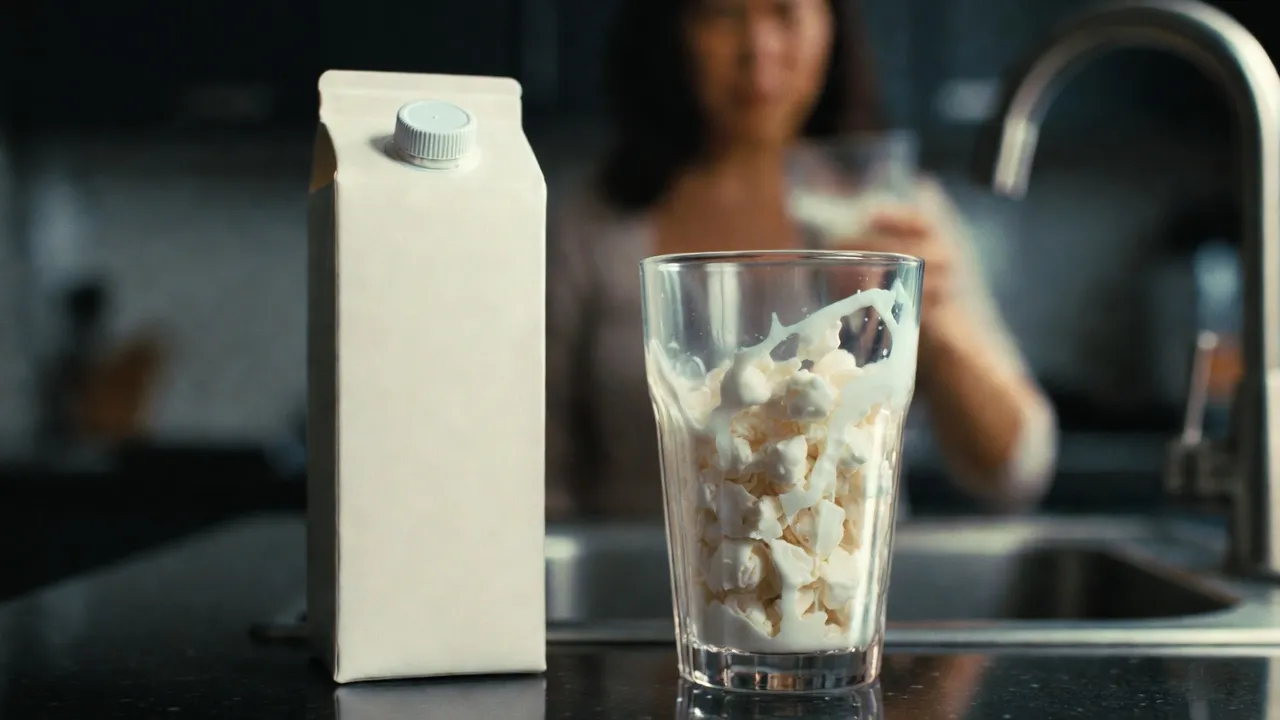
Quick Summary: Drinking expired almond milk can cause food poisoning symptoms like nausea, vomiting, and diarrhea if harmful bacteria have grown. Unopened shelf-stable almond milk may last 5-7 days past its date, while opened almond milk should be consumed within 7-10 days. Signs of spoilage include sour smell, lumpy texture, discoloration, and off taste.
That half-empty carton of almond milk sitting in the back of your fridge is calling your name. But wait—the date printed on the carton has passed. Is it still safe to drink?
According to the National Science Foundation (NSF), 78% of consumers report throwing out milk and dairy products once the date on the label has passed. But here’s the thing: that date doesn’t necessarily mean the product is unsafe.
Understanding what happens when almond milk expires—and whether it’s actually dangerous—can save you from unnecessary food waste and potential health risks.
What the Expiration Date Actually Means
Food product dating often confuses consumers. The USDA explains that dates on food products are generally manufacturer suggestions for peak quality, not strict safety deadlines.
Most almond milk cartons display one of these phrases:
- Best if Used By: Indicates when the product will be at peak flavor and quality
- Use By: The last date recommended for product use at peak quality
- Sell By: Tells retailers how long to display the product for sale
None of these dates are federally required safety dates. According to USDA data, approximately 30 percent of the food supply is lost or wasted at the retail and consumer levels, partly because of confusion about date labeling.
For almond milk specifically, the date printed matters less than how the product has been stored and whether it’s been opened.
How Long Does Almond Milk Last Past Its Date?
The shelf life of almond milk depends on whether it’s shelf-stable or refrigerated, and whether the container has been opened.
Unopened Shelf-Stable Almond Milk
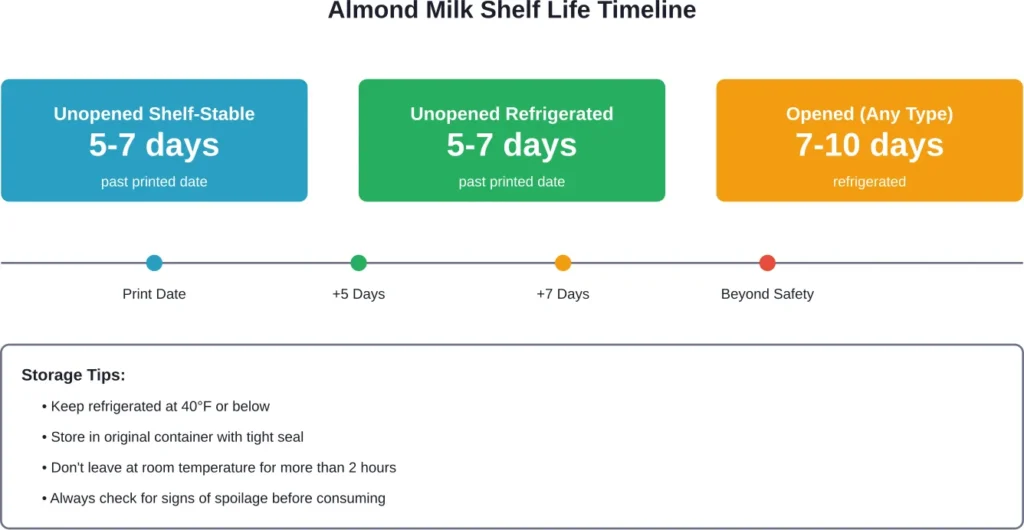
Unopened shelf-stable almond milk (the kind sold in the non-refrigerated section) can potentially last significantly longer than 5-7 days past its printed date when stored properly at room temperature. Some community discussions report safely using almond milk up to one month past the date, though this extends beyond typical recommendations.
The aseptic packaging process used for shelf-stable products prevents bacterial growth until the seal is broken.
Unopened Refrigerated Almond Milk
Refrigerated almond milk sold in the dairy section typically stays good for 5-7 days past the printed date when kept at consistent cold temperatures below 40°F.
Opened Almond Milk (Both Types)
Once opened, all almond milk should be refrigerated and consumed within 7-10 days, regardless of the printed date. Most manufacturers recommend using opened almond milk within 7 days for best quality.
What Happens When You Drink Expired Almond Milk?
The consequences of drinking expired almond milk depend on how far past the date it is and whether it has actually spoiled.
Potential Health Risks
If almond milk has truly gone bad, harmful bacteria may have multiplied to dangerous levels. According to the CDC, food poisoning occurs when foods contain germs that make people sick.
Recent research from Purdue University highlights that consumers often underestimate the bacterial risks associated with nut-based products. While many know the food safety risks of dairy products, they’re less likely to understand risks associated with tree nuts like almonds.
Symptoms of food poisoning from spoiled almond milk can include:
- Nausea and vomiting
- Stomach cramps and abdominal pain
- Diarrhea
- Fever and chills
- General weakness
These symptoms typically appear within a few hours to 48 hours after consumption.
Bacterial Growth Concerns
Plant-based milk alternatives can harbor various bacteria when improperly stored or kept too long. Research shows that both pathogenic and spoilage bacteria can grow in these products.
While almond milk doesn’t contain the same pathogens as dairy milk (like Listeria monocytogenes, which research notes can be cultured from approximately 5% of raw (unpasteurized) milk samples), it can still develop harmful bacteria if contaminated after opening.
When Expired Doesn’t Mean Dangerous
Here’s what many people don’t realize: a product slightly past its date isn’t automatically unsafe. Food poisoning bacteria doesn’t suddenly appear the moment a date passes.
If almond milk has been stored properly and shows no signs of spoilage, it may be perfectly safe a few days past the printed date. The date indicates quality degradation, not an immediate safety cutoff.
How to Tell If Almond Milk Has Gone Bad
Don’t rely solely on the date. Use these sensory checks to determine if almond milk is still good.
Visual Inspection
Fresh almond milk should have a consistent, milky-white or slightly beige color. Look for these warning signs:
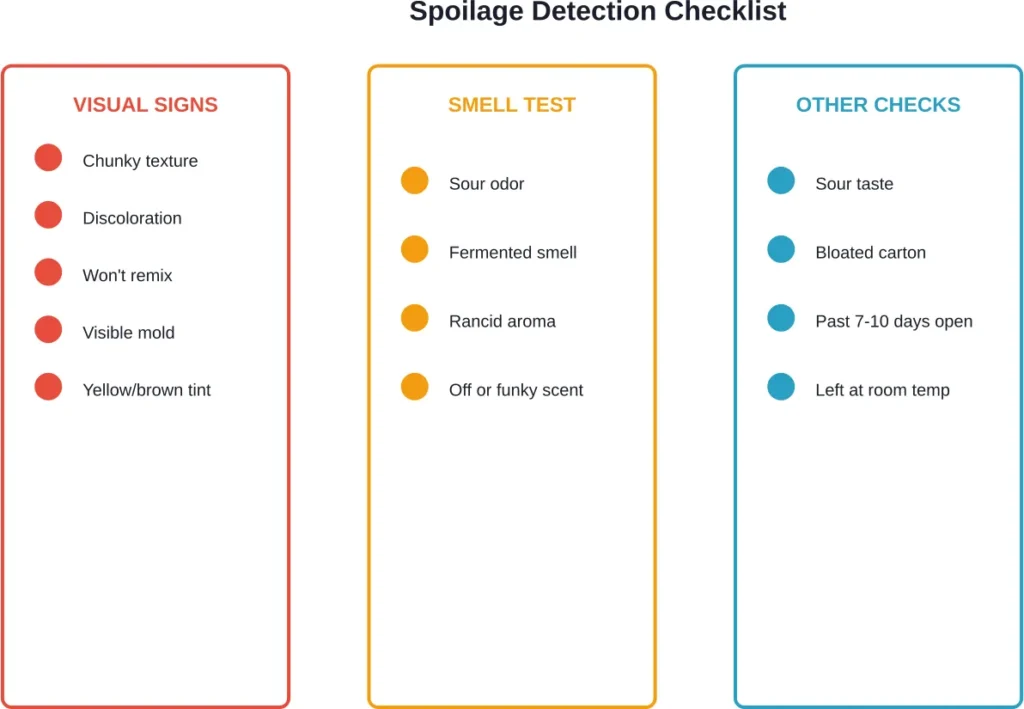
- Separation: Some separation is normal—shake it. But if it doesn’t remix, that’s a problem
- Chunky or lumpy texture: Definite sign of spoilage
- Discoloration: Yellow or brownish tints indicate bacterial growth
- Mold: Any visible mold means throw it out immediately
Smell Test
Fresh almond milk has a mild, slightly nutty aroma. Spoiled almond milk develops a sour, fermented, or rancid smell that’s immediately noticeable when you open the carton.
If it smells off, trust your nose. That sour odor indicates bacterial activity.
Taste Test (Use Caution)
If the almond milk looks and smells fine but you’re still uncertain, take a tiny sip. Spoiled almond milk tastes noticeably sour or bitter.
Real talk: if it tastes bad, spit it out immediately and rinse your mouth. A small taste won’t cause serious harm, but don’t swallow it.
Container Integrity
Check the carton itself. A bloated or swollen container indicates gas production from bacterial activity—a clear sign the product has spoiled.
Safe Storage Practices for Almond Milk
Proper storage significantly extends almond milk’s usable life and prevents premature spoilage.
Refrigeration Guidelines
Once opened, all almond milk must be refrigerated. The CDC recommends refrigerating perishable foods promptly to prevent bacterial growth.
Keep refrigerator temperatures at 40°F or below. Store almond milk on interior shelves rather than the door, where temperatures fluctuate.
Room Temperature Limits
Never leave opened almond milk at room temperature for more than 2 hours. Bacteria multiply rapidly between 40°F and 140°F—what food safety experts call the “danger zone.”
If almond milk has been sitting out longer than 2 hours, discard it regardless of the expiration date.
Container Care
Always seal the carton tightly after each use. Exposure to air introduces bacteria and accelerates spoilage.
Don’t drink directly from the carton—bacteria from your mouth can contaminate the entire container.
Comparing Almond Milk to Dairy Milk Expiration
Almond milk and dairy milk behave differently when it comes to shelf life and spoilage.
| Factor | Almond Milk | Dairy Milk |
|---|---|---|
| Unopened shelf-stable | Months past date if stored properly | Not applicable (requires refrigeration) |
| Unopened refrigerated | 5-7 days past date | 5-7 days past date |
| Opened (refrigerated) | 7-10 days | 5-7 days |
| Primary spoilage bacteria | General environmental bacteria | Listeria, Salmonella, E. coli |
| Pasteurization requirements | Not standardized | FDA regulated (minimum 71.7°C for 15 seconds via HTST process) |
| Protein content | Lower (1g per cup typically) | Higher (8g per cup) |
According to Stanford Medicine research, plant-based milks generally don’t have saturated fat like dairy milk but often have less protein—almond milk contains much less protein than soy or dairy milk.
This lower protein content may actually slow certain types of bacterial growth compared to dairy milk, though proper storage remains essential for both.
What to Do If You’ve Already Drunk Spoiled Almond Milk
Realized too late that the almond milk tasted off? Here’s what to expect and when to worry.
Immediate Actions
If you’ve consumed spoiled almond milk:
- Stop drinking immediately
- Rinse your mouth with water
- Don’t try to “neutralize” it with other foods or drinks
- Stay hydrated with clean water
Monitoring Symptoms
Most people who drink a small amount of spoiled almond milk experience mild symptoms or none at all. But monitor for signs of food poisoning over the next 24-48 hours.
Generally speaking, mild nausea or stomach discomfort may pass without treatment. Severe or persistent symptoms require medical attention.
When to Seek Medical Care
Contact a healthcare provider if experiencing:
- Severe vomiting that prevents keeping liquids down
- Signs of dehydration (dark urine, dizziness, extreme thirst)
- High fever above 101.5°F
- Bloody diarrhea
- Symptoms lasting more than 3 days
The CDC provides guidelines for preventing food poisoning: clean hands and surfaces, separate risky foods, cook food properly, and refrigerate promptly.
Frequently Asked Questions
Yes, drinking spoiled almond milk can cause food poisoning if harmful bacteria have multiplied. Symptoms include nausea, vomiting, diarrhea, and stomach cramps. However, almond milk slightly past its printed date isn’t automatically dangerous if stored properly and showing no signs of spoilage.
Opened almond milk stays fresh for 7-10 days when refrigerated at 40°F or below, regardless of the printed expiration date. Most manufacturers recommend consuming within 7 days for optimal quality. Always check for spoilage signs before drinking.
Yes, even unopened almond milk eventually spoils. Shelf-stable varieties can last months when stored properly in a cool, dry place, but refrigerated almond milk has a shorter lifespan. Unopened refrigerated almond milk typically stays good for 5-7 days past the printed date.
Spoiled almond milk develops a distinctly sour, fermented, or rancid smell that differs significantly from fresh almond milk’s mild, nutty aroma. If the smell seems off or unpleasant when opening the carton, the milk has likely gone bad and should be discarded.
Almond milk can be frozen, though it may separate and change texture when thawed. According to USDA guidance, food poisoning bacteria doesn’t grow in the freezer, so frozen food remains safe indefinitely. However, quality deteriorates over time. Use frozen almond milk within 1-2 months for best results.
Cooking doesn’t make spoiled almond milk safe. While heat kills many bacteria, it doesn’t eliminate toxins that bacteria may have already produced. If almond milk shows signs of spoilage—sour smell, lumpy texture, discoloration—discard it rather than attempting to use it in cooking.
Once opened, almond milk is exposed to bacteria from the environment and loses its sterile seal. Even refrigerated storage only slows bacterial growth rather than stopping it completely. The 7-10 day window reflects how long it takes for bacteria to multiply to levels that cause noticeable spoilage.
The Bottom Line on Expired Almond Milk
Drinking truly spoiled almond milk can make you sick with food poisoning symptoms. But a date slightly past doesn’t automatically mean danger.
The key? Don’t rely solely on the printed date. Use your senses—look for texture changes, smell for sour odors, and when in doubt, throw it out. No one wants to risk food poisoning over an inexpensive carton of almond milk.
Proper storage makes the difference between wasting perfectly good almond milk and avoiding genuine health risks. Keep it refrigerated, sealed tightly, and consumed within the recommended timeframe after opening.
Sound familiar—finding questionable food items in your fridge? The USDA emphasizes that approximately 30 percent of food gets wasted due to confusion about date labels. Understanding what those dates actually mean helps reduce waste while maintaining food safety.
When in doubt about any food product, the CDC’s food safety principles apply: if it looks off, smells off, or tastes off, don’t consume it. Trust your instincts over an arbitrary date.