
Quick Summary: Without consistent retainer wear, teeth can begin shifting back toward their original positions in as little as a few weeks. The American Association of Orthodontists confirms that retainers are essential for maintaining orthodontic results, as teeth naturally move throughout life. Skipping retainer wear may require additional orthodontic treatment to correct relapse.
Finishing orthodontic treatment feels like crossing a finish line. After months or years of braces or clear aligners, that straight smile is finally here. But here’s the thing—retainers aren’t optional. They’re the second half of treatment.
According to the American Association of Orthodontists, retainers are a critical part of orthodontic care. Getting straight teeth is only half the battle; keeping them straight is where retainers come in. Teeth naturally move and change position throughout life, and even after treatment, they can continue to shift.
So what actually happens when retainer wear stops? The consequences unfold faster than most people expect.
Why Retainers Matter After Orthodontic Treatment
Orthodontic treatment moves teeth into new positions by applying gentle, continuous pressure. Braces and clear aligners gradually reposition teeth over time, but once treatment ends, those teeth aren’t locked in place.
Teeth sit in bone surrounded by periodontal ligaments—elastic fibers that support and cushion each tooth. These ligaments have memory. After orthodontic treatment, they naturally try to pull teeth back toward their original positions. This biological tendency is called relapse.
The American Association of Orthodontists notes that teeth can continue to shift even after treatment because of natural changes throughout life. Retainers hold teeth in their corrected positions while surrounding bone and soft tissue stabilize. Without that support, shifting begins.
The Timeline: How Quickly Teeth Shift Without a Retainer
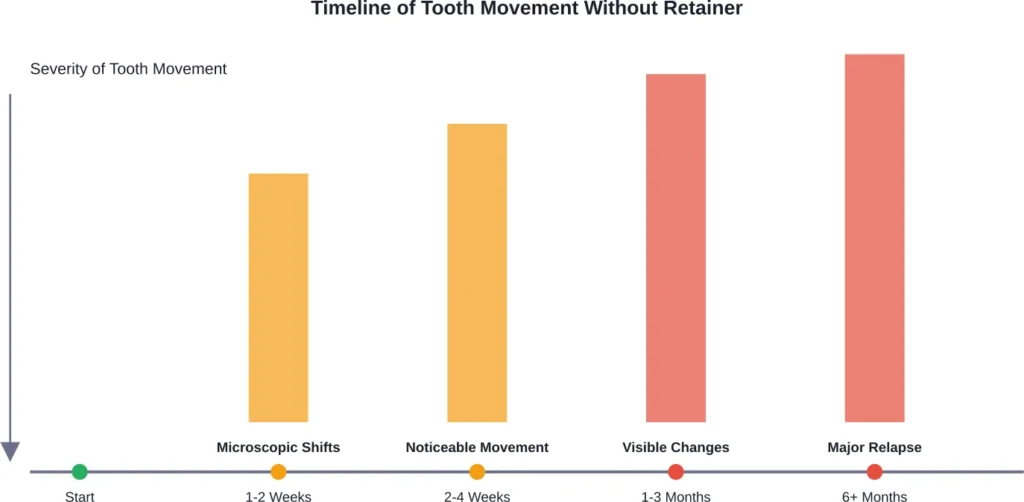
The speed of tooth movement without retainer wear varies, but the process starts sooner than most people think.
First Few Days to Two Weeks
Initial movement may not be visible, but it’s happening. Periodontal ligaments begin adjusting, and teeth can start microscopic shifts. Some people notice their retainer feels slightly tighter after just a few days without wearing it—a sign that subtle movement has occurred.
Two to Four Weeks
Noticeable changes often appear within this window. Teeth may shift enough that the retainer no longer fits comfortably or may not fit at all. Front teeth, particularly lower incisors, tend to shift first because they’re smaller and more mobile.
One to Three Months
By this point, visible gaps, crowding, or rotation often develop. The smile that took months or years to perfect starts reverting. Depending on how much movement occurs, the original retainer may be unwearable.
Six Months and Beyond
Significant relapse typically occurs by six months without retention. Teeth may return close to their pre-treatment positions. At this stage, new orthodontic treatment is often necessary to correct the regression.
Consequences of Not Wearing Your Retainer
Skipping retainer wear creates a cascade of problems that extend beyond cosmetic concerns.
Tooth Shifting and Crowding
The most obvious consequence is that teeth move. Gaps close, crowding returns, and alignment deteriorates. Lower front teeth are particularly prone to shifting because they’re smaller and less stable.
Bite Problems
When teeth shift, the bite relationship changes. This can lead to uneven wear on tooth surfaces, jaw discomfort, and even temporomandibular joint (TMJ) issues. An improper bite affects how teeth come together, which can cause headaches and facial pain.
Need for Additional Treatment
Once significant relapse occurs, the original retainer won’t fit. Correcting the movement requires new orthodontic treatment—either another round of braces or clear aligners. This means additional time, expense, and effort to regain what was already achieved.
Research published on PubMed highlights that adherence to removable retainer wear varies widely, and challenges in accessing replacement retainers often lead to cessation of wear and subsequent relapse. The difficulty isn’t just about remembering to wear the retainer; it’s about maintaining access to properly fitting retention devices.
Financial Impact
Orthodontic treatment isn’t cheap. Retreatment to fix relapse means paying for orthodontics twice. Research published in the American Dental Association’s JADA publication indicates that retainer survival times vary based on retainer type and patient compliance.
Types of Retainers and Their Role
Different retainer types serve the same purpose but work in different ways.
| Retainer Type | Description | Wear Schedule | Pros | Cons |
|---|---|---|---|---|
| Hawley Retainer | Wire and acrylic removable retainer | Full-time initially, then nights | Durable, adjustable | Visible, bulkier |
| Clear Plastic (Thermoplastic) | Vacuum-formed clear retainer | Full-time initially, then nights | Invisible, comfortable | Less durable, can warp |
| Fixed (Bonded) Retainer | Wire bonded to back of teeth | Permanent until removed | Can’t forget to wear it | Harder to clean, can break |
According to the American Dental Association, in one study of 591 retainers, 278 (47%) were stainless steel lingual fixed retainers bonded at the canines (mostly mandibular), 199 (33.7%) were Hawley retainers (maxillary only), and 34 (5.8%) were vacuum-formed retainers. Each type has specific failure modes and survival characteristics.
Fixed retainers eliminate the compliance issue since they’re always in place, but they require meticulous oral hygiene. Removable retainers offer flexibility but rely entirely on patient adherence.
How Long Should Retainers Be Worn?
The American Association of Orthodontists emphasizes that retainers are part of treatment, not an afterthought. The standard recommendation is straightforward: wear retainers as directed by the orthodontist.
Typical wear schedules progress in phases:
- Full-time wear: Immediately after braces or aligners are removed, retainers are usually worn 22 hours per day (removing only for eating and brushing).
- Night-time wear: After several months of full-time wear, many patients transition to wearing retainers only at night.
- Long-term retention: Some orthodontists recommend permanent night-time wear to maintain results indefinitely.
Research from PubMed notes that there’s insufficient high-quality evidence to definitively determine whether full-time retainer wear provides greater stability than part-time wear, though this has been assessed in limited studies. What’s clear is that some form of ongoing retention is necessary to prevent relapse.
Teeth can shift at any age. Even decades after treatment, natural aging processes, wisdom teeth eruption, tooth loss, and grinding can cause movement. That’s why many orthodontists now recommend lifelong retention, at least a few nights per week.
What to Do If You’ve Stopped Wearing Your Retainer
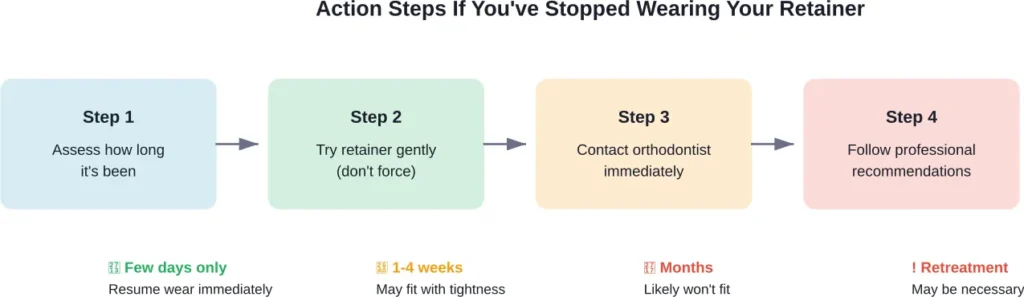
Real talk: if retainer wear has lapsed, action needs to be taken quickly.
Assess How Long It’s Been
If it’s been just a few days, try putting the retainer back in. It might feel snug, but if it fits without forcing, resume the regular wear schedule.
Try the Retainer Carefully
If it’s been weeks, attempt to insert the retainer gently. Never force a retainer that doesn’t fit—this can damage teeth or the retainer itself. If it’s tight but goes in, wear it as much as possible and contact the orthodontist.
Contact the Orthodontist Immediately
If the retainer doesn’t fit at all or causes pain, schedule an appointment right away. The orthodontist can assess how much shifting has occurred and recommend next steps. Options may include:
- Fabricating a new retainer to hold the current position
- Using aligners or other appliances to guide teeth back
- Starting a new round of orthodontic treatment if relapse is severe
Some individuals report varying degrees of relapse after stopping retainer wear, with experiences ranging from minimal changes to cases requiring full retreatment. Individual results depend on factors like age at treatment, duration without retainers, and biological tendency for tooth movement.
Don’t Wait
The longer the delay, the more movement occurs. Early intervention can often prevent the need for extensive retreatment.
Tips for Consistent Retainer Wear
Staying motivated to wear retainers long-term requires building habits and routines.
Make It Part of the Routine
Link retainer wear to existing habits. Put the retainer in right after brushing teeth at night. Store it in the same visible place every morning. Consistency builds automaticity.
Use Reminders
Set phone alarms or use apps to remind about retainer wear, especially during the transition from full-time to night-time use.
Keep It Clean
A clean retainer is easier to wear. Rinse it daily, brush it gently with a soft toothbrush, and use retainer cleaning solutions as recommended. According to American Dental Association guidance on home oral care, maintaining oral appliances properly supports overall oral health.
Protect the Investment
Orthodontic treatment costs thousands of dollars. Framing retainer wear as protecting that investment—and protecting years of treatment—can reinforce commitment.
Have a Backup
Lost or broken retainers are common. Ask the orthodontist about ordering a spare retainer to avoid gaps in wear if the primary retainer is damaged.
Can Retainers Fix Shifted Teeth?
This depends on how much shifting has occurred. Retainers are designed to hold teeth in position, not to move them significantly.
If teeth have shifted slightly and the retainer still fits (even if tight), consistent wear may guide teeth back gradually. But if shifting is moderate to severe, retainers alone won’t correct the problem. New orthodontic treatment with braces or clear aligners will be necessary.
Some orthodontists may use a series of retainers or aligner-style appliances to nudge teeth back into place if the movement is minor. This is faster and less expensive than full retreatment but still requires professional supervision.
Frequently Asked Questions
Teeth can begin shifting within days to weeks of stopping retainer wear. Noticeable movement often occurs within two to four weeks, though the timeline varies by individual. Some people experience changes within days, while others may go longer before visible shifting happens. The safest approach is to never skip retainer wear as directed.
Without retainer wear, teeth will tend to shift back toward their original positions due to periodontal ligament memory and natural aging changes. Complete regression to pre-treatment alignment is possible, especially if retainer wear stops for extended periods. The degree of relapse varies based on how long since treatment ended and individual biological factors.
Contact the orthodontist immediately. Do not force the retainer onto teeth, as this can cause damage. The orthodontist will evaluate the amount of shifting and determine whether a new retainer can hold the current position or if additional treatment is needed to correct the movement.
No. Most orthodontic protocols require full-time retainer wear (except during meals and brushing) for the first several months after treatment ends. This allows bone and soft tissue to stabilize around the new tooth positions. Night-time-only wear is typically introduced after this initial stabilization period, as directed by the orthodontist.
Retainer lifespan varies by type and care. Clear plastic retainers may last one to three years with proper care, while Hawley retainers can last longer—sometimes five to ten years. Fixed retainers can remain in place indefinitely if properly maintained. Regular orthodontic check-ups help monitor retainer condition and determine when replacement is necessary.
Many orthodontists now recommend lifelong retention, at least several nights per week, to maintain results. Teeth can shift at any age due to natural changes, grinding, tooth loss, or aging. Long-term retention protects the investment in orthodontic treatment and keeps the smile aligned.
Some companies offer direct-to-consumer retainers based on at-home impressions, but this approach has risks. Without professional supervision, poorly fitting retainers can cause tooth movement in the wrong direction or fail to address existing shifting. The safest approach is to work with a licensed orthodontist who can assess tooth position and ensure proper retainer fit.
Protect Your Investment
Orthodontic treatment transforms smiles, but that transformation requires ongoing maintenance. Retainers aren’t optional—they’re the second half of treatment, as the American Association of Orthodontists makes clear.
Skipping retainer wear sets off a predictable cascade: teeth shift, alignment deteriorates, and eventually, retreatment becomes necessary. All of this is preventable with consistent retention.
The timeline is unforgiving. Movement starts within days, becomes noticeable within weeks, and can become severe within months. But the good news is that wearing retainers as prescribed keeps teeth stable and preserves years of orthodontic work.
If retainer wear has lapsed, don’t wait. Contact an orthodontist now to assess the situation and prevent further regression. The sooner action is taken, the better the outcome.
That straight smile took time, effort, and investment to achieve. Retainers are what keep it that way.