

Quick Summary: Untreated chlamydia can cause severe complications including pelvic inflammatory disease (PID), infertility, ectopic pregnancy, and chronic pain. According to the CDC, up to 40% of women with untreated chlamydia develop PID, which can permanently damage reproductive organs. While chlamydia is curable with antibiotics, leaving it untreated increases the risk of other STIs including HIV.
Chlamydia is the most common bacterial sexually transmitted infection worldwide. According to the World Health Organization, in 2020 there were an estimated 128.5 million new chlamydia infections among adults aged 15–49 years globally.
Here’s the thing though—most people with chlamydia don’t have symptoms. That’s exactly what makes it dangerous.
The CDC confirms that chlamydia is a common STI that can cause permanent damage to a woman’s reproductive system, potentially making pregnancy difficult or impossible later. And because symptoms are often mild or completely absent, serious complications can develop before someone even realizes there’s a problem.
Why Chlamydia Is So Easy to Ignore
Chlamydia often sneaks under the radar. Many people carry the infection without feeling sick at all.
When symptoms do appear, they’re usually mild enough to dismiss. Some people might notice unusual discharge or slight discomfort during urination. Others feel nothing whatsoever.
But here’s where it gets serious: the infection doesn’t care whether symptoms show up or not. It keeps spreading through the reproductive system, causing damage silently.
That said, the infection is highly treatable. Antibiotics can cure chlamydia completely—but only if someone knows they have it and gets treated.
What Happens to Women With Untreated Chlamydia
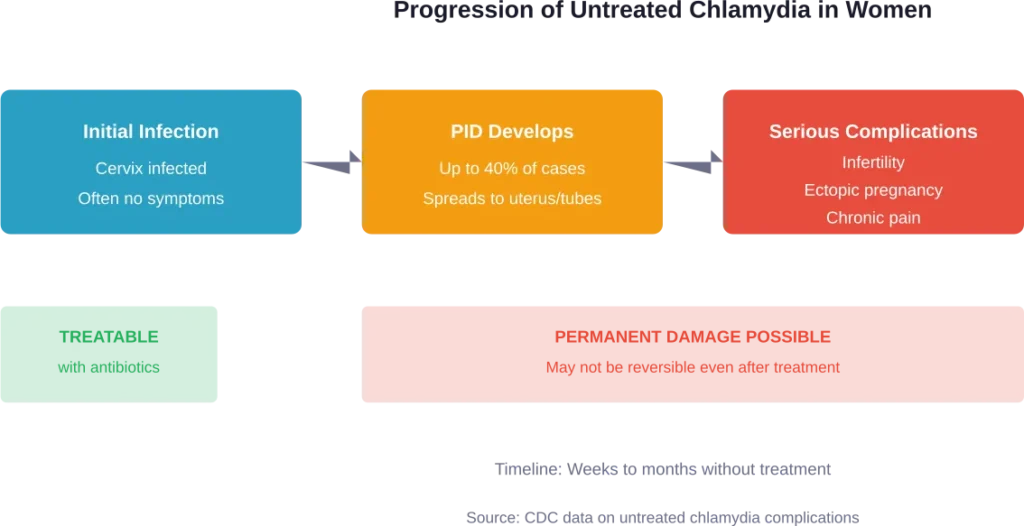
The consequences of untreated chlamydia are particularly severe for women. The infection can spread from the cervix into the uterus and fallopian tubes.
Pelvic Inflammatory Disease (PID)
According to the CDC, among women with untreated chlamydia, up to 40% will develop pelvic inflammatory disease. This is a serious infection of the reproductive organs.
PID can cause permanent damage to the fallopian tubes, uterus, and surrounding tissues. The scarring and blockages that result create long-term complications.
Many women with PID don’t realize they have it because symptoms can be subtle. Some experience lower abdominal pain, fever, or unusual discharge. Others have no symptoms at all while damage progresses.
Infertility and Tubal Damage
Research published in Clinical Infectious Diseases found that women who tested positive for chlamydia had an increased risk of female infertility (adjusted hazard ratio [aHR], 1.87) compared to those who tested negative.
The mechanism is straightforward but devastating. When PID damages the fallopian tubes, scarring can block the pathway eggs need to travel. Even partial blockages make conception extremely difficult.
This kind of tubal factor infertility often requires assisted reproductive technologies to overcome. In some cases, the damage is so severe that pregnancy becomes impossible without medical intervention.
Ectopic Pregnancy Risk
Damaged fallopian tubes create another dangerous scenario: ectopic pregnancy. This happens when a fertilized egg implants outside the uterus, usually in a fallopian tube.
Ectopic pregnancies are medical emergencies. They can’t result in a viable birth and can cause life-threatening internal bleeding if the tube ruptures.
Women with a history of PID from untreated chlamydia face elevated risks of ectopic pregnancy compared to women without this history.
Chronic Pelvic Pain
Even after the active infection clears, some women develop chronic pelvic pain. This persistent discomfort can last for years.
The scarring and inflammation from PID don’t always resolve completely. Adhesions—bands of scar tissue—can form between organs, causing ongoing pain during daily activities or sexual intercourse.
What Happens to Men With Untreated Chlamydia
Men aren’t immune to serious complications either. While the risks differ from those facing women, untreated chlamydia can cause significant health problems.
Epididymitis
The infection can spread to the epididymis, the tube that carries sperm from the testicles. This condition, called epididymitis, causes pain, swelling, and sometimes fever.
Without treatment, epididymitis can lead to abscess formation or chronic pain. In rare cases, it can affect fertility by damaging the sperm transport system.
Urethritis and Discharge
Chlamydia commonly causes urethritis in men—inflammation of the urethra. Symptoms include burning during urination and discharge from the penis.
But here’s the problem: many men have no symptoms at all. They can carry and transmit the infection without knowing it.
Reactive Arthritis
In some cases, untreated chlamydia triggers reactive arthritis, also called Reiter’s syndrome. This condition causes joint pain, eye inflammation, and urinary symptoms.
Reactive arthritis can affect the knees, ankles, and feet. While it often resolves over time, some people develop chronic arthritis that persists for years.
Risks That Affect Everyone
Some complications from untreated chlamydia don’t discriminate by sex.
Increased HIV Transmission
Untreated chlamydia increases susceptibility to HIV infection. The inflammation and tissue damage create entry points for the virus.
People with chlamydia who are exposed to HIV face a higher risk of contracting it compared to those without chlamydia. This connection makes treating STIs crucial for overall sexual health.
Rectal and Throat Infections
Chlamydia can infect the rectum through anal sex or the throat through oral sex. These infections often cause no symptoms but can still lead to complications.
Rectal chlamydia can cause pain, discharge, and bleeding. Throat infections rarely cause problems but can still be transmitted to partners.
Eye Infections
Chlamydia can cause eye infections if someone touches infected genitals and then rubs their eyes without washing their hands. This can lead to conjunctivitis with discharge and discomfort.
In newborns, chlamydia can cause serious eye infections or pneumonia if transmitted during birth from an infected mother.
| Complication | Affected Population | Severity | Reversibility |
|---|---|---|---|
| Pelvic Inflammatory Disease | Women | High | Often permanent damage |
| Infertility | Primarily women | Very High | Often irreversible |
| Ectopic Pregnancy | Women | Life-threatening | N/A (emergency condition) |
| Chronic Pelvic Pain | Primarily women | Moderate to High | May persist indefinitely |
| Epididymitis | Men | Moderate | Treatable but may recur |
| Reactive Arthritis | All sexes | Moderate | Variable |
| Increased HIV Risk | All sexes | Very High | Preventable with treatment |
Does Chlamydia Ever Go Away on Its Own?
This is one of the most searched questions about chlamydia. The answer is complicated.
Some studies have examined the natural history of chlamydia—what happens when it’s left untreated. Research found that around 80% of people with asymptomatic chlamydia were still infected when they returned for follow-up testing.
That means the infection persisted in most people. Only a small percentage saw spontaneous clearance.
But here’s the critical point: waiting to see if the infection clears on its own is extremely risky. During that time, damage can occur. PID can develop. Scarring can form.
The CDC is clear: chlamydia should be treated with antibiotics, not left to chance.
How Long Before Complications Develop?
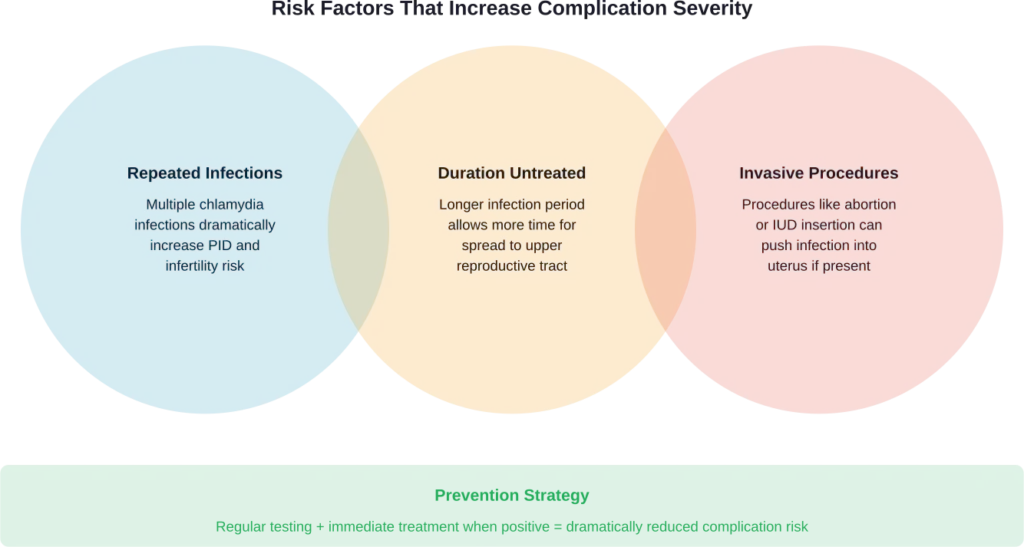
There’s no precise timeline for when untreated chlamydia causes serious complications. Some people develop PID within weeks. Others carry the infection for months or years before complications appear.
The infection can remain dormant or cause subtle damage that goes unnoticed. By the time symptoms appear, significant harm may have already occurred.
Research indicates that repeated infections increase complication risks. Someone who gets chlamydia multiple times faces higher odds of developing PID and infertility than someone with a first infection.
Treatment Is Simple and Effective
The irony is that chlamydia is incredibly easy to treat. A single dose of antibiotics or a week-long course can cure the infection completely.
Gonorrhea and chlamydia can be cured with the right medicine from a healthcare provider. The standard treatment involves antibiotics like azithromycin or doxycycline.
After completing treatment, the active infection is gone. But here’s what’s crucial to understand: treatment doesn’t reverse damage that’s already occurred.
If PID has scarred the fallopian tubes, antibiotics won’t remove that scarring. If infertility has developed from tubal damage, curing the infection won’t restore fertility.
That’s why early detection and treatment matter so much. The best time to treat chlamydia is before complications develop.
Why Regular Testing Matters
Because chlamydia often causes no symptoms, testing is the only reliable way to detect it. The CDC recommends regular screening for sexually active people.
Testing is simple and non-invasive. For women, it usually involves a urine sample or a swab from the cervix. For men, a urine sample is typically sufficient.
Results come back quickly, and treatment can start immediately if the test is positive.
Real talk: regular testing isn’t just about personal health. It’s about preventing transmission to partners and stopping the cycle of infection.
Preventing Reinfection
Getting treated for chlamydia doesn’t provide immunity. Reinfection is common and increases complication risks.
Partners need to be tested and treated simultaneously. Otherwise, the infection can bounce back and forth between partners.
The CDC recommends that anyone diagnosed with chlamydia should tell their partners and ensure they get tested. Avoiding sexual contact until both partners complete treatment prevents reinfection.
According to the WHO, correct and consistent use of condoms during sex is the most effective way to prevent chlamydia transmission.
Frequently Asked Questions
There’s limited evidence linking chlamydia directly to cancer, though some research has examined potential connections to cervical cancer risk. The more established concern is that untreated chlamydia causes reproductive damage, infertility, and increases HIV susceptibility rather than cancer development.
The timeline varies significantly between individuals. Some people develop complications like PID within weeks, while others carry the infection for months or years before serious damage occurs. Research shows that up to 40% of untreated cases progress to PID, but there’s no predictable timeline for when this happens.
Not necessarily. Many serious complications develop silently. PID can cause permanent tubal damage without obvious symptoms. Some women only discover they have scarring or infertility when they try to conceive. That’s why testing is essential even without symptoms.
Yes, though it’s less common than in women. Untreated chlamydia can cause epididymitis, which may damage the sperm transport system. Repeated infections or severe cases increase the risk of male infertility, though the overall risk is lower than the infertility risk women face from PID.
Treatment cures the active infection but doesn’t reverse structural damage that’s already occurred. If chlamydia has caused scarring in the fallopian tubes or other reproductive organs, that damage is often permanent. Early treatment before complications develop offers the best chance of preserving fertility.
The CDC recommends annual screening for sexually active women under 25 and for older women with risk factors like new or multiple partners. Sexually active men who have sex with men should be tested at least annually, or more frequently based on individual risk. Anyone with symptoms or a partner who tests positive should get tested immediately.
Yes. While chlamydia primarily affects the genital tract, it can spread to the eyes if someone touches infected areas and then touches their eyes. In women, it can ascend from the cervix to the uterus and fallopian tubes, causing PID. Newborns can develop eye infections or pneumonia if exposed during birth.
The Bottom Line
Untreated chlamydia is far from harmless. The CDC data makes this clear: up to 40% of women with untreated chlamydia develop PID, which can permanently damage reproductive organs and cause infertility.
Men face serious complications too, including epididymitis and reactive arthritis. Everyone with untreated chlamydia has increased HIV susceptibility.
But here’s the good news: chlamydia is completely curable with simple antibiotic treatment. The key is catching it early through regular testing, especially since most infections cause no symptoms.
Don’t wait for symptoms to appear. If sexually active, get tested regularly. If diagnosed, complete treatment and ensure partners get tested too. These straightforward steps prevent the serious, often permanent complications that untreated chlamydia can cause.
The difference between a quick, curable infection and permanent reproductive damage often comes down to a simple test and a course of antibiotics. That’s a trade-off worth making.