
Quick Summary: Killing a wasp indoors can release alarm pheromones that may attract other wasps from nearby nests, though the risk is higher outdoors. The safest approach is to remain calm, open windows to guide the wasp out, or trap and release it rather than swatting. If you must kill it, use a fast method and quickly dispose of the body to minimize pheromone release.
That unmistakable buzzing sound against your window. Your stomach drops as you spot the yellow-and-black intruder circling your living room. A wasp has invaded your space, and panic sets in.
Your first instinct? Grab the nearest magazine and swat it. But wait—does killing a wasp inside your house actually make things worse? Will its distress signals summon an angry swarm? Here’s what actually happens when you kill a wasp indoors, backed by science and pest control expertise.
The Science Behind Wasp Alarm Pheromones
Wasps communicate through chemical signals called pheromones. When a wasp feels threatened or dies violently, it releases alarm pheromones that alert nearby colony members to potential danger.
These chemical messengers serve as a defense mechanism. According to research on wasp colony behavior, the intensity of defensive responses increases with both colony size and the perceived threat level. The alarm pheromone essentially broadcasts: “Danger here—send backup.”
But here’s the thing—this biological alarm system works most effectively when other wasps are close enough to detect it. That’s where the indoor versus outdoor distinction becomes critical.
Indoor vs. Outdoor: Does Location Matter?
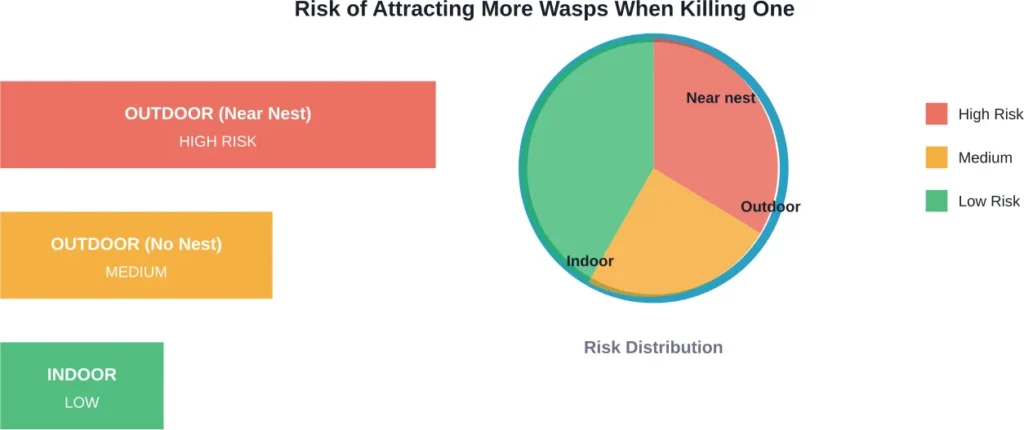
The risk of attracting more wasps by killing one indoors is significantly lower than outdoors, for several reasons:
- Physical barriers (walls, closed windows, doors) prevent pheromones from reaching outdoor nests
- Indoor air circulation dilutes and disperses chemical signals faster
- Most solitary wasps that wander indoors aren’t connected to nearby colonies
- The confined space limits how far the alarm signal can travel
Community discussions from pest control forums confirm that killing a single wasp inside rarely triggers an invasion. The bigger concern? Whether there’s already a nest somewhere in your walls or attic.
What Actually Happens When You Kill a Wasp Indoors
So you’ve swatted the wasp. Now what?
The immediate aftermath depends on how you killed it and how quickly you act. A crushed wasp releases more pheromones than one killed instantly with spray. The body continues emitting faint chemical signals even after death.
Real talk: if you’ve got a lone wasp that wandered through an open door, killing it won’t summon reinforcements. But if wasps regularly appear indoors, that’s a red flag pointing to a hidden nest.
Signs You Might Have a Nest Problem
| Warning Sign | What It Means | Action Needed |
|---|---|---|
| Multiple wasps daily | Likely nest in walls or attic | Professional inspection required |
| Wasps in same room repeatedly | Entry point or nest nearby | Check for gaps, vents, cracks |
| Scratching sounds in walls | Active nest construction | Immediate professional removal |
| One wasp occasionally | Random intruder | Simple removal, seal entry points |
Safer Alternatives to Killing Wasps Indoors
Killing isn’t always the best option. These methods reduce risk while effectively removing the intruder:
The Window Exit Strategy
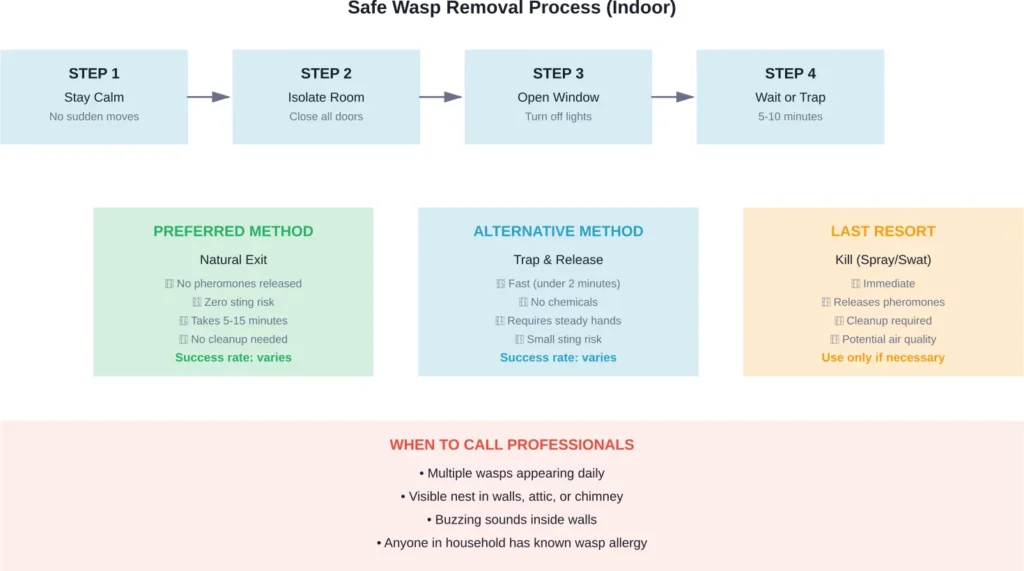
Stay calm. Close all doors to contain the wasp in one room. Open a single window wide and turn off lights—wasps navigate toward natural light. Most will find their way out within minutes.
This works because wasps aren’t aggressive when not defending a nest. According to the CDC, outdoor workers face the highest sting risk, but indoor encounters rarely result in stings when handled calmly.
Trap and Release Method
Grab a clear glass or plastic container and a piece of stiff paper. Wait until the wasp lands on a flat surface (windows are ideal). Quickly place the container over it, slide the paper underneath, and carry it outside.
This technique requires steady hands but eliminates pheromone release entirely. No alarm signals, no dead wasp attracting scavengers, no risk.
Natural Deterrents That Actually Work
Peppermint oil diluted in water works as a mild repellent. Spray it around window frames and entry points—not directly on the wasp. The scent won’t kill but may encourage the wasp to leave.
That said, the EPA emphasizes proper pesticide use when chemical control becomes necessary. Many household products can create indoor air quality issues when misused.
When Killing Becomes Necessary
Sometimes you’ve got no choice. The wasp is aggressive, someone’s allergic, or it’s stuck in a tight space where trap-and-release won’t work.
If killing is unavoidable, do it smart:
- Use wasp spray from distance: Stand 6-8 feet back, spray directly, and the wasp drops within seconds
- Choose fast-acting insecticide: Quick kills minimize pheromone release time
- Dispose immediately: Scoop the body into a sealed bag and remove from the house
- Ventilate the area: Open windows to clear any lingering chemical signals
- Check for entry points: Seal gaps, cracks, or damaged screens that allowed access
According to the EPA, proper pesticide disposal matters. Don’t flush dead wasps or leave them in indoor trash where scent molecules can continue dispersing.
Understanding Health Risks
The CDC reports that during 2011–2021, a total of 788 deaths from hornet, wasp, and bee stings occurred (an average of 72 deaths per year), with 84% of deaths occurring among males. Most deaths resulted from severe allergic reactions called anaphylactic shock.
For those with known venom allergies, even a single sting can trigger life-threatening responses requiring immediate medical care. This makes prevention—not just safe removal—absolutely critical.
Preventing Future Indoor Invasions
The best defense? Keep wasps outside in the first place.
- Install tight-fitting screens on all windows and doors
- Seal cracks around window frames, siding, and foundations
- Cover attic vents with fine mesh
- Remove outdoor food sources (fallen fruit, exposed trash, sugary spills)
- Inspect your home’s exterior monthly during warm months
Outdoor workers face higher exposure risks, but homeowners can significantly reduce indoor encounters through basic exclusion techniques.
Frequently Asked Questions
Unlikely. Indoor walls and closed windows prevent alarm pheromones from reaching outdoor nests. The risk increases only if there’s already a nest inside your walls or attic. Killing a single random intruder rarely attracts others indoors.
Alarm pheromones dissipate relatively quickly in well-ventilated indoor spaces. The chemical signal weakens rapidly once the source is removed. Quick disposal of the dead wasp and opening windows accelerates the process.
The window-exit method works best: isolate the wasp in one room, open a single window, turn off lights, and wait 5-15 minutes. Wasps naturally move toward bright natural light and will exit on their own in most cases.
Use sparingly and only when necessary. The EPA warns that indoor pesticide use can impact air quality. If spraying indoors, choose products labeled for indoor use, spray from a distance, remove people and pets from the room, and ventilate thoroughly afterward.
Warning signs include multiple wasps appearing daily in the same location, scratching or buzzing sounds inside walls, wasps entering/exiting the same exterior hole, and increased activity during warm afternoons. Professional inspection is recommended if these signs appear.
While some research suggests paper wasps can recognize individual human faces, they don’t plot revenge. Wasps respond to immediate threats through chemical signaling, not long-term memory of specific people. Once the threat passes, so does their defensive behavior.
Yes, but minimally. Dead wasps can still sting if their stinger is pressed into skin—the venom sac can contract reflexively for several hours after death. Handle dead wasps with paper towels or gloves, and dispose of them in sealed bags outside your home.
The Bottom Line on Indoor Wasp Killing
Killing a wasp inside your house won’t trigger an immediate swarm invasion. The alarm pheromones work primarily when other colony members are nearby—which isn’t typical for random indoor intruders.
That said, safer alternatives exist. The window-exit strategy and trap-and-release methods eliminate risk entirely while avoiding chemical use and potential pheromone signals. These approaches work effectively for most single-wasp encounters.
When killing becomes necessary, act fast and dispose of the body immediately. But more importantly, inspect your home for entry points and hidden nests. Recurring indoor wasp problems signal larger issues that require professional pest control intervention.
Stay calm, work methodically, and remember: wasps inside your home are usually lost, not aggressive. Handle them correctly, and both of you can walk away unharmed.
Got a persistent wasp problem or suspect a hidden nest? Don’t risk it—contact a licensed pest control professional for safe, effective removal and prevention strategies tailored to your home.