

Quick Summary: To sell books successfully on Amazon, authors and resellers need specialized tools that streamline research, publishing, optimization, and sales tracking. The top tools include Amazon KDP’s native features (Cover Creator, A+ Content, royalty calculators), third-party platforms like WisePPC, Helium 10 and Publisher Rocket for keyword research and market analysis, book scouting apps like ScoutIQ and ASellerTool for resellers, and design tools such as Canva and Vellum for professional formatting.
Selling books on Amazon has evolved into a sophisticated operation requiring more than just good writing. Whether publishing original work through Kindle Direct Publishing or reselling used books as inventory, sellers need a strategic toolkit.
The Amazon book marketplace moves fast. Competition intensifies daily, algorithm updates shift visibility, and customer expectations climb higher. Success hinges on choosing the right combination of tools that match your specific selling model.
This guide breaks down the essential tools across five critical categories: native Amazon KDP resources, keyword research platforms, book scouting applications for resellers, design and formatting software, and analytics tools. Each category serves a distinct purpose in the book-selling workflow.
Amazon KDP Native Tools: The Foundation Every Seller Needs

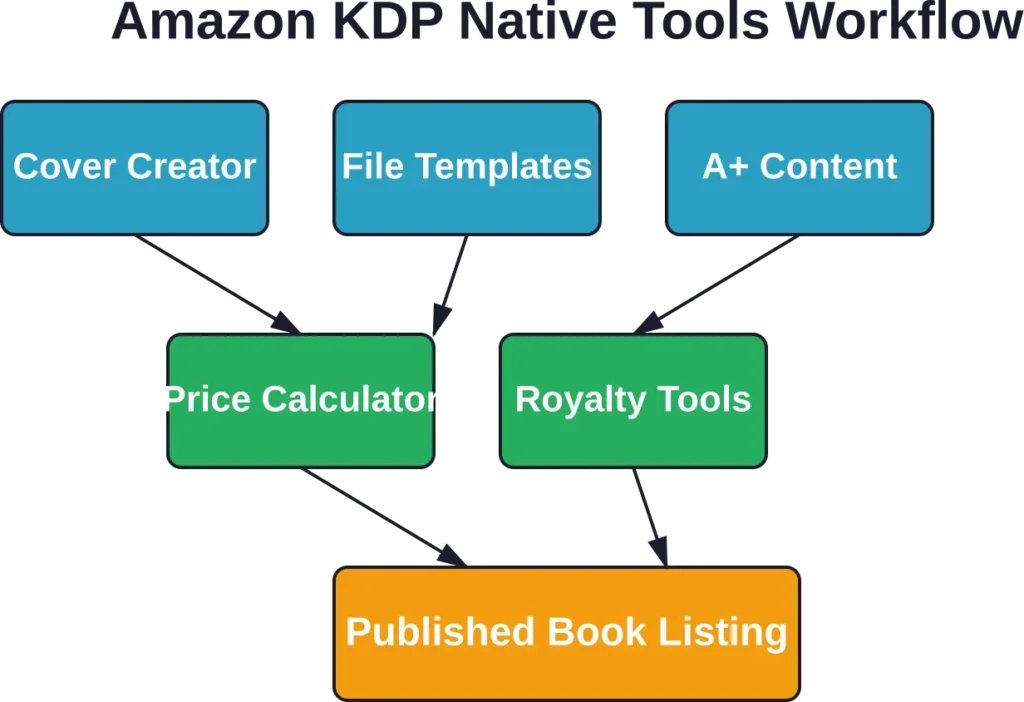
Amazon provides a suite of built-in tools through Kindle Direct Publishing that many sellers overlook. These free resources form the bedrock of any publishing strategy on the platform.
Cover Creator
According to the official KDP help resources, Cover Creator helps authors design compelling covers that perform well both as full-sized images and thumbnails. Since Amazon displays thumbnail cover images in search results, automated merchandising, and detail pages, visual appeal at small sizes directly impacts click-through rates.
The tool offers templates across genres, customizable fonts, and stock image libraries. While professional designers produce superior results for competitive niches, Cover Creator provides a zero-cost entry point that meets Amazon’s technical specifications automatically.
A+ Content
A+ Content allows published KDP authors to enhance product detail pages with rich media. According to official KDP documentation, authors can create one A+ Content project and apply multiple book ASINs to it, adding enhanced content across different format detail pages.
The feature supports images, comparison charts, and formatted text sections that appear below the standard book description. A+ Content must be created and published separately in each marketplace where display is desired. From kdp.amazon.com, authors can publish A+ Content in multiple international marketplaces.
Royalty and Printing Cost Calculators
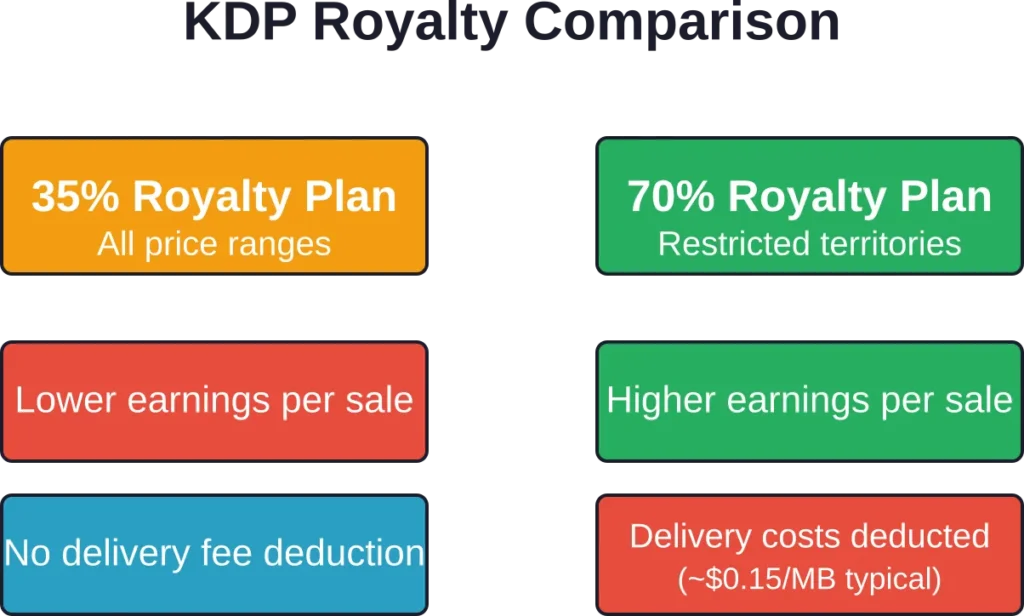
KDP offers two royalty plans for eBooks: 35% royalty and 70% royalty. According to the official pricing page, sales to customers outside the 70% eligible territories receive 35% of the list price.
The royalty calculator shows real-time estimates based on list price, marketplace, delivery costs, and applicable VAT. For paperbacks and hardcover books, printing cost depends on the Amazon marketplace where the order originated, page count, ink type (black or color), and trim size. Bleed settings and cover finish don’t affect printing cost.
These calculators eliminate guesswork when setting competitive prices that maintain profitability. Authors can test various price points and instantly see the impact on per-unit earnings.
File Setup Calculator and Templates
According to KDP help resources, the file setup calculator helps authors choose the best resource based on the type of word processing software used and whether templates are preferred. Note that Hardcover is not supported on Amazon.co.jp.
Amazon provides step-by-step guides for Word for Windows, Word for Mac, and Pages, along with manuscript templates optimized for various trim sizes and formats. Using these templates prevents common formatting errors that trigger rejections during the upload process.
Amazon Associates Program Integration
KDP merchandising tips note that authors can join the Amazon Associates program to earn an additional 4% on each sale they drive. Creating custom links to books and professional interactive widgets generates supplemental income when customers click these links and purchase.
This integration proves particularly valuable for authors with established websites, email lists, or social media followings who can direct traffic to their Amazon listings.
Marketing and Promotion Tools
Publishing a book represents only half the equation. Marketing tools amplify visibility and drive sales through multiple channels.
WisePPC

WisePPC is a powerful third-party Amazon PPC management tool designed specifically for optimizing Sponsored Products, Sponsored Brands, and Sponsored Display campaigns. It provides advanced bulk operations, long-term historical data storage (far beyond Amazon’s 60-90 day limit), automated bid rules, and deep performance analytics across keywords, placements, and match types.
For book sellers and KDP authors, WisePPC excels at separating ad-driven sales from organic sales, lowering ACoS/TACoS, and scaling profitable campaigns efficiently. Its clean interface and powerful filters make it easier to manage hundreds or thousands of ad groups even for large catalogs.
Contact Information:
- Website: wiseppc.com
- Facebook: www.facebook.com/people/Wise-PPC/61573154427547
- LinkedIn: www.linkedin.com/company/wiseppc
- Instagram: www.instagram.com/wiseppc
Amazon Advertising Console

Amazon’s native advertising platform enables targeted promotion directly within Amazon’s ecosystem. Sponsored Product ads appear in search results and on competitor detail pages, driving traffic to book listings.
The pay-per-click model controls costs while testing campaign effectiveness. Authors bid on keywords related to their books, paying only when shoppers click ads. Successful campaigns generate positive ROI by converting clicks into purchases at profitable rates.
BookBub
BookBub dominates book promotion services with a massive email list of deal-seeking readers. Featured deals reach hundreds of thousands of subscribers in specific genres, generating massive sales spikes during promotion periods.
Competition for BookBub features remains intense, with acceptance rates varying by genre and discount depth. The service works best for authors building readership for series—the first book runs as a loss leader, while subsequent books generate profit from readers hooked by the initial discounted entry point.
Newsletter Building Tools
Direct reader relationships through email lists provide long-term marketing infrastructure independent of Amazon algorithm changes. Tools like Mailchimp, ConvertKit, and BookFunnel facilitate list building and automated reader engagement.
Successful authors cultivate email lists through reader magnets—free short stories or bonus content offered in exchange for email addresses. These lists become launch assets, generating initial sales velocity that improves Amazon rankings organically.
Social Media Scheduling
Consistent social media presence builds author platforms gradually. Scheduling tools like Buffer, Hootsuite, and Later allow batch-creating content during productive periods, then automatically posting throughout weeks or months.
The tools support multiple platforms simultaneously, enabling authors to maintain presence across Facebook, Twitter, Instagram, and other networks without daily manual posting.
Keyword Research and Market Analysis Tools
Discovering profitable niches and optimizing book metadata requires dedicated research tools. These platforms analyze Amazon’s vast data to surface opportunities invisible through manual browsing.
Helium 10

According to SellerSprite’s 2026 comparison, Helium 10 includes powerful research tools and an integrated PPC platform called Helium 10 Ads, making it suitable for sellers from beginners to large agencies. The platform offers a free version and entry pricing around $39 per month, with higher tiers unlocking advanced analytics.
Helium 10’s book-specific features include keyword tracking, competitor analysis, and listing optimization suggestions. The tool scrapes Amazon search data to identify high-volume, low-competition keyword opportunities that improve organic ranking.
Publisher Rocket

Publisher Rocket (formerly KDP Rocket) specializes exclusively in book publishing research. The software provides keyword suggestions based on actual Amazon customer searches, category analysis showing sales estimates for top books, and competition assessment tools.
Unlike subscription-based platforms, Publisher Rocket requires a one-time purchase. The tool runs locally on desktop computers, analyzing Amazon data to surface niche opportunities and suggest optimal keywords for the seven keyword slots KDP provides.
Jungle Scout

While primarily known for physical product research, Jungle Scout offers features applicable to book sellers. The platform excels at competitive intelligence, showing sales estimates, historical pricing data, and market trend analysis.
Jungle Scout’s database allows filtering by category, price range, and sales velocity. Book sellers can identify trending subcategories before saturation occurs and spot gaps in competitive markets worth entering.
SellerSprite

According to SellerSprite’s 2026 comparison, the platform offers a comprehensive suite covering product research, keyword mining, competitor analysis, and listing optimization. SellerSprite stands out as an all-in-one platform for cross-border Amazon sellers.
The keyword research module identifies search terms customers actually use, tracks ranking positions over time, and suggests related terms that competitors target. SellerSprite’s pricing typically starts lower than major competitors, making it accessible for new sellers testing the market.
SmartScout

According to recent platform comparisons, SmartScout provides traffic estimation and keyword intelligence. Despite its depth, SmartScout starts at around $29 per month and appeals to sellers who need category-level market analysis rather than individual product tracking.
The platform maps Amazon’s entire category structure, showing traffic distribution, top brands, and growth trends. For book sellers exploring new genres, SmartScout reveals which categories attract buyer attention without requiring extensive manual research.
| Tool | Best For | Starting Price | Key Strength |
|---|---|---|---|
| Helium 10 | Established sellers | ~$39/month | Integrated PPC platform |
| Publisher Rocket | KDP-specific research | One-time fee | Desktop-based analysis |
| Jungle Scout | Market trend analysis | Subscription | Sales estimation accuracy |
| SellerSprite | International sellers | Budget-friendly | Cross-border optimization |
| SmartScout | Category research | ~$29/month | Traffic mapping |
Book Scouting Apps for Resellers
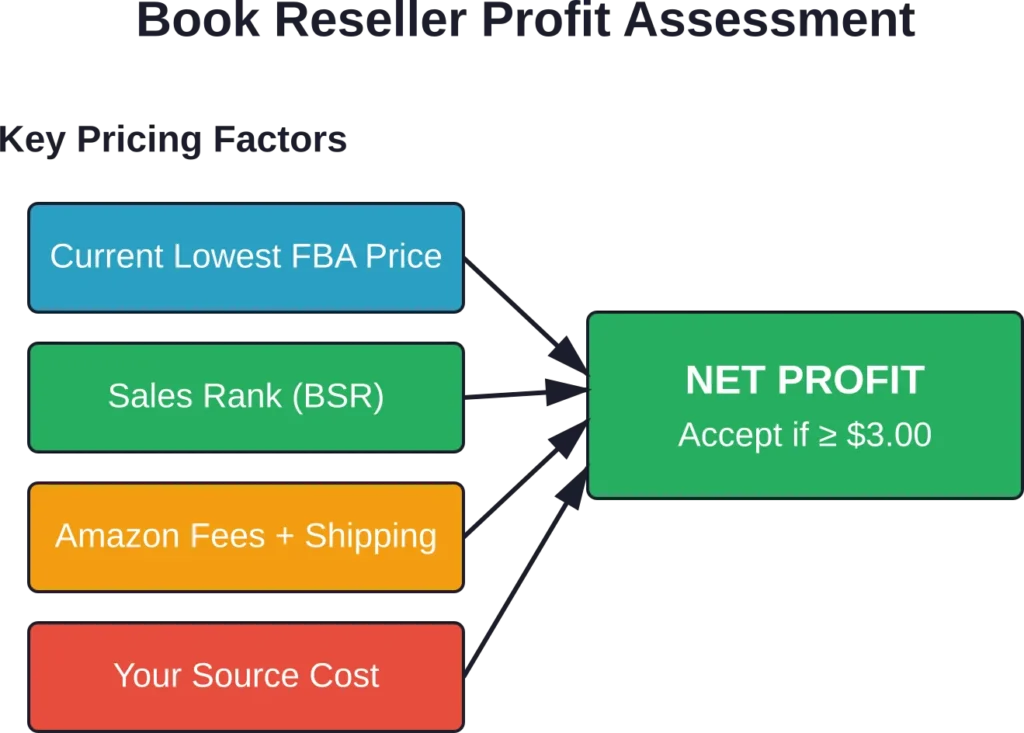
Reselling used books on Amazon requires rapid profit assessment while sourcing inventory. Book scouting apps scan ISBNs and instantly display pricing data, sales rank, and profitability estimates.
ScoutIQ

ScoutIQ dominates the professional book reseller market with comprehensive data presentation and customizable profit triggers. The app displays current Amazon prices across condition tiers, historical pricing trends, sales rank, and estimated monthly sales.
According to community discussions among booksellers, ScoutIQ offers the most detailed live pricing data. The app shows both Fulfillment by Amazon (FBA) and merchant-fulfilled prices, helping resellers choose the optimal fulfillment method for each title.
ScoutIQ integrates with batch listing workflows, allowing scanned books to flow directly into listing templates with pre-populated pricing and condition notes.
ASellerTool

ASellerTool serves as ScoutIQ’s primary competitor, offering similar core functionality at a different price point. The app provides live Amazon data, profit calculations accounting for fees, and customizable accept/reject criteria.
Resellers appreciate ASellerTool’s offline database capability, which caches pricing data for continued scanning when internet connectivity becomes unreliable in sourcing locations like library book sales or warehouse environments.
Inventory Source Apps
Beyond scouting apps, successful resellers utilize inventory management systems that track repricing, automate feedback requests, and monitor competitive positions.
These systems integrate with Amazon Seller Central APIs to adjust pricing dynamically as market conditions shift, protecting margins when competitors lower prices or restocking inventory when bestsellers sell through.
Setting Up an Efficient Scouting Workflow
Detailed workflow guides recommend systematic workstation setup. The recommended approach includes organizing inventory into batches, scanning methodically through each item, and maintaining consistent acceptance criteria.
Common sourcing locations include thrift stores and Goodwill outlets, with paperbacks often priced under $1. Going frequently matters because stock turns quickly and other resellers scan daily. Additional sources include library sales, estate sales, and online arbitrage from platforms selling bulk lots.
The workflow involves scanning each ISBN, reviewing the data presented by the scouting app, and making rapid accept-reject decisions based on predefined profit thresholds. Experienced resellers can process hundreds of books per hour once their system solidifies.
Design and Formatting Tools
Professional presentation separates successful books from ignored listings. Design tools handle covers, interior formatting, and visual elements that influence purchase decisions.
Canva

Canva democratized graphic design for non-designers. The platform offers thousands of book cover templates across genres, drag-and-drop editing, stock photo libraries, and export options matching Amazon’s specifications.
Canva’s free tier provides substantial functionality, though premium features unlock additional stock images and advanced design elements. The web-based interface eliminates software installation and enables collaboration when working with editors or co-authors.
For authors on tight budgets, Canva bridges the gap between DIY Cover Creator results and professional designer costs. The platform’s template quality has improved significantly, with many genre-appropriate options that follow current market trends.
Vellum

Vellum revolutionized eBook formatting for Mac users. The software generates professionally formatted eBooks and print interiors with minimal manual intervention, handling chapter headings, scene breaks, and front matter automatically.
While Vellum requires a significant upfront investment and runs exclusively on macOS, authors publishing multiple books recover the cost quickly through time savings. The software exports files optimized for KDP upload, reducing formatting-related rejections.
Atticus

Atticus emerged as a cross-platform alternative to Vellum, offering similar formatting automation for both Windows and Mac users. The tool combines writing features with formatting capabilities, positioning itself as an all-in-one book production platform.
Atticus handles complex formatting requirements including images, tables, and multi-level headings. The software exports print-ready PDFs and eBook files simultaneously from a single project.
Adobe InDesign

Professional publishers rely on Adobe InDesign for complete layout control. The industry-standard tool handles intricate design requirements impossible in simplified platforms—multi-column layouts, advanced typography, and precise image placement.
InDesign’s learning curve intimidates beginners, and the Creative Cloud subscription adds recurring costs. However, publishers producing illustrated books, textbooks, or coffee-table titles find the investment necessary for achieving professional results.
Photoshop and GIMP

Cover design often requires photo editing beyond Canva’s capabilities. Adobe Photoshop remains the professional standard, while GIMP provides a capable free alternative for budget-conscious authors.
These tools handle tasks like background removal, color correction, compositing multiple images, and preparing files at high resolution for print covers. Basic photo editing skills dramatically expand creative options when designing book covers.
Analytics and Tracking Platforms
Data-driven decisions separate growing book businesses from stagnant ones. Analytics tools track sales patterns, monitor competitive positions, and identify optimization opportunities.
Keepa

Keepa tracks Amazon price history and sales rank over time. The browser extension displays historical charts directly on Amazon product pages, showing price fluctuations, availability gaps, and rank patterns.
For book sellers, Keepa reveals seasonal trends, identifies optimal pricing windows, and monitors competitor pricing strategies. The data helps time promotions, adjust list prices strategically, and understand demand patterns.
Keepa’s database extends years into the past, providing long-term perspective unavailable through Amazon’s native reporting. The subscription fee remains modest relative to the competitive intelligence gained.
Data Dive

Data Dive specializes in sales estimation for Amazon books. The tool converts sales rank (BSR) into approximate monthly unit sales, helping authors assess market size before entering niches.
Understanding that a book ranked 50,000 in the Kindle store sells approximately X units monthly guides pricing decisions, advertising budget allocation, and realistic revenue projections. Data Dive removes guesswork from market assessment.
AMZScout

AMZScout provides sales tracking and market analysis across Amazon categories. While designed for physical products, many features apply to book sellers tracking competitive landscapes.
The platform’s database filters enable isolation of books by subcategory, price range, publication date, and sales volume. Sellers identify emerging trends and spot categories experiencing growth before saturation.
Book Report

Book Report aggregates sales data from Amazon KDP dashboards, providing enhanced analytics beyond Amazon’s native reporting. The service tracks royalties across marketplaces, projects monthly earnings, and visualizes sales trends.
Authors publishing across multiple formats and international marketplaces appreciate the consolidated view. Book Report normalizes data from various Amazon domains into unified dashboards showing global performance.
ZonGuru

ZonGuru offers tools spanning product research, listing optimization, and sales tracking. The platform includes features like automated review requests, keyword tracking, and business analytics.
For book sellers managing larger catalogs, ZonGuru’s automation features reduce repetitive tasks. The system monitors inventory levels (for print books), tracks keyword rankings, and alerts sellers to listing issues requiring attention.
| Tool Type | Primary Function | Best Use Case |
|---|---|---|
| Keepa | Price & rank history | Competitive intelligence |
| Data Dive | Sales estimation | Market sizing |
| AMZScout | Market analysis | Trend identification |
| Book Report | Royalty tracking | Multi-market authors |
| ZonGuru | Business automation | Large catalogs |
Pricing Strategy Tools
Strategic pricing maximizes revenue while maintaining competitive positioning. Several tools help sellers find the optimal price point balancing volume and margin.
According to official KDP documentation, authors can choose list prices at their discretion within KDP’s minimum and maximum ranges. KDP offers two royalty plans for eBooks: 35% royalty and 70% royalty. To see specific minimum and maximum list prices for each plan, authors should check list price requirements.
In Europe, VAT applies to books sold on Amazon.co.uk, Amazon.de, Amazon.es, Amazon.fr, Amazon.it, Amazon.nl, Amazon.pl, Amazon.se, Amazon.ie, and Amazon.com.be. The VAT rate depends on the customer’s country of residence. When VAT applies, Amazon automatically adds the applicable rate to the selected list price.
Dynamic Repricing for Resellers
Used book resellers benefit from automated repricing tools that adjust prices in response to competitive changes. When another seller undercuts a listing, repricing software automatically lowers the price to maintain competitive position while respecting minimum profit thresholds.
According to reseller workflow examples, pricing data shows significant variation across condition tiers and fulfillment methods, with FBA and merchant-fulfilled prices differing substantially.
These price variations create arbitrage opportunities. A book listed at $5 with $3.99 shipping might actually cost buyers more than one listed at $7.50 with free Prime shipping, but the lower headline price often wins the Buy Box.
Testing Price Points
Systematic price testing reveals optimal positioning for new releases. Some authors launch at premium prices to maximize early revenue from loyal fans, then gradually reduce prices to broaden market reach.
Others adopt penetration pricing—launching low to build reviews and rankings quickly, then raising prices once social proof accumulates. Both strategies work depending on genre, competition, and existing author platform.
Administrative and Business Tools
Professional book selling requires business infrastructure beyond creative tools.
Accounting Software
Tracking royalties, expenses, and tax obligations becomes complex quickly. QuickBooks Self-Employed, FreshBooks, and Wave provide accounting solutions tailored to solo entrepreneurs and small businesses.
These platforms import bank transactions, categorize expenses automatically, generate profit-and-loss statements, and prepare tax documentation. Proper accounting prevents surprises during tax season and clarifies actual profitability after accounting for all costs.
ISBN Management
While Amazon provides free ASINs for Kindle eBooks, print books benefit from unique ISBNs for distribution flexibility. Bowker’s MyIdentifiers platform manages ISBN purchases and assignment in the United States.
Owning ISBNs enables distribution beyond Amazon through IngramSpark or other aggregators, expanding market reach. The investment makes sense for authors building long-term publishing businesses rather than testing with a single title.
Project Management
Authors juggling multiple projects benefit from organizational tools. Trello, Asana, and Notion help track manuscripts through writing, editing, design, and publishing phases while managing deadlines and collaborator communications.
These platforms prevent important tasks from falling through cracks during complex multi-book production schedules.
How to Choose the Right Tools for Your Situation
Tool selection depends on publishing model, experience level, and budget constraints. New authors should start lean.
Begin with free Amazon KDP tools—Cover Creator, formatting templates, and built-in calculators. These provide essential functionality without financial risk. Test the publishing process completely before investing in premium tools.
Once initial books publish, add one keyword research tool. Publisher Rocket suits authors on tight budgets due to its one-time cost, while SellerSprite or Helium 10 work better for those comfortable with subscriptions. Focus on understanding Amazon’s search ecosystem before expanding the toolkit further.
Book resellers face different priorities. Scouting apps become essential immediately since they determine sourcing profitability. ScoutIQ or ASellerTool should be among the first investments, recovering costs within dozens of profitable book purchases.
Design tools scale with quality expectations. Authors in competitive niches benefit from investing in professional design—either purchasing premium tools like Vellum and Adobe Creative Cloud or hiring designers. Less competitive categories tolerate adequate covers from Canva or Cover Creator.
Analytics tools make sense once sales volume justifies their cost. An author selling ten books monthly gains little from Keepa subscriptions, while one selling hundreds benefits from detailed competitive intelligence and trend analysis.
Marketing tools should align with established strategies. Authors building email lists need newsletter platforms immediately. Those focusing on Amazon ads should master Amazon’s native advertising console before exploring third-party bid optimization services.
Real talk: tool accumulation doesn’t guarantee success. Strategic application of a focused toolkit beats scattered experimentation with dozens of platforms. Master core tools thoroughly before expanding.
Common Mistakes When Using Book Selling Tools
Tool misuse undermines their value. Several patterns appear repeatedly among struggling sellers.
Over-reliance on Keyword Research
Keyword tools reveal what readers search for, not necessarily what they’ll buy. High search volume for a keyword doesn’t guarantee sales if competition saturates that market or if searches reflect research rather than purchase intent.
Balance keyword data with qualitative market assessment. Read reviews of competitive books, understand reader complaints, and identify underserved needs that data alone won’t reveal.
Ignoring Metadata Guidelines
According to official KDP content guidelines, metadata—titles, subtitles, and descriptions—must follow specific rules. Prohibited elements include references to other authors, sales rank claims like “bestselling,” advertisements or promotions such as “free,” and anything unrelated to the book’s content.
HTML tags aren’t allowed in metadata fields. Violating these guidelines triggers listing suppression or account warnings.
Underpricing Based on Tools Alone
Scouting apps and research platforms suggest prices based on current competition. Blindly matching the lowest price creates a race to the bottom that erodes profitability industry-wide.
Consider condition, completeness, and fulfillment method when pricing. A pristine first edition justifies premium pricing over acceptable copies, regardless of what automated tools suggest.
Feature Overload
Premium tools unlock dozens of features most users never need. Paying for enterprise tiers when using only basic functionality wastes money that could fund advertising or professional editing.
Audit tool usage quarterly. Cancel or downgrade subscriptions when advanced features remain unused. Redirect savings toward direct revenue drivers.
Neglecting Amazon’s Free Resources
Authors chase expensive third-party solutions while ignoring Amazon’s official help documentation, community forums, and free webinars. KDP provides extensive guides covering formatting, metadata optimization, advertising basics, and marketplace-specific requirements.
The official KDP help center includes detailed troubleshooting for common issues, category selection guidance, and technical specifications. Starting here prevents many problems third-party tools later need to fix.
Future Trends in Book Selling Tools
Tool development follows broader technology trends while adapting to Amazon’s evolving platform.
AI Integration
According to official KDP content guidelines, authors are required to inform Amazon of AI-generated content (text, images, or translations) when publishing new books or making edits to existing books. AI-generated and AI-assisted content are distinguished differently, with only AI-generated content requiring disclosure.
Despite regulatory attention, AI tools increasingly assist with market research, cover design iteration, description optimization, and even content editing. Future tools will likely embed AI assistants that suggest keywords, predict market trends, and optimize listings automatically.
Enhanced Analytics
Data platforms continue expanding backward-looking sales reports into forward-looking predictive analytics. Machine learning models trained on millions of book launches will eventually predict launch success probability based on metadata, pricing, and competitive positioning.
These predictive tools will help authors make go/no-go decisions before investing in editing and design, reducing financial risk from unsuccessful projects.
Marketplace Fragmentation
While Amazon dominates English-language book sales, international marketplaces grow independently. Tools supporting multi-platform publishing across Amazon, Kobo, Apple Books, and Google Play will streamline distribution complexity.
Aggregation platforms that manage pricing, metadata, and royalty tracking across all retailers in unified dashboards will gain market share from authors tired of managing multiple seller accounts manually.
Automation Expansion
Repetitive tasks continue migrating toward automation. Future tools will handle routine repricing, review monitoring, inventory reordering, and compliance checking with minimal human intervention.
This automation frees creative time for writing, marketing strategy, and reader engagement—activities that actually differentiate successful authors from struggling ones.
Frequently Asked Questions
Begin with Amazon KDP’s free native tools including Cover Creator, formatting templates, and royalty calculators. These handle core publishing requirements at zero cost. Add a basic keyword research tool like Publisher Rocket (one-time purchase) or SellerSprite’s entry tier once you’re ready to optimize listings. Everything else—premium design software, analytics platforms, marketing automation—can wait until sales justify the investment. Most successful authors started with minimal tooling and expanded strategically as revenue grew.
Budget varies dramatically based on publishing model. New authors can operate on $0-30 monthly using free KDP tools plus one keyword research subscription. Established authors typically spend $50-150 monthly across keyword research, analytics platforms like Keepa, and marketing tools. Professional resellers often invest $100-300 monthly in scouting apps, repricing software, and inventory management systems. Start lean and let tool spending scale with revenue rather than front-loading costs before proving the business model.
Absolutely. Professional scouting apps like ScoutIQ or ASellerTool pay for themselves within the first few profitable book purchases. The data prevents costly mistakes—buying books that won’t sell or mispricing inventory. According to reseller communities, attempting to source profitably without scouting apps wastes enormous time and money through trial-and-error learning that the apps eliminate immediately. The subscription represents insurance against unprofitable purchasing decisions.
Yes. Canva has evolved into a viable alternative for many genres, offering templates and design elements that produce market-appropriate covers. For eBooks especially, Canva covers perform adequately in most categories. Print books in highly competitive niches benefit from professional design, but even then, tools like Affinity Photo provide Photoshop-like capabilities at one-time purchase prices rather than subscriptions. Many successful authors use Canva for their entire catalog, particularly in romance, cozy mystery, and other template-friendly genres.
According to official KDP pricing documentation, the 70% royalty plan offers higher per-sale earnings but includes delivery cost deductions (approximately $0.15 per MB in the US) and restricts eligible territories. The 35% plan works across all territories without delivery fees. Choose 70% for eBooks priced between $2.99 and $9.99 targeting primary markets (US, UK, major European countries) where file size stays under 3MB. Choose 35% for books priced outside that range, very large files, or targeting markets outside 70% eligible territories. Use KDP’s royalty calculator to compare actual earnings under both plans before deciding.
Core tools remain similar, but emphasis shifts. Fiction authors prioritize tools that identify trending tropes and reader preferences within genres—keyword research focuses on subgenre terminology and comparable author identification. Nonfiction authors need tools assessing search volume for problem-solution keywords and competitive analysis of existing solutions. Design tools differ somewhat—fiction relies heavily on genre conventions visible through stock image browsing, while nonfiction often requires custom graphics, charts, or photography. Marketing tools diverge too, with fiction leaning toward BookBub and reader engagement platforms while nonfiction benefits more from content marketing and SEO tools.
For Kindle eBooks, Amazon’s free ASIN works perfectly—there’s no advantage to purchasing ISBNs for eBooks sold exclusively through Amazon. For print books, the decision depends on distribution plans. Authors publishing only through KDP can use free ISBNs Amazon provides. However, these ISBNs list Amazon as the publisher of record and limit distribution options. Authors planning to distribute through IngramSpark, libraries, or bookstores benefit from purchasing their own ISBNs through Bowker, which enables broader distribution and lists the author or their publishing imprint as publisher. The investment makes sense for professional long-term publishing businesses, not experimental first books.
Conclusion
Success selling books on Amazon requires matching the right tools to your specific publishing model, budget, and experience level. The platform provides robust free resources through KDP that handle core publishing needs competently.
Strategic tool investment amplifies results. Keyword research platforms reveal hidden opportunities in Amazon’s vast marketplace. Book scouting apps transform used book reselling from guesswork into data-driven profit assessment. Design tools elevate presentation quality, while analytics platforms track performance and identify optimization opportunities.
But tools alone guarantee nothing. They amplify effective strategies and accelerate learning, but they can’t compensate for poor market positioning, weak writing, or nonexistent marketing. The most sophisticated toolkit won’t rescue an unwanted book, while a great book in a hungry market will find readers even with basic tooling.
Start with Amazon’s free KDP resources. Master the fundamentals of formatting, metadata optimization, and pricing strategy before investing in premium platforms. Add tools incrementally as specific needs emerge rather than assembling a complete toolkit upfront.
Audit tool usage regularly. Cancel subscriptions for features that aren’t actively used. Redirect that capital toward direct revenue drivers—better editing, professional covers, or advertising budgets that put books in front of readers.
The Amazon book marketplace rewards systematic experimentation more than expensive tools. Test pricing strategies. Try different keywords. Iterate cover designs based on click-through data. Build direct relationships with readers through email lists that survive algorithm changes.
Tools serve the strategy. Define your approach first, then select instruments that execute it efficiently. That discipline separates profitable publishers from perpetual tool collectors who confuse activity with progress.