

Quick Summary: Essential Facebook Ads tools span automation platforms, analytics suites, creative management systems, and AI-powered optimization engines that help advertisers scale campaigns, reduce manual workload, and improve Extuitive, ROAS. The right toolset depends on campaign complexity, team size, and specific performance goals—ranging from native Meta Advantage features to third-party platforms like Madgicx, AdEspresso, and Smartly.io.
Managing Facebook advertising campaigns manually in 2026 is an exercise in inefficiency. The platform’s auction dynamics shift hourly, audience behaviors fragment across devices, and campaign complexity scales faster than most teams can handle.
That’s where specialized tools come in.
The right Facebook ads tools automate repetitive tasks, surface actionable insights from oceans of data, and free up strategic thinking time. But the landscape is crowded—automation platforms, analytics dashboards, creative management systems, and AI-powered optimizers all compete for attention.
This guide breaks down the essential tool categories, highlights standout platforms across price points, and maps features to real-world use cases. Whether running a solo consulting practice or managing eight-figure ad accounts, the following sections cover what matters.
Why Facebook Ads Tools Matter in 2026
Native Meta Ads Manager provides foundational campaign management, but it wasn’t designed for efficiency at scale. Teams managing multiple clients, testing dozens of creative variations weekly, or optimizing across complex funnel stages hit walls fast.
The core challenge? Time. Manual campaign checks consume hours that could be spent on strategy, creative direction, or client communication. According to data from digital advertising research, online media channels require continuous optimization to maintain competitive advantages in fast-moving consumer goods and services sectors.
Here’s what dedicated tools solve:
- Campaign automation reduces launch time from hours to minutes
- Algorithmic bid adjustments respond faster than human monitoring
- Centralized dashboards eliminate app-switching between accounts
- Creative testing frameworks systematize what typically relies on gut instinct
- Performance anomaly detection flags issues before budgets drain
Real talk: not every tool delivers on its promise. Some add complexity without corresponding value. The sections below focus on platforms that solve specific, high-impact problems.
Creative Management and Testing Tools
Creative performance drives Facebook advertising results, but managing dozens or hundreds of ad variations manually is impractical. Creative-focused tools systematize testing and asset management.
Extuitive
Extuitive is an AI-powered predictive platform that forecasts ad creative performance before launching on Facebook and Instagram. It connects directly to your Shopify store, analyzes your product catalog and past campaigns, then scores hundreds of creative variations on predicted CTR, ROAS, and engagement.
The platform doesn’t just generate creatives — it validates them. Using AI consumer agents modeled after 150,000+ real buyer profiles, Extuitive identifies winners and eliminates losers before any budget is spent. This dramatically reduces wasted test spend and speeds up the path to profitable creatives.
Extuitive continuously learns from your account’s actual results. As campaigns run, the system refines its predictions and increasingly aligns future recommendations with what performs best for your specific brand and audience.
Contact Information:
- Website: extuitive.com
- Email: [email protected]
- LinkedIn: www.linkedin.com/company/extuitive
- Twitter: x.com/Extuitive_Inc
- Instagram: www.instagram.com/extuitiveinc
Pencil
Pencil uses AI to generate ad creative variations from brand assets. Upload logos, product images, and brand guidelines—the platform outputs hundreds of ad combinations optimized for Meta’s specifications.
The tool isn’t replacing human creative directors. It’s accelerating iteration. Rather than waiting days for design resources to produce new ad variations, media buyers generate options in minutes and test aggressively.
Pencil also learns from performance data. As ads run, the platform identifies which design patterns correlate with better results and prioritizes similar characteristics in future generations.
AdCreative.ai

AdCreative.ai follows a similar model—AI-generated ad creatives based on performance data from thousands of accounts. The platform claims its generated ads outperform human-designed ones on average, though results vary significantly by vertical and brand maturity.
The platform works best for direct-response advertisers willing to prioritize performance over brand aesthetics. For brands with strict visual guidelines, the generated outputs often require manual refinement.
Foreplay

Foreplay is a creative intelligence platform that archives and organizes competitor ads. The tool monitors ad libraries across Facebook, Instagram, TikTok, and YouTube, building a searchable database of what messaging and formats other brands test.
For creative teams, it’s systematized competitive research. Instead of manually browsing Meta’s Ad Library, Foreplay surfaces relevant competitor creatives automatically, tags them by format and theme, and tracks how long they run—a proxy for performance.
Native Meta Tools Every Advertiser Should Master
Before evaluating third-party platforms, master what Meta provides natively. These tools form the foundation—and for smaller accounts, they’re often sufficient.
Meta Ads Manager
The core campaign interface. Ads Manager handles campaign creation, targeting setup, creative upload, and basic reporting. It’s free, comprehensive, and integrates directly with the ad auction.
Key capabilities include:
- Campaign structure management across awareness, consideration, and conversion objectives
- Detailed targeting by demographics, interests, behaviors, and custom audiences
- Creative preview across Facebook, Instagram, Audience Network, and Messenger placements
- Real-time performance dashboards with customizable columns
- A/B testing framework for creative, audience, and placement experiments
The limitation? Scale. Managing ten campaigns manually is manageable. Managing two hundred becomes a full-time job.
Meta Advantage Suite
Meta’s AI-powered automation features cluster under the Advantage branding. These tools let the algorithm handle decisions that traditionally required manual input.
Advantage+ Shopping Campaigns automate targeting, creative selection, and budget allocation for e-commerce advertisers. Rather than building complex campaign structures, advertisers provide creative assets and a budget—the algorithm handles the rest.
Advantage Detailed Targeting expands manually selected audiences with algorithmically identified similar users. It reduces targeting rigidity while maintaining performance guardrails.
Advantage Campaign Budget optimizes spend across ad sets rather than locking budgets at the ad set level. For campaigns with multiple audience segments, it shifts budget toward better performers automatically.
Meta Business Suite
A unified dashboard for managing Facebook Pages, Instagram accounts, and basic advertising. Business Suite works for small teams managing organic and paid social from a single interface.
It’s less powerful than Ads Manager for campaign optimization but handles scheduling, inbox management, and basic performance tracking without switching tools.
Top Third-Party Facebook Ads Automation Tools
Third-party platforms extend beyond native capabilities with specialized automation, deeper analytics, and workflow optimizations Meta doesn’t prioritize.
Madgicx
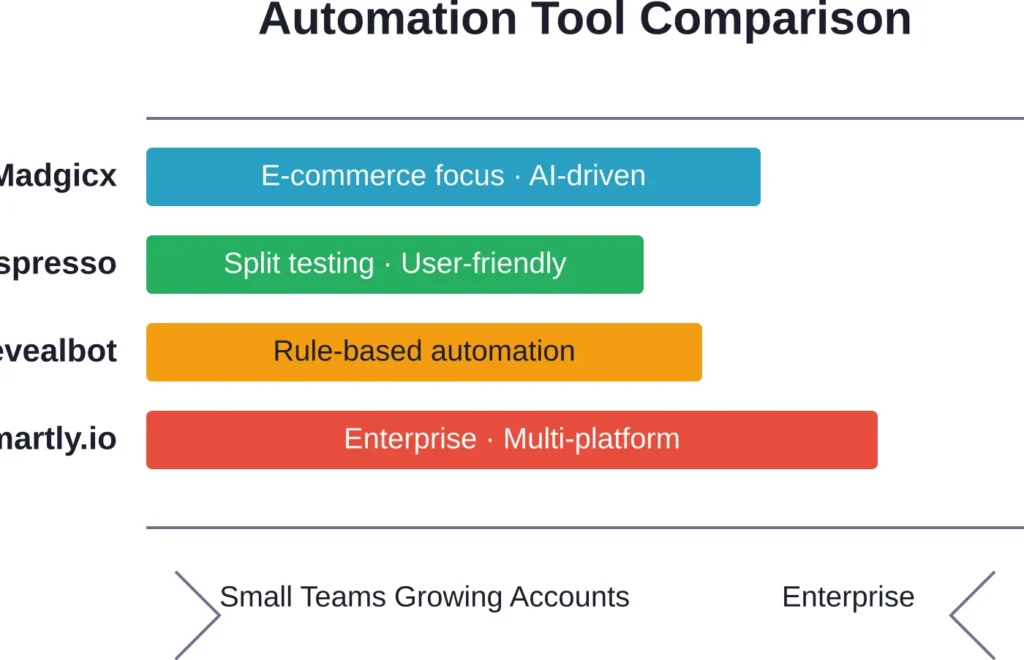
Madgicx targets e-commerce advertisers and agencies with AI-driven campaign automation. The platform analyzes account performance, suggests optimization moves, and executes changes automatically when configured.
Core features include:
- Autonomous budget allocation between campaigns based on real-time performance
- Creative insights that decompose which elements drive results
- Audience launcher that generates and tests new segments systematically
- Tactical dashboards for quick decision-making without deep-diving into Ads Manager
The platform shines for accounts running substantial ad spend where marginal efficiency gains translate to meaningful cost savings. Smaller accounts may find the feature set overwhelming relative to needs.
AdEspresso by Hootsuite
AdEspresso simplifies split testing across creative variations, audiences, and placements. It’s designed for marketers who want structured experimentation without manual campaign duplication.
The platform’s strength is its testing grid—define variables (three headlines, four images, two audience segments) and AdEspresso generates all combinations, launches them as separate ads, and reports performance at the variable level.
This matters because native A/B testing in Ads Manager limits combinations and requires campaign-level setup. AdEspresso makes testing a systematic workflow rather than an occasional experiment.
Revealbot

Revealbot focuses on rule-based automation for performance-driven advertisers. The platform monitors campaigns continuously and executes predefined actions when conditions trigger.
Example automation rules:
- Pause ad sets when cost per acquisition exceeds target by 20%
- Increase budgets by 15% on ad sets maintaining target CPA with high spend velocity
- Send Slack alerts when daily spend deviates more than 30% from the seven-day average
- Duplicate top-performing ads into new ad sets targeting different geographies
For teams that understand their performance thresholds, Revealbot eliminates the need for constant manual monitoring. Set rules once, let the platform execute.
Smartly.io

Smartly.io operates at enterprise scale, managing campaigns across Meta, TikTok, Snapchat, and Pinterest from unified workflows. The platform targets agencies and large brand teams running complex, multi-platform strategies.
Key differentiators include:
- Creative automation that generates ad variations from templates and product feeds
- Predictive budget allocation models that forecast performance impact before shifting spend
- Cross-platform reporting that normalizes metrics across different advertising ecosystems
- Collaboration features for approval workflows, commenting, and version control
Pricing reflects the enterprise positioning—Smartly.io makes sense for teams managing seven-figure monthly budgets, less so for smaller operations.
Analytics and Reporting Platforms
Campaign performance data exists in Ads Manager, but extracting insights requires manual analysis. Dedicated analytics tools transform raw metrics into actionable intelligence.
Motion

Motion positions itself as a creative-first reporting platform. Rather than focusing solely on campaign metrics, it connects performance back to specific creative elements—colors, messaging angles, image styles, video lengths.
The platform ingests ad creative automatically, tags elements with machine learning, and reports which combinations drive results. For brands running heavy creative testing, this granularity identifies patterns humans miss.
Motion also layers in anomaly detection—flagging when performance metrics deviate from historical norms, which catches issues before they consume meaningful budget.
Supermetrics
Supermetrics isn’t a standalone analytics platform—it’s a data connector. The tool pipes advertising data from Meta, Google Ads, LinkedIn, and dozens of other sources into spreadsheets, data warehouses, or business intelligence platforms.
For teams that already use Google Sheets, Excel, Looker, or Tableau for analysis, Supermetrics eliminates manual data export. Refreshed data flows automatically on scheduled intervals, keeping dashboards current without repeated API calls or CSV downloads.
Triple Whale

Triple Whale targets e-commerce brands running on Shopify. The platform combines advertising data with store analytics, creating unified dashboards that track the full customer journey from ad click to purchase to repeat order.
Key metrics include:
- Blended ROAS across all marketing channels
- Customer acquisition cost by traffic source
- Lifetime value cohorts segmented by acquisition channel
- Real-time profit tracking that factors in cost of goods and fulfillment
The platform’s strength is its e-commerce specificity. Rather than generic advertising metrics, Triple Whale reports what online retailers actually care about—profit per order, not just revenue.
Choosing the Right Tools for Different Use Cases
Tool selection depends on account characteristics, team structure, and performance goals. The following scenarios map common situations to appropriate tool combinations.
Solo Consultant or Freelancer
Managing three to ten client accounts with limited budget per client.
Recommended stack:
- Meta Ads Manager for campaign management
- AdEspresso for structured split testing without manual duplication
- Supermetrics to pull data into client-facing Google Sheets reports
This combination keeps costs low while automating the most time-intensive tasks—campaign setup and reporting. Advanced automation isn’t necessary at this scale.
E-Commerce Brand ($50k–$200k Monthly Ad Spend)
Single brand, high creative testing volume, direct-to-consumer focus.
Recommended stack:
- Madgicx or Revealbot for automated budget optimization
- Triple Whale for profit-focused analytics
- Pencil for creative generation and testing
This stack prioritizes efficiency at scale. Automation handles repetitive optimization, analytics connect ad spend to profit, and creative tools maintain testing velocity.
Agency Managing 20+ Clients
Multi-client management, diverse verticals, white-label reporting requirements.
Recommended stack:
- Smartly.io or Skai for cross-account campaign management
- Motion for creative performance analysis
- Supermetrics feeding into a custom data warehouse
- Foreplay for competitive intelligence across client verticals
Agency operations require centralized visibility, client-specific dashboards, and creative research at scale. This combination addresses all three without requiring teams to master a dozen separate platforms.
Enterprise Brand (Multi-Platform, Global)
Large internal team, multiple product lines, campaigns across Meta, Google, TikTok, and traditional channels.
Recommended stack:
- Smartly.io for unified campaign orchestration
- Custom data warehouse with Supermetrics or Fivetran connectors
- Tableau or Looker for business intelligence dashboards
- Internal creative team supplemented by Pencil for high-volume testing
Enterprise scale demands custom infrastructure. Third-party tools provide specialized capabilities, but data flows into centralized systems that support cross-functional decision-making beyond just advertising.
| Use Case | Primary Challenge | Essential Tools |
|---|---|---|
| Solo Consultant | Time constraints | Ads Manager, AdEspresso, Supermetrics |
| E-Commerce Brand | Scaling profitably | Madgicx, Triple Whale, Pencil |
| Agency (20+ clients) | Multi-account oversight | Smartly.io, Motion, Foreplay |
| Enterprise Brand | Cross-platform coordination | Custom data stack, Smartly.io, BI tools |
Pricing Models and Budget Considerations
Facebook ads tools range from free browser extensions to enterprise platforms with six-figure annual contracts. Understanding pricing structures helps match budgets to actual needs.
Common Pricing Approaches
Most platforms use one of three models:
Percentage of Ad Spend: The tool charges a percentage of monthly ad spend managed through the platform. Typical ranges fall between 1% and 5% depending on features and spend volume. This model aligns platform costs with advertiser scale but can become expensive quickly.
Flat Monthly Subscription: Fixed monthly fee regardless of ad spend. Common for reporting tools, creative platforms, and lighter automation. Subscriptions typically tier by feature access or account limits rather than spend volume.
Usage-Based Pricing: Charges based on specific actions—data queries, creative generations, automation rule executions. Less common but growing, especially for AI-powered features where computational costs vary significantly.
Evaluating Cost vs. Value
A tool that costs $500 monthly but saves fifteen hours of manual work is profitable if those hours redirect toward strategic activities that improve results. The calculation isn’t just tool cost—it’s opportunity cost of manual processes.
For media buyers, time spent on repetitive campaign checks, budget adjustments, and report generation is time not spent on creative strategy, landing page optimization, or audience research. Tools that automate low-value tasks free capacity for high-value work.
Similarly, tools that improve performance metrics directly impact bottom line. If a $1,000 monthly platform fee reduces average cost per acquisition by 8% on $100,000 ad spend, the tool pays for itself immediately.
Integration and Data Infrastructure
Tools work best when they connect seamlessly with existing systems. Integration capabilities determine whether a platform fits into workflows or creates new friction.
Key Integration Points
Most Facebook ads tools integrate through Meta’s Marketing API, but capabilities vary:
Campaign Management Access: Can the tool create, edit, and pause campaigns programmatically? Full write access enables automation; read-only access limits functionality to reporting.
Creative Upload: Does the platform upload creative directly to Meta, or does it require manual transfer? Direct upload streamlines workflows; manual transfers negate efficiency gains.
Custom Conversions and Events: Can the tool access and optimize for custom conversion events configured in Events Manager? Optimization requires full event access.
Audience Syncing: Does the tool create and update custom audiences automatically, or are audiences managed separately in Ads Manager? Automated audience management matters for dynamic retargeting strategies.
Data Warehouse Considerations
For larger operations, tools that export data to warehouses enable custom analysis beyond platform limitations. Look for native integrations with BigQuery, Snowflake, Redshift, or flexible API access for custom connectors.
Data warehouse integration matters when standard platform reports don’t answer business-specific questions. Custom analysis requires raw data access, which many platforms restrict to preserve their reporting layer’s value.
AI and Machine Learning in Facebook Ads Tools
AI features dominate tool marketing in 2026, but capabilities range from basic automation to genuine predictive intelligence. Understanding what AI actually does helps separate substance from hype.
What AI Does Well in Advertising Tools
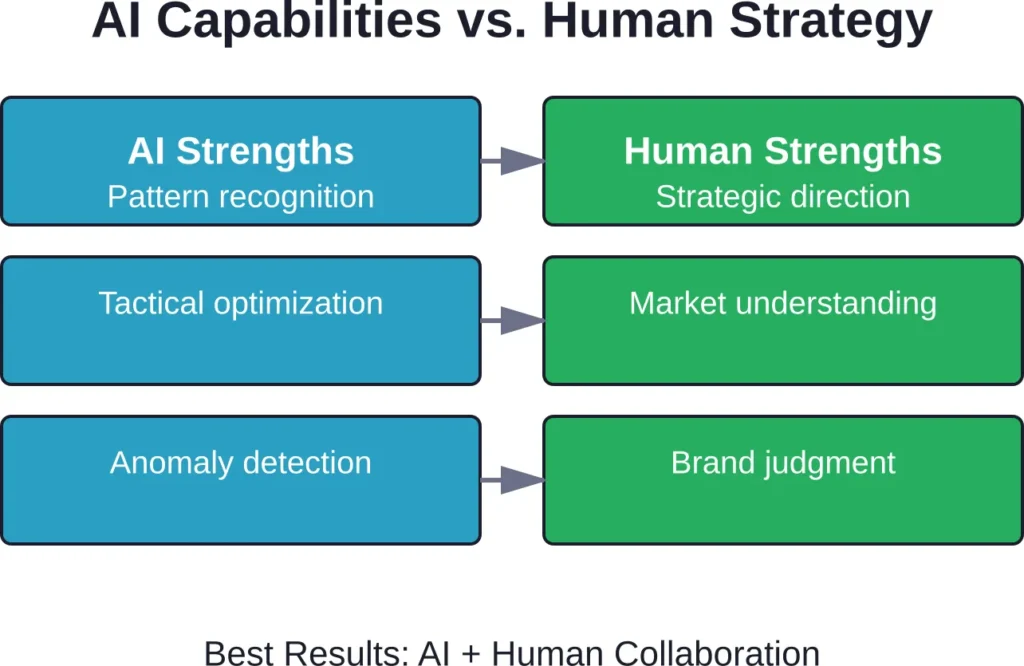
Machine learning excels at pattern recognition across large datasets. In Facebook advertising, this translates to:
- Identifying audience segments that perform similarly to known high-converters
- Predicting which creative elements correlate with better engagement
- Detecting performance anomalies that deviate from historical patterns
- Optimizing budget allocation across campaigns faster than human monitoring
Research examining generative AI in advertising found that fully AI-generated ads achieved 19% higher click-through rates than human-expert-crafted ads, demonstrating genuine capability in creative optimization. However, the same research showed that disclosure of AI involvement reduced click-through rates by 31.5%, highlighting consumer perception challenges.
What AI Doesn’t Replace
AI tools optimize within defined parameters—they don’t set strategy. A machine learning algorithm can identify the best-performing creative variant from twenty options, but it doesn’t determine whether the underlying offer resonates with market needs.
Strategic decisions still require human judgment:
- Positioning and messaging strategy
- Target market selection and expansion
- Campaign objective prioritization
- Budget allocation across marketing channels
- Brand guideline enforcement
Tools that promise to “run campaigns automatically” typically optimize tactical execution, not strategic direction. That’s valuable, but it’s not autonomous marketing.
Evaluating AI Feature Claims
When platforms tout AI capabilities, ask specific questions:
- What data does the model train on—just this account, or aggregated cross-account data?
- How much historical data is required before AI recommendations become reliable?
- Can the AI explain its recommendations, or is it a black box?
- What control exists to override or constrain AI decisions?
The best AI-powered tools augment human decision-making with data-driven suggestions, not replace judgment entirely.
Common Implementation Mistakes to Avoid
Tool adoption fails when platforms are implemented without proper planning or team alignment. The following mistakes appear repeatedly.
Over-Automation Without Understanding
Enabling aggressive automation rules before understanding account baseline performance creates chaos. An algorithm told to pause campaigns exceeding target CPA will happily shut down new campaigns that haven’t exited the learning phase yet.
Best practice: run tools in monitoring mode first. Let them suggest actions rather than execute automatically. Once patterns make sense and recommendations prove reliable, gradually enable automated execution.
Tool Sprawl
Adopting six different platforms because each solves one narrow problem creates integration nightmares and inflated costs. Three well-integrated tools beat eight disconnected ones.
Before adding a new platform, ask whether existing tools can be configured to handle the use case. Many platforms include features that teams never activate because they’re buried in settings or require initial configuration effort.
Ignoring Team Training
Tools deliver value when teams actually use them. Purchasing an enterprise platform without dedicated training means most features go unused, and the team defaults back to familiar manual processes.
Implementation should include structured onboarding, documentation of standard operating procedures, and regular check-ins to address questions as they arise.
Optimizing for the Wrong Metrics
Many tools optimize for metrics that don’t align with business goals. Maximizing click-through rate is irrelevant if those clicks don’t convert. Minimizing cost per click is counterproductive if cheaper clicks come from lower-intent audiences.
Define business-aligned success metrics before configuring optimization rules. Tools will optimize for whatever metric is specified—make sure it’s the right one.
Tool Security and Access Management
Third-party tools require access to ad accounts, which creates security considerations. Proper access management protects accounts from unauthorized changes and data exposure.
Meta Business Manager Roles
Grant tool access through Meta Business Manager using the minimum necessary permissions. Most tools request Admin access by default, but many functions work with Advertiser or Analyst roles.
- Admin: Full account access including financial settings and user management
- Advertiser: Can create and edit campaigns but not modify payment methods
- Analyst: Read-only access for reporting tools
Reporting and analytics tools typically need only Analyst access. Automation platforms require Advertiser. Very few tools genuinely need Admin.
API Token Management
Tools that connect via API use tokens that grant access to account data and actions. Tokens should be treated like passwords—unique per tool, never shared, and rotated periodically.
When offboarding team members or discontinuing a tool, revoke associated tokens immediately. Lingering access creates security vulnerabilities.
Data Privacy Considerations
Tools that access customer data—email lists, purchase histories, website behavior—must comply with privacy regulations including GDPR and CCPA. Verify that platforms maintain appropriate data handling certifications and allow data deletion on request.
For regulated industries (healthcare, finance), additional compliance requirements may restrict which tools are permissible. Evaluate compliance capabilities before implementation, not after.
Staying Current as Tools Evolve
The Facebook advertising tool landscape shifts continuously. Platforms add features, get acquired, pivot positioning, or shut down. Staying effective requires ongoing evaluation.
Monitoring Product Updates
Major platforms publish release notes, but meaningful updates often hide in minor releases. Subscribe to official product blogs, join user communities, and participate in webinars where product teams preview upcoming features.
Tools that stagnate lose relevance as Meta’s platform evolves. Regular innovation signals healthy product development and vendor commitment.
Competitive Evaluation Cadence
Review tool choices annually even when current platforms work well. New entrants often launch with innovative approaches that challenge established players, and pricing models shift as markets mature.
Quarterly reviews of performance metrics help identify whether tools deliver expected value or have become expensive habits.
Community Resources
Facebook ads communities on Reddit, dedicated Slack channels, and industry forums surface real-world tool experiences that marketing materials don’t reveal. Practitioners share what actually works versus what sounds good in demos.
These communities also identify emerging tools before they gain mainstream traction, providing early-adopter advantages.
Building a Sustainable Tool Stack
The goal isn’t collecting tools—it’s building systems that scale with account growth while maintaining efficiency. A sustainable tool stack shares several characteristics.
Integration Over Accumulation
Prioritize tools that connect with each other. Data flowing seamlessly between platforms eliminates manual transfers and reduces error rates.
Native integrations beat custom API connections, which require ongoing maintenance. Look for platforms that list each other as integration partners rather than generic “API access available” claims.
Scalable Pricing
Percentage-of-spend pricing scales naturally with account growth, but can become prohibitively expensive at high spend levels. Hybrid models that combine base subscriptions with usage tiers often provide better long-term economics.
Negotiate enterprise agreements once ad spend consistently exceeds $100k monthly. Most platforms discount significantly for annual commitments and high-volume accounts.
Vendor Stability
Tool vendors funded by venture capital face pressure to grow rapidly, which can lead to abrupt product pivots or acquisitions that disrupt workflows. Evaluate vendor financial stability when selecting tools for core workflows.
Bootstrapped companies and established public companies typically offer more predictable roadmaps than startups in aggressive growth phases.
Frequently Asked Questions
Tools start delivering positive ROI around $10,000 to $15,000 in monthly ad spend. Below this threshold, the time savings and performance improvements typically don’t offset subscription costs. Native Meta tools handle smaller accounts effectively without additional investment.
No—tools that connect through Meta’s official Marketing API comply with platform terms. Meta encourages third-party development through their API program. Problems arise only when tools attempt to circumvent platform limitations or manipulate the auction in prohibited ways. Stick with established platforms that maintain Meta Business Partner status.
No single tool covers every use case comprehensively. Most advertisers benefit from two to four specialized tools—typically one for automation or campaign management, one for analytics, and possibly one for creative management. Enterprise operations may add audience intelligence and cross-platform orchestration tools. Focus on core needs rather than comprehensive coverage.
Most tools require two to four weeks of baseline data collection before optimization recommendations become reliable. Automation rules need sufficient historical performance data to establish accurate thresholds. Expect a one-month learning period before evaluating tool effectiveness. Immediate results typically indicate the tool is optimizing aggressively based on insufficient data, which often backfires.
Free tools work well for specific narrow use cases—browser extensions for ad library research, basic reporting templates, simple automation scripts. They become limiting as account complexity grows. Paid platforms justify their cost through time savings, advanced features, and support. Start with free tools to understand workflow gaps, then upgrade to paid solutions that address specific bottlenecks.
Campaigns continue running in Meta’s systems regardless of tool status. Third-party platforms monitor and adjust campaigns but don’t host them. If a tool experiences downtime, campaigns remain active—you simply lose access to that platform’s optimization and reporting features until service resumes. Critical campaigns should always be accessible through native Ads Manager as backup.
Run controlled tests with holdout groups. For automation tools, manage a subset of campaigns manually while the tool manages others with similar characteristics. Compare performance metrics after four weeks. For analytics tools, verify that insights lead to actionable changes that improve results—dashboards that look impressive but don’t inform decisions provide little value. Measure time saved and performance deltas, not feature counts.
Conclusion: Building Your Essential Facebook Ads Tool Stack
Facebook advertising in 2026 demands more than manual campaign management. The platform’s complexity, auction dynamics, and creative testing requirements exceed what teams can optimize manually at scale.
Essential tools fall into distinct categories—automation platforms, analytics suites, creative management systems, and specialized optimizers. The right combination depends on account size, team structure, and specific performance bottlenecks.
Start with native Meta tools to establish baseline competency. Ads Manager and Advantage features handle core functionality effectively, especially for smaller accounts. Add third-party tools strategically as specific limitations emerge—when reporting becomes too time-intensive, when creative testing outpaces manual capacity, when optimization rules require constant monitoring.
Prioritize integration over accumulation. Three well-connected tools that share data seamlessly beat eight isolated platforms. Focus investment on tools that solve high-impact problems rather than collecting capabilities that sound useful but address low-priority needs.
Tool vendors will continue iterating, new platforms will launch, and Meta’s native capabilities will expand. But the core principle remains constant: tools exist to amplify human strategy, not replace it. Spend time saved through automation on higher-value activities—creative strategy, audience research, landing page optimization, and business model innovation.
The advertisers winning on Facebook in 2026 aren’t necessarily running the most tools—they’re running the right tools, configured properly, supporting strategies that actually matter. Build toward that, and the specific platforms become implementation details rather than strategic constraints.
Ready to optimize performance? Start by auditing current workflows. Identify the three most time-intensive manual tasks, then evaluate which tool category addresses them most directly. Implement one platform, master it completely, then add the next layer only when the first delivers measurable value.