

Quick Summary: AI marketing automation tools combine artificial intelligence with workflow automation to help teams execute personalized campaigns at scale. The best platforms in 2026 include Extuitive for ad, HubSpot for all-in-one marketing, Zapier for connecting 8,000+ apps, and Brevo for budget-conscious teams. Oracle data shows businesses using marketing automation achieve a 451% lift in qualified leads.
Marketing teams today face relentless pressure. Campaign deadlines stack up, performance reports demand constant attention, and customers expect personalized experiences across every touchpoint.
AI marketing automation solves this bottleneck. These platforms handle repetitive tasks, analyze customer data in real-time, and execute campaigns while your team focuses on strategy.
Here’s what matters: businesses using marketing automation achieve a 451% lift in qualified leads, according to Oracle research. That’s not incremental improvement—that’s transformation.
But the market is crowded. Choosing the wrong platform wastes months of implementation time and thousands in subscription costs.
This guide breaks down the best AI marketing automation tools available in 2026, backed by verified data from academic sources and real-world testing.
What Is AI Marketing Automation?
Marketing automation platforms handle lead generation, lead management, lead scoring, and lead nurturing activities—that’s the definition from Gartner research published by Stanford University’s Salesforce Center of Practice.
Add AI to that foundation, and the platform can now predict customer behavior, personalize content dynamically, and optimize campaign timing without manual intervention.
Traditional automation follows IF-THIS-THEN-THAT rules. AI-powered automation learns from data and adjusts strategies automatically.
The difference shows up in results. McKinsey research cited by TrustRadius found that 71% of consumers demand personalized experiences, and 76% get frustrated without them. AI makes that personalization scalable.
How Marketing Teams Use AI Daily
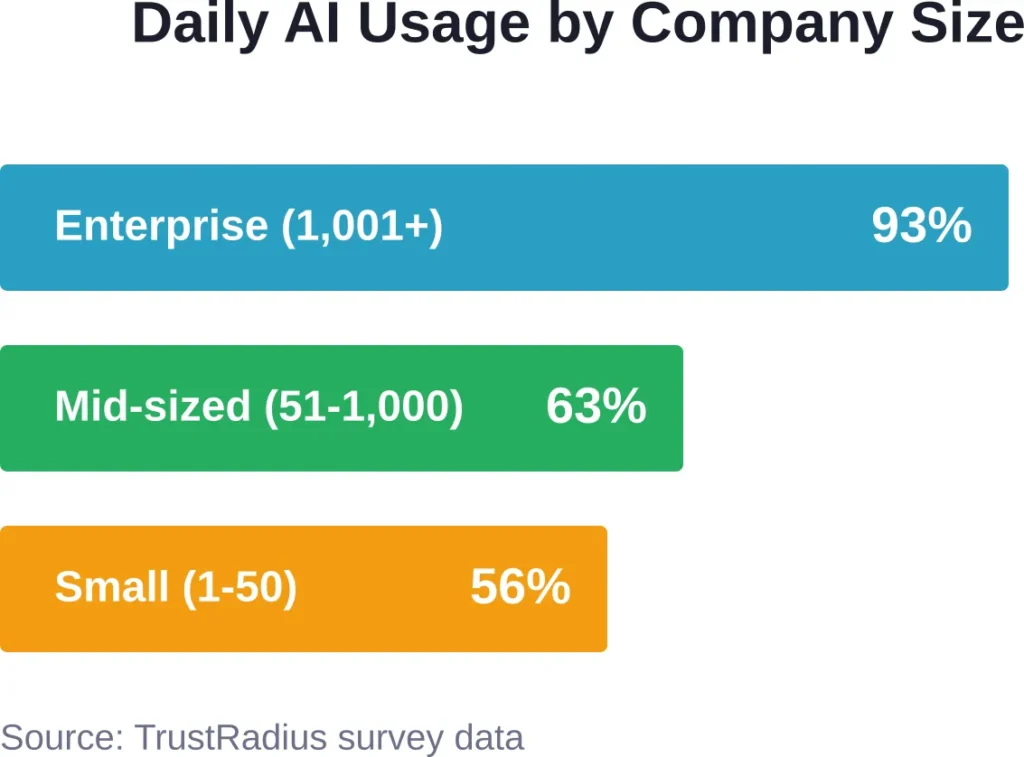
Survey data from TrustRadius shows 70% of marketers using AI daily, and 98% using it almost weekly. Enterprise companies (1,001+ employees) are most likely to use AI daily.
Smaller teams are catching up, though. Mid-sized and small businesses show lower daily AI adoption rates than enterprise companies.
What are they doing with it? Marketing teams use AI for various functions including writing, research, ideation, content creation, and data analysis.
Why AI Marketing Automation Matters Now
Digital advertising commanded 71.8% of all U.S. media spending in 2022—up 16 percentage points from 2019, according to Insider Intelligence data cited by Rasmussen University.
That trend accelerated. Campaigns now span email, social media, paid search, display advertising, SMS, push notifications, and more.
Managing that complexity manually doesn’t scale. AI automation handles the orchestration.
Real talk: many organizations get less than 50% ROI on AI investments, according to Forrester research. The difference between success and failure comes down to choosing tools that match actual workflow needs.
The Shift From MAPs to Revenue Marketing Platforms
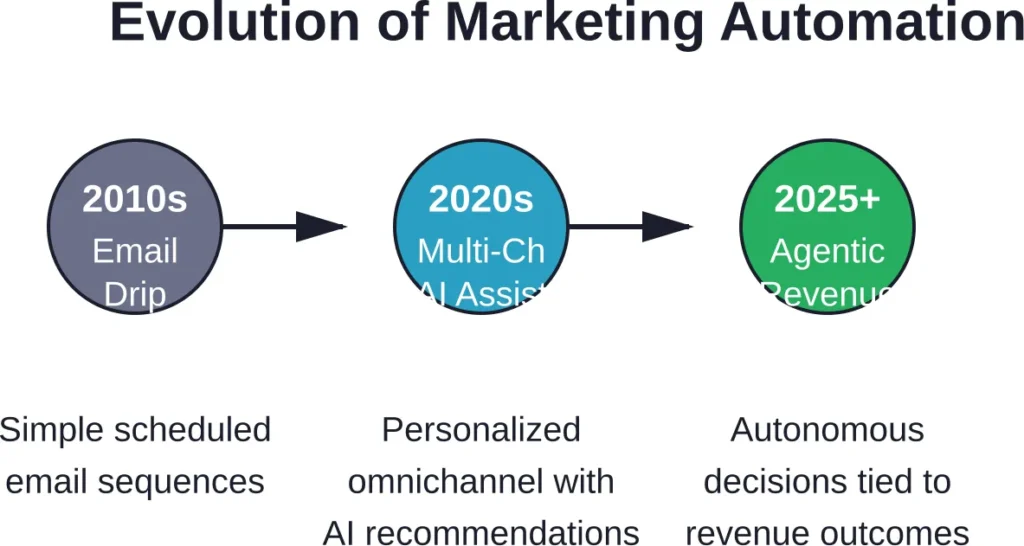
Traditional marketing automation platforms (MAPs) focused on lead-centric strategies. They captured email addresses, scored leads, and nurtured prospects through predetermined sequences.
That model is fragmenting. Forrester analysts note the rise of Revenue Marketing Platforms—systems that merge MAP capabilities with account-based marketing (ABM) into unified hubs.
These platforms track buying groups, not just individual leads. They connect marketing activity directly to revenue outcomes. And they integrate AI at every layer.
What to Look for in AI Marketing Automation Tools
Not all platforms deliver the same value. Some excel at email campaigns. Others shine in workflow orchestration or predictive analytics.
Before evaluating specific tools, identify which capabilities matter most for your team’s workflow.
Core Capabilities
Lead Management and Scoring: The platform should capture leads from multiple sources, score them based on behavior and demographic data, and route high-value prospects to sales automatically.
Multi-Channel Campaign Execution: Email is table stakes. Look for platforms that orchestrate campaigns across SMS, push notifications, social media, and paid advertising from a single interface.
Personalization at Scale: Dynamic content blocks, AI-driven product recommendations, and behavioral triggers enable personalized experiences without manual work.
Analytics and Reporting: Real-time dashboards should show campaign performance, conversion metrics, and revenue attribution. Beautiful visual tools for analyzing both individual channels and full campaign lifecycles matter—Stanford’s research highlights this as a key differentiator.
Integration Ecosystem: The platform must connect seamlessly with your CRM, ecommerce system, analytics tools, and other marketing technology. API access unlocks custom workflows.
Pricing Considerations
Marketing automation platforms typically structure pricing around contact volume or feature tiers. Stanford’s analysis shows pricing often ranges from $1,000 to $3,000 per month, with different tiers unlocking advanced features.
The $2,000/month Pro tier commonly includes API access, A/B testing, AdWords integration, and dynamic email capabilities. Ultimate tiers at $3,000/month add enterprise features like advanced segmentation and priority support.
But pricing varies dramatically. Some platforms start under $100/month for basic functionality, while enterprise solutions exceed $10,000/month.
Check official pricing pages for current rates—plans change frequently.
Best AI Marketing Automation Tools in 2026
After analyzing academic research, verified user data, and platform capabilities, these tools represent the strongest options across different use cases.
1. Extuitive — Best for Predictive Ad Performance & Pre-Launch Validation
Extuitive is an AI-powered predictive marketing platform that forecasts real-world ad performance before any budget is spent. It connects directly to Shopify stores, analyzes products and historical data, then generates high-converting ad copy, images, and videos while simulating consumer reactions with 150,000+ AI agents.
The platform scores every creative on predicted CTR, ROAS, and purchase intent, allowing marketers to launch only the strongest ads and dramatically reduce wasted testing spend. It combines creative generation with Polyintelligence simulation for accurate pre-launch validation across Meta, TikTok, and other platforms.
Pricing starts in the Starter tier around $1,000/month, with Professional and Enterprise plans for larger teams and higher volumes.
Real-world use cases include scaling creative testing without burning budget, faster campaign launches, and consistently higher-performing ads for Shopify e-commerce brands.
Contact Information:
- Website: extuitive.com
- Email: [email protected]
- LinkedIn: www.linkedin.com/company/extuitive
- Twitter: x.com/Extuitive_Inc
- Instagram: www.instagram.com/extuitiveinc
2. HubSpot — Best All-in-One Marketing Platform
HubSpot combines CRM, marketing automation, sales tools, and customer service in one ecosystem. The Marketing Hub handles email campaigns, social media scheduling, landing pages, SEO optimization, and analytics.
AI features include content generation, predictive lead scoring, and automated email optimization. The platform learns which subject lines, send times, and content formats perform best.
HubSpot Marketing Hub Professional pricing varies by contact volume and includes multiple seats. The platform scales from startups to enterprise teams.
Integration depth sets HubSpot apart. Native connections to Salesforce, WordPress, Shopify, and hundreds of other tools eliminate data silos.
3. Zapier — Best for Connecting Marketing Tools

Zapier isn’t a traditional marketing automation platform—it’s the glue connecting 8,000+ apps. Marketing teams use it to build workflows that span email tools, CRMs, analytics platforms, social media schedulers, and more.
The platform added built-in AI capabilities that generate text, analyze sentiment, extract data, and make decisions within workflows. A marketer can trigger a Zap when someone fills out a form, use AI to qualify the lead, add them to the appropriate email sequence, and notify the sales team—all automatically.
Pricing includes a free plan with basic functionality, then starts at $19.99/month for multi-step Zaps and faster execution.
For organizations with complex tech stacks, Zapier eliminates the need for custom API integrations.
4. Brevo — Best Budget-Friendly Option

Brevo (formerly Sendinblue) delivers email marketing, SMS campaigns, chat, CRM, and marketing automation at competitive prices. The platform targets small to mid-sized businesses that need professional features without enterprise budgets.
AI-powered send-time optimization analyzes recipient behavior and delivers emails when they’re most likely to engage. The built-in CRM tracks customer interactions across channels.
Free tier includes basic features. Paid plans start around $15 per seat/month depending on contact volume.
5. Klaviyo — Best for Ecommerce Marketing

Klaviyo specializes in ecommerce marketing automation. The platform integrates deeply with Shopify, WooCommerce, Magento, and other ecommerce platforms to trigger campaigns based on shopping behavior.
AI recommendations suggest products based on browsing history and purchase patterns. Automated flows handle abandoned cart recovery, post-purchase follow-ups, win-back campaigns, and more.
Pricing scales with contact volume. Basic plans start around $20/month for small stores, but costs increase significantly as the subscriber list grows.
Ecommerce brands report strong ROI—Klaviyo customers report strong ROI from the platform.
6. Customer.io — Best for Product-Led Growth Companies

Customer.io focuses on behavioral messaging for SaaS and product-led growth companies. The platform tracks in-app activity and triggers contextual messages based on how users interact with the product.
Marketers create sophisticated logic—if a user completes action A but not action B within X days, send message C through channel D. AI features optimize message timing and content.
The platform excels at lifecycle marketing, onboarding sequences, feature adoption campaigns, and retention programs.
Pricing depends on message volume and active profiles. Check the official site for current rates.
7. ActiveCampaign — Best for Advanced Automation Logic

ActiveCampaign combines email marketing, marketing automation, sales automation, and CRM. The visual automation builder allows teams to create complex workflows with conditional logic, wait steps, goal tracking, and A/B split testing.
AI-powered features include predictive sending, content recommendations, and win probability scoring for sales opportunities.
ActiveCampaign offers tiered pricing based on features and contact volume. Premium plans unlock advanced features like custom reporting and integrations.
8. Marketo Engage (Adobe) — Best for Enterprise B2B

Marketo, now part of Adobe Experience Cloud, dominates enterprise B2B marketing automation. Stanford research includes Marketo in comparisons of top marketing automation platforms alongside Salesforce, Pardot, and HubSpot.
The platform handles complex multi-touch attribution, account-based marketing, lead lifecycle management, and revenue attribution. Integration with Adobe’s analytics and content tools creates a comprehensive martech ecosystem.
Pricing sits at the enterprise level—expect significant investment. The platform makes sense for organizations with dedicated marketing operations teams.
9. Mailchimp — Best for Email-First Teams

Mailchimp started as an email service provider and evolved into a marketing automation platform. The tool remains strongest for email campaigns but now includes landing pages, social media scheduling, and basic CRM functionality.
AI features recommend optimal send times, predict customer lifetime value, and generate subject line suggestions. The interface prioritizes simplicity over advanced features.
Mailchimp offers free and paid tiers with varying contact limits and send volumes.
10. Omnisend — Best for Multi-Channel Ecommerce

Omnisend focuses on omnichannel marketing for ecommerce brands. The platform orchestrates campaigns across email, SMS, push notifications, Facebook Messenger, and more from unified workflows.
Pre-built automation workflows for cart abandonment, welcome series, and browse abandonment get campaigns running quickly. The platform integrates with major ecommerce platforms and includes built-in forms and landing pages.
Omnisend offers free and paid plans scaling with contact volume and message sends.
How to Choose the Right Platform for Your Team
The wrong platform choice costs more than subscription fees. Teams waste months in implementation, lose campaign momentum, and accumulate technical debt.
Here’s how to evaluate options systematically.
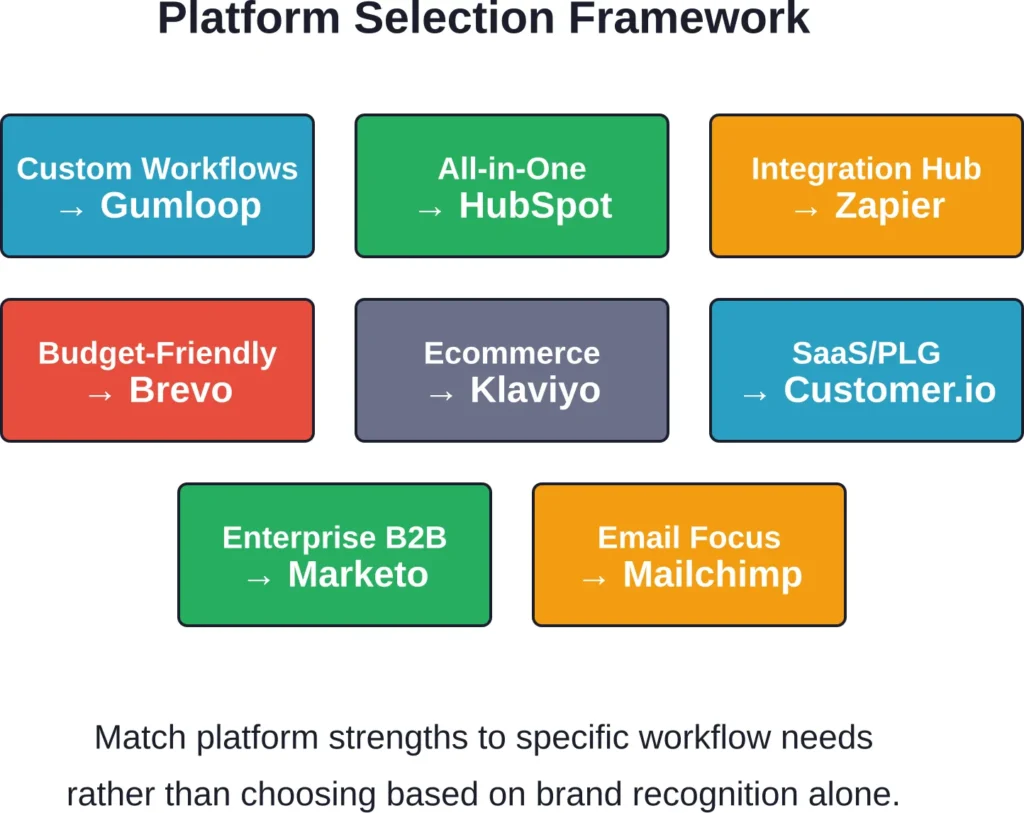
Start With Use Cases, Not Features
List the top five marketing workflows your team runs most frequently. For B2B companies, that might be lead nurturing, webinar promotion, content distribution, sales enablement, and customer retention.
For ecommerce brands, it could be abandoned cart recovery, post-purchase sequences, win-back campaigns, product launches, and loyalty programs.
Evaluate platforms based on how well they handle those specific workflows, not on feature lists.
Assess Integration Requirements
Marketing automation platforms live in an ecosystem. They need to exchange data with CRM systems, analytics tools, advertising platforms, ecommerce systems, and more.
Map your current tech stack. Identify which integrations are critical versus nice-to-have. Verify that candidate platforms offer native connectors or well-documented APIs for essential tools.
Platforms connecting to thousands of apps through Zapier or similar services provide flexibility, but native integrations typically offer deeper functionality.
Calculate Total Cost of Ownership
Monthly subscription fees represent only part of the cost. Factor in:
- Implementation time and consulting fees
- Training for marketing team members
- Ongoing admin and maintenance hours
- Cost increases as contact lists grow
- Fees for add-on features or premium tiers
A platform with higher upfront costs but lower maintenance requirements often delivers better ROI than a cheap tool that demands constant hands-on work.
Evaluate AI Capabilities Critically
Most platforms claim AI-powered features. Look beyond marketing language to understand what the AI actually does.
Useful AI features include predictive send-time optimization, dynamic content personalization, lead scoring that improves over time, and natural language content generation.
Generic chatbots or basic recommendation engines add less value. Test AI features during trial periods to verify they deliver meaningful improvements.
Test With Real Campaigns
Free trials and demos show polished interfaces. They don’t reveal how platforms handle messy real-world data.
During evaluation periods, run actual campaigns with representative audience segments. Test the workflows your team uses daily. Identify friction points before committing.
Involve the team members who will use the platform daily. Their hands-on feedback matters more than executive opinions.
Common Challenges and How to Avoid Them
Marketing automation implementations fail frequently. Understanding common pitfalls helps teams avoid them.
Over-Automation Without Strategy
Automation amplifies existing strategies—it doesn’t create them. Teams that automate broken processes end up executing bad campaigns faster.
Start with clear campaign goals, audience segmentation, and content strategy. Then automate the execution.
Ignoring Data Quality
AI-powered personalization depends on accurate data. Duplicate contacts, outdated information, and incomplete profiles sabotage automation effectiveness.
Implement data hygiene processes before launching automated campaigns. Regular audits keep contact databases clean.
Setting Up Complex Workflows Too Quickly
Marketing automation platforms enable sophisticated multi-step workflows with conditional logic, A/B testing, and dynamic content. That complexity creates debugging nightmares when campaigns malfunction.
Start simple. Launch straightforward automated workflows, measure results, and gradually add complexity as the team gains proficiency.
Neglecting Performance Monitoring
Automated campaigns run continuously in the background. Without regular monitoring, teams miss declining performance, broken integrations, or outdated messaging.
Schedule weekly reviews of automated campaign metrics. Set up alerts for anomalies like sudden drops in delivery rates or engagement.
The Future of AI Marketing Automation
The marketing automation landscape continues evolving rapidly. Several trends will reshape the category over the next few years.
Agentic AI and Autonomous Campaigns
Current AI features assist marketers—they suggest content, recommend send times, and score leads. Emerging agentic AI will make independent decisions.
Forrester research on autonomous platforms highlights this shift. Systems will adjust campaign strategies, reallocate budgets, and create content variations without human approval.
This raises important questions about brand control and oversight. The most successful implementations will balance autonomy with governance guardrails.
Convergence of Marketing and Sales Automation
The boundary between marketing automation and sales automation is dissolving. Revenue marketing platforms track the full customer journey from anonymous visitor to closed deal to repeat purchase.
This convergence improves attribution and eliminates handoff friction between marketing and sales teams. But it requires organizational alignment beyond just technology integration.
Real-Time Personalization at Scale
Batch-and-blast email campaigns are dead. Modern consumers expect every interaction to reflect their current context—recent browsing behavior, current location, real-time inventory availability, and more.
Platforms increasingly leverage CDP (customer data platform) capabilities to unify data streams and deliver truly real-time personalization across channels.
Privacy-First Marketing Automation
Regulations like GDPR and CCPA forced platforms to rethink data collection and usage. Cookie deprecation accelerates this trend.
Future platforms will emphasize first-party data collection, consent management, and privacy-preserving analytics. Teams that build marketing strategies around owned data rather than third-party tracking will maintain competitive advantages.
Getting Started: Implementation Roadmap
Successful marketing automation rollouts follow a structured approach.
Phase 1: Foundation (Weeks 1-4)
Audit existing marketing workflows and identify automation opportunities. Document current processes, pain points, and desired outcomes.
Clean and organize contact data. Remove duplicates, standardize formatting, and verify that critical fields are populated.
Select the platform based on the evaluation framework outlined earlier. Negotiate contracts and set up accounts.
Phase 2: Core Setup (Weeks 5-8)
Configure platform settings, user permissions, and brand assets. Connect integrations with CRM, analytics, and other essential tools.
Build contact segments based on demographics, behavior, and lifecycle stage. These segments power targeted campaigns.
Create email templates, landing page designs, and form structures that align with brand guidelines.
Phase 3: First Campaigns (Weeks 9-12)
Launch 2-3 simple automated workflows. Good starter campaigns include welcome sequences for new subscribers, abandoned cart recovery for ecommerce, or content nurture tracks for B2B.
Monitor performance closely during the first weeks. Identify bugs, refine messaging, and optimize based on early data.
Train team members on platform usage. Focus on the workflows they’ll interact with most frequently.
Phase 4: Expansion (Months 4-6)
Build additional automated workflows now that the foundation is solid. Add complexity gradually—conditional logic, A/B testing, multi-channel orchestration.
Implement lead scoring models that assign points based on demographic fit and engagement behavior. Route high-scoring leads to sales automatically.
Develop reporting dashboards that track KPIs aligned with business goals. Share results with stakeholders to demonstrate ROI.
Phase 5: Optimization (Ongoing)
Review campaign performance monthly. Identify underperforming workflows and test variations.
Expand AI feature usage as the team becomes comfortable with the platform. Test predictive sending, dynamic content, and automated optimization.
Stay current with platform updates and new feature releases. Vendors add capabilities frequently—teams that leverage new features maintain competitive advantages.
Measuring Marketing Automation Success
Platforms generate overwhelming amounts of data. Focus on metrics tied directly to business outcomes.
Lead Generation Metrics
- Number of new contacts added monthly
- Cost per lead across different channels
- Lead source attribution and channel effectiveness
Engagement Metrics
- Email open rates and click-through rates
- Landing page conversion rates
- Content consumption patterns
- Multi-channel engagement scores
Conversion Metrics
- Lead-to-opportunity conversion rate
- Opportunity-to-customer conversion rate
- Average sales cycle length
- Win rates for marketing-qualified leads
Revenue Metrics
- Marketing-attributed revenue
- Customer acquisition cost
- Customer lifetime value
- Return on marketing automation investment
Oracle data showing a 451% lift in qualified leads from marketing automation represents an outcome metric—more and better leads entering the pipeline. That’s the type of result that justifies platform investment.
Frequently Asked Questions
AI marketing automation combines traditional workflow automation with artificial intelligence capabilities. The platform handles repetitive marketing tasks like email sending, lead scoring, and campaign tracking while AI features personalize content, predict customer behavior, optimize send times, and improve targeting. This allows marketing teams to execute sophisticated campaigns at scale without manual work for every interaction.
Pricing varies dramatically based on platform capabilities and contact volume. Budget-friendly options start around $15-20 per month for basic features and small contact lists. Mid-market platforms typically range from $100 to $1,000 per month depending on features and contacts. Enterprise solutions like Marketo can exceed $3,000 monthly. Most platforms price based on contact count, so costs increase as your list grows. Check official websites for current pricing, as subscription models change frequently.
Brevo offers the best combination of affordability and features for small businesses, with plans starting around $15 per seat monthly. Mailchimp provides a generous free tier that works well for very small teams just getting started. For ecommerce businesses, Klaviyo delivers strong ROI despite slightly higher costs. The right choice depends on whether email marketing, multi-channel campaigns, or ecommerce integration matters most for your specific business model.
Modern marketing automation platforms prioritize no-code interfaces with drag-and-drop workflow builders and visual campaign designers. Marketing teams can configure most campaigns without developer help. However, complex integrations, custom API connections, and advanced data transformations may require technical assistance. Platforms like Gumloop and Zapier bridge this gap by offering powerful automation without coding requirements. Plan for some learning curve regardless of technical background.
Basic implementation takes 4-8 weeks for most platforms. This includes account setup, integration configuration, contact migration, template creation, and launching initial campaigns. Complex implementations with custom integrations, data migration from legacy systems, and sophisticated workflow requirements can extend to 3-6 months. Teams see faster results when they start with simple workflows and add complexity gradually rather than attempting comprehensive launches. Expect the first meaningful results within 60-90 days of go-live.
No. Marketing automation handles execution and optimization of campaigns but doesn’t replace strategic thinking, creative development, or relationship building. The technology excels at repetitive tasks, data analysis, and personalization at scale. Humans remain essential for strategy, messaging, creative direction, and interpreting results. Teams that combine human creativity with automation efficiency achieve the strongest results. The Northwestern research showing AI saves marketers 5.4% of work hours demonstrates that automation augments rather than replaces marketing professionals.
Email marketing tools focus specifically on creating, sending, and tracking email campaigns. Marketing automation platforms include email capabilities but extend to multi-channel orchestration, lead scoring, CRM integration, landing pages, forms, analytics, and workflow automation. Email marketing might send a newsletter to your list. Marketing automation triggers personalized sequences based on recipient behavior, scores leads based on engagement, routes hot prospects to sales, and attributes revenue to specific campaigns. Most businesses outgrow standalone email tools and graduate to full automation platforms as their sophistication increases.
Making Your Decision
Marketing automation platforms represent significant investments—in money, implementation time, and organizational change. The wrong choice costs months of lost momentum.
The best platform isn’t the one with the longest feature list or the biggest brand name. It’s the tool that matches your team’s specific workflows, integrates cleanly with existing systems, and delivers measurable improvements in lead generation and campaign effectiveness.
Start by clarifying what success looks like. Are you trying to generate more leads? Improve lead quality? Reduce manual campaign work? Personalize customer experiences? Different goals point to different platforms.
Test before committing. Every major platform offers trials or demos. Run real campaigns during evaluation periods to understand how tools perform with actual data and workflows.
And remember: tools amplify strategy. The fanciest automation platform won’t fix broken messaging, unclear positioning, or poor audience targeting. Get strategy right first, then automate execution.
Next Steps
Ready to implement marketing automation? Here’s what to do now:
Document your current marketing workflows. List the 5-10 most time-consuming recurring tasks your team handles. These represent your best automation opportunities.
Audit your tech stack. Identify which integrations are critical for any new platform. Verify that candidate tools offer those connections.
Define success metrics before implementation. Decide how you’ll measure ROI—lead volume, lead quality, conversion rates, or revenue attribution.
Request trials from 2-3 platforms that match your use case. Spend time actually using them, not just watching demos.
Involve the team members who will use the tool daily in the evaluation process. Their hands-on feedback reveals friction points executive demos miss.
Marketing automation delivers the 451% lift in qualified leads that Oracle documented—but only when teams choose the right platform, implement it systematically, and optimize continuously based on performance data.
The tools exist. The results are proven. Now it’s execution that separates winners from the pack.