

Quick Summary: The best web development companies in 2026 combine technical expertise with strategic vision, delivering solutions from enterprise software to SaaS platforms. This guide profiles 15 leading agencies—including Lengreo, Gilzor, OSKI Solutions, A-listware, Mobian Studio, Clay, Toptal, Instrument, and emerging specialists—based on their services, client work, and industry recognition. The generative AI market is projected to reach $110 billion by 2030 according to industry analysis, transforming how development agencies approach digital solutions.
Finding the right web development company isn’t just about technical skills anymore. It’s about finding a partner that understands business goals, anticipates user needs, and builds solutions that actually scale.
The development landscape has shifted dramatically. Agentic software development—where AI systems perform real development work rather than just assist—is reshaping how agencies operate. According to Forrester research, EA management suites represent a $1 billion market, and the tooling ecosystem surrounding development has never been more sophisticated.
But here’s the thing: more options don’t make the choice easier. With thousands of agencies claiming expertise in everything from enterprise platforms to startup MVPs, the selection process can feel overwhelming.
This guide cuts through the noise. The 15 companies featured here represent different strengths—some excel at complex enterprise systems, others at consumer-facing applications, and several specialize in emerging technologies. None of them are perfect for every project, and that’s precisely why understanding their distinct approaches matters.
What Makes a Web Development Company Great in 2026
The definition of excellence in web development has evolved. Speed matters, but so does security. Beautiful interfaces matter, but they’re worthless if the backend can’t scale. AI integration is table stakes, not a differentiator.
Top agencies in 2026 share several characteristics. They maintain transparent communication throughout projects. They’ve moved beyond simple waterfall or agile dogma to hybrid approaches that match project needs. And they’ve invested heavily in AI-assisted development tools without losing sight of strategic thinking that only humans provide.
Technical debt awareness separates good companies from great ones. The best agencies build systems that are maintainable five years down the road, not just shippable next quarter.
Client reviews consistently highlight responsiveness as a critical factor. When issues arise—and they always do—how quickly does the agency mobilize? How clearly do they communicate trade-offs?
Evaluation Methodology
The agencies featured here were evaluated based on multiple factors. Service offerings and technical capabilities formed the foundation. But real client reviews, project portfolios, and industry recognition carried equal weight.
Pricing details are intentionally excluded. Development costs vary wildly based on project scope, timeline, and technical requirements. An e-commerce platform with complex inventory management carries a different price tag than a marketing website. Agencies themselves often work on value-based pricing rather than fixed hourly rates.
Geographic distribution mattered too. While remote work has expanded possibilities, some projects benefit from agencies with specific regional expertise or timezone alignment.
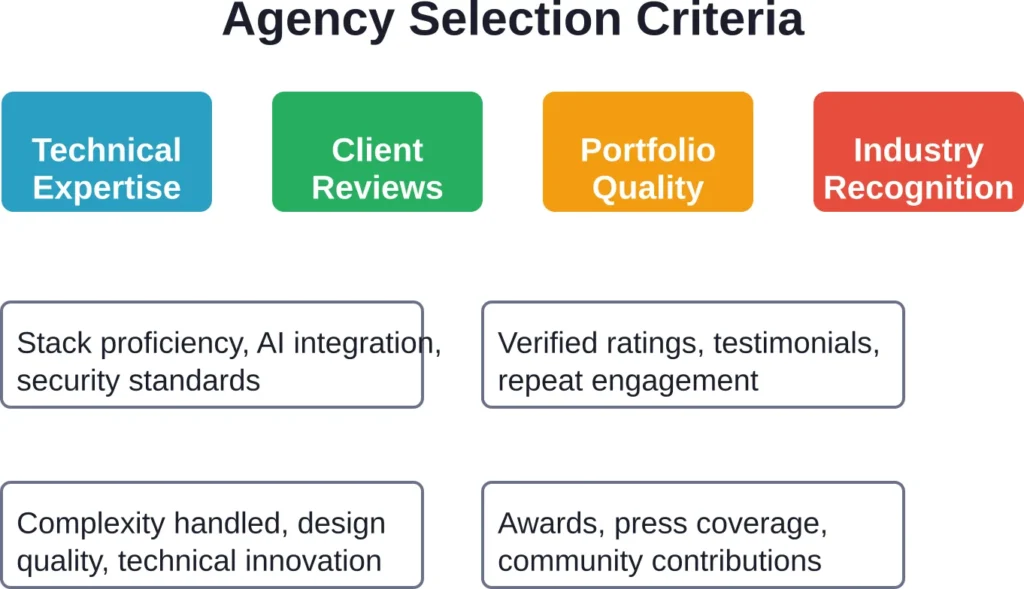
Top 15 Web Development Companies in 2026
1. Lengreo
Lengreo operates as a complete marketing and technology partner, blending B2B digital strategy with hands-on website development and lead generation execution. Their approach centers on measurable growth outcomes rather than isolated tactics, helping clients across IT, architecture, and tech services dramatically improve client acquisition and conversion rates.
The agency excels at combining website development with full-funnel marketing. They build conversion-focused websites, landing pages, and e-commerce platforms while running LinkedIn outreach, paid campaigns, and demand generation programs that feed directly into the new digital assets. This integrated model shortens the path from launch to revenue.
What sets Lengreo apart is their emphasis on personalized outreach and strategy customization. Instead of templated solutions, teams listen to client goals and craft tailored campaigns that leverage SEO, content, and hyper-personalized B2B lead generation. Clients frequently report significant improvements in qualified opportunities and cost-per-lead metrics.
Their work with software development companies, architecture firms, and event tech providers shows consistent ability to drive both brand visibility and direct pipeline results. The combination of technical website execution and aggressive lead nurturing creates a powerful growth engine for B2B organizations.
Best for: B2B service companies, IT and software firms, professional services seeking integrated marketing and web development
Strong points: Lead generation integration, website development with conversion focus, full-funnel B2B strategy
Considerations: Marketing-heavy positioning, results tied to ongoing campaign management, strong emphasis on outbound and paid channels
Contact Information:
- Website: Lengreo.com
- Phone: +31 686 147 566
- Email: [email protected]
- Address: Vrijstraat 9 C/D, 5611 AT Eindhoven, Netherlands
- LinkedIn: Lengreo
- Twitter: @Lengreo
- Instagram: @lengreo
2. Gilzor

Gilzor brings a full-cycle custom software development approach focused on turning ideas into market-ready digital products. Their process covers idea validation, UI/UX design, web and mobile development, quality assurance, and go-to-market strategy, making them a true end-to-end partner for startups and scaling businesses.
The team emphasizes user-centric design and technical excellence. They build secure, scalable web and mobile applications that prioritize performance and conversion while maintaining clean architecture. Projects often include complex features such as e-commerce platforms, automation tools, and specialized industry solutions.
Gilzor stands out through strong product-market fit validation and research-driven development. Before heavy coding begins, they help clients confirm demand, refine value propositions, and reduce risk of building unwanted features. This front-loaded thinking leads to higher success rates for launched products.
Their portfolio demonstrates success across airlines, grocery e-commerce, health tech, and other sectors. Clients value the combination of creative thinking, strategic guidance, and reliable delivery that supports both early-stage launches and sustained product growth.
Best for: Startups launching MVPs, SMBs building new digital channels, product companies seeking ongoing development
Strong points: Full-cycle development, idea validation and GTM strategy, mobile and web expertise
Considerations: Comprehensive process may extend initial timelines, best suited for clients who value strategic partnership over pure execution
Contact Information:
- Website: www.gilzor.com
- Email: [email protected]
- Address: Poland, Warsaw, Office 58, street Adama Mickiewicza 37, 01-625
- LinkedIn: www.linkedin.com/company/gilzor-softwaredevelopment
3. Oski
Oski delivers smart, well-engineered software solutions with deep expertise in cloud architecture, modern frontend frameworks, and artificial intelligence integrations. They serve tech-forward enterprises and ambitious startups that require high-quality, maintainable digital platforms.
The agency combines strong technical capabilities with industry-specific knowledge across travel, logistics, e-commerce, education, fintech, and insurance. Their solutions emphasize scalability, security, and seamless user experiences that directly support business operations and growth objectives.
What makes Oski effective is their ability to handle complex projects from design through deployment and ongoing maintenance. Teams work with React, Vue, Angular, .NET, Azure, AWS, and various CMS platforms while incorporating AI and automation where it creates real value.
Their consultative approach helps clients reimagine operations through digital innovation. Projects often include custom web portals, booking systems, learning platforms, and data-driven applications that deliver measurable improvements in efficiency and customer engagement.
Best for: Enterprises and startups in regulated or complex industries, companies needing cloud and AI-enhanced web solutions
Strong points: Technical depth in cloud and frontend, industry specialization, full-lifecycle delivery
Considerations: Enterprise-grade focus, emphasis on quality and architecture may influence project pacing
Contact Information:
- Website: oski.site
- Phone: +48571282759
- Email: [email protected]
- Address: Kaupmehe tn 7, 10114 Tallinn, Estonia
- LinkedIn: www.linkedin.com/company/oski-solutions
4. A-listware
A-listware functions as a software development and consulting partner specializing in dedicated teams, custom development, and comprehensive IT solutions. They excel at becoming a seamless extension of client organizations, delivering high-quality web and enterprise applications while managing the full technology ecosystem.
The company offers broad capabilities spanning software development, UX/UI design, QA/testing, data analytics, infrastructure, and cybersecurity. This full-spectrum approach allows them to handle everything from greenfield custom web platforms to legacy modernization and complex enterprise integrations.
A-listware particularly shines in team augmentation and managed delivery models. Clients gain access to experienced developers who integrate smoothly with internal processes, supported by strong project governance and communication standards that ensure consistent results.
Their work spans enterprise applications, ERP/CRM implementations, e-commerce, and specialized industry solutions. The combination of technical breadth and client-centric service makes them reliable for organizations requiring both strategic consulting and hands-on development execution.
Best for: Companies needing dedicated development teams, enterprises modernizing systems, organizations requiring end-to-end IT support
Strong points: Team augmentation expertise, broad technical and consulting capabilities, reliable delivery management
Considerations: Comprehensive service model suits mid-to-large engagements, strength in managed and outsourced relationships
Contact Information:
- Website: a-listware.com
- Phone: +1 (888) 337 93 73
- Email: [email protected]
- Address: North Bergen, NJ 07047, USA
- LinkedIn: www.linkedin.com/company/a-listware
- Facebook: www.facebook.com/alistware
5. Mobian
Mobian builds dedicated engineering teams focused on mobile and AI-powered solutions for companies in IT, healthcare, fintech, and logistics. They offer both full outsourcing and outstaffing models, delivering production-ready software with senior-level execution and clean, documented architecture.
The studio emphasizes scalable systems and domain-specific expertise. Teams handle end-to-end product development, legacy integrations, and complex AI implementations including custom agents, computer vision, and LLM workflows while maintaining regulatory compliance where required.
What distinguishes Mobian is their commitment to long-term partnership and code quality. Every project follows standards for clean architecture, test coverage, and maintainability, ensuring clients receive solutions that scale without constant rewrites. Post-launch support and knowledge transfer are built into every engagement.
Their approach works especially well for organizations that need reliable velocity without the overhead of building large in-house teams. Clients benefit from focused, exclusive engineering capacity combined with deep industry understanding and modern technical practices.
Best for: Companies in healthcare, fintech, logistics and IT, organizations scaling mobile or AI products, teams needing senior augmentation
Strong points: Dedicated teams model, AI and mobile expertise, scalable architecture focus
Considerations: Senior-level positioning, strength in specialized domains, requires clear project or team requirements for best results
Contact Information:
- Website: mobian.studio
- Phone: [email protected]
- Address: Harju maakond, Tallinn, Kesklinnalinnaosa, Masina tn 22, 10113
- LinkedIn: www.linkedin.com/company/mobian-studio
6. Fantasy
Fantasy specializes in digital experiences for ambitious brands, with particular strength in e-commerce and content-rich websites. Their work with fashion, lifestyle, and consumer goods clients demonstrates sophisticated taste and technical execution.
The agency’s e-commerce implementations go beyond basic Shopify templates. They build custom features—product configurators, subscription management, loyalty programs—that enhance the shopping experience while integrating seamlessly with backend systems.
Content management receives particular attention. Fantasy’s sites often include sophisticated publishing workflows, media libraries, and editorial tools. For brands that treat content as a strategic asset, these capabilities matter enormously.
Performance optimization is a clear priority. Even content-heavy sites load quickly, images are properly optimized, and the user experience remains smooth across devices. Fast sites convert better—Fantasy’s portfolio results reflect this.
Best for: E-commerce platforms, content-rich brand sites, fashion and lifestyle companies
Strong points: E-commerce expertise, content management, performance optimization
Considerations: Strong aesthetic point of view, primarily consumer-focused
7. Basic Agency (DEPT)
Basic Agency operates under the DEPT umbrella, bringing global resources while maintaining a nimble studio culture. This combination allows them to tackle large-scale projects with the responsiveness of a smaller team.
Their work spans brand development, digital products, and marketing campaigns. This integrated capability means web development projects can draw on broader strategic context—understanding how the website fits into the complete customer journey.
Technical capabilities cover both modern web applications and platform-based solutions. Basic has delivered custom Node.js and React applications alongside sophisticated WordPress and Contentful implementations. The choice depends on client needs rather than agency preference.
Being part of DEPT provides access to specialized expertise—accessibility specialists, performance engineers, security auditors—that smaller agencies can’t maintain in-house. For complex projects, this depth of talent pool offers meaningful advantages.
Best for: Integrated brand and digital projects, mid-size to enterprise clients, multi-market deployments
Strong points: Global resources, integrated services, platform flexibility
Considerations: Larger agency structure, may not suit very small projects
8. Mighty Roar

Mighty Roar focuses on Shopify and e-commerce development with laser precision. Rather than attempting to serve every type of web project, they’ve built deep expertise in one platform and one problem domain.
This specialization delivers tangible benefits. Their developers know Shopify’s capabilities and limitations intimately. They’ve solved common e-commerce challenges—inventory sync, multi-currency, subscription billing—dozens of times and have battle-tested solutions.
The agency’s approach emphasizes store performance and conversion optimization. They audit existing stores, identify friction points in the purchase flow, and implement improvements. Small changes—streamlined checkout, better product filtering, faster image loading—compound into meaningful revenue differences.
Mighty Roar works with both new store launches and replatforming projects. For brands outgrowing basic templates or migrating from other platforms, their experience navigating data migration and URL redirects prevents costly mistakes.
Best for: Shopify stores, e-commerce brands, replatforming projects
Strong points: Shopify specialization, conversion optimization, e-commerce focus
Considerations: Primarily Shopify-focused, less suitable for custom platform needs
9. WebFX
WebFX differentiates itself through data-driven marketing integration. Their web development services connect directly to SEO, paid advertising, and analytics capabilities—building sites designed to attract and convert traffic, not just look attractive.
The agency’s process begins with competitive research and keyword analysis. Before designing layouts or choosing technology stacks, they understand what potential customers are searching for and how competitors are positioned. This informs site architecture, content strategy, and feature prioritization.
Technical SEO receives substantial attention. Sites launch with proper schema markup, optimized page speed, mobile-first design, and clean URL structures. These technical foundations often get overlooked by design-focused agencies but directly impact search rankings.
WebFX serves a broad client base, from small businesses to enterprise organizations. Their service tiers accommodate different budgets and needs, though feature sets and engagement models vary accordingly.
Best for: SEO-focused websites, lead generation platforms, businesses prioritizing organic traffic
Strong points: SEO integration, analytics and tracking, marketing expertise
Considerations: Marketing emphasis may overshadow pure development innovation, broad client focus
10. Orbit Media Studios

Orbit Media Studios brings a content-first philosophy to web development. Their blog and educational resources demonstrate deep expertise in content strategy, information architecture, and technical writing—expertise that directly benefits client projects.
The agency specializes in WordPress development with sophisticated content management requirements. Publishing workflows, editorial calendars, multi-author environments, content migration—these challenges are their wheelhouse.
Research and planning phases are comprehensive. Orbit conducts stakeholder interviews, content audits, and user research before development begins. This groundwork ensures the final product serves actual business needs rather than assumed ones.
The team’s own content marketing success—their blog attracts substantial organic traffic—validates their methodology. They practice what they preach, and the results show in both their own metrics and client outcomes.
Best for: Content-heavy websites, publishing platforms, WordPress projects
Strong points: Content strategy, WordPress expertise, information architecture
Considerations: Primarily WordPress-focused, content-marketing emphasis may not suit all projects
11. Clay
Clay brings a product-first mentality to web development that sets them apart from traditional agencies. Their work spans branding, interface design, and full-stack development, but the common thread is a focus on businesses scaling rapidly.
The agency’s portfolio includes work with Slack, Coinbase, and other high-growth technology companies. Their approach emphasizes clarity and conversion over purely aesthetic concerns. Every design decision ties back to measurable business outcomes.
What makes Clay particularly effective is their integration of brand strategy with technical execution. Too many agencies treat these as separate workstreams. Clay’s teams work collaboratively from discovery through deployment, ensuring visual identity and technical architecture support the same goals.
Their design systems are notably robust. Companies that work with Clay often report smoother product iterations long after the initial engagement ends, precisely because the foundational systems were built to accommodate growth.
Best for: High-growth technology companies, SaaS platforms, consumer applications requiring sophisticated branding
Strong points: Brand-development integration, design systems, conversion optimization
Considerations: Premium positioning, longer engagement timelines, primarily focused on venture-backed companies
12. Toptal
Toptal operates on a fundamentally different model than traditional agencies. Rather than maintaining in-house teams, they vet and connect clients with freelance developers from a curated network. This flexibility allows companies to scale teams up or down based on project phases.
The screening process is rigorous. Toptal accepts only a small percentage of applicants, testing for both technical skills and communication abilities. This selectivity means clients typically work with senior developers rather than junior team members padding hours.
Response time is a significant advantage. Because Toptal maintains a large network across timezones, they can often match clients with developers within days rather than weeks. For projects with urgent timelines or unexpected team gaps, this speed matters.
The model works particularly well for companies that have internal technical leadership but need to augment capacity. Less suitable for organizations seeking a full-service partner to drive strategy and execution.
Best for: Companies needing flexible team scaling, projects requiring niche expertise, organizations with internal technical leadership
Strong points: Rapid deployment, senior talent, timezone coverage, flexible engagement models
Considerations: Requires client-side project management, less cohesive team culture than in-house agencies, variable communication styles
13. Instrument

Instrument positions itself at the intersection of brand, product, and technology. Their client list includes Google, Stripe, and other companies where user experience directly impacts business metrics.
The agency’s strength lies in tackling complex information architecture challenges. When a product has dozens of features, multiple user types, and competing business goals, making everything intuitive requires systematic thinking. Instrument excels here.
Their process emphasizes research and testing. Before writing production code, teams validate assumptions through prototyping and user studies. This front-loading of discovery work can extend timelines, but it reduces expensive mid-project pivots.
Instrument’s development teams are full-stack and comfortable with modern frameworks. They’ve built applications on React, Vue, and other ecosystems, adapting technology choices to project requirements rather than forcing every client into the same stack.
Best for: Complex web applications, enterprise platforms, products requiring extensive user research
Strong points: Information architecture, user research integration, full-stack capabilities
Considerations: Longer discovery phases, premium positioning, projects require substantial scope
14. Code and Theory
Code and Theory brings a consultative approach to web development, often engaging with clients at the strategy level before any development begins. This positions them well for digital transformation projects where the technical work is only one component.
Their portfolio spans industries—financial services, healthcare, retail, entertainment. This breadth means they’ve encountered and solved a wide range of technical and regulatory challenges. HIPAA compliance for healthcare clients, PCI DSS for payment processing, accessibility standards for government work.
The agency maintains specialization in both custom development and platform implementations. Some projects require bespoke architecture; others are better served by extending Shopify, WordPress, or other platforms. Code and Theory can evaluate trade-offs objectively because they aren’t committed to one approach.
Their teams include strategists, designers, and developers, enabling them to own projects end-to-end. For companies without dedicated digital teams, this full-service model reduces coordination overhead.
Best for: Digital transformation initiatives, multi-platform ecosystems, regulated industries
Strong points: Strategic consulting, industry diversity, platform and custom development capabilities
Considerations: Larger team size can mean higher costs, enterprise-focused engagement models
15. Ueno
Ueno approaches web development with a playful sophistication that’s rare in the industry. Their work is visually distinctive—animation, illustration, and interaction design feature prominently—but never at the expense of performance or usability.
The agency’s case studies reveal a consistent focus on brand differentiation. In competitive markets where dozens of companies offer similar services, standing out visually can drive business results. Ueno builds websites that people remember and share.
Technical execution matches design ambition. Sites are performant even with rich media, accessible to users with disabilities, and optimized for SEO. The whole point of memorable design is wasted if Google can’t crawl the content or the site loads slowly on mobile devices.
Ueno works primarily with established companies rather than early-stage startups. Their projects typically involve brand launches, rebrands, or major product releases where making a splash matters strategically.
Best for: Brand launches, consumer-facing applications, companies prioritizing design differentiation
Strong points: Visual design, animation and interaction, brand expression
Considerations: Distinctive style may not suit every brand, focused on established companies
Key Considerations When Choosing a Development Partner
Technical Stack and Platform Expertise
Not all development agencies work with the same technologies, and this matters more than many clients realize. An agency with deep React expertise won’t necessarily excel at Ruby on Rails projects. Shopify specialists may struggle with custom Node.js applications.
Ask potential partners about their core technology stack. What frameworks do their developers work with daily? Where does their collective experience run deepest? Agencies that claim expertise in everything often excel at nothing.
Platform choices carry long-term implications. A custom application offers maximum flexibility but requires ongoing development resources. Platform-based solutions—Shopify, WordPress, Webflow—provide structure and ecosystem benefits but impose constraints. The right choice depends on specific business needs, not abstract ideals.
Communication and Project Management
Technical skills matter, but communication breakdowns kill more projects than coding errors. How does the agency handle status updates? Who’s the primary point of contact? What happens when priorities shift mid-project?
Evaluate communication style during the sales process. If responses are slow or unclear before a contract is signed, they won’t improve afterward. Agencies that ask thoughtful questions about goals, constraints, and success metrics are demonstrating the strategic thinking that separates good from great.
Project management methodology deserves explicit discussion. Some agencies follow strict agile sprints with daily standups and bi-weekly demos. Others prefer a more flexible approach with milestone-based check-ins. Neither is inherently superior, but mismatched expectations cause friction.
Portfolio Relevance
A stunning portfolio is necessary but not sufficient. The relevant question isn’t whether an agency has done great work—it’s whether they’ve solved problems similar to yours.
Look for projects with comparable complexity, not just visual similarity. If the goal is a custom SaaS application with complex permissions and real-time updates, an agency’s beautiful marketing sites won’t demonstrate relevant capabilities.
Client types matter too. Agencies that primarily serve enterprise clients may struggle with startup constraints around timeline and budget. Conversely, agencies focused on small businesses may lack the infrastructure for large-scale projects.
Long-Term Maintenance and Support
Launching a website or application isn’t the end of the relationship—it’s the beginning. Bugs need fixing. Content requires updating. New features become necessary as the business evolves.
Understand the agency’s approach to post-launch support. Do they offer ongoing maintenance retainers? What’s their response time for urgent issues? Can they accommodate future feature development, or will that require engaging a different team?
Some agencies specialize in greenfield development and aren’t structured for long-term maintenance. Others offer comprehensive ongoing support as a core service. Knowing which model fits the business’s needs prevents painful transitions down the road.
| Consideration | Key Questions to Ask | Warning Signs |
|---|---|---|
| Technical Expertise | What frameworks do you use daily? What’s your core specialization? | Claims to excel at every technology; no clear technical focus |
| Communication | Who’s my point of contact? How often do we connect? What’s your typical response time? | Slow email responses; unclear about project management approach |
| Portfolio Fit | Show me projects similar to mine in complexity and scope. | Only shows visually impressive but functionally simple sites |
| Timeline | What’s realistic for a project of this scope? What could cause delays? | Unrealistically aggressive timelines; doesn’t discuss risks |
| Post-Launch | What happens after launch? How do you handle bugs and updates? | No clear support structure; assumes launch is relationship end |
Emerging Trends Shaping Web Development in 2026
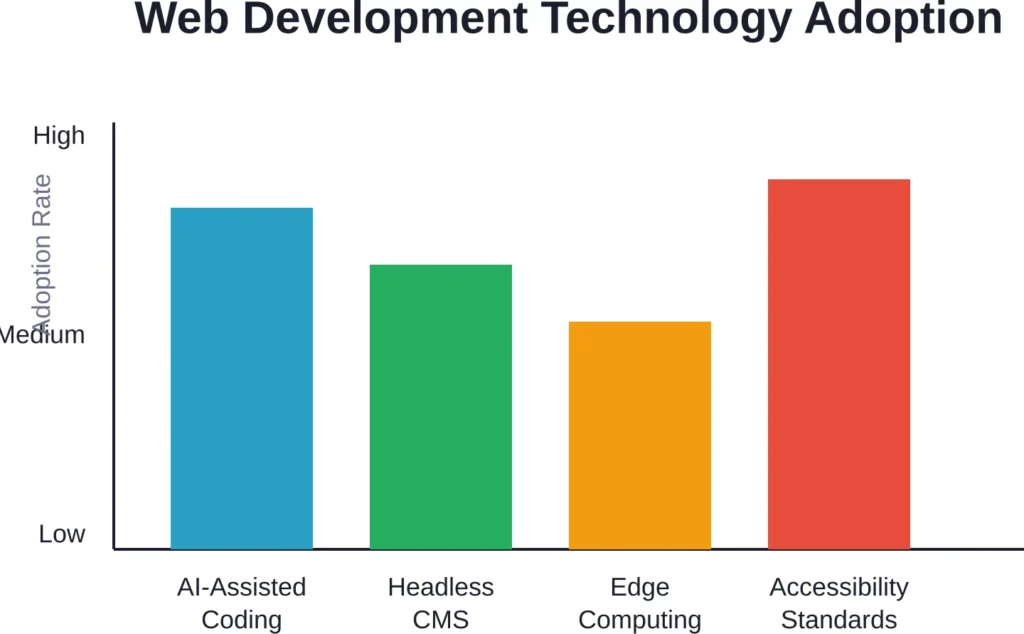
Agentic AI in Development Workflows
The shift from AI-assisted coding to truly agentic development is accelerating. According to Forrester research, agentic software development represents a fundamental change where AI systems perform real development work rather than just autocompleting code.
This doesn’t mean developers are obsolete. Rather, the role is evolving toward higher-level system design and quality assurance. AI handles boilerplate code, routine refactoring, and initial test generation. Humans focus on architecture decisions, business logic, and edge cases.
Top agencies are integrating these tools without compromising code quality or security. The key is treating AI output as a starting point requiring review, not finished work ready for production.
Performance as a Competitive Advantage
Site speed has moved from technical consideration to business imperative. Users abandon slow sites. Search engines penalize them. Conversion rates correlate directly with load times.
Modern development agencies optimize performance from the start rather than treating it as a post-launch concern. This means server-side rendering, image optimization, efficient database queries, and strategic caching—all baked into the initial architecture.
The best implementations feel instantaneous. Pages load in under a second. Interactions provide immediate feedback. Users don’t consciously notice the performance, but they notice the experience.
Accessibility as Standard Practice
Accessibility is no longer an optional enhancement—it’s a baseline requirement. Legal mandates in many jurisdictions require digital products to meet WCAG standards. Beyond compliance, accessible design simply reaches more users.
Leading agencies integrate accessibility testing throughout development. Automated tools catch obvious issues. Manual testing with screen readers and keyboard navigation reveals subtler problems. The goal is inclusive design, not retrofitted compliance.
Headless and Composable Architecture
The monolithic CMS is giving way to composable systems where content management, e-commerce, search, and other functions come from specialized services connected via APIs. This flexibility allows businesses to swap components without rebuilding everything.
Headless architecture separates content from presentation. The same content API can feed a website, mobile app, smart display, and any future channel. For businesses with multi-platform strategies, this approach eliminates duplicate content management.
The trade-off is increased complexity. Rather than one system to manage, there’s an ecosystem of services to coordinate. For large organizations with dedicated technical teams, this complexity is manageable. For smaller businesses, traditional platforms often remain more practical.
Common Mistakes When Hiring Development Agencies
Choosing Based on Price Alone
The cheapest quote rarely delivers the best value. Development projects require substantial expertise, and experienced developers command appropriate compensation. Suspiciously low bids often hide problems—junior developers learning on your project, offshored work with communication barriers, or scope gaps that lead to costly change orders.
Value and cost aren’t the same thing. An agency that delivers on time, communicates clearly, and builds maintainable code is worth more than one that’s cheap but requires constant oversight and eventual rebuilding.
Ignoring Cultural Fit
Technical capability is necessary, but partnerships succeed when working styles align. A fast-moving startup may clash with an agency accustomed to enterprise approval processes. A brand that values creative exploration may frustrate with an agency focused purely on functional requirements.
Pay attention to cultural signals during the sales process. Does the agency’s communication style match internal expectations? Do they ask about team structure and decision-making processes? Agencies that ignore these factors often struggle during execution.
Underspecifying Requirements
Vague requirements lead to misaligned expectations. “We need a website” isn’t sufficient scope for accurate estimation. What features are essential versus nice-to-have? Who are the users? What business outcomes define success?
Quality agencies will ask these questions and help refine requirements. But having preliminary answers ready accelerates the process and ensures more accurate proposals. Written user stories, competitive examples, and prioritized feature lists help tremendously.
Skipping the Discovery Phase
Many clients want to jump straight to design and development, viewing discovery as wasted time and budget. This is backwards. Discovery—research, strategy, technical planning—is where projects are actually won or lost.
Skipping discovery means building on assumptions rather than validated understanding. Assumptions about user needs, technical constraints, and business priorities are frequently wrong. Discovery surfaces these misalignments when changing course is still cheap.
Questions to Ask Potential Development Partners
The questions asked during agency evaluation reveal as much about the client’s priorities as the answers reveal about the agency. Here are critical questions that help assess fit:
About their process: Walk me through a typical project from kickoff to launch. Where do projects commonly encounter challenges? How do you handle scope changes mid-project?
About their team: Who specifically will work on our project? What’s their experience level? If key team members leave, how do you ensure continuity?
About their expertise: Show me three projects similar to ours in scope and complexity. What challenges did you encounter? What would you do differently if you could start over?
About communication: How often should we expect updates? What’s your typical response time for questions? How do you handle urgent issues outside business hours?
About outcomes: How do you measure project success? Can you share metrics from past projects—performance improvements, conversion rate increases, user satisfaction scores?
About post-launch: What happens when we find bugs after launch? Do you offer ongoing maintenance? How do you handle future feature requests?
Agencies that answer these questions clearly and specifically, citing concrete examples, demonstrate the maturity and communication skills essential for successful partnerships.
The Role of AI in Modern Web Development
Artificial intelligence is reshaping web development workflows in 2026, though not always in the ways initially predicted. Rather than replacing developers, AI tools are augmenting capabilities and accelerating certain tasks while elevating the strategic work that requires human judgment.
Code generation tools have matured significantly. Developers describe requirements or show examples, and AI generates functional code. But this code still requires review, testing, and refinement. The time savings come from eliminating boilerplate and routine logic, freeing developers for complex problem-solving.
Design tools incorporating AI can generate layout variations, suggest color palettes based on brand guidelines, or optimize responsive breakpoints. Again, these are starting points. Human designers make final decisions about what serves the brand and users best.
Testing and quality assurance benefit enormously from AI. Automated tests can be generated from user stories. Visual regression testing catches unintended UI changes. Accessibility audits identify WCAG violations. These capabilities allow developers to maintain higher quality standards without proportionally increasing testing time.
The generative AI market is projected to reach $110 billion by 2030 according to industry analysis. Web development represents one clear beneficiary of these technologies.
The agencies thriving in this environment are those integrating AI thoughtfully. They’re training teams on AI-assisted workflows, establishing quality standards for AI-generated code, and clearly delineating when human oversight is required. They’re not blindly adopting every new tool, but they’re not ignoring the shift either.
Security Considerations in Agency Selection
Security breaches carry catastrophic consequences—financial losses, regulatory penalties, reputational damage. Yet many businesses treat security as an afterthought during development rather than a core requirement.
Top development agencies build security into every phase. During planning, they conduct threat modeling to identify potential vulnerabilities. During development, they follow secure coding practices—input validation, parameterized queries, proper authentication and authorization.
Code reviews specifically examine security implications. Are secrets hardcoded in source files? Are third-party libraries up-to-date? Is sensitive data properly encrypted both in transit and at rest?
Compliance requirements vary by industry. Healthcare applications must meet HIPAA standards. Financial services face PCI DSS requirements. European customers trigger GDPR obligations. Experienced agencies understand these frameworks and build compliant systems from the start rather than retrofitting.
Ask potential partners about their security practices. Do they conduct regular security audits? How do they handle vulnerability disclosure? What’s their track record—have past projects experienced breaches?
According to research from IEEE and other technical standards organizations, management’s failure to learn from software project failures continues to cause issues affecting millions. Security practices represent one area where learning from industry failures is essential.
Measuring Development Project Success
Defining success metrics upfront prevents misaligned expectations and provides objective evaluation criteria. But many projects launch without clear success definitions beyond “looks good” and “works.”
Technical Performance Metrics
Page load time, time to interactive, and Core Web Vitals provide quantitative measures of technical execution. These metrics directly impact user experience and SEO rankings.
Uptime and reliability matter too. A beautiful site that’s frequently unavailable fails at its core purpose. Monitoring systems should track availability and alert teams to issues before users complain.
Business Outcome Metrics
Technical excellence means nothing without business results. What specific business outcomes should improve post-launch?
For e-commerce, conversion rate and average order value are primary metrics. For lead generation, form submissions and cost per lead. For content sites, engagement time and repeat visit rate.
Establish baseline metrics before launch. Track changes afterward. This data-driven approach demonstrates value and informs future optimization.
User Satisfaction Indicators
Quantitative metrics tell part of the story. Qualitative feedback reveals the user experience that numbers can’t fully capture.
User testing sessions, satisfaction surveys, and support ticket analysis provide insight into what’s working and what’s frustrating. The best development agencies continue gathering this feedback post-launch and feed it into iterative improvements.
| Success Category | Example Metrics | Typical Improvement Targets |
|---|---|---|
| Technical Performance | Page load time, Core Web Vitals, uptime percentage | Load time under 2 seconds, 99.9% uptime |
| Conversion | Conversion rate, cart abandonment, form completions | 10-30% improvement in conversion rate |
| Engagement | Pages per session, time on site, bounce rate | 15-25% increase in engagement metrics |
| SEO | Organic traffic, keyword rankings, click-through rate | 20-40% traffic growth over 6 months |
| User Satisfaction | NPS score, support tickets, user survey results | NPS above 50, reduced support volume |
Regional Considerations and Remote Work
Geography matters less in 2026 than ever before, but it hasn’t become completely irrelevant. Remote collaboration tools enable productive relationships across timezones, yet certain projects still benefit from proximity.
For projects requiring extensive stakeholder collaboration—multiple decision-makers, frequent workshops, iterative refinement—working with local agencies can smooth communication. Real-time meetings without timezone gymnastics accelerate decision-making.
Regulatory and cultural considerations sometimes favor local expertise. An agency familiar with local privacy laws, payment preferences, or cultural norms brings context that purely remote teams might miss.
That said, remote work has democratized access to talent. A business in a smaller market can now work with specialized agencies anywhere. The key is establishing clear communication protocols, overlapping working hours for real-time collaboration, and using appropriate tools.
Many successful partnerships blend remote efficiency with occasional in-person sessions. Kickoff meetings benefit from face-to-face time. Mid-project check-ins can happen virtually. Launch celebrations might bring teams together again.
Budget Planning for Web Development Projects
Development costs vary enormously based on scope, complexity, timeline, and team experience. A basic marketing site might start in the tens of thousands. Complex enterprise applications can reach hundreds of thousands or millions.
Rather than starting with a fixed budget and trying to fit requirements within it, successful projects typically work backwards from business goals. What capabilities are essential? What outcomes justify the investment? Budget follows from these answers.
That said, understanding typical ranges helps calibration. Simple template-based sites represent the low end. Custom design with standard functionality falls in the middle. Sophisticated applications with complex integrations, custom features, and extensive testing occupy the high end.
Hidden costs often surprise clients. These include content creation, photography, copywriting, ongoing hosting and maintenance, third-party service subscriptions, and future feature development. Comprehensive budgets account for these from the start.
The most expensive outcome is building something twice. Cheap initial development that requires complete rebuilding within a year wastes far more than investing appropriately upfront. Quality agencies cost more initially but deliver systems that last.
Frequently Asked Questions
Project timelines vary dramatically based on scope and complexity. A basic website might launch in 6-8 weeks. Custom applications with sophisticated features typically require 3-6 months. Enterprise platforms can extend to 12+ months. The timeline includes discovery, design, development, testing, and deployment phases. Projects requiring extensive content creation, complex integrations, or regulatory compliance take longer. Rushing development to meet arbitrary deadlines usually creates technical debt and quality problems that cost more to fix later.
Web design focuses on visual appearance, user experience, and interface layouts—how the site looks and feels. Web development involves the technical implementation—writing code, configuring databases, building functionality, and making everything actually work. Many agencies offer both services, while others specialize in one or the other. Full-service agencies handle both design and development with integrated teams. For complex projects, having both capabilities under one roof reduces coordination overhead and ensures designs are technically feasible.
The answer depends on project needs. Specialized agencies—focused on Shopify, or WordPress, or SaaS applications—bring deep expertise in their domain. They’ve solved similar problems repeatedly and have proven approaches. Generalist agencies offer flexibility and can tackle diverse projects, but may lack depth in specific areas. For projects with well-defined requirements in a specific category, specialists often deliver better results. For projects spanning multiple disciplines or requiring custom solutions, generalists may be more appropriate.
Look beyond visual appeal to functional complexity. Does the portfolio include projects similar to yours in scope, not just aesthetics? Can you interact with live sites to evaluate performance and user experience? Ask agencies to walk through specific projects—what challenges did they encounter, how did they solve them, what were the business outcomes? Client testimonials provide valuable perspective, but verify them when possible. Portfolio quality matters less than portfolio relevance—an agency’s most impressive work may not relate to your needs.
Critical questions include: Who specifically will work on our project and what’s their experience? What’s your process from kickoff to launch? How do you handle scope changes or unexpected challenges? What happens after launch if we find issues? Can you provide references from similar projects? How do you measure project success? What’s included in your pricing and what costs extra? How do you ensure accessibility and security? What’s your approach to mobile responsiveness? These questions reveal process maturity, communication style, and whether the agency understands your specific needs.
Extremely important. Websites and applications require regular updates—security patches, software updates, content changes, feature additions. Neglected sites become security vulnerabilities and fall behind technically. Most agencies offer maintenance retainers providing monthly support hours. This ensures quick response to issues and keeps the platform current. Budget for ongoing maintenance from the start—typically 15-20% of the initial development cost annually. Some agencies specialize in maintenance and can take over sites built elsewhere, though working with the original development team usually provides better continuity.
Client involvement is essential for success. During discovery, provide comprehensive information about goals, users, and requirements. During design, offer timely feedback on mockups and prototypes. During development, remain available for questions and decisions. Provide content and assets on schedule—delays here often cascade into overall timeline delays. Participate in testing to catch issues before launch. The most successful projects involve engaged clients who contribute domain expertise while trusting the agency’s technical and design recommendations. Micromanagement and second-guessing slow progress, but complete disengagement leads to misaligned outcomes.
Conclusion
The web development landscape in 2026 offers unprecedented choice. Technology has democratized many aspects of building digital products, yet the gap between mediocre and excellent implementations remains vast.
The 15 agencies featured here represent different approaches, specializations, and strengths. None is universally “best”—the right choice depends entirely on specific project needs, business goals, budget constraints, and cultural fit.
Success requires clarity about what matters most. Is design differentiation the priority? Technical sophistication? E-commerce conversion? Content management capabilities? SEO performance? Understanding these priorities focuses the selection process on agencies genuinely aligned with goals.
The agencies that thrive are those treating development as a means to business outcomes, not an end in itself. They ask hard questions during discovery. They challenge assumptions when necessary. They communicate clearly about trade-offs and risks. And they build systems designed to evolve rather than require complete rebuilding as business needs change.
Finding the right development partner requires diligence. Research portfolios thoroughly. Speak with past clients. Ask detailed questions about process, team composition, and post-launch support. Trust instincts about communication style and cultural fit.
The investment in thoughtful agency selection pays dividends throughout the project and long afterward. A well-built platform becomes a business asset that drives results for years. A poorly executed project becomes a constant source of frustration and escalating costs.
Take the time to get this decision right. The difference between a good development partner and a great one isn’t measured in percentage points—it’s measured in whether the final product genuinely serves the business or just checks technical boxes.
Ready to move forward with a web development project? Start by clearly defining goals, assembling existing brand assets and content, and establishing realistic timelines and budgets. Then reach out to agencies whose work and approach align with those needs. The right partner is ready to help transform vision into reality.