
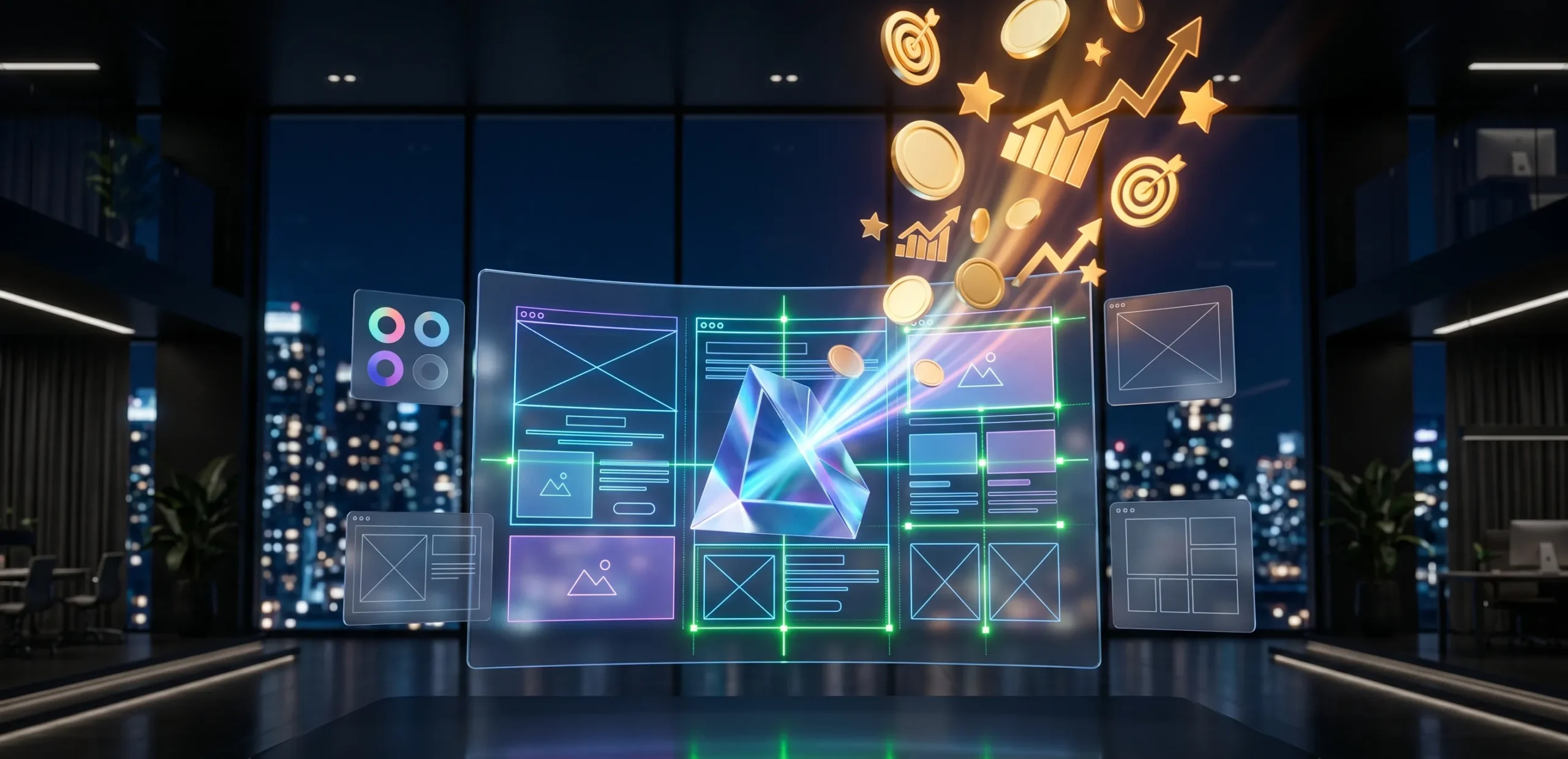
Quick Summary: Finding the right web design and development agency can transform your brand’s online presence. This guide profiles 15 top-tier agencies recognized for their innovative design, technical excellence, and proven track records with major clients. Each agency brings unique strengths—from SaaS product design to enterprise-level solutions—helping you match your project needs with the perfect creative partner.
Your website isn’t just a digital business card anymore. It’s your hardest-working sales rep, your brand’s first impression, and often the deciding factor between a bounce and a conversion.
But here’s the thing—building a website that actually delivers results requires more than drag-and-drop templates and stock photography. It demands strategic thinking, design excellence, and technical chops that most in-house teams simply don’t have bandwidth for.
That’s where specialized web design and development agencies come in. These firms live and breathe digital experiences. They’ve solved problems you haven’t encountered yet, worked with technologies you’re just hearing about, and built sites that have generated millions in revenue for their clients.
The challenge? There are thousands of agencies out there, all claiming to be the best.
This guide cuts through the noise. We’ve identified 15 agencies that consistently deliver exceptional work, backed by industry recognition, client testimonials, and portfolios that speak for themselves. Some specialize in SaaS products, others excel at eCommerce, and a few handle massive enterprise projects that lesser firms wouldn’t touch.
No two projects are identical, and neither are these agencies. Let’s explore what makes each one stand out.
Why Agency Selection Actually Matters
Choosing the wrong agency isn’t just frustrating. It’s expensive.
A mismatched partnership can mean months of wasted time, budgets that balloon beyond recognition, and a final product that misses the mark entirely. Industry reports suggest that nearly half of redesign projects fail to meet their initial objectives, often because the agency lacked specific expertise the project demanded.
The right agency brings more than design skills. They bring process, experience with similar challenges, and the ability to anticipate problems before they derail your timeline.
They ask the right questions upfront. They challenge assumptions that need challenging. And they deliver work that doesn’t just look good—it performs.
Consider what you’re actually buying: strategic guidance, creative vision, technical implementation, and often ongoing support. That’s a significant relationship, not a transaction.
What Separates Top-Tier Agencies from the Rest
Awwwards recognition tells you something. When platforms that celebrate design excellence consistently feature an agency’s work, that’s not luck.
Take the agencies that have won Site of the Day honors—they’re pushing boundaries, experimenting with interactions most firms wouldn’t attempt, and setting trends rather than following them. Paper Tiger earned Site of the Day recognition on January 17, 2026. The Agency of Love & Logic received their Site of the Day award on April 19, 2026 for presenting work through the lens of love and logic.
But awards aren’t everything. The agencies that consistently rank among the best share several traits:
Specialized expertise in specific industries or project types. Generalists can handle basic projects, but specialists solve complex problems. An agency that lives in the SaaS world understands onboarding flows, dashboard design, and conversion optimization at a level a general agency never will.
Proven processes that reduce risk. Top agencies have refined their workflows through dozens or hundreds of projects. They know which questions to ask during discovery, how to structure feedback loops, and when to push back on client requests that would hurt the final product.
Technical depth beyond surface-level design. Pretty mockups mean nothing if they can’t be built efficiently or perform well. The best agencies understand performance optimization, accessibility standards, and how design decisions impact development timelines.
Portfolio work that demonstrates range and depth. Look beyond the hero images. Do their case studies explain the problem, the approach, and the results? Can they articulate why they made specific decisions?
The Top 15 Web Design and Development Companies
These agencies represent the current state of excellence in web design and development. Each brings distinct strengths to the table.
1. Gilzor

Gilzor builds custom digital products from idea to launch for startups and scaling businesses. They focus on turning product visions into functional, market-ready web and mobile applications that users love and investors back.
What sets them apart is their full-cycle approach: idea validation, UI/UX design that boosts conversions, robust development, and go-to-market strategy. They emphasize clean architecture, performance, and user-centric solutions rather than just writing code.
Their expertise covers web development, mobile apps (iOS and Android), R&D for ambitious features, quality assurance with minimal rework, and post-launch support. Gilzor particularly shines when helping early-stage companies achieve product-market fit and when established businesses need reliable custom software to grow revenue or automate operations.
The team blends creative thinking with strategic execution, delivering solutions that are both visually compelling and technically solid.
Contact Information:
- Website: www.gilzor.com
- Email: [email protected]
- Address: Poland, Warsaw, Office 58, street Adama Mickiewicza 37, 01-625
- LinkedIn: www.linkedin.com/company/gilzor-softwaredevelopment
2. Mobian
Mobian Studio delivers dedicated engineering teams that ship production-ready software on time and on budget. They specialize in mobile and AI solutions for companies in IT, Healthcare, Fintech, and Logistics.
Their strength lies in two flexible models: full outsourcing where they own end-to-end delivery, or outstaffing where senior engineers integrate directly into the client’s team. Either way, the focus remains on clean architecture, clear documentation, and senior-level execution without the overhead of bad hires.
Mobian handles everything from mobile apps and AI-powered systems to scalable backends and legacy integrations. They excel at building products that can grow from hundreds to tens of thousands of users without painful rebuilds, while maintaining strict domain compliance where it matters.
Real talk: They move fast, communicate clearly, and stay as long-term partners after launch — fixing issues, supporting scaling, and keeping the codebase healthy.
Contact Information:
- Website: mobian.studio
- Phone: [email protected]
- Address: Harju maakond, Tallinn, Kesklinnalinnaosa, Masina tn 22, 10113
- LinkedIn: www.linkedin.com/company/mobian-studio
3. Lengreo
Lengreo acts as a complete marketing and tech partner, helping B2B companies generate high-quality leads and accelerate growth through smart digital strategies and custom website development.
They combine data-driven marketing with hands-on web development to deliver measurable business results: dramatically increased client acquisition, lower cost per lead, and higher conversion rates. Their work spans SEO, paid advertising, hyper-personalized outreach, and high-converting websites and landing pages.
What makes Lengreo effective is their refusal to use cookie-cutter solutions. They listen carefully, audit existing efforts, and build tailored strategies that integrate marketing, lead generation, and technical implementation. Their website development services include discovery, prototyping, full build, and ongoing optimization.
Clients value their initiative, clear communication, and consistent delivery of quality work that directly impacts revenue.
Contact Information:
- Website: Lengreo.com
- Phone: +31 686 147 566
- Email: [email protected]
- Address: Vrijstraat 9 C/D, 5611 AT Eindhoven, Netherlands
- LinkedIn: Lengreo
- Twitter: @Lengreo
- Instagram: @lengreo
4. Oski
Oski designs, develops, and maintains well-engineered software solutions for tech-forward enterprises and ambitious startups. They bring over two decades of delivery excellence to complex digital challenges.
The agency stands out through AI-accelerated development that delivers results up to three times faster while maintaining high quality. Their expertise covers cloud architecture, modern frontend solutions, artificial intelligence integrations, and robust CMS platforms.
Oski works across multiple industries including travel, logistics, e-commerce, education, fintech, and insurance. They create scalable systems that improve operations, enhance customer experiences, and drive revenue through thoughtful digital innovation.
From initial consultation to long-term maintenance, they focus on clean, flexible solutions that adapt as businesses grow.
Contact Information:
- Website: oski.site
- Phone: +48571282759
- Email: [email protected]
- Address: Kaupmehe tn 7, 10114 Tallinn, Estonia
- LinkedIn: www.linkedin.com/company/oski-solutions
5. A-listware
A-listware is a software development and consulting company that provides skilled teams and end-to-end digital solutions. They help enterprises, SMBs, and startups build high-quality, secure, and responsive applications.
They excel at software development outsourcing, team augmentation, legacy modernization, cloud solutions, data analytics, and dedicated development teams. Their approach ensures seamless integration with client processes while delivering cost-effective, reliable results.
The company covers a wide spectrum — from custom enterprise applications (ERP, CRM, HR) to UI/UX design, testing, cybersecurity, and infrastructure management. They act as a true extension of the client’s team, providing 24/7 access to experts and consistent quality delivery.
A-listware focuses on building long-term partnerships where technology becomes a genuine competitive advantage.
Contact Information:
- Website: a-listware.com
- Phone: +1 (888) 337 93 73
- Email: [email protected]
- Address: North Bergen, NJ 07047, USA
- LinkedIn: www.linkedin.com/company/a-listware
- Facebook: www.facebook.com/alistware
6. Basic Agency (DEPT)
Basic Agency joined DEPT, creating a powerhouse that combines creative excellence with global scale. They handle brand strategy, design, and development for ambitious companies.
Their portfolio spans diverse industries—technology, consumer products, hospitality, and more. This breadth gives them perspective that narrowly focused agencies lack. They bring insights from one industry to solve problems in another.
Basic Agency’s strength lies in their strategic foundation. They start by understanding business goals, user needs, and market dynamics before proposing solutions. Design serves strategy, not the other way around.
The agency has delivered work for Google, Levi’s, and other major brands that needed partners capable of handling complexity while maintaining creative standards.
Their development capabilities match their design chops. They build on modern stacks, optimize for performance, and ensure everything they create can scale as clients grow.
7. Build in Amsterdam
Build in Amsterdam brings European design sensibility to digital projects. Their work emphasizes clean layouts, strong typography, and purposeful use of white space.
They’ve created impressive digital experiences for global brands while maintaining a boutique agency feel. Projects get senior-level attention rather than being passed to junior team members.
The agency’s approach balances aesthetic beauty with functional clarity. Their sites don’t just look elegant—they guide users intuitively through content and conversion paths.
Build in Amsterdam excels at projects where brand expression matters as much as functionality. Their work helps companies differentiate in crowded markets through distinctive visual identity.
They’re particularly strong with content-rich sites where information architecture and content strategy play crucial roles in success.
8. Area 17

Area 17 specializes in digital experiences for cultural institutions, publishers, and brands with rich content libraries. They’ve worked with the Museum of Modern Art, Sundance Institute, and other organizations where content takes center stage.
Their expertise in content strategy and information architecture sets them apart. They understand how to structure complex content systems that remain manageable and intuitive.
The agency doesn’t impose a house style on every project. Instead, they develop design systems tailored to each client’s content, audience, and goals. The result feels specific, not generic.
Area 17’s technical team builds robust content management systems that empower clients to manage their own content after launch. They think about the long-term relationship between content creators and the tools they use.
Their work demonstrates that content-heavy sites don’t have to be boring. With thoughtful design and smart architecture, even massive content libraries can feel navigable and engaging.
9. Locomotive
Locomotive brings serious technical skills to creative projects. They’re based in Montreal and have built a reputation for smooth animations, creative interactions, and technical innovation.
Their work often incorporates cutting-edge web technologies that create memorable experiences. They push boundaries while ensuring everything works reliably across browsers and devices.
The agency has created notable work for clients including Apple, Google, and other technology leaders who expect both creative ambition and technical excellence.
Locomotive’s team includes creative developers who blur the line between design and development. They prototype ideas quickly, experiment with emerging technologies, and find solutions that other agencies might dismiss as impossible.
Their projects demonstrate what’s possible when technical skill matches creative vision. Sites feel fluid, responsive, and more like applications than traditional websites.
10. Excited Agency
Excited Agency takes a product-first approach to web design, focusing on clarity, structure, and conversion over surface aesthetics. They combine UX research, web design, branding, and motion design.
The agency creates websites that scale with the product and support long-term growth. They think beyond the initial launch to how the site will evolve as the business expands.
According to available data, their approach emphasizes understanding user needs and business objectives before proposing design solutions. This foundation ensures the final product serves strategic goals.
Excited works with startups and growing companies that need websites to drive measurable business results. Their focus on conversion and user experience makes them particularly valuable for companies where the website plays a crucial role in customer acquisition.
They maintain a lean, efficient process that helps projects stay on schedule and within budget while still delivering quality work.
11. Clay
Clay operates at the intersection of brand and digital product design. Their client list reads like a who’s who of Silicon Valley—Coinbase, Slack, and Google have all trusted Clay with high-stakes projects.
What sets them apart? They don’t just make things look good. They obsess over how design decisions impact business metrics. Every layout choice, every interaction pattern, every content hierarchy decision gets evaluated through the lens of user behavior and business outcomes.
Their work spans brand identity, UI/UX design, and full website development. But they’re particularly strong with companies experiencing rapid growth, where the website needs to evolve quickly without losing coherence.
Clay’s process emphasizes collaboration. They embed themselves in their clients’ operations, working alongside internal teams rather than disappearing into a black box and emerging months later with a finished product.
Real talk: Clay isn’t cheap, and they’re selective about projects. But for brands with ambitious goals and the budget to match, they consistently deliver work that moves needles.
12. Instrument

Instrument builds digital experiences for brands that need to make statements. Nike, Google, and Sonos have all partnered with them for projects that required both creative boldness and technical excellence.
Their strength lies in connected brand experiences—websites, apps, and digital platforms that feel cohesive regardless of touchpoint. They think in systems, not pages.
The agency approaches each project through research and strategy before a single pixel gets designed. They conduct user research, audit existing digital properties, analyze competitor landscapes, and identify opportunities that clients often haven’t considered.
Instrument’s technical capabilities run deep. They build custom platforms when off-the-shelf solutions won’t cut it, and they’re comfortable working with emerging technologies that other agencies avoid as too risky.
Their office culture emphasizes craft. Designers and developers work closely together from day one, which eliminates the handoff problems that plague many agencies.
13. Huge

Huge handles enterprise-level digital transformation. When established companies need to completely rethink their digital presence, Huge has the infrastructure and expertise to manage massive, multi-phase projects.
They’re not just designing websites—they’re often redesigning entire digital ecosystems. That means coordinating across multiple brands, navigating complex stakeholder landscapes, and ensuring consistency across dozens of touchpoints.
The agency’s research capabilities distinguish them from smaller competitors. They maintain dedicated research teams that conduct extensive user testing, competitive analysis, and market research to inform design decisions.
Huge’s client roster includes major corporations across retail, financial services, healthcare, and technology. They’ve worked with Google, USAA, Target, and countless others on projects that required both creative excellence and enterprise-grade reliability.
Their process accommodates the reality of large organizations—governance requirements, brand guidelines, technical constraints, and the need to get buy-in from multiple departments. Smaller agencies often struggle with this organizational complexity.
14. Fantasy
Fantasy specializes in interactive experiences that push technical boundaries. Their work often incorporates motion design, complex animations, and custom interactions that elevate brands above their competitors.
They’ve created notable work for Dropbox, Square, and other technology companies that want their digital presence to feel as innovative as their products. Fantasy doesn’t do cookie-cutter; every project feels distinct.
The agency’s team blends designers, developers, and creative technologists who collaborate throughout the project lifecycle. This tight integration means they can conceive and execute interactions that would be impossible with traditional agency structures.
Fantasy excels at brand launches and rebrands where making a splash matters. Their work generates attention, wins awards, and signals to the market that a company is serious about design.
But they’re not all style over substance. Behind the beautiful animations and striking visuals, Fantasy builds solid, performant websites that hold up under traffic and work across devices.
15. Ueno
Ueno earned their reputation through distinctive, bold design work for clients like Google, Uber, and Slack. They approach every project as an opportunity to create something memorable.
What makes Ueno interesting is their willingness to challenge conventions. They’re not afraid to suggest approaches that feel risky, and they back those suggestions with solid reasoning about why breaking patterns will serve the project.
The agency maintains a strong focus on craft and details. Animations feel polished, typography choices elevate content, and every element gets the attention it deserves. Nothing feels rushed or half-considered.
Ueno’s team includes designers and developers who understand each other’s disciplines. Designers think about technical constraints; developers contribute creative ideas. This mutual respect produces better work.
They’ve built a culture that attracts top talent, which means clients benefit from working with some of the industry’s most skilled practitioners.
How to Choose the Right Agency for Your Project
Matching your needs with the right agency matters more than picking the most awarded firm or the one with the biggest name clients.
Start by getting clear on what you actually need. Are you launching a new product? Redesigning an existing site? Building a complex web application? Different agencies excel at different project types.
Define your must-haves versus nice-to-haves. Do you need someone who can manage complex technical integrations? Is ongoing support after launch critical? Does the agency need specific industry experience?
Consider timeline and budget constraints. Top agencies often book months in advance. If you need something launched in six weeks, many of these firms won’t be able to accommodate. And while we’re not discussing specific rates, understand that elite agencies command premium fees.
Evaluate portfolios critically. Don’t just admire pretty screenshots. Ask yourself: Do their past projects solve problems similar to mine? Do case studies explain their thinking process? Can I see evidence of measurable results?
Assess cultural fit. You’ll be working closely with this team for months. Do they communicate in ways that mesh with your organization? Do they seem like partners who’ll challenge you constructively, or order-takers who’ll build whatever you ask for?
Check technical capabilities. If your project has specific technical requirements—integration with existing systems, performance needs, accessibility compliance—verify the agency has relevant experience.
Understand their process. How do they handle feedback? How often will you see work in progress? What happens if you’re unhappy with initial concepts? Agencies with mature processes can answer these questions clearly.
Red Flags to Watch For
Some warning signs should give you pause, regardless of how impressive an agency’s portfolio looks.
Agencies that promise the moon without understanding your business are selling, not listening. The best firms ask probing questions before proposing solutions.
Be wary of firms that can’t provide relevant case studies or client references. If they’ve done great work, they should be able to point to it.
Watch out for agencies that don’t discuss strategy or user research. Jumping straight to design without foundation leads to pretty but ineffective websites.
Unclear pricing or unwillingness to discuss budget ranges can signal problems down the road. Professional agencies can at least provide ballpark estimates after understanding project scope.
Project Investment Considerations
Web design and development projects vary enormously in scope and cost. Web design project costs vary widely depending on complexity and scope, with analyses indicating typical ranges fall between modest five-figure investments for straightforward sites to substantial six-figure commitments for complex platforms.
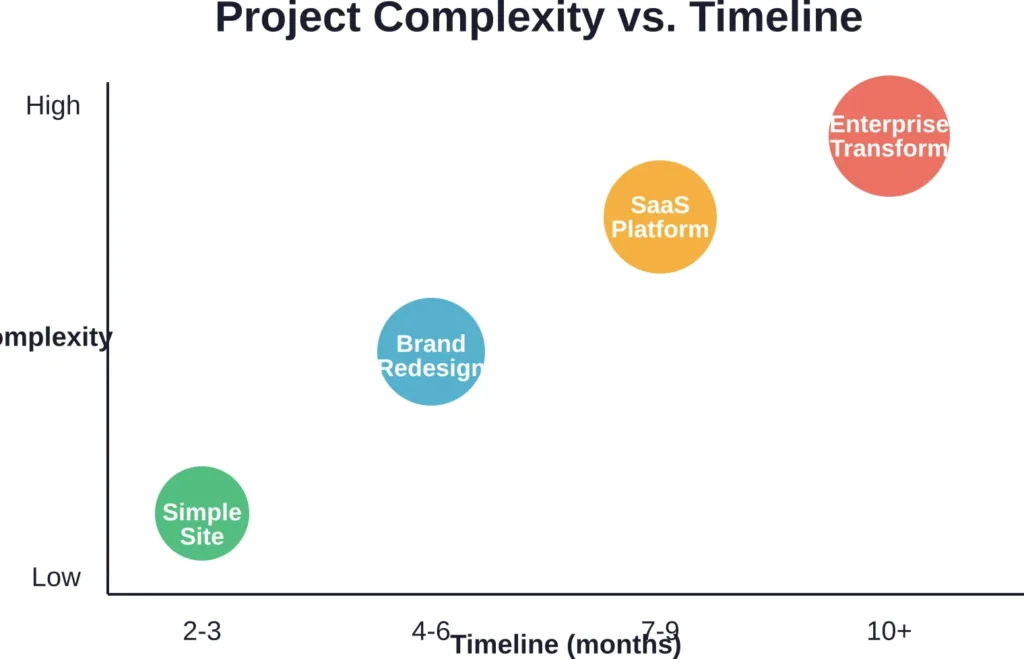
Large SaaS or enterprise-level projects can exceed $30,000–$100,000 due to advanced functionality, custom development, and extended timelines. These projects often involve months of strategy, design, development, and testing.
Several factors influence investment levels:
Project complexity and scope. A simple marketing site costs dramatically less than a web application with user accounts, dashboards, and complex integrations.
Timeline pressure. Rush projects often command premium rates as agencies shift resources and work extended hours.
Required expertise. Specialized skills—advanced animation, complex technical integrations, specific industry knowledge—increase costs.
Ongoing support needs. Some agencies offer post-launch support and optimization. Others hand off the finished product and move on.
For teams with tighter budgets, some agencies offer productized services or more limited engagements that deliver value at lower price points than fully custom projects.
The Agency Engagement Process
Understanding what to expect makes the partnership smoother and more productive.
Most agency engagements follow a similar arc, though specifics vary by firm and project.
Discovery and Strategy Phase
Projects typically begin with discovery. The agency digs into your business, users, competitors, and goals. They conduct stakeholder interviews, review existing analytics, audit current digital properties, and identify opportunities.
Good agencies challenge assumptions during this phase. They ask why things work the way they do and whether different approaches might serve users better.
This phase produces strategic documents—user personas, competitive analysis, content strategy, technical requirements, and project roadmap. These artifacts guide everything that follows.
Design Phase
With strategy established, designers create concepts. This usually starts with wireframes or low-fidelity mockups that establish layout and hierarchy without getting caught up in visual details.
Once the structure is solid, designers add visual polish—color, typography, imagery, and refined details. Top agencies present work in context, showing how designs work across different pages and screen sizes.
Expect multiple rounds of revision. The best work emerges through iteration and refinement, not fully formed on the first try.
Development Phase
Developers translate approved designs into functional code. Modern agencies typically build on frameworks and tools that streamline development and create maintainable codebases.
During development, you’ll see work on staging servers where you can interact with the site before it goes live. This is when you catch issues with functionality, content, or interactions that weren’t apparent in static designs.
Quality agencies test thoroughly across browsers, devices, and connection speeds. They optimize performance, ensure accessibility compliance, and fix bugs before launch.
Launch and Beyond
Launch day isn’t the end—it’s the beginning. Smart agencies monitor performance closely in the first days and weeks, addressing any issues that arise under real-world conditions.
Some firms offer ongoing support, optimization, and iteration. Others hand off the finished product and documentation that allows your team to manage the site independently.
Current Trends Shaping Web Design
The web design landscape evolves constantly. Agencies at the forefront incorporate emerging patterns and technologies that give their clients advantages.
Performance as a core feature. Users expect instant loading. Agencies now treat performance as a design constraint from day one, not something to optimize after the fact. Every image, animation, and script gets evaluated for its impact on speed.
Accessibility moving mainstream. What was once an afterthought is now central to responsible design. Leading agencies build accessibility into their process, ensuring sites work for users with disabilities.
Motion and interaction design. Static pages feel dated. Modern sites incorporate subtle animations and interactions that guide attention, provide feedback, and create more engaging experiences. But the best agencies use motion purposefully, not gratuitously.
AI integration. Forward-thinking agencies experiment with AI for personalization, content recommendations, and enhanced user experiences. According to available industry data, agencies implementing innovative AI SEO strategies have reported substantial growth in referral traffic from generative AI platforms, with some reporting significant traffic increases from AI platforms during 2025.
Component-based design systems. Rather than designing one-off pages, agencies create flexible systems of reusable components. This approach scales better and maintains consistency as sites grow.
Mobile-first thinking. With mobile traffic dominating, agencies design for small screens first, then enhance for larger displays. This ensures core experiences work everywhere.
Questions to Ask During Agency Evaluation
The right questions reveal whether an agency truly fits your needs.
Can you walk me through a similar project you’ve completed? This gets beyond portfolio screenshots to understand their actual process and how they solved specific challenges.
Who would be working on my project day-to-day? You want to know if senior people handle your work or if it gets passed to junior team members after the sale.
How do you handle disagreements or creative differences? Conflict happens. How they navigate it reveals their professionalism and communication style.
What happens if we’re unhappy with initial concepts? Understanding their revision process and philosophy prevents surprises later.
How do you measure project success? Do they think in terms of business outcomes, or just deliverables? The best agencies care about results, not just shipping pretty designs.
What’s your approach to ongoing optimization? Launch is just the start. Do they offer post-launch support? How do they think about continuous improvement?
Can you provide references from past clients? Speaking with previous clients reveals information you won’t get from the agency directly.
Common Pitfalls in Agency Partnerships
Even with the right agency, things can go wrong. Awareness helps you avoid common traps.
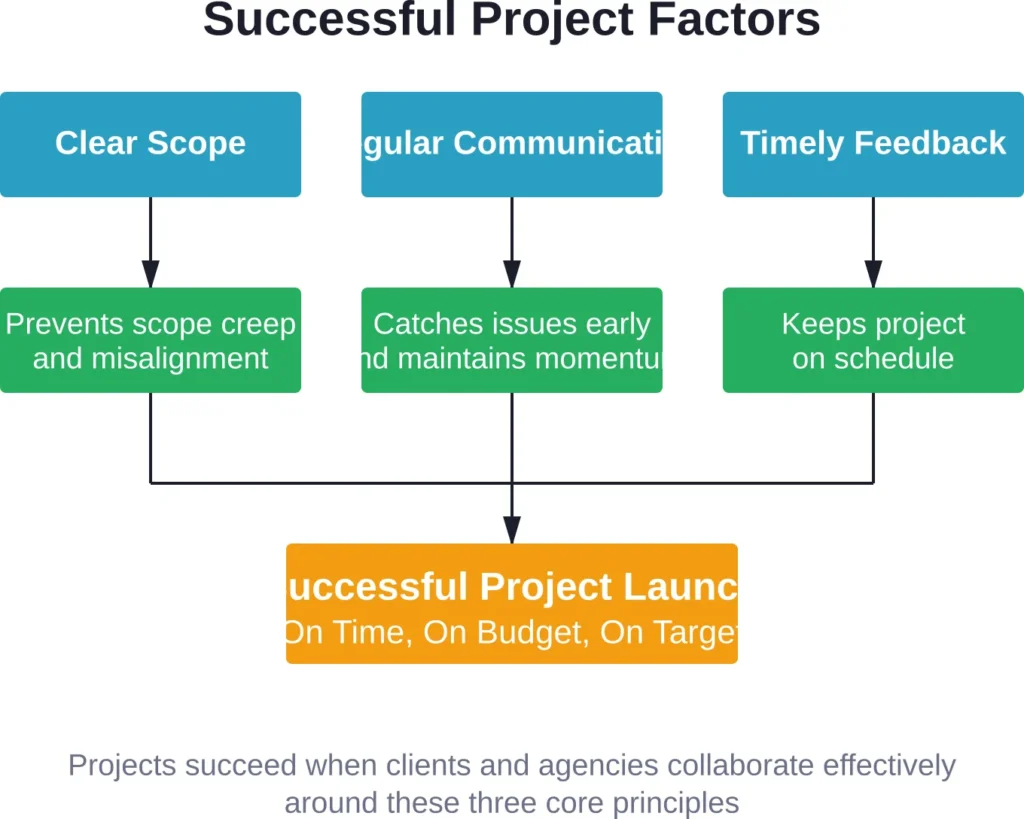
Unclear project scope. The number one cause of project problems is fuzzy definition of what’s included and what’s not. Get specific about deliverables, revisions, and timeline before work begins.
Poor communication cadence. When clients and agencies don’t communicate regularly, misunderstandings compound. Establish clear communication rhythms—weekly check-ins, defined feedback windows, and direct access to key team members.
Decision-making bottlenecks. Projects stall when feedback requires approval from too many stakeholders. Designate clear decision-makers and empower them to move things forward.
Scope creep without budget adjustment. It’s tempting to add “just one more feature” mid-project. But additions have costs. Either adjust budget and timeline, or save new ideas for phase two.
Ignoring agency expertise. You hired experts for a reason. When agencies push back on requests, it’s usually because they’ve seen similar approaches fail. Listen to their reasoning before overriding their judgment.
Inadequate preparation. Agencies work best when you provide necessary materials promptly—content, assets, brand guidelines, access to systems. Delays on your end cascade through the project.
Agency Recognition and Industry Standards
Several organizations recognize excellence in web design, and understanding these accolades helps evaluate agency credibility.
Awwwards celebrates innovative web design through its Site of the Day and annual awards programs. Recent SOTD recipients include Adaline by Daybreak Studio (July 31, 2025), Flabbergast Agency (October 19, 2025), Paper Tiger (January 17, 2026), and The Agency of Love & Logic (April 19, 2026). These recognitions signal that agencies are creating work that pushes boundaries and sets industry standards.
The platform noted they were honored to recognize fantastic work by agencies and designers throughout 2025 in their Annual Awards.
While awards indicate creative excellence and design innovation, agencies should also be evaluated on their ability to deliver measurable business results for clients. The best agencies balance award-worthy creativity with pragmatic focus on client goals.
Other recognition sources include Clutch reviews, which aggregate client feedback and ratings. Top-performing agencies typically maintain strong client satisfaction ratings based on third-party review platforms.
Working with International vs. Local Agencies
Geography matters less than it once did, but it’s still a consideration.
Remote collaboration tools have made working with agencies anywhere feasible. Video calls, project management platforms, and cloud-based design tools enable smooth collaboration across time zones.
International agencies often bring fresh perspectives unburdened by local market assumptions. They’ve solved problems in different contexts and can apply those insights to your project.
But time zone differences create challenges. Real-time collaboration becomes difficult when your workday and theirs barely overlap. Decision cycles slow when you can’t jump on a quick call to resolve questions.
Local agencies offer easier in-person collaboration if that matters for your project. Some organizations value the ability to visit the agency’s office, meet teams face-to-face, and build relationships beyond video calls.
Cultural and language considerations also factor in. While most top agencies work internationally, nuances in communication style and business practices sometimes create friction.
Maximizing Value from Your Agency Partnership
Getting the best work from your agency requires active participation and clear communication.
Provide comprehensive briefs. The more context agencies have upfront, the better their work aligns with your needs. Share business goals, target audience details, competitive landscape analysis, and any relevant research.
Respond to requests promptly. When agencies ask for information, assets, or feedback, prioritize those requests. Your delays become their delays.
Give clear, constructive feedback. “I don’t like it” doesn’t help. Explain what doesn’t work and why. Point to specific elements rather than general impressions.
Trust their expertise while advocating for your needs. Balance being open to their recommendations with clearly articulating your requirements and constraints.
Involve the right stakeholders at the right times. Too many cooks spoil the broth, but you need buy-in from key players. Structure feedback loops that gather necessary input without creating decision paralysis.
Think long-term. The best agency relationships extend beyond single projects. When you find a great partner, maintain that relationship for ongoing needs.
Frequently Asked Questions
Project timelines vary significantly based on scope and complexity. Simple marketing sites might be completed in 2-3 months, while comprehensive brand redesigns typically require 4-6 months. Complex web applications, enterprise platforms, or sites requiring extensive custom development can extend to 9-12 months or longer. The discovery and strategy phase alone can take 4-6 weeks for substantial projects. Rush timelines are sometimes possible but often compromise quality or require premium fees.
Design agencies focus primarily on user experience, visual design, brand expression, and strategic thinking about how sites should look and function. Development companies emphasize technical implementation, coding, system architecture, and solving complex technical challenges. Top agencies typically offer both capabilities under one roof, with designers and developers collaborating throughout projects. This integrated approach produces better results than hiring separate firms for design and development, which creates handoff problems and misalignment.
It depends on your needs. Specialized agencies bring deep expertise in specific industries or project types—for example, agencies that focus exclusively on SaaS products understand those unique challenges better than generalists. Full-service agencies offer convenience and can handle broader needs like marketing, branding, and ongoing support alongside web design. If your project has unique requirements or fits a specific niche, specialists often deliver superior results. For straightforward projects or when you need multiple services, full-service firms can be more efficient.
Reputable agencies provide detailed case studies that explain their specific role, the challenges faced, and the solutions implemented. They should be able to discuss projects in depth and explain design decisions. Check if team members who worked on portfolio pieces are still with the agency. Look for consistency across their portfolio—agencies develop recognizable approaches and quality levels. You can also request client references and contact those clients directly to verify the agency’s contributions and working relationship.
Develop a clear brief that outlines your business goals, target audience, key competitors, project scope, desired timeline, and budget range. Gather any existing brand guidelines, content, research, or analytics that provide context. Identify who will be involved in decision-making on your side. The more prepared you are, the more accurate proposals will be and the smoother the project will proceed. Agencies appreciate clients who’ve thought through their needs rather than expecting the agency to define everything.
Top-tier agencies typically work with clients who have substantial budgets—often starting well into five figures and extending to six figures for complex projects. However, some elite agencies offer more limited engagements, productized services, or tiered offerings that make their expertise accessible at lower price points. Alternatively, many excellent mid-tier agencies deliver outstanding work at more accessible rates. Focus on finding an agency whose typical project size aligns with your budget rather than stretching to afford a name-brand firm that may not give smaller projects adequate attention.
Professional agencies build revision rounds into their contracts and processes. Most include 2-3 rounds of revisions per project phase. If you’re unhappy, provide specific, constructive feedback about what doesn’t work and why. Good agencies will work with you to address concerns. However, if fundamental misalignment occurs, contract terms usually outline how to pause or terminate the engagement. This is why clear communication upfront and at every stage matters so much—catching issues early prevents major problems later. Review contracts carefully to understand your rights and the agency’s obligations if things go wrong.
Making Your Final Decision
You’ve researched agencies, reviewed portfolios, and maybe even had initial conversations with a few firms.
Now comes the decision.
Trust your instincts about cultural fit and communication style. You’ll be working closely with this team for months. If something feels off during the sales process, it won’t improve once the contract is signed.
But don’t let personal chemistry override objective evaluation of capability. The agency you like most might not be the agency best equipped to handle your specific technical requirements or industry challenges.
Consider starting with a smaller, defined project if you’re uncertain. A discovery phase engagement or limited scope project lets you evaluate the partnership with less risk than committing to a massive redesign.
Remember that the cheapest option rarely delivers the best value. Agencies charge what they do because of the expertise, process, and quality they bring. Trying to negotiate top-tier work at bargain prices usually results in disappointment.
Whatever you decide, be clear about expectations, communicate openly, and commit to active participation in the project. The best agency in the world can’t succeed without an engaged client partner.
Conclusion
Your website is too important to trust to just anyone.
The 15 agencies featured here represent the current state of excellence in web design and development. They’ve earned their reputations through consistently outstanding work, innovation that pushes the industry forward, and results that move business metrics for their clients.
But the “best” agency is ultimately the one that best fits your specific needs, budget, timeline, and culture. An agency that’s perfect for a venture-backed startup launching a revolutionary product might be completely wrong for an established enterprise modernizing legacy systems.
Do your homework. Review portfolios critically, ask tough questions, check references, and trust your judgment.
The right agency partnership transforms your digital presence from something that exists to something that performs. It elevates your brand, improves user experience, and drives measurable business results.
Whether you choose one of these agencies or continue your search, commit to finding a partner who brings not just design skills but strategic thinking, technical excellence, and a genuine investment in your success.
Your next website can be something special. With the right agency, it will be.
Ready to move forward? Reach out to agencies whose work resonates with your vision, share your project needs, and start conversations that could reshape your digital future.