
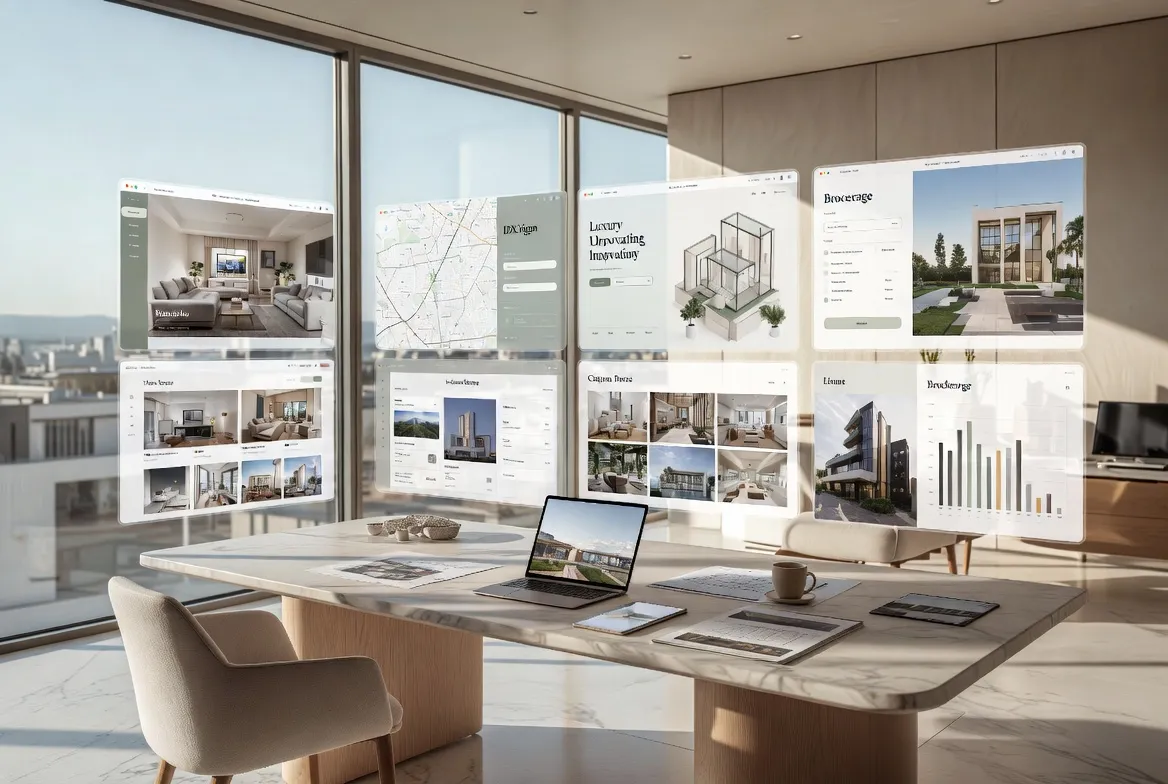
Quick Summary: The top real estate web development companies for 2026 combine technical expertise with deep industry knowledge to deliver websites that generate leads, integrate with MLS systems, and scale with growing agencies. This curated list features 15 agencies specializing in custom real estate platforms, from luxury property showcases to brokerage management systems, each with proven track records in the property technology sector.
The real estate software industry has ballooned into a $10 billion+ market, and finding the right development partner can make or break your digital presence. According to a 2025 REsimpli report, over 97 percent of home buyers use the internet during their property search, and more than half contact an agent directly through a website before visiting a property.
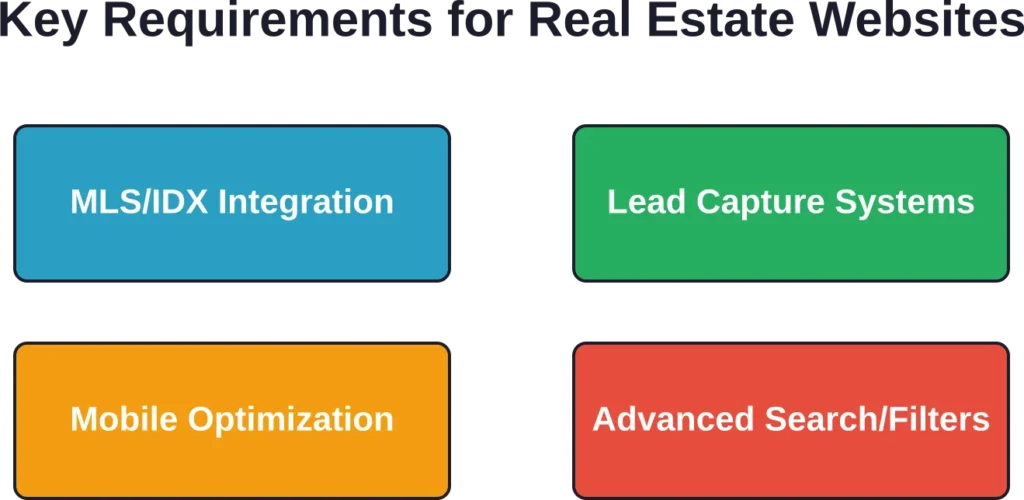
That’s why choosing a web development company that understands real estate isn’t just about aesthetics. It’s about MLS integration, lead capture systems, mobile responsiveness, and SEO architecture that actually drives traffic.
But here’s the thing—not all development agencies understand the nuances of property listings, IDX feeds, or the compliance requirements that come with real estate data. Generic web shops often deliver beautiful sites that fail to convert visitors into leads.
This guide breaks down 15 specialized agencies that have proven themselves in the real estate development space. No pricing discussions, just capabilities, specialties, and what makes each one worth considering for your next project.
Why Real Estate Websites Need Specialized Developers
Real estate websites aren’t standard brochure sites. They’re complex applications that handle thousands of property listings, user accounts, saved searches, and real-time data feeds.
The technical requirements go far beyond WordPress and a contact form. You need developers who can integrate with MLS systems, implement IDX functionality, build custom search filters, and ensure lightning-fast load times even with image-heavy property galleries.
And that’s before we talk about mobile optimization. With the majority of property searches now happening on smartphones, responsive design isn’t optional—it’s mission-critical.
Look, a general web agency might deliver a pretty homepage. But when it comes to the backend architecture that powers lead nurturing workflows, CRM integrations, and automated property updates, you need specialists who’ve solved these problems before.
Top 15 Real Estate Web Development Companies
The following agencies have demonstrated expertise in real estate web development through client portfolios, industry recognition, and specialized service offerings. Each brings different strengths to the table depending on whether you’re an independent agent, growing team, or national brokerage.
1. Gilzor
Gilzor focuses on custom software development for real estate companies that want to stand out with unique digital products. They build everything from sophisticated property portals and booking platforms to mobile apps and internal management systems specifically designed for the real estate sector.
Their process emphasizes thorough idea validation, user-centric design, and scalable architecture. Whether it’s a luxury listing platform with advanced search and visualization tools or an agent productivity app, Gilzor delivers solutions that feel native to real estate workflows while maintaining technical excellence.
Clients appreciate their full-cycle approach — from business analysis and UI/UX design to QA, launch, and ongoing support. This end-to-end expertise helps real estate businesses launch digital tools that not only look premium but actually drive efficiency and revenue growth.
Contact Information:
- Website: www.gilzor.com
- Email: [email protected]
- Address: Poland, Warsaw, Office 58, street Adama Mickiewicza 37, 01-625
- LinkedIn: www.linkedin.com/company/gilzor-softwaredevelopment
2. Oski
Oski builds smart, high-performance digital solutions for forward-thinking real estate enterprises and ambitious brokerages. They specialize in creating powerful websites, client portals, and internal platforms that leverage modern technologies like cloud infrastructure, advanced frontend frameworks, and artificial intelligence.
Their strength lies in delivering seamless user experiences combined with robust backend systems. Oski develops real estate platforms featuring intelligent search, personalized property recommendations, virtual tour integrations, and automated workflows that reduce manual work for agents and teams.
They focus on scalability and innovation, helping real estate companies reimagine how they operate digitally — from stunning consumer-facing websites to powerful admin dashboards and data-driven tools that support smarter decision-making in competitive markets.
Contact Information:
- Website: oski.site
- Phone: +48571282759
- Email: [email protected]
- Address: Kaupmehe tn 7, 10114 Tallinn, Estonia
- LinkedIn: www.linkedin.com/company/oski-solutions
3. Lengreo

Lengreo serves as a complete marketing and technology partner for real estate professionals who need more than just a basic website. They combine custom website development with full-funnel B2B strategies tailored to the real estate industry, helping agents, brokerages, and developers generate qualified leads consistently.
Their approach goes far beyond design. Lengreo builds websites optimized for lead generation, integrates powerful CRM systems, and layers on SEO, paid advertising, and hyper-personalized outreach campaigns. They excel at turning high-intent property searches into actual appointments and closed deals.
What truly sets them apart is their data-driven methodology. They run marketing audits, implement conversion rate optimization, and continuously refine campaigns based on real performance. Clients have seen dramatic improvements in lead quality and cost efficiency through their integrated strategies that connect websites directly to sales pipelines.
Contact Information:
- Website: Lengreo.com
- Phone: +31 686 147 566
- Email: [email protected]
- Address: Vrijstraat 9 C/D, 5611 AT Eindhoven, Netherlands
- LinkedIn: Lengreo
- Twitter: @Lengreo
- Instagram: @lengreo
4. A-listware

A-listware provides dedicated software development and consulting services tailored for real estate organizations that need reliable, high-quality digital solutions. They excel at building and maintaining custom websites, property management systems, CRM integrations, and client portals with a strong emphasis on security and performance.
Their flexible engagement models allow them to act as an extension of your in-house team or take full ownership of development projects. This makes them particularly effective for brokerages and developers who require ongoing enhancements, modernizations of legacy systems, or entirely new real estate platforms.
A-listware stands out through their attention to clean architecture, thorough testing, and deep understanding of real estate-specific needs — from IDX/MLS integrations to advanced analytics dashboards that help clients track performance and optimize operations.
Contact Information:
- Website: a-listware.com
- Phone: +1 (888) 337 93 73
- Email: [email protected]
- Address: North Bergen, NJ 07047, USA
- LinkedIn: www.linkedin.com/company/a-listware
- Facebook: www.facebook.com/alistware
5. Mobian Studio
Mobian Studio builds dedicated engineering teams that deliver production-ready real estate software on time and within scope. They specialize in mobile apps, AI-powered tools, and full-stack platforms for companies in the property sector that demand speed without compromising quality.
They work in two efficient models: complete project outsourcing or seamless outstaffing that integrates senior engineers directly into your team. This flexibility helps real estate firms quickly develop listing apps, tenant portals, AI matching systems, or sophisticated internal tools.
What distinguishes Mobian is their focus on clean, scalable architecture and long-term partnership. They deliver well-documented solutions with ongoing support, enabling real estate businesses to move faster than competitors while maintaining technical excellence across web, mobile, and AI-driven features.
Contact Information:
- Website: mobian.studio
- Phone: [email protected]
- Address: Harju maakond, Tallinn, Kesklinnalinnaosa, Masina tn 22, 10113
- LinkedIn: www.linkedin.com/company/mobian-studio
6. Cybernautic

Cybernautic specializes in custom web application development, and their real estate work reflects that technical depth. They’re the agency you call when off-the-shelf solutions won’t cut it and you need genuinely custom functionality.
Their projects often involve building proprietary tools for real estate businesses: custom CRM systems, agent portals, client dashboards, and internal workflow automation. These aren’t consumer-facing marketing sites—they’re business-critical applications that agencies rely on for daily operations.
That said, Cybernautic also builds public-facing websites with that same technical rigor. Their sites tend to be fast, secure, and built on modern frameworks that can scale as traffic grows. They’re less focused on cutting-edge design trends and more focused on rock-solid performance.
The agency works well with real estate companies that have specific technical requirements or want to build competitive advantages through proprietary technology. If you’re looking to differentiate through features rather than just design, Cybernautic has the development chops to execute.
7. Webby Central
Webby Central offers real estate web development with a focus on affordability and speed to market. They serve the segment of agents and small brokerages who need professional websites without the extended timelines and budgets that come with fully custom projects.
Their approach uses a library of proven real estate templates that get customized with client branding, content, and specific feature requirements. This isn’t drag-and-drop website builder territory—it’s professional development using pre-built components that accelerate delivery.
The result is websites that look custom and include all the essential functionality (IDX integration, lead capture, mobile responsiveness, SEO optimization) but get delivered in weeks rather than months. For agents who need to get online quickly or have limited budgets, that trade-off makes sense.
Webby Central also handles hosting, maintenance, and updates as part of their service model. That’s valuable for clients who don’t want to manage technical details or coordinate with multiple vendors for different aspects of their web presence.
8. KrishaWeb

KrishaWeb operates as a technology partner for real estate businesses with complex development needs. Based in India with global delivery capabilities, they offer the technical horsepower to build large-scale real estate platforms and custom applications.
Their real estate work includes property portals, listing aggregators, agent management systems, and mobile applications. KrishaWeb has experience with projects that require integration across multiple systems—MLS feeds, third-party APIs, payment processors, document management, and CRM platforms.
The agency’s strength is handling projects with significant technical complexity. If you’re building a marketplace where buyers, sellers, and agents interact, or if you need custom matching algorithms and recommendation engines, KrishaWeb has developers with those specialized skills.
They work well with real estate startups and companies looking to build proprietary platforms rather than just marketing websites. Projects tend to be longer-term engagements with ongoing development and feature additions rather than one-time website builds.
9. Modern Tribe

Modern Tribe has built a reputation for WordPress development at the enterprise level. While they work across industries, their real estate clients benefit from their deep expertise in building scalable, secure WordPress applications that can handle high traffic and complex functionality.
For real estate companies committed to WordPress as their platform, Modern Tribe offers the kind of custom development that transforms WordPress from a simple CMS into a full-featured application. They build custom plugins, optimize performance, and implement security hardening that enterprise clients require.
Their projects often involve taking existing WordPress sites and rebuilding them with better architecture, faster performance, and more robust integrations. They’re the cleanup crew when a real estate company has outgrown their current WordPress setup and needs a more sophisticated implementation.
Modern Tribe also provides long-term support and development partnerships. For real estate businesses that view their website as ongoing product development rather than a one-time project, that partnership model provides dedicated development resources without hiring in-house.
10. Digital Silk

Digital Silk combines strategic consulting with development execution. They position themselves as growth partners rather than order-takers, working with real estate companies to define digital strategy before moving into design and development.
Their process starts with discovery: understanding the business model, target audience, competitive landscape, and growth objectives. That strategic foundation informs every decision in the design and development phases, ensuring the website serves business goals rather than just looking good.
Digital Silk has worked with real estate clients ranging from individual luxury agents to national brokerage chains. Their portfolio demonstrates sophistication in both design and technology, with particular strength in creating cohesive brand experiences across web, mobile, and marketing channels.
They’re well-suited for real estate businesses undergoing rebranding or repositioning. Digital Silk can handle the entire process from brand strategy through website launch, providing continuity across what’s often a complex, multi-phase project.
11. Luxury Presence

Luxury Presence has carved out a dominant position in the high-end real estate market. They specialize in creating sophisticated websites for luxury agents and brokers who need to showcase premium properties with the polish and performance those listings demand.
Their platform goes beyond standard templates. Luxury Presence builds custom designs while maintaining the backend infrastructure needed for lead generation, CRM integration, and marketing automation. They’ve worked with top-producing agents who need their websites to reflect the same premium positioning as their property portfolios.
What sets them apart is their understanding of luxury buyer psychology. These aren’t buyers scrolling through dozens of listings—they’re high-net-worth individuals expecting a curated, magazine-quality experience. Luxury Presence delivers that through full-screen photography, minimal interfaces, and sophisticated neighborhood guides.
The company has received multiple industry awards, including recognition from RealTrends for their work in the luxury real estate space. Their client roster includes agents and teams who consistently rank among the top producers in major metropolitan markets.
12. DD.NYC (Duck Design)
DD.NYC brings a design-first philosophy to real estate web development, with a particular strength in creating visually striking websites that still perform technically. Based in New York, they’ve built a reputation for working with boutique agencies and independent brokers who want to stand out in competitive urban markets.
Their development approach emphasizes custom UX/UI design for both property listings and transaction dashboards. In documented case studies, their work has driven measurable results—one project showed a 70% increase in brand recognition alongside improved user engagement metrics.
DD.NYC doesn’t rely on cookie-cutter templates. Each project starts with brand strategy and user research before moving into design and development. That process takes longer than spinning up a theme-based site, but it results in websites that feel uniquely matched to the brokerage’s market positioning.
They’re particularly strong at integrating custom photography and video content. For real estate clients with professional media assets, DD.NYC builds the kind of presentation layer that does justice to high-quality visual content.
13. Gauss

Gauss positions itself as a technical powerhouse for real estate development projects that require complex functionality. They handle everything from basic agent websites to full-scale property portals with thousands of listings and advanced search capabilities.
One of their key differentiators is speed of execution combined with ongoing optimization. Client testimonials highlight how quickly Gauss implements changes and their ability to double monthly users through SEO optimization—one client reported growth to over 10,000 monthly users.
Their technical stack supports the kind of features that convert visitors into leads: saved searches with email alerts, mortgage calculators, neighborhood data visualization, and multi-parameter filtering that helps buyers narrow down inventory quickly.
Gauss also focuses heavily on the backend experience for agents and brokers. Their admin interfaces make it straightforward to manage listings, update content, and track lead sources without needing technical support for routine updates.
14. UPQODE

UPQODE operates as a full-service digital agency with a dedicated real estate practice. They’ve built websites for property developers, real estate agencies, and individual agents across multiple countries, giving them perspective on different market requirements and regulatory environments.
Their strength lies in versatility. UPQODE can handle a simple agent site with IDX integration just as competently as they build custom property portals for real estate investment firms. That flexibility comes from a larger team structure with specialized developers for frontend, backend, and integration work.
They place particular emphasis on conversion rate optimization. Beyond getting the site built and launched, UPQODE implements tracking, runs A/B tests on lead capture forms, and iterates on design elements based on actual user behavior data.
The agency also offers ongoing maintenance packages, which matters for real estate sites that need to stay current with MLS feed updates, security patches, and evolving search engine algorithms. Real talk: a real estate website isn’t a “set it and forget it” project, and UPQODE’s support model reflects that reality.
15. Thrive Internet Marketing Agency
Thrive brings an integrated marketing and development approach to real estate projects. They don’t just build websites—they architect entire digital ecosystems that include the website, SEO strategy, PPC campaigns, and social media integration.
For real estate clients, this integrated approach means the website gets built with marketing campaigns in mind from day one. Landing pages are optimized for ad traffic, conversion tracking is baked into the architecture, and the content structure supports SEO from the ground up.
Their real estate portfolio spans independent agents, teams, and regional brokerages. Thrive understands that different business models need different website architectures—what works for a solo agent in a suburban market won’t work for a 50-agent team covering multiple cities.
They’re particularly strong at local SEO, which matters enormously for real estate where geographic targeting drives the majority of qualified traffic. Thrive implements schema markup, optimizes for “near me” searches, and builds location-specific content that helps agents dominate their farm areas.
Key Features to Look for in Real Estate Development Partners
When evaluating development companies, certain capabilities matter more than others in the real estate context. Not every agency needs to excel at everything, but they should be transparent about their strengths and limitations.
MLS and IDX Integration Experience
IDX (Internet Data Exchange) integration is non-negotiable for most real estate websites. It allows agents to display MLS listings on their own websites, giving visitors access to comprehensive property data without sending them to third-party portals.
But here’s where it gets tricky—IDX implementation varies significantly by MLS provider. Some have clean, well-documented APIs. Others require working with specific IDX vendors who provide their own plugins or widgets. And the quality of those integrations ranges from seamless to frustratingly buggy.
An experienced real estate development agency has navigated these challenges before. They know which IDX providers work reliably, how to customize the search experience while staying within MLS compliance rules, and how to optimize performance when displaying thousands of listings.
Ask potential agencies about their IDX integration experience. Have they worked with your specific MLS? Can they show examples of custom search interfaces they’ve built? Do they understand the compliance requirements around displaying listing data?
Mobile-First Development Approach
With the majority of property searches starting on mobile devices, responsive design has shifted from nice-to-have to absolutely critical. But responsive design alone isn’t enough—the mobile experience needs to be thoughtfully designed for how users actually search for properties on phones.
That means touch-friendly interfaces, streamlined search filters that work on small screens, image galleries optimized for mobile viewing, and lead capture forms that are easy to complete without a keyboard. It also means fast load times even on slower mobile connections.
Look for agencies that design for mobile first and then scale up to desktop, rather than the other way around. The constraints of mobile force better prioritization and cleaner interfaces that translate well to larger screens.
Lead Generation Architecture
A beautiful website that doesn’t generate leads is just an expensive brochure. The development agency needs to understand lead capture strategy and build it into the site architecture from the beginning.
That includes registration gates that balance lead capture with user experience, saved search functionality that keeps users coming back, property alert systems, and CRM integration so leads flow directly into the agent’s follow-up workflows.
The best real estate sites create multiple conversion opportunities: contact forms on listing pages, schedule showing buttons, property valuation tools, neighborhood guides with lead gates, and chat widgets for immediate engagement. Each serves different visitor intent and captures leads at different stages.
Performance Optimization
Real estate sites face unique performance challenges. High-resolution property photography, video walkthroughs, virtual tours, and map interfaces all add weight. Multiply that across hundreds or thousands of listings and load times can balloon quickly.
Experienced developers implement image optimization, lazy loading, content delivery networks, and database optimization to keep sites fast. They also consider hosting infrastructure—shared hosting rarely cuts it for active real estate sites with significant traffic.
Site speed impacts both user experience and search rankings. Google uses page speed as a ranking factor, and users abandon slow-loading pages. A notable 75% of users judge a website’s credibility based on aesthetics, and speed is a fundamental part of that perception.
SEO-Friendly Architecture
Real estate SEO has specific requirements that need to be built into the site structure. That includes location-based page hierarchies, schema markup for properties and businesses, optimized URL structures, and technical SEO fundamentals like XML sitemaps and robots.txt configuration.
The development agency should understand how to handle IDX content from an SEO perspective. Since IDX listings are syndicated content, there are strategies needed to avoid duplicate content issues while still getting SEO value from those pages.
They should also build in the content management capabilities needed for ongoing SEO: blog functionality, neighborhood guide pages, market report templates, and other content types that drive organic traffic over time.
| Feature | Why It Matters | What to Ask Agencies |
|---|---|---|
| IDX Integration | Display MLS listings on your site, keep visitors from leaving to portals | Which MLS systems have you integrated? Can you customize search interfaces? |
| Mobile Optimization | Majority of searches happen on phones, Google prioritizes mobile experience | Do you design mobile-first? How do you handle property galleries on mobile? |
| Lead Capture | Convert visitors into contacts for follow-up and nurturing | What conversion rate optimization do you implement? CRM integration options? |
| Performance | Speed affects user experience, bounce rates, and search rankings | What’s your approach to image optimization and hosting infrastructure? |
| SEO Architecture | Organic search drives the most qualified traffic long-term | How do you handle schema markup and technical SEO for real estate sites? |
Questions to Ask Before Hiring a Development Agency
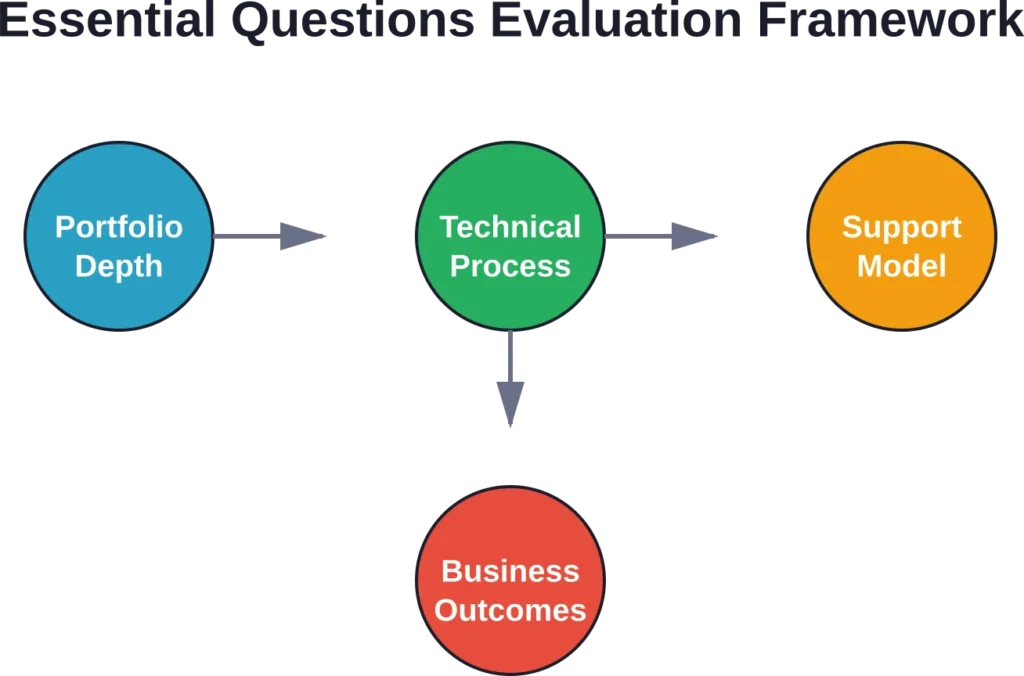
The evaluation process shouldn’t stop at reviewing portfolios. The right questions help you understand whether an agency truly fits your needs and can deliver on their promises.
Can You Show Real Estate Projects Similar to Mine?
Portfolio depth matters more than portfolio breadth in this context. An agency that’s built 20 real estate sites understands the nuances better than one that’s built 100 sites across random industries with only two being real estate.
Look for projects that match your scale and complexity. If you’re an independent agent, an agency that only works with national brokerages might not be the right fit. If you’re building a custom property portal, agencies that primarily do template-based agent sites won’t have the technical depth you need.
What’s Your Process for IDX Setup and Customization?
This question quickly reveals experience level. Agencies that have done this before will walk you through the process confidently: selecting an IDX provider if you don’t have one, handling the MLS approval process, customizing the search interface, and setting up automated data feeds.
Agencies new to real estate often underestimate IDX complexity. That leads to timeline delays, unexpected costs, and frustration when things don’t work as smoothly as promised.
How Do You Handle Ongoing Maintenance and Updates?
Real estate websites require ongoing attention. MLS feeds need monitoring, plugins require updates, security patches need implementation, and content needs refreshing. Some agencies include maintenance in their project scope, others require separate retainer agreements.
Understand what’s included and what costs extra. Also ask about response times for urgent issues—if your site goes down or the IDX feed breaks, waiting three days for a response isn’t acceptable.
What Metrics Will You Track to Measure Success?
Beyond launching a website that looks good, how will the agency measure whether it’s actually working? Traffic, lead generation, conversion rates, page speed, search rankings, and user engagement all tell different parts of the story.
Agencies that focus on business outcomes rather than just deliverables tend to produce better results. They should be thinking about how the website contributes to your business goals and how to measure that contribution.
Can You Integrate with My Existing Tech Stack?
Most real estate businesses already use CRM systems, email marketing platforms, transaction management software, and other tools. The website needs to integrate with these systems rather than existing in isolation.
Ask specifically about integration capabilities with your existing tools. Some integrations are straightforward, others require custom API work. Understanding this upfront prevents surprises during implementation.
Development Timeline Expectations
Real estate website projects vary dramatically in timeline depending on complexity. A template-based agent site might launch in 4-6 weeks. A fully custom brokerage platform could take 4-6 months or longer.
Understanding realistic timelines helps set appropriate expectations. Agencies that promise unrealistically fast delivery often cut corners or over-promise and under-deliver.
Discovery and Planning Phase
Good projects start with discovery. This is where the agency learns about your business model, target audience, competitive positioning, and specific requirements. They should audit your existing site if you have one, review your current tech stack, and understand your growth objectives.
This phase typically takes 1-2 weeks for smaller projects, longer for complex builds. Rushing through discovery leads to miscommunication and scope creep later. Better to invest the time upfront getting alignment on goals and requirements.
Design Phase
Design timelines depend on whether you’re working with templates, semi-custom designs, or fully custom work. Template-based approaches can move quickly—sometimes just a few days to customize branding and content layouts.
Custom design takes longer. Expect 2-4 weeks for initial concepts, revisions, and finalization. This includes homepage design, interior page templates, mobile layouts, and style guides that developers will use during build.
The design phase should include stakeholder feedback loops. If multiple decision-makers need to weigh in, factor that coordination time into the schedule.
Development and Integration
Development is where designs become functional websites. For real estate sites, this includes implementing the design, integrating IDX functionality, building custom features, connecting CRM systems, and setting up analytics tracking.
Development timelines range from 3-6 weeks for straightforward projects to 3-4 months for complex custom builds. IDX integration alone can add a week or two depending on MLS approval processes and data feed setup.
Testing happens throughout development but intensifies as launch approaches. This includes browser testing, mobile device testing, form validation, search functionality, and lead capture workflows.
Content Migration and SEO Setup
If you’re replacing an existing site, content needs to migrate to the new platform. This includes property listings, blog posts, pages, images, and documents. Depending on volume, migration can be quick or consume significant time.
SEO setup includes implementing redirects from old URLs to new ones, configuring schema markup, setting up search console, and ensuring technical SEO elements are in place. Skipping this work means losing existing search rankings when the new site launches.
Training and Launch
Before launch, you need training on how to manage the new site. This covers adding listings, updating content, managing leads, and handling routine administrative tasks. Good agencies provide documentation and training sessions rather than just handing over login credentials.
Launch itself requires coordination: DNS updates, final testing on the live server, monitoring for issues, and being available to address any problems that surface once real users start interacting with the site.
Red Flags to Watch for When Evaluating Agencies
Not every agency is a good fit, and some warning signs should make you pause before committing to a project.
No Real Estate Portfolio Examples
If an agency can’t show you real estate projects they’ve completed, that’s a red flag. Real estate websites have specific requirements that generalist developers often underestimate. The learning curve happens on your project, which means delays, budget overruns, and frustration.
Unclear Pricing or Scope
Professional agencies provide clear proposals that outline scope, deliverables, timeline, and costs. Vague proposals or reluctance to commit details in writing suggests either inexperience or intentional ambiguity that leads to scope creep and surprise charges later.
Over-Promising Results
Be wary of agencies that guarantee specific traffic numbers or lead volumes. While good design and technical execution improve results, many factors outside the agency’s control affect those metrics. Agencies making unrealistic promises either don’t understand digital marketing or are being deliberately misleading.
No Process Documentation
Ask about their development process. Established agencies have documented methodologies, project management systems, and clear communication protocols. Lack of process suggests you’ll be their guinea pig as they figure things out.
Poor Communication During Sales
How an agency communicates during the sales process is how they’ll communicate during the project. Slow responses, missed calls, or confusion during initial discussions will amplify once you’re in the middle of a project with deadlines and dependencies.
The Technology Landscape in Real Estate Development
Understanding the technology choices agencies make helps evaluate their technical approach and whether it aligns with your needs and future plans.
Platform Choices: WordPress vs. Custom Solutions
WordPress dominates the real estate website market, and for good reason. It’s flexible, cost-effective, has extensive plugin ecosystems including multiple IDX solutions, and most clients can learn to manage content without developer assistance.
But WordPress isn’t the only option. Some agencies build on proprietary platforms that offer tighter integration and more control but less flexibility. Others use frameworks like React or Vue.js for highly custom applications that need capabilities beyond traditional CMS platforms.
The right choice depends on your needs. WordPress works well for most agent and brokerage sites. Custom solutions make sense for property portals, marketplace platforms, or businesses with unique requirements that plugins can’t address.
IDX Providers and Integration Methods
IDX integration typically happens through specialized providers like IDX Broker, Diverse Solutions, or WP Engine’s Real Estate Portal. Each has different feature sets, pricing models, and integration quality.
Some agencies have preferred IDX partnerships that give them better support and integration capabilities. Others work with whatever provider the client already uses. Understanding these relationships helps predict how smooth the integration process will be.
CRM and Marketing Automation Integration
According to the REALTOR® Technology Survey, social media remained the top lead-generating technology (39%), followed by Customer Relationship Management (CRM) (23%), and local MLS (17%). Integration between the website and CRM ensures leads captured online flow immediately into follow-up workflows.
Popular real estate CRM platforms include Follow Up Boss, LionDesk, and kvCORE. The website should integrate with these systems via API connections rather than relying on manual data entry or email notifications that create extra work.
Hosting and Infrastructure Considerations
Where the website lives matters for performance, security, and reliability. Shared hosting plans rarely provide the resources real estate sites need, especially those with significant traffic and comprehensive listing databases.
Many agencies include hosting as part of their offering, often using managed WordPress hosts like WP Engine or Kinsta that specialize in performance and security. Others leave hosting to the client, which saves money but requires technical management.
| Technology Decision | Common Options | Key Considerations |
|---|---|---|
| Platform | WordPress, Custom Framework, Proprietary | Flexibility vs. control, content management ease, long-term scalability |
| IDX Provider | IDX Broker, Diverse Solutions, iHomefinder | Feature set, compliance, integration quality, ongoing costs |
| CRM Integration | Follow Up Boss, LionDesk, kvCORE | API availability, lead routing logic, automation capabilities |
| Hosting | Managed WordPress, VPS, Cloud Platform | Performance, security, backup systems, support quality |
How Real Estate Website Needs Differ by Business Type
Not all real estate businesses need the same website architecture. Requirements vary significantly based on business model and scale.
Independent Agent Websites
Solo agents need websites that establish credibility, showcase their local expertise, and capture leads from property searches. The site functions as a personal brand hub and lead generation tool.
Key features include IDX integration for listing search, lead capture forms, testimonials and social proof, neighborhood guides, and blog content that demonstrates market knowledge. The design should reflect the agent’s personal brand and target market positioning.
Solo agents typically have smaller budgets and need the most cost-effective solutions that still deliver professional results. Template-based approaches with customization often make sense for this segment.
Team Websites
Real estate teams need websites that showcase the team brand while also featuring individual agents. The architecture gets more complex with multiple agent profiles, team versus individual listings, and lead routing logic that distributes inquiries appropriately.
Team sites often include agent portals where team members can manage their own profiles and listings. They need flexible lead assignment workflows based on geography, property type, or agent availability.
Brokerage Platforms
Brokerages with dozens or hundreds of agents need robust platforms that support multiple users, extensive listing inventories, and sophisticated lead management. These sites are often closer to web applications than traditional websites.
Features include agent onboarding and management, office location pages, career sections for recruiting, training resources, and back-office functionality. IDX integration needs to handle much larger data volumes and provide filtering by office or agent.
Brokerage projects require agencies with experience at this scale. The technical requirements and project complexity exceed what agencies focused on individual agent sites can typically handle.
Property Developer Sites
Real estate developers building new construction need websites that showcase specific projects rather than comprehensive market listings. The focus shifts to visual storytelling, project details, amenities, location highlights, and sales center integration.
These sites often include interactive site maps, floor plan galleries, availability tracking, and reservation systems. The design tends toward brand-heavy presentations that match the premium positioning of new developments.
Emerging Trends in Real Estate Web Development
The real estate technology landscape continues evolving. Agencies staying current with these trends are better positioned to build sites that remain competitive and functional over time.
AI-Powered Features
Artificial intelligence is making its way into real estate websites through chatbots that qualify leads, recommendation engines that suggest properties based on search behavior, and automated property valuations. Industry reports indicate AI tools for real estate are reshaping how agents interact with technology and clients.
These features can improve user experience and lead conversion when implemented thoughtfully. The key is ensuring AI augments rather than replaces human interaction—home buying still requires personal relationships and expertise.
Enhanced Visual Experiences
Property presentation continues getting more sophisticated with 3D tours, drone photography, and virtual staging becoming standard expectations rather than luxury features. According to the REALTOR® Technology Survey (2025), 33% of respondents found AI to have a moderately positive impact on their business, while 59% of agents use emerging technology but are still learning.
Websites need the technical architecture to deliver these rich media experiences without sacrificing performance. That means optimized video delivery, responsive image systems, and third-party integration with tour providers like Matterport.
Hyper-Local Content
Search engines increasingly prioritize local relevance, and buyers want detailed information about neighborhoods, schools, amenities, and community characteristics beyond just property specs.
Advanced sites now include neighborhood pages with local data visualization, school ratings, walkability scores, commute time calculators, and local business directories. This content serves both SEO and user experience goals.
Privacy and Compliance
Data privacy regulations continue expanding, and real estate sites need to handle user data responsibly. That includes cookie consent management, clear privacy policies, data deletion capabilities, and secure handling of personal information submitted through forms.
MLS rules also continue evolving regarding how listing data can be displayed and used. Agencies need to stay current with these requirements to ensure client sites remain compliant.
Frequently Asked Questions
Development costs vary dramatically based on complexity and customization level. Based on industry data from multiple regions, real estate web development projects range from $15,000-$60,000 in markets like India to $50,000-$250,000 in markets like the United States and Australia. Template-based solutions cost less but offer less customization, while fully custom platforms command higher budgets but deliver unique functionality. The investment should align with business size and growth objectives—independent agents need different solutions than national brokerages.
MLS (Multiple Listing Service) is the database where real estate listings are stored and managed by local realtor associations. IDX (Internet Data Exchange) is the system that allows MLS data to be displayed on individual agent and brokerage websites. Think of MLS as the source database and IDX as the technology that enables you to show that data on your site while maintaining compliance with MLS rules about data display and attribution.
Timeline depends heavily on project scope. A template-based agent site with standard IDX integration can launch in 4-8 weeks. Semi-custom designs with moderate feature complexity typically take 8-12 weeks. Fully custom brokerage platforms or property portals may require 4-6 months or longer. The phases include discovery and planning, design, development, IDX integration and testing, content migration, and launch preparation. Agencies should provide detailed timeline estimates during the proposal stage.
Yes, and that should be a standard expectation. Professional development agencies build sites on content management systems like WordPress that allow clients to update most content without developer assistance. IDX listings typically update automatically from MLS feeds, but you should be able to add blog posts, update pages, manage images, and perform routine content updates yourself. Good agencies provide training and documentation to ensure you’re comfortable with these tasks.
Real estate sites need regular attention beyond content updates. Technical maintenance includes security updates for the CMS and plugins, IDX feed monitoring to catch data sync issues, backup management, performance optimization as content grows, and compatibility testing when browsers update. Most agencies offer maintenance plans or retainer arrangements to handle these technical tasks. Budget for ongoing maintenance as an operational expense rather than viewing the website as a one-time investment.
Website builders like Agent Image, Real Geeks, or Placester offer faster, more affordable deployment with pre-built real estate features and hosting included. Custom development provides greater flexibility, unique functionality, and complete control over design and features. Builders work well for agents and small teams who want proven solutions quickly. Custom development makes sense when you need differentiation, have specific feature requirements, or plan to build proprietary technology as a competitive advantage. Consider budget, timeline, technical requirements, and long-term growth plans when deciding.
Mobile optimization is absolutely critical—industry research shows over 97 percent of home buyers use the internet during property searches, with the majority of that activity happening on mobile devices. Search engines like Google now use mobile-first indexing, meaning they primarily use the mobile version of your site for ranking purposes. Beyond SEO, the user experience on mobile directly impacts lead generation. Forms, property search, image galleries, and contact features must work seamlessly on phones and tablets or potential leads will simply move on to competitors with better mobile experiences.
Making Your Final Decision
Choosing a web development agency is ultimately about fit. The agency needs the right technical capabilities, real estate experience, and working style that aligns with how your business operates.
Start by clarifying your own requirements. What functionality do you absolutely need? What’s your timeline? What’s your budget range? What does success look like six months after launch?
Use those criteria to evaluate the agencies on this list and others you discover. Review portfolios critically—do their previous projects demonstrate the capabilities you need? Talk to references and ask specific questions about their experience working with the agency.
Consider the relationship beyond the initial project. Websites aren’t static deliverables—they require ongoing optimization, updates, and improvements. Does the agency offer long-term support? Are they responsive and communicative? Can you envision working with them for years rather than just months?
And remember that the most expensive agency isn’t necessarily the best fit, nor is the cheapest necessarily a bargain. Value comes from the combination of expertise, deliverables, and results. An agency that costs more but delivers a website that generates twice as many leads provides far better ROI than a bargain-basement option that looks good but doesn’t convert.
The real estate industry continues becoming more digital and competitive. Your website isn’t just an online business card anymore—it’s often the first impression potential clients have of your business and a critical lead generation tool that can make or break your growth trajectory.
Invest the time to find the right development partner. Ask the tough questions. Review portfolios thoroughly. Check references. And choose an agency that understands both the technology and the real estate business equally well.
Ready to start your real estate web development project? Review the agencies above, explore their portfolios, and reach out to those that align with your needs and goals. The right website can transform your business—but only if you partner with developers who understand what it takes to succeed in real estate digital marketing.