
Quick Summary: The best general web development companies in 2026 include industry leaders like Lengreo, Gilzor, OSKI Solutions, A-listware, Mobian Studio, Digital Silk, Clay, Lounge Lizard, Prismetric, Code and Theory, Duck Design, Instrument, Basic Agency (DEPT), Fantasy, and Ueno. These agencies excel in building scalable websites, web applications, and digital experiences across industries from SaaS and eCommerce to enterprise and nonprofit sectors, with expertise spanning modern technologies, user experience design, and strategic development approaches.
Finding the right web development partner can make or break a digital project. The landscape of web development companies has evolved dramatically, with agencies now offering everything from simple WordPress sites to complex web applications powered by cutting-edge technologies.
But here’s the thing—not all web development companies are created equal. Some excel at eCommerce platforms, others specialize in SaaS products, and still others focus on enterprise-level applications. The challenge isn’t finding a web development company; it’s finding the right one for the specific project at hand.
This guide breaks down the top 15 general web development companies that have consistently delivered exceptional results across multiple industries and project types. These aren’t niche specialists—they’re versatile agencies that can handle diverse requirements while maintaining high standards of execution.
What Makes a Web Development Company Stand Out in 2026
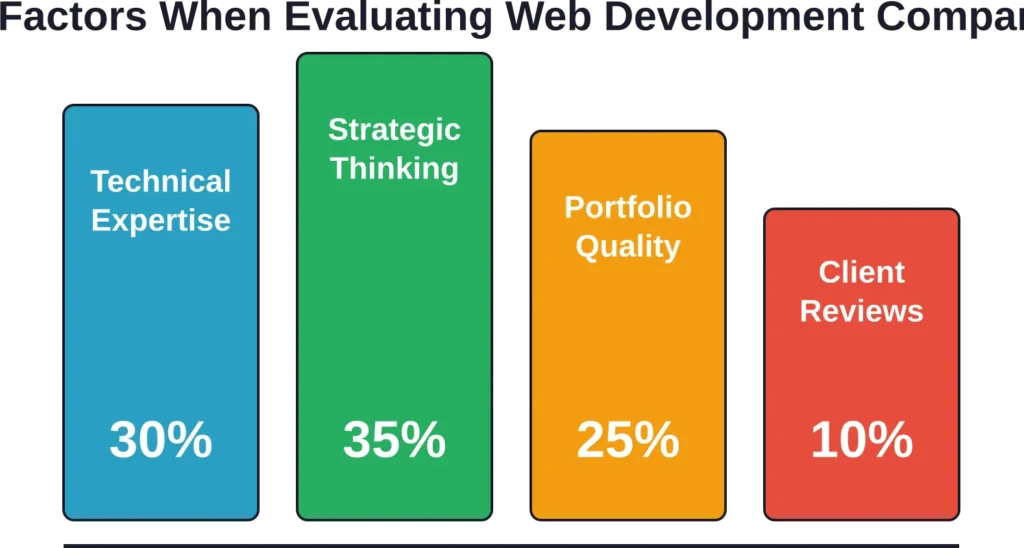
The web development industry has matured significantly. The most successful agencies typically share several common characteristics that separate them from average providers.
Technical expertise remains foundational. The best web development companies maintain in-house teams proficient in modern frameworks like React, Angular, Vue.js, and backend technologies including Python, PHP, Laravel, and Node.js. They don’t just follow trends—they understand when to apply specific technologies to solve real business problems.
But technical skill alone doesn’t define excellence. The top agencies combine development prowess with strategic thinking, user experience design, and a deep understanding of how websites and web applications drive business outcomes.
The Shift Toward Product-First Development
Many leading agencies now approach web development through a product lens rather than a purely technical one. This means thinking about scalability, user experience, and long-term maintenance from day one.
The best firms don’t just build what clients ask for—they question requirements, propose alternatives, and ensure the final product serves actual user needs. This consultative approach has become a hallmark of premium web development services.
Top 15 Web Development Companies: Detailed Breakdown
The following agencies represent the best general web development companies operating in 2026. Each has demonstrated excellence across multiple project types, industries, and technical requirements.
1. Gilzor
Gilzor specializes in custom software development with a strong emphasis on web and mobile solutions that help startups launch successfully and established businesses scale efficiently. The company creates digital products designed to attract users, investors, and revenue.
The agency follows a structured product-first methodology that includes idea validation, business analysis, UI/UX design, development, and go-to-market strategy. This end-to-end process minimizes risk and ensures the final product meets real market needs.
Gilzor’s team delivers full-cycle web development services from initial research through testing, deployment, and post-launch maintenance. They excel at building scalable, secure, and high-performance web applications using modern technologies and user-centric design principles.
Their portfolio includes web platforms for airlines, eCommerce grocery solutions, and interactive product studio tools. Clients value Gilzor’s ability to deliver functional, attractive products that connect effectively with target audiences while supporting long-term business growth.
Contact Information:
- Website: www.gilzor.com
- Email: [email protected]
- Address: Poland, Warsaw, Office 58, street Adama Mickiewicza 37, 01-625
- LinkedIn: www.linkedin.com/company/gilzor-softwaredevelopment
2. Oski
Oski builds smart, well-engineered software solutions for tech-forward enterprises and ambitious startups. The company focuses on designing, developing, and maintaining robust digital platforms that drive operational efficiency and innovation.
What distinguishes Oski is its commitment to quality engineering combined with AI-accelerated development and flexible cloud architectures. Projects begin with thorough understanding of business goals before moving into design, implementation, and ongoing optimization.
The agency offers comprehensive frontend and full-stack capabilities, including modern JavaScript frameworks, responsive design, and seamless CMS integrations. Their solutions emphasize scalability, security, and exceptional user experiences across industries.
Oski serves sectors such as travel, logistics, eCommerce, education, fintech, and insurance. Clients praise the team’s strong project management, timely delivery, and ability to create reliable systems that support business transformation and growth.
Contact Information:
- Website: oski.site
- Phone: +48571282759
- Email: [email protected]
- Address: Kaupmehe tn 7, 10114 Tallinn, Estonia
- LinkedIn: www.linkedin.com/company/oski-solutions
3. A-Listware

A-Listware delivers software development and consulting solutions with a focus on building high-quality, secure, and responsive digital experiences. The company acts as a strategic partner that extends client teams to accelerate project delivery.
The agency emphasizes seamless integration, clear communication, and end-to-end management. Whether through dedicated development teams or custom software projects, A-Listware ensures solutions align precisely with business requirements and technical needs.
Their expertise covers web development, cloud applications, enterprise systems, UX/UI design, and modern architectures. The team works with a broad range of technologies to create scalable platforms that support both B2B and B2C operations.
A-Listware has completed projects across enterprise, SMB, and startup environments, including ERP, CRM, eCommerce, and custom web portals. Clients appreciate the agency’s reliability, technical depth, and focus on delivering solutions that integrate smoothly with existing infrastructure.
Contact Information:
- Website: a-listware.com
- Phone: +1 (888) 337 93 73
- Email: [email protected]
- Address: North Bergen, NJ 07047, USA
- LinkedIn: www.linkedin.com/company/a-listware
- Facebook: www.facebook.com/alistware
4. Mobian
Mobian builds dedicated engineering teams that deliver production-ready software on time and within budget. The European agency specializes in mobile and AI-powered web solutions for companies in IT, healthcare, fintech, and logistics.
The company operates through flexible outsourcing and outstaffing models, providing senior-level execution without the overhead of in-house hiring. Projects emphasize clean architecture, thorough documentation, and clear communication throughout the development lifecycle.
Mobian covers end-to-end web and product development, including scalable backends, APIs, cloud infrastructure, and seamless integrations. Their work focuses on systems that remain maintainable and performant as businesses grow.
The agency excels at legacy integration, AI-enhanced features, and domain-specific solutions that respect industry regulations and requirements. Clients benefit from dedicated teams, post-launch support, and architectures designed for long-term scalability and future expansion.
Contact Information:
- Website: mobian.studio
- Phone: [email protected]
- Address: Harju maakond, Tallinn, Kesklinnalinnaosa, Masina tn 22, 10113
- LinkedIn: www.linkedin.com/company/mobian-studio
5. Lengreo
Lengreo has positioned itself as a complete marketing and tech partner that combines digital strategy with hands-on website development. The agency builds high-converting websites, eCommerce platforms, and landing pages that drive measurable business growth.
What sets Lengreo apart is its results-driven approach focused on qualified lead generation and ROI. Rather than offering generic templates, the team starts with deep business analysis, discovery, and custom strategy tailored to each client’s objectives.
Lengreo handles full-cycle website development from prototyping and design to implementation, quality assurance, and ongoing support. Their expertise covers modern web technologies, SEO-optimized structures, and conversion-focused architectures that perform across devices.
The agency’s work spans B2B and B2C sectors including IT, architecture, and technology services. Clients consistently highlight Lengreo’s proactive communication, transparent reporting, and ability to deliver tangible outcomes such as increased client acquisition and significantly improved conversion rates.
Contact Information:
- Website: Lengreo.com
- Phone: +31 686 147 566
- Email: [email protected]
- Address: Vrijstraat 9 C/D, 5611 AT Eindhoven, Netherlands
- LinkedIn: Lengreo
- Twitter: @Lengreo
- Instagram: @lengreo
6. Duck Design
Duck Design brings a product design mentality to web development. The agency specializes in creating websites and web applications for startups and growing companies, with particular strength in the SaaS and technology sectors.
The company’s development process is deeply collaborative, involving clients in regular design reviews and working sessions. This approach ensures the final product aligns with business goals while incorporating user feedback gathered throughout development.
Duck Design’s technical expertise covers modern web frameworks, responsive design, and progressive web app technologies. The agency emphasizes performance optimization, ensuring websites load quickly even on slower connections and less powerful devices.
What distinguishes Duck Design is its focus on conversion optimization. The team doesn’t just build attractive websites—they architect user flows designed to guide visitors toward specific actions, whether that’s signing up for a trial, requesting a demo, or making a purchase.
7. Instrument

Instrument has built a reputation for creating distinctive digital experiences that push creative boundaries while maintaining technical excellence. The agency works with brands that want to stand out rather than blend in.
The company’s projects often feature sophisticated animations, custom interactions, and unique visual treatments. But these creative elements aren’t just decoration—they serve strategic purposes, guiding user attention and enhancing usability.
Instrument’s development team possesses strong expertise in front-end technologies, animation libraries, and performance optimization. The agency has mastered the challenge of creating visually rich websites that still load quickly and run smoothly across devices.
The agency’s portfolio includes work for major brands in technology, fashion, entertainment, and other industries where brand expression matters as much as functionality. Instrument excels when projects demand both technical sophistication and creative innovation.
8. Basic Agency (DEPT)
Basic Agency, now part of the larger DEPT network, combines boutique agency creativity with the resources of a global organization. The company specializes in digital experiences for brands in fashion, beauty, lifestyle, and culture.
The agency’s approach to web development emphasizes storytelling and brand expression. Websites aren’t just functional tools—they’re extensions of brand identity that need to convey personality and values alongside information and features.
Basic Agency’s technical capabilities include custom CMS development, eCommerce platforms, and content-rich editorial websites. The team has particular expertise in creating mobile-first experiences that work beautifully across screen sizes.
Client relationships tend to be long-term, with Basic Agency often serving as an ongoing digital partner rather than a one-off vendor. This continuity allows the agency to refine and evolve websites over time based on performance data and changing business needs.
9. Fantasy
Fantasy creates websites and digital products that combine exceptional craft with strategic thinking. The agency works primarily with innovative brands and companies that value design quality and aren’t afraid to try new approaches.
The company’s development process emphasizes prototyping and iteration. Rather than locking down every detail upfront, Fantasy builds working prototypes early, tests them with users, and refines based on actual behavior rather than assumptions.
Fantasy’s technical stack favors modern, flexible technologies that enable rapid iteration. The agency has expertise in headless CMS architectures, API-first development, and component-based design systems that make it easier to maintain consistency across large websites.
The agency’s portfolio demonstrates versatility across industries and project types. Fantasy has delivered everything from marketing websites and brand platforms to web applications and interactive experiences.
10. Ueno
Ueno rounds out this list with a focus on creating digital products that people genuinely enjoy using. The agency approaches web development as product development, emphasizing user experience and long-term product thinking.
The company’s process involves close collaboration between designers and developers from project inception. This integration prevents common problems where beautiful designs prove technically impractical or where technical limitations constrain creative possibilities.
Ueno’s development expertise spans web applications, mobile-responsive websites, and progressive web apps. The team favors modern JavaScript frameworks and has deep experience with React, Vue, and similar technologies.
What clients appreciate most is Ueno’s ability to balance aesthetics with functionality. Websites don’t just look good—they work intuitively, load quickly, and provide smooth experiences across devices and browsers.
11. Digital Silk
Digital Silk has established itself as one of the most versatile web development agencies in the industry. The company specializes in custom website design and development for brands that need more than template solutions.
What sets Digital Silk apart is its focus on creating websites that actually convert. The agency approaches each project with a strategic mindset, conducting thorough research into target audiences and competitive landscapes before writing a single line of code.
The team handles everything from branding and UX design to full-stack development and ongoing optimization. Their portfolio spans industries including healthcare, finance, technology, and consumer goods, demonstrating adaptability across sectors.
Digital Silk’s development capabilities cover modern JavaScript frameworks, content management systems, and custom web applications. The agency has built a reputation for delivering projects that not only look polished but also perform well in terms of speed, accessibility, and search engine optimization.
12. Clay
Clay operates at the intersection of design and technology, creating websites and digital products for some of the world’s most recognized brands. The agency’s work is characterized by exceptional attention to detail and innovative interactions.
The company takes a product-first approach to web development, treating websites as digital products that need to scale and evolve over time. This philosophy results in architectures that remain flexible and maintainable long after launch.
Clay’s team includes designers, developers, strategists, and product managers who collaborate closely throughout the development process. This integrated approach prevents the common disconnect between design vision and technical execution.
Their technical stack emphasizes modern, performant solutions. The agency has particular expertise in headless CMS architectures, React-based applications, and custom backend systems that can handle complex business logic.
13. Lounge Lizard
Lounge Lizard has been delivering web development services for over two decades, evolving alongside the industry while maintaining consistent quality. The agency describes itself as a “brandtenders” firm—mixing strategy, creativity, and technology to create distinctive digital experiences.
The company offers end-to-end services spanning web design, development, mobile apps, and digital marketing. This comprehensive capability allows clients to work with a single partner across their entire digital ecosystem.
Lounge Lizard’s development team works with a wide range of technologies and platforms, from enterprise content management systems to custom web applications. The agency has particular strength in eCommerce development, having built numerous online stores that handle high transaction volumes.
What clients consistently praise is the agency’s communication and project management. Lounge Lizard maintains transparency throughout development, providing regular updates and involving stakeholders in key decisions without overwhelming them with technical jargon.
14. Prismetric
Prismetric is a web development company with 14+ years of experience building highly scalable websites and portals. The agency maintains in-house experts proficient in the latest technologies including Python, PHP, Laravel, ReactJS, and Angular.
Prismetric excels in crafting end-to-end solutions for customers around the world, providing customized website development that addresses specific business requirements rather than forcing clients into predefined templates.
The agency’s expertise spans eCommerce platforms, enterprise web applications, and custom portals. Their development process emphasizes scalability and performance, ensuring websites can handle growth in traffic and functionality without requiring complete rebuilds.
Client feedback highlights Prismetric’s ability to deliver complex projects on schedule. The agency maintains structured development workflows that balance agility with predictability—an important combination for businesses with firm launch deadlines.
15. Code and Theory
Code and Theory represents the enterprise tier of web development agencies. The company works primarily with large brands and organizations that need sophisticated digital experiences backed by robust technical infrastructure.
The agency’s approach combines strategic consulting with hands-on development. Projects typically begin with discovery phases that examine business objectives, user needs, and technical constraints before moving into design and implementation.
Code and Theory’s development capabilities extend beyond standard websites to include custom web applications, digital platforms, and complex integrations with existing enterprise systems. The team has deep experience with APIs, microservices architectures, and cloud infrastructure.
The agency has completed projects for major brands across retail, media, financial services, and other sectors. Their work often involves not just building new experiences but also modernizing legacy systems and migrating content from outdated platforms.
How These Companies Approach Web Development Projects
Understanding how top agencies structure their development processes provides insight into what separates excellent work from average execution.
Discovery and Strategy Phases
The best web development companies don’t jump straight into coding. They begin with discovery—research phases that examine business goals, user needs, competitive context, and technical requirements.
This upfront investment prevents costly mid-project pivots when teams realize initial assumptions were wrong. Discovery typically includes stakeholder interviews, user research, technical audits of existing systems, and competitive analysis.
Strategy work translates research findings into concrete plans. What features does the website need? What’s the information architecture? How will content be organized? What integrations are required? These decisions happen before design or development begins.
Design and Prototyping
Design phases at top agencies involve more than creating static mockups. Teams build interactive prototypes that demonstrate how interfaces will actually function, allowing stakeholders to experience the future website before development begins.
This prototyping approach catches usability issues early when they’re inexpensive to fix. It also ensures alignment between stakeholders—everyone can see and interact with the proposed solution rather than trying to imagine it from static images.
Modern design processes also establish design systems—reusable components and patterns that maintain consistency across the website while making development more efficient.
Development and Quality Assurance
Development at professional agencies follows established best practices including version control, code reviews, automated testing, and continuous integration. These aren’t just nice-to-haves—they’re essential for maintaining quality on complex projects.
Quality assurance happens continuously rather than only at the end. Developers test their own code, automated tests catch regressions, and dedicated QA specialists perform comprehensive testing across browsers and devices.
The best agencies maintain staging environments where clients can review work in progress. This transparency prevents surprises at launch and allows for course corrections throughout development.
Launch and Post-Launch Support
Launch isn’t the end—it’s a transition point. Professional agencies plan launches carefully, including deployment checklists, rollback plans, and monitoring to catch any issues quickly.
Post-launch support typically includes a stabilization period where the agency remains actively engaged to address any issues that emerge with real users and real content. Many agencies also offer ongoing maintenance, updates, and optimization services.
Key Technologies and Platforms
The top web development companies work with a diverse range of technologies, selecting tools based on project requirements rather than defaulting to favorites.
Front-End Frameworks
React remains the dominant front-end framework, used extensively by agencies building interactive web applications and component-based websites. Its ecosystem, performance characteristics, and developer availability make it a practical default choice.
Vue.js has gained traction for projects where React feels like overkill. The framework’s gentler learning curve and excellent documentation make it attractive for certain project types.
Angular maintains its position primarily in enterprise contexts where TypeScript, strong conventions, and comprehensive tooling provide advantages for large teams.
Back-End Technologies
Node.js enables JavaScript across the full stack, a major advantage for teams where front-end specialists can also work on server-side code. The platform’s performance and scalability suit most web application requirements.
PHP remains enormously important, particularly for WordPress, Laravel, and other popular platforms. Despite predictions of its demise, PHP continues powering a substantial portion of the web.
Python has become increasingly popular for web development, particularly for data-intensive applications and projects requiring machine learning integration. Frameworks like Django and Flask provide solid foundations.
Content Management Systems
WordPress dominates the CMS landscape for good reasons—it’s mature, flexible, and has an enormous ecosystem of plugins and themes. The best agencies build custom WordPress solutions rather than relying solely on themes.
Headless CMS platforms like Contentful, Sanity, and Strapi have gained significant traction. These systems separate content management from presentation, enabling omnichannel strategies and more flexible architectures.
For enterprise needs, platforms like Adobe Experience Manager and Sitecore provide comprehensive features—though at significantly higher complexity and cost.
| Technology Category | Popular Options | Best Use Cases |
|---|---|---|
| Front-End Frameworks | React, Vue.js, Angular | Interactive web apps, component-based sites |
| Back-End Languages | Node.js, PHP, Python | API development, server-side logic |
| CMS Platforms | WordPress, Contentful, Sanity | Content-driven websites, marketing sites |
| eCommerce | Shopify, WooCommerce, Magento | Online stores, product catalogs |
| Hosting/Infrastructure | AWS, Vercel, Netlify, DigitalOcean | Deployment, scaling, performance |
What to Look for When Hiring a Web Development Company
Selecting the right agency requires evaluating multiple factors beyond just portfolio quality.
Portfolio Relevance
Look for work similar to the intended project. An agency with a beautiful portfolio of brand websites might not be the best choice for a complex web application, and vice versa.
Pay attention to the diversity of work. Agencies that show range across industries and project types tend to be more adaptable. But also look for depth—evidence that the agency has solved similar problems before.
Don’t just look at aesthetics. Consider performance, functionality, and business outcomes. The prettiest website isn’t worth much if it doesn’t achieve its goals.
Technical Capabilities
Verify that agencies possess expertise in relevant technologies. If the project requires React development, make sure the agency has React specialists—not just developers who’ve dabbled with it.
Ask about technical architecture and decision-making processes. Good agencies can explain why they recommend specific technologies and approaches, not just what they’ll use.
Consider ongoing technical support. Websites require maintenance, updates, and occasional troubleshooting. Agencies that offer long-term relationships provide more value than those focused only on initial launches.
Process and Communication
Understanding an agency’s process reveals how they work. Structured processes with clear milestones provide predictability. Agile approaches offer flexibility. Neither is inherently better—what matters is alignment with project needs and organizational culture.
Communication style matters enormously. Some agencies provide detailed weekly reports. Others prefer frequent informal check-ins. Some excel at explaining technical concepts in plain language. Others assume technical literacy. Choose agencies whose communication style matches preferences.
Client References and Reviews
References provide invaluable insight into what working with an agency actually feels like. Ask specific questions: How did they handle challenges? Did they stay on budget? Were they responsive? Would the client hire them again?
Online reviews on platforms that verify client relationships offer additional perspective. Look for patterns in feedback—both positive and negative.
Industry Trends Shaping Web Development in 2026
The web development landscape continues evolving, with several trends influencing how the best agencies approach projects.
AI Integration
Artificial intelligence has moved from buzzword to practical tool. Agencies now incorporate AI features including personalization, chatbots, predictive analytics, and content generation into websites and web applications.
Companies like Nvidia, Microsoft, and Google have driven significant investment in AI infrastructure. According to industry analysis, Nvidia recently became the first company to hit a $5 trillion valuation on the back of the AI boom. This investment is trickling down to web development through better tools and more accessible AI capabilities.
The best agencies understand when AI adds genuine value versus when it’s unnecessary complexity. They implement AI features that solve actual user problems rather than including them for marketing purposes.
Performance Optimization
Website performance has become a critical competitive factor. Users expect instant loading, and search engines increasingly factor speed into rankings.
Top agencies obsess over performance metrics—time to first byte, largest contentful paint, cumulative layout shift, and other Core Web Vitals. They optimize images, minimize JavaScript, leverage caching, and employ numerous other techniques to make websites fast.
Performance isn’t just about initial load times. The best websites remain responsive during interactions, handle poor network conditions gracefully, and work well on less powerful devices.
Accessibility Standards
Web accessibility has shifted from nice-to-have to requirement. Legal considerations, ethical obligations, and user expectations all drive this change.
Professional agencies now build accessibility into projects from the start rather than treating it as a final checklist. This includes semantic HTML, proper heading hierarchies, keyboard navigation, screen reader compatibility, and adequate color contrast.
Accessibility benefits everyone, not just users with disabilities. Clear hierarchies, good contrast, and keyboard navigation make websites easier for all users.
Headless and Composable Architectures
Traditional monolithic platforms are giving way to composable architectures where best-of-breed services connect through APIs. Content management, eCommerce, search, analytics, and other functions come from specialized providers rather than all-in-one platforms.
This approach provides flexibility and prevents vendor lock-in. Businesses can swap out individual components without rebuilding everything. The trade-off is increased complexity—composable architectures require more technical sophistication to implement and maintain.
The best agencies help clients evaluate whether composable approaches make sense for their situations or whether traditional platforms remain more appropriate.
Common Web Development Project Challenges
Even with excellent agencies, web development projects face predictable challenges. Understanding these helps set realistic expectations.
Scope Creep
Scope creep—the gradual expansion of project requirements—threatens budgets and timelines. It usually happens gradually: “While we’re at it, could we also add…” requests that individually seem minor but cumulatively derail projects.
The best agencies manage scope carefully through detailed initial scoping, change request processes, and transparent communication about impacts. They help clients distinguish between must-have features and nice-to-have additions that can wait for future phases.
Content Delays
Content—copy, images, videos, product data—often arrives late or incomplete. Agencies can build perfect websites, but they can’t launch without content.
Smart agencies address this proactively by clearly defining content requirements, establishing deadlines, offering content strategy services, and maintaining realistic timelines that account for typical content-related delays.
Browser and Device Compatibility
Despite improvements in web standards, ensuring websites work across all browsers and devices remains challenging. Older browsers lack modern features. Mobile browsers have quirks. Screen sizes vary enormously.
Professional agencies test extensively across device and browser combinations. They also make informed decisions about support priorities—which older browsers warrant accommodation versus which have such small market share that support isn’t cost-effective.
Integration Complexity
Modern websites rarely exist in isolation. They integrate with CRM systems, marketing automation platforms, analytics tools, payment processors, and numerous other services.
Each integration adds complexity and potential failure points. APIs change, authentication breaks, and data formats shift. The best agencies account for integration complexity in project planning and build robust error handling.
Measuring Web Development Success
How do organizations know whether their web development project succeeded? Clear metrics provide answers.
Performance Metrics
Technical performance provides objective measurements. Load times, server response times, and Core Web Vitals scores indicate whether the website meets modern performance standards.
Tools like Google Lighthouse, WebPageTest, and Chrome DevTools provide detailed performance analysis. The best agencies deliver websites that score well on these metrics without sacrificing functionality or design quality.
User Experience Metrics
User behavior reveals how well websites actually work. Bounce rates, time on site, pages per session, and conversion rates all provide insight into user experience quality.
Good agencies establish baseline metrics before redesigns and track improvements afterward. They also implement analytics properly—configuring goals, events, and custom dimensions that capture meaningful interactions rather than just vanity metrics.
Business Outcomes
Ultimately, websites exist to achieve business goals. Lead generation websites should generate qualified leads. eCommerce sites should drive sales. Content platforms should engage audiences.
The best web development projects include clear success criteria tied to business objectives. Did the website increase conversions? Reduce support costs? Improve brand perception? These outcomes matter more than technical awards or aesthetic praise.
Working With International vs. Local Agencies
Organizations face choices between local agencies, national firms, and international providers. Each option offers distinct advantages.
Local Agencies
Local web development companies provide easy face-to-face collaboration, shared time zones, and cultural familiarity. For projects requiring frequent in-person meetings or deep local market knowledge, proximity matters.
Local agencies also understand regional business contexts, regulations, and user preferences. A UK agency understands GDPR compliance differently than an Asian firm, for example.
National and International Firms
Larger geographical reach often correlates with larger teams and broader capabilities. National and international agencies can staff projects with specialists in specific technologies or industries.
These firms often have established processes refined across hundreds of projects. They can scale teams up or down based on project phases. And they typically offer more comprehensive services—strategy, development, marketing, and ongoing optimization under one roof.
The trade-off is often less personal attention. Projects compete with numerous others for resources and executive attention.
The Future of Web Development Services
Several emerging trends will shape how web development companies operate in coming years.
Low-Code and No-Code Tools
Platforms like Webflow, Framer, and others enable sophisticated websites without traditional coding. This doesn’t eliminate the need for professional agencies—it shifts their role toward strategy, customization, and complex functionality that visual builders can’t achieve.
The best agencies embrace these tools where appropriate while maintaining coding capabilities for situations requiring custom solutions.
Sustainable Web Development
Environmental concerns are driving interest in sustainable web development—building websites that minimize energy consumption and carbon emissions. This involves optimization, efficient code, green hosting, and thoughtful design decisions.
Some agencies now offer carbon impact assessments and sustainable development practices as differentiators.
Voice and Conversational Interfaces
As voice assistants become ubiquitous, websites need to work in voice contexts. This requires rethinking content structure, navigation, and interaction patterns.
Forward-thinking agencies are exploring how to make web content accessible through voice interfaces without sacrificing visual experience quality.
Making the Final Decision
Choosing among excellent agencies requires weighing multiple factors against specific project needs.
Start by clarifying requirements. What does success look like? What capabilities are essential versus nice-to-have? What budget and timeline constraints exist?
Narrow the field to agencies with relevant experience and capabilities. Don’t just pick the biggest names—look for the best fit for the specific project.
Conduct thorough evaluations. Review portfolios carefully. Check references. Have detailed conversations about process, technology decisions, and project approach. Request proposals that demonstrate understanding of the project.
Consider chemistry and communication style. Technical skills matter, but so does working relationship quality. Choose agencies that communicate clearly, listen carefully, and demonstrate genuine interest in the project.
Trust matters enormously. The best agency partnerships involve trust on both sides—clients trusting agencies to make good decisions, and agencies trusting clients to provide necessary information and feedback.
Frequently Asked Questions
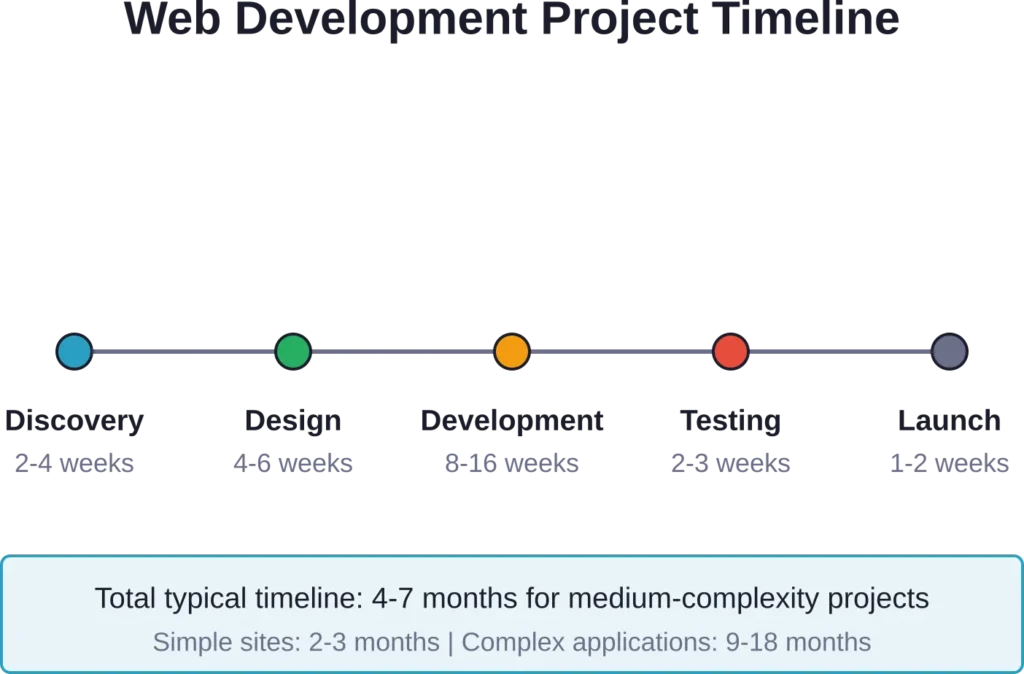
Project timelines vary significantly based on complexity. Simple marketing websites might take 2-3 months from kickoff to launch, including discovery, design, development, and testing. Medium-complexity projects with custom functionality typically require 4-7 months. Complex web applications can take 9-18 months or longer. The development phase alone usually spans 8-16 weeks for medium-complexity projects, with additional time for discovery, design, testing, and content preparation.
Web design focuses on the visual and experiential aspects—layouts, colors, typography, user interface elements, and overall aesthetic. Web development implements those designs in code, building the functional website or application. Development includes front-end work (the code that runs in browsers) and back-end work (server-side logic, databases, and APIs). The best agencies integrate design and development rather than treating them as separate sequential phases.
This depends on project complexity and ongoing needs. Specialist agencies excel in specific areas—SaaS products, eCommerce, or particular technologies—and may deliver better results for projects matching their expertise. Full-service agencies provide convenience and coordination across multiple disciplines like strategy, design, development, and marketing. For organizations needing comprehensive digital support, full-service firms often prove more practical than coordinating multiple specialists.
Review their portfolio for projects using relevant technologies. Ask specific technical questions about architecture, frameworks, performance optimization, and security. Request to speak with their technical lead or CTO, not just salespeople. Check whether they contribute to open-source projects or share technical knowledge through blogs or talks. Ask about their development processes, code quality standards, testing approaches, and how they stay current with technology changes.
Strong contracts specify project scope, deliverables, timeline, payment terms, intellectual property ownership, support and maintenance terms, change request procedures, testing and acceptance criteria, hosting and domain responsibilities, and what happens if the relationship ends. Contracts should also address confidentiality, liability limitations, and dispute resolution procedures. The best contracts protect both parties and set clear expectations rather than being one-sided legal documents.
Websites require ongoing attention—security updates, bug fixes, content updates, performance monitoring, and occasional feature additions. Neglected websites develop security vulnerabilities, break as dependencies update, and gradually decline in performance. Many agencies offer maintenance retainers covering routine updates and minor changes. Even without formal retainers, maintaining a relationship with the development agency makes future updates easier since they already understand the codebase.
Technically yes, but practically it’s expensive and disruptive. New agencies need time to understand the project, existing work, and codebase. Transitions typically set timelines back significantly. Before switching, attempt to resolve issues directly—most problems stem from communication gaps or misaligned expectations rather than incompetence. If switching becomes necessary, ensure clear documentation handoff and that code repositories, assets, and access credentials transfer completely. Prevention is better—choose carefully upfront and maintain open communication throughout.
Conclusion
The best web development companies combine technical excellence with strategic thinking, strong communication, and genuine partnership mindset. The 15 agencies highlighted here—Digital Silk, Clay, Lounge Lizard, Prismetric, Code and Theory, Duck Design, Instrument, Basic Agency (DEPT), Fantasy, and Ueno—represent different approaches and specialties but share consistently high execution standards.
Choosing the right agency requires looking beyond portfolio aesthetics to evaluate technical capabilities, relevant experience, process alignment, and cultural fit. The cheapest option rarely delivers the best value, nor does the most expensive necessarily guarantee success.
Success comes from clear requirements, honest communication, mutual trust, and agencies that approach web development as solving business problems rather than just writing code. The best partnerships extend beyond single projects to ongoing relationships where agencies become true digital partners invested in long-term success.
Whether building a marketing website, eCommerce platform, or complex web application, the right agency partner makes all the difference. Take time to evaluate options carefully, check references thoroughly, and choose agencies that demonstrate both technical capability and genuine understanding of the specific business context and goals.
Ready to start your web development project? Research these agencies, review their portfolios, and reach out to discuss how they might approach your specific needs. The right partner is out there—finding them is worth the effort.