

Quick Summary: The digital marketing and web development landscape in 2026 is dominated by agencies that blend technical expertise with strategic creativity. From full-service firms handling SEO, PPC, and content marketing to specialized web development shops crafting high-performance platforms, the top agencies share a commitment to measurable results, transparent communication, and staying ahead of rapidly evolving technology trends.
Finding the right digital marketing or web development partner can transform business outcomes. But here’s the thing—the agency world is crowded, and not every firm delivers what it promises.
The difference between mediocre results and exceptional growth often comes down to choosing a partner that understands both the technical foundation and the strategic vision needed to compete online.
This guide examines15 agencies that have earned recognition through consistent performance, client satisfaction, and demonstrated expertise across digital marketing and web development disciplines. These aren’t arbitrary selections—each company has proven capabilities in driving measurable business results.
What Defines a Top Digital Marketing and Web Development Agency
The agency landscape has undergone significant transformation. According to Forrester research, 85% of US B2C marketing executives plan to review their media agencies in 2026, signaling widespread dissatisfaction with traditional models.
The best agencies have adapted to these shifting expectations. They’ve moved beyond the old vendor model to become strategic partners that understand business objectives, not just execute tactics.
Core Capabilities That Matter
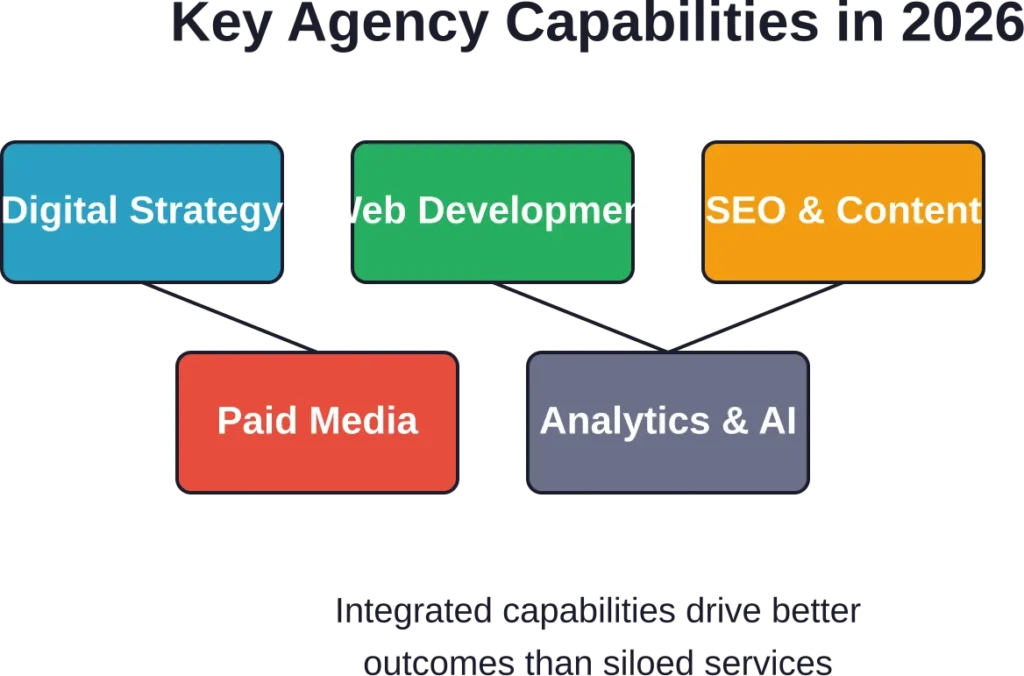
Top-tier agencies demonstrate proficiency across multiple disciplines. Digital marketing excellence requires mastery of SEO, paid media, content strategy, and social channels. Web development expertise means building scalable, secure platforms that perform under real-world conditions.
But technical skills alone don’t define excellence. The agencies that stand out deliver transparent reporting, maintain clear communication channels, and align their work with client business goals rather than vanity metrics.
Industry data shows substantial changes in agency economics. Agencies are restructuring their service models and consolidating capabilities as firms adapt to market demands.
The Technology Integration Challenge
Agencies face intense pressure to integrate emerging technologies. Generative AI tools have changed buyer behavior, with many purchase influencers reporting use of private genAI engines for purchasing decisions.
The best agencies aren’t chasing every new technology trend. Instead, they’re making strategic investments in capabilities that directly improve client outcomes, whether that’s AI-powered analytics, advanced automation platforms, or proprietary optimization tools.
The Top 15 Digital Marketing and Web Development Companies
These agencies represent diverse approaches, specializations, and market positions. Some excel in full-service digital marketing, while others focus on cutting-edge web development or specialized verticals.
What they share is demonstrated capability to deliver measurable business results.
1. Gilzor

Gilzor specializes in custom software development and digital product creation for startups and scaling businesses. The company helps clients validate ideas, design exceptional user experiences, and build secure, high-performance web and mobile applications.
What distinguishes Gilzor is their product-first mindset and commitment to delivering solutions that truly meet market needs. They combine technical excellence with strategic thinking to reduce risk and accelerate time to value.
Their services cover idea validation, business analysis, UI/UX design, mobile and web development, quality assurance, R&D, go-to-market strategy, and ongoing support. This full-cycle approach supports businesses from initial concept through launch and growth.
The company has developed strong capabilities in creating functional and attractive digital products across various industries. Their focus on user-centric design, scalable architecture, and continuous improvement helps clients achieve product-market fit and sustainable growth.
Contact Information:
- Website: www.gilzor.com
- Email: [email protected]
- Address: Poland, Warsaw, Office 58, street Adama Mickiewicza 37, 01-625
- LinkedIn: www.linkedin.com/company/gilzor-softwaredevelopment
2. Mobian Studio
Mobian Studio is a specialized software development partner focused on building dedicated engineering teams for mobile and AI solutions. The company helps IT, healthcare, fintech, and logistics companies deliver production-ready software on time and within budget.
What sets Mobian apart is their ability to eliminate hiring risks while maintaining senior-level execution. They offer two flexible models — full outsourcing with end-to-end delivery and outstaffing where engineers integrate directly into client teams.
Their service portfolio includes end-to-end product development, AI and automation systems, scalable architecture, legacy integration, and post-launch support. This comprehensive approach allows clients to accelerate delivery without managing multiple vendors.
Mobian has particular strength in complex domain-specific projects that require regulatory compliance, high scalability, and seamless integration with existing systems. Their teams deliver clean architecture, well-documented code, and clear communication throughout every engagement.
Contact Information:
- Website: mobian.studio
- Phone: [email protected]
- Address: Harju maakond, Tallinn, Kesklinnalinnaosa, Masina tn 22, 10113
- LinkedIn: www.linkedin.com/company/mobian-studio
3. A-Listware

A-Listware is a software development and consulting company that provides skilled teams and managed delivery for businesses requiring reliable technical execution. They help enterprises, SMBs, and startups scale their development capabilities efficiently.
What sets them apart is their focus on seamless team integration, quality delivery, and flexible engagement models that function as natural extensions of client organizations. They prioritize clear communication and consistent results.
Their service portfolio includes software development, application services, UX/UI design, testing and QA, IT consulting, dedicated development teams, data analytics, infrastructure, and cybersecurity. This wide range supports both project-based work and long-term partnerships.
A-Listware excels at delivering enterprise applications, ERP, CRM, HR systems, and other complex solutions that streamline operations and enable digital transformation. Their technical expertise spans cloud solutions, AI, machine learning, and full-spectrum software engineering services.
Contact Information:
- Website: a-listware.com
- Phone: +1 (888) 337 93 73
- Email: [email protected]
- Address: North Bergen, NJ 07047, USA
- LinkedIn: www.linkedin.com/company/a-listware
- Facebook: www.facebook.com/alistware
4. Oski
Oski builds smart, well-engineered software solutions for tech-forward enterprises and ambitious startups. The company focuses on cloud infrastructure, modern frontend experiences, artificial intelligence, and robust content management systems.
Their strength lies in delivering scalable, secure, and innovative digital platforms that help businesses operate more efficiently and compete effectively. Oski combines deep technical expertise with practical business understanding.
The firm offers comprehensive services across cloud solutions, frontend development, AI integrations, CMS implementations, and industry-specific applications. This breadth allows them to serve as a strategic technology partner rather than just a development vendor.
Oski has particular expertise in sectors such as travel, logistics, e-commerce, education, fintech, and insurance. They create tailored solutions that address unique industry challenges while maintaining high standards of performance and user experience.
Contact Information:
- Website: oski.site
- Phone: +48571282759
- Email: [email protected]
- Address: Kaupmehe tn 7, 10114 Tallinn, Estonia
- LinkedIn: www.linkedin.com/company/oski-solutions
5. Lengreo

Lengreo positions itself as a complete marketing and technology partner for B2B companies seeking measurable growth. The firm combines strategic digital marketing with technical implementation to drive qualified leads and business opportunities.
Their result-driven approach and deep focus on client success distinguish them from traditional agencies. Rather than offering pre-packaged solutions, Lengreo listens carefully to business needs and builds customized tactics that deliver real ROI.
The company provides a wide range of services including B2B digital marketing strategy, SEO, website development, paid advertising, lead generation, appointment setting, and demand generation. This full-spectrum capability enables them to support clients across the entire customer acquisition funnel.
Lengreo has built notable expertise in hyper-personalized outreach, LinkedIn campaigns, and conversion rate optimization. They excel at turning marketing efforts into tangible outcomes such as increased client acquisition and significantly improved lead quality.
Contact Information:
- Website: Lengreo.com
- Phone: +31 686 147 566
- Email: [email protected]
- Address: Vrijstraat 9 C/D, 5611 AT Eindhoven, Netherlands
- LinkedIn: Lengreo
- Twitter: @Lengreo
- Instagram: @lengreo
6. Excited Agency

Excited Agency approaches web design through a product-first lens, focusing on clarity, structure, and conversion rather than surface-level aesthetics. This philosophy shapes everything from initial strategy to final implementation.
The agency combines UX research, web design, branding, and motion design to create websites that scale with products and support long-term growth. Their process emphasizes understanding business models and user needs before jumping into visual design.
Excited has particular expertise in SaaS platforms and digital products where the website serves as both marketing tool and product education vehicle. They understand how to communicate complex value propositions clearly while maintaining design sophistication.
The team’s approach to information architecture ensures content organization supports user goals and business objectives. They map user journeys, identify friction points, and optimize paths to conversion.
Motion design capabilities allow Excited to incorporate sophisticated animations and interactions that enhance user experience without sacrificing performance. Their technical implementation ensures fast load times even with rich visual experiences.
7. Toptal
Toptal operates as a talent network connecting businesses with freelance software developers, designers, and project managers. Unlike traditional agencies, Toptal screens and vets independent professionals, then matches them with client projects.
This model provides flexibility for companies that need specific expertise for defined projects without committing to full-service agency relationships. Clients can scale teams up or down based on project requirements.
Toptal maintains rigorous screening processes for its talent network. The platform works well for companies that have internal project management capabilities but need additional technical resources. It’s less suited for businesses seeking strategic guidance or full-service agency partnerships.
Toptal professionals span web development, mobile development, design, and specialized technical domains. The network includes experts in specific frameworks, languages, and platforms, allowing precise matching to project requirements.
8. Cleveroad

Cleveroad focuses on custom software development with particular strength in web applications and mobile platforms. The company serves mid-market and enterprise clients across multiple industries.
Their technical team handles complex development projects requiring custom functionality, third-party integrations, and scalable architecture. Cleveroad brings engineering discipline to projects that need robust, maintainable code.
The company offers dedicated development teams that integrate with client organizations for long-term projects. This model works well for companies building proprietary platforms or applications that require sustained development effort.
Cleveroad’s process emphasizes requirements analysis and technical planning before development begins. This upfront investment reduces costly changes during implementation and ensures the final product meets specifications.
While Cleveroad provides some design capabilities, their core strength is technical development. Companies working with them typically either have design resources internally or partner with design-focused agencies for visual and UX work.
9. Intellectsoft

Intellectsoft specializes in enterprise software development, mobile applications, and emerging technology implementations including AI, blockchain, and IoT solutions. The company works with large organizations requiring sophisticated technical capabilities.
Their team handles projects at significant scale, building platforms that serve thousands or millions of users. Intellectsoft brings enterprise-grade engineering practices including security protocols, scalability planning, and compliance requirements.
The company has developed vertical expertise in industries including healthcare, financial services, retail, and logistics. This specialization allows them to navigate industry-specific regulations and technical requirements.
Intellectsoft’s approach emphasizes digital transformation consulting alongside technical implementation. They help organizations define technology strategies, assess current capabilities, and plan multi-phase implementations.
Projects often span months or years and involve substantial investment. Intellectsoft serves clients with complex requirements and budgets to match, rather than small businesses seeking basic website development.
10. ELEKS
ELEKS provides software engineering and technology consulting services with offices across Europe and North America. The company serves mid-market and enterprise clients requiring custom development, product engineering, and technology strategy.
Their service portfolio includes web applications, mobile platforms, data analytics solutions, and emerging technology implementations. ELEKS maintains technical expertise across modern development frameworks, cloud platforms, and integration architectures.
The company operates using dedicated team models for long-term projects and fixed-scope approaches for defined deliverables. This flexibility allows them to match engagement structure to client preferences and project characteristics.
ELEKS has invested significantly in quality assurance and testing capabilities. Their QA teams conduct comprehensive testing across functionality, performance, security, and compatibility dimensions.
The company works across industries including financial services, healthcare, retail, logistics, and media. Their broad industry experience allows them to bring cross-sector insights while respecting industry-specific requirements.
11. Codistan Ventures
Codistan Ventures has established itself as a global leader in custom software development, mobile applications, and digital marketing services. Founded in 2015, the company focuses on helping businesses stay competitive through scalable, high-performance digital solutions.
The firm’s commitment to quality, agility, and customer satisfaction distinguishes it from competitors. Codistan takes a comprehensive approach that combines technical development expertise with strategic digital marketing capabilities.
Their service portfolio spans custom web development, mobile app creation, and integrated digital marketing campaigns. This breadth allows them to serve as a single partner for companies requiring both technical infrastructure and marketing execution.
Codistan has built particular strength in delivering solutions for companies undergoing digital transformation. Their team understands the technical complexities of modern web platforms while maintaining focus on business outcomes.
12. SmartSites
SmartSites has earned recognition for excellence in SEO, PPC, email marketing, SMS campaigns, and social media management. The firm operates with a team of more than 100 professionals dedicated to helping clients excel in competitive markets.
What sets SmartSites apart is their result-oriented approach and exceptional customer service. They don’t just execute marketing tactics—they focus on driving measurable business outcomes aligned with client objectives.
The company provides comprehensive digital marketing services spanning search optimization, paid advertising, web design, and conversion rate optimization. Their expertise across multiple channels allows them to develop integrated campaigns that reinforce messaging across touchpoints.
Client reviews consistently highlight SmartSites’ responsiveness, strategic thinking, and ability to deliver results. The firm has developed particular expertise in eCommerce, B2B services, and healthcare verticals where marketing complexity requires sophisticated approaches.
13. Thrive Internet Marketing Agency
Thrive has demonstrated substantial capabilities across web design, SEO, and digital marketing services. The agency achieved remarkable growth in referral traffic from generative AI platforms using innovative AI SEO strategies, with total traffic from AI platforms growing by 4,302% from January to October 2025.
This performance demonstrates Thrive’s ability to adapt quickly to emerging technology trends and capitalize on new traffic sources before competitors recognize the opportunity.
Thrive offers comprehensive services spanning web design, search optimization, paid media, social marketing, and content strategy. Their integrated approach ensures consistency across channels while allowing specialized optimization within each discipline.
The agency maintains strong expertise in conversion-focused web design that balances aesthetic appeal with functional performance. Their development team builds sites optimized for both search engines and user experience.
Thrive has developed vertical expertise in industries including healthcare, legal services, eCommerce, and B2B professional services. This specialization allows them to bring category-specific insights rather than generic best practices.
14. Digital Silk

Digital Silk positions itself as a full-service digital agency specializing in web design, branding, and digital marketing. The company works with mid-market and enterprise clients requiring sophisticated digital experiences.
Their approach emphasizes custom solutions tailored to specific business requirements rather than templated implementations. Digital Silk’s design team creates distinctive brand experiences that differentiate clients in crowded markets.
The firm combines strategic thinking with technical execution. Projects typically begin with discovery and strategy phases that define objectives, audiences, and success metrics before moving into design and development.
Digital Silk has particular strength in complex web applications and platforms that require custom functionality. Their development team handles everything from content management systems to custom web applications with integrated business logic.
Client engagements often span multiple years as Digital Silk transitions from initial development to ongoing optimization and expansion. This long-term partnership model allows deeper integration with client teams and sustained improvement over time.
15. Clay

Clay has built a reputation for exceptional design work and user experience focus. The agency works primarily with technology companies, startups, and digital-native brands that prioritize design excellence.
Their portfolio showcases sophisticated visual design combined with strategic thinking about user journeys, conversion paths, and brand positioning. Clay doesn’t just make sites look good—they ensure design decisions support business objectives.
The agency takes a product-focused approach to web design, treating websites as products that need to evolve based on user behavior and business requirements. This mindset leads to more strategic thinking about information architecture, feature prioritization, and iterative improvement.
Clay’s team includes specialists in UX research, interface design, motion design, and front-end development. This multidisciplinary capability allows them to handle complex projects requiring coordination across multiple expertise areas.
While Clay primarily serves tech and startup clients, their design thinking principles apply across industries. Companies working with Clay typically value design as a competitive differentiator and are willing to invest accordingly.
How to Choose the Right Agency for Your Business
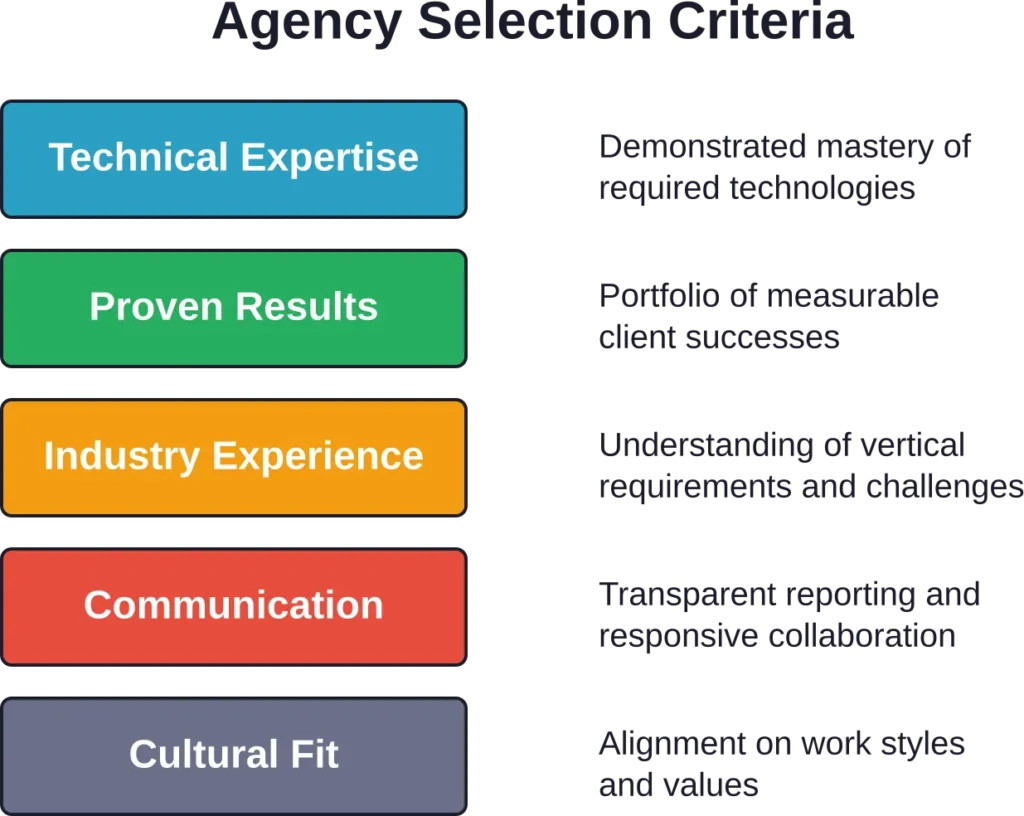
Selecting an agency partner requires more than reviewing portfolios and comparing proposals. The best match depends on business objectives, internal capabilities, budget parameters, and organizational culture.
Define Objectives Before Engaging Agencies
Clarity about desired outcomes shapes productive agency conversations. Businesses should identify specific goals—whether that’s increasing qualified leads, improving conversion rates, launching new products, or expanding into new markets.
Vague objectives like “improve our digital presence” or “get more traffic” make it difficult for agencies to propose appropriate strategies or demonstrate value. Specific, measurable goals allow more productive discussions about approach and expected results.
Understanding internal constraints matters too. What resources can the internal team contribute? What approval processes will affect project timelines? Which stakeholders need involvement in decisions?
Evaluate Relevant Experience
Portfolio review should focus on projects similar to the engagement being considered. An agency with beautiful consumer brand work may lack expertise in B2B lead generation or complex technical implementations.
Look for demonstrated results, not just pretty designs. What business outcomes did previous projects achieve? How does the agency measure success? Can they articulate the strategic thinking behind creative decisions?
Industry experience can provide valuable context, but it’s not always essential. Sometimes agencies from outside an industry bring fresh perspectives that internal teams and specialized competitors miss.
Assess Process and Communication Style
Agency processes reveal how they’ll operate during the engagement. Do they conduct discovery before proposing solutions? How do they incorporate client feedback? What does their project management approach look like?
Communication style matters for long-term partnerships. Some agencies prefer regular scheduled check-ins with formal status reports. Others operate more informally with frequent quick updates. Neither is inherently better—what matters is alignment with internal preferences.
Response time expectations should be discussed upfront. How quickly can clients expect replies to questions or requests? Who serves as the primary contact? What happens if that person is unavailable?
Understand Pricing Structure and Value
Agencies structure pricing in various ways—monthly retainers, project-based fees, hourly rates, or performance-based models. Each approach has advantages and disadvantages depending on project characteristics.
The lowest price rarely represents the best value. Agency expertise, process maturity, and talent quality all affect outcomes. Underpaying often means working with inexperienced teams, inadequate quality assurance, or stretched resources.
That said, expensive doesn’t guarantee quality either. Evaluate what’s included in pricing—strategy, creative, development, project management, revisions, and ongoing support. Compare scope and deliverables across proposals, not just bottom-line numbers.
Consider Long-Term Partnership Potential
Most successful agency relationships extend beyond single projects. Digital marketing requires ongoing optimization. Websites need updates, improvements, and expansions as businesses evolve.
Evaluate whether an agency can scale with growth. Do they have capabilities to expand into additional channels or services? Can they handle increased complexity as needs grow?
Cultural fit affects long-term satisfaction. Do agency team members seem like people the internal team will enjoy working with? Do they share similar values about quality, collaboration, and business ethics?
Digital Marketing Service Categories Explained
Modern agencies offer diverse services that can be confusing to evaluate. Understanding core service categories helps businesses identify which capabilities matter most for their situations.
Search Engine Optimization
SEO encompasses technical optimization, content strategy, and authority building to improve organic search visibility. Effective SEO requires sustained effort across multiple dimensions.
Technical SEO addresses site architecture, page speed, mobile optimization, and crawlability issues that affect search engine indexing. Content optimization ensures pages target relevant keywords while providing value to users. Link building establishes authority through relationships with other websites.
SEO results take time—typically months before significant improvements appear. Agencies promising immediate results either have unrealistic expectations or plan to use risky tactics that can trigger penalties.
Paid Media Management
Paid advertising spans search ads, social media promotion, display advertising, and video campaigns. Each channel has distinct characteristics, audience behaviors, and optimization approaches.
Effective paid media requires continuous testing, optimization, and budget reallocation based on performance data. The best agencies treat paid campaigns as learning systems that improve over time rather than static implementations.
Platform expertise matters significantly. Google Ads, Facebook advertising, LinkedIn campaigns, and emerging channels each have unique features, targeting options, and best practices. Generalist knowledge rarely matches specialist depth.
Content Marketing
Content strategy involves creating valuable information that attracts, engages, and converts target audiences. This includes blog posts, videos, infographics, guides, case studies, and other formats.
Strategic content marketing requires understanding audience information needs, search behavior, and decision processes. Random blog posts rarely drive business results—effective content addresses specific questions and concerns potential customers have.
Content distribution matters as much as creation. The best content achieves nothing if target audiences never see it. Distribution strategies span email, social promotion, paid amplification, and outreach to industry publications.
Web Development Services
Web development ranges from simple brochure sites to complex applications with custom functionality. Requirements vary dramatically based on business models, user needs, and technical constraints.
Custom development provides maximum flexibility but requires larger investments and longer timelines. Template-based approaches using platforms like WordPress reduce costs and speed but limit customization.
Development quality affects long-term cost. Poorly built sites require expensive maintenance and frequent fixes. Quality development follows best practices for security, performance, and maintainability that pay dividends over time.
Conversion Rate Optimization
CRO focuses on improving the percentage of visitors who complete desired actions—whether purchases, lead form submissions, or other conversions. Small percentage improvements in conversion rates can dramatically impact revenue.
Effective CRO combines analytics, user research, hypothesis development, and systematic testing. Random changes rarely improve results—strategic optimization requires understanding why users behave as they do.
Testing infrastructure matters for CRO success. A/B testing platforms, analytics implementation, and heat mapping tools provide the data needed to make informed optimization decisions.
| Service Category | Timeline to Results | Best For | Key Success Factors |
|---|---|---|---|
| SEO | 3-6 months | Long-term organic growth | Technical excellence, quality content, sustained effort |
| Paid Media | Immediate | Quick results, scalable growth | Platform expertise, testing discipline, budget optimization |
| Content Marketing | 2-4 months | Authority building, education | Audience understanding, distribution strategy, consistency |
| Web Development | 1-6 months | Platform foundation | Clear requirements, quality code, user focus |
| CRO | 1-3 months | Improving existing traffic | Testing infrastructure, analytical rigor, user insights |
Key Trends Shaping Agency Services in 2026
The agency landscape continues evolving rapidly. Several trends are reshaping how agencies operate and what services they deliver.
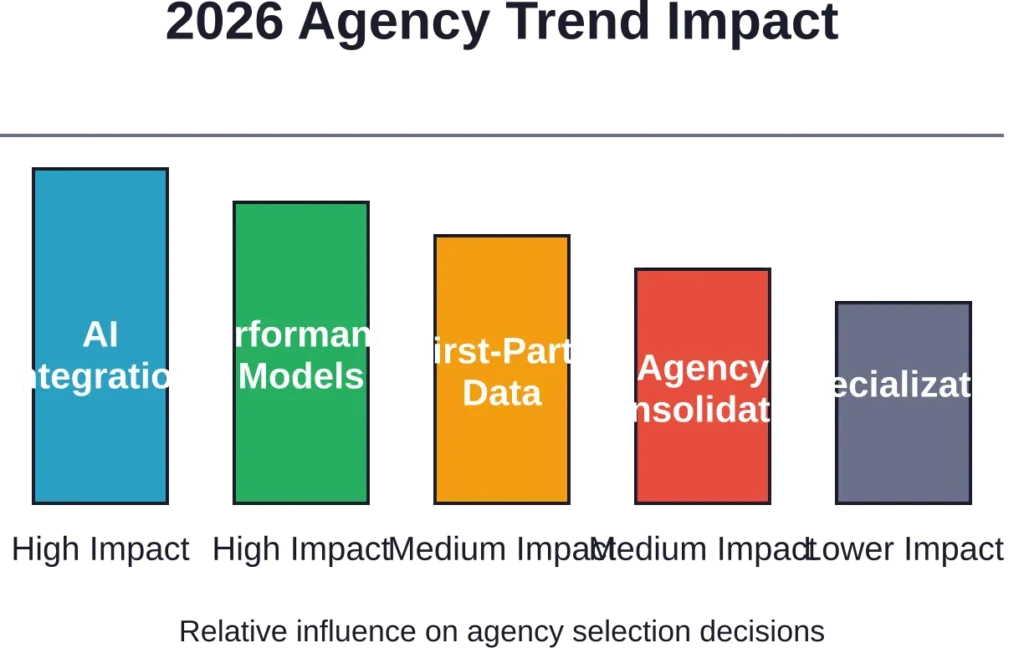
AI Integration Across Services
Artificial intelligence has moved from experimental to essential. Agencies use AI for content creation, audience analysis, campaign optimization, and customer service automation.
But AI adoption brings challenges. According to Forrester research, 30% of B2B buyers viewed genAI tools as meaningful interaction types during the final commit stage of their buying process in 2025. This compares to just 17% who viewed product expert interaction as meaningful.
This shift means agencies must optimize not just for traditional search but for AI-powered research tools that buyers increasingly use. Content strategies need to address how generative AI systems surface and present information.
Agency Consolidation and Restructuring
The agency industry faces economic pressure. Major holding companies reported mixed results—Publicis Groupe delivered 5.7% growth in the most recent quarter, while Havas, Omnicom, and Stagwell reported low single-digit growth between 2.5% and 3.8%.
Consolidation continues with major acquisitions reshaping the landscape. Omnicom Group’s $13.3 billion acquisition of Interpublic Group in 2024 represents the largest agency merger in years.
This consolidation reflects agencies racing to build comprehensive capabilities spanning creative, media, data, and technology. The old model of specialized agencies handling discrete functions is giving way to integrated partners managing entire digital ecosystems.
Performance-Based Models Gaining Traction
Traditional agency compensation—monthly retainers or hourly billing—is shifting toward performance-based arrangements. Clients increasingly demand agency compensation tied to business outcomes.
This trend reflects broader dissatisfaction with agency value delivery. The 85% of US B2C marketing executives planning to review their media agencies in 2026 signals demand for greater accountability.
Performance models vary—some tie fees to lead volume, others to revenue generation, and still others to specific KPIs like conversion rates or customer acquisition costs. These arrangements align agency incentives with client success but require robust measurement infrastructure.
Specialization Versus Full-Service Debate
Agencies face strategic choices about breadth versus depth. Full-service firms offer convenience and integrated strategy but may lack deep expertise in specific channels or technologies.
Specialized agencies bring profound knowledge of particular disciplines—whether that’s technical SEO, paid social advertising, or mobile app development. But clients working with specialists must coordinate multiple vendors.
The best approach depends on internal capabilities and business requirements. Companies with strong internal marketing leadership can coordinate specialists effectively. Organizations lacking that expertise benefit from full-service partners who manage integration.
Privacy and First-Party Data Emphasis
Digital advertising faces ongoing privacy restrictions. Display ad budgets are projected to drop 30% in 2026 according to Forrester analysis, driven partly by consumer retreat from the open web and declining third-party cookie availability.
This shift forces agencies to emphasize first-party data strategies—building owned audiences through email lists, community platforms, and direct customer relationships rather than relying on rented attention through paid advertising.
Agencies with expertise in customer data platforms, marketing automation, and first-party data activation provide increasing value as traditional digital advertising becomes less effective.
Common Mistakes When Hiring Agencies
Businesses often make predictable errors during agency selection that lead to disappointing results and wasted investment.
Choosing Based on Price Alone
Selecting the lowest-priced proposal rarely produces the best outcomes. Agency quality varies dramatically, and experienced teams command higher rates for good reasons.
Budget constraints are real, but they should inform scope decisions rather than drive quality compromises. A smaller project executed well by a capable agency produces better results than an ambitious scope delivered poorly by a cheap provider.
Value assessment requires looking beyond hourly rates or project totals to evaluate what’s included, who’s doing the work, and what results can reasonably be expected.
Failing to Check References
Portfolio work shows what agencies can do, but reference conversations reveal what they actually deliver and how they operate during engagements.
References provide insights into communication style, problem-solving approaches, deadline adherence, and how agencies handle challenges. These operational factors often matter more than creative capabilities.
Ask references specific questions about their experience: Did projects stay on budget? How did the agency handle unexpected issues? Would they hire them again? What could have been better?
Unclear Success Metrics
Engagements without defined success metrics lead to misaligned expectations and disputes about value delivered. What specific outcomes indicate successful performance?
Good agencies push for clarity about success metrics during sales conversations. Vague objectives make it impossible to demonstrate value or optimize for desired outcomes.
Metrics should connect to business objectives—not just marketing vanity metrics. Traffic increases mean nothing without corresponding lead generation or revenue impact.
Inadequate Internal Resources
Agency success requires client participation. Businesses that can’t provide timely feedback, necessary approvals, or requested information slow projects and reduce quality.
Before engaging agencies, assess internal capacity. Who will manage the relationship? Who provides feedback and approvals? Who supplies content, product information, or other required inputs?
Agencies can’t succeed without access to client knowledge, stakeholders, and decision-makers. Setting realistic expectations about internal availability prevents frustration on both sides.
Expecting Immediate Results
Digital marketing and web development produce results on different timelines. SEO requires months of sustained effort. Content marketing builds momentum gradually. Paid advertising delivers faster results but requires optimization time.
Unrealistic timeline expectations doom partnerships. Businesses demanding immediate results from strategies that require time either get disappointed with capable agencies or work with providers using shortcuts that damage long-term performance.
Understand typical timelines for different services and judge agencies against realistic benchmarks, not wishful thinking.
Questions to Ask During Agency Selection
The right questions reveal agency capabilities, processes, and fit more effectively than marketing materials or presentations.
About Their Process
How do they approach discovery and strategy development? What information do they need from clients? How do they incorporate feedback during projects?
What project management methodology do they follow? Who serves as the primary contact? How frequently do they communicate status updates?
How do they handle scope changes or additional requests? What’s included in quoted prices versus what incurs additional costs?
About Their Team
Who specifically will work on the account? What’s their experience and expertise? Will those team members stay consistent throughout the engagement?
How large is their team? Do they handle all work internally or use subcontractors? If using subcontractors, how do they vet and manage them?
What’s their team turnover rate? How do they handle transitions if someone leaves mid-project?
About Their Experience
What similar projects have they completed? Can they share specific results achieved? What challenges did they encounter and how were they addressed?
Do they have experience in the relevant industry? If not, how do they get up to speed on unfamiliar categories?
What’s their largest successful project? What’s their most complex implementation? These reveal capabilities at scale and under challenging conditions.
About Results and Reporting
How do they measure success? What metrics do they track? How frequently do they report results?
What analytics tools and platforms do they use? Do they require specific tracking implementations?
How do they handle underperformance? What’s their process when results don’t meet expectations?
About Engagement Terms
What contract terms do they require? What’s the minimum commitment? What’s required for termination?
How is pricing structured? What’s included versus what costs extra? When are invoices issued and when is payment due?
Who owns work product—designs, code, content? What happens to assets if the relationship ends?
The Future of Agency Partnerships
Agency relationships are evolving beyond traditional vendor arrangements toward more integrated partnerships.
Embedded Agency Teams
Some agencies now embed team members within client organizations, blurring lines between agency and internal resources. These hybrid models provide agency expertise with internal team integration.
Embedded models work well for sustained initiatives requiring deep business understanding. Agency team members participate in internal meetings, understand organizational culture, and build relationships across departments.
This approach requires compatible cultures and work styles. Not every agency or client organization adapts well to embedded models.
Outcome-Based Partnerships
Traditional time-based billing is giving way to outcome-focused arrangements where agencies share risk and reward based on business results achieved.
These partnerships require sophisticated measurement infrastructure and agreed-upon attribution models. What results does the agency control versus what depends on factors outside their influence?
Successful outcome-based arrangements align incentives but need careful structure to avoid disputes about attribution and responsibility.
Platform and Technology Integration
Agencies increasingly integrate specific technology platforms into their offerings. Some agencies build proprietary tools for analytics, optimization, or campaign management.
Others develop deep expertise in commercial platforms, becoming implementation and optimization specialists. This technical integration creates switching costs that strengthen client relationships.
Technology dependence has downsides though—businesses become locked into specific platforms and may face challenges transitioning if relationships end.
Frequently Asked Questions
Digital marketing agencies focus on driving traffic, generating leads, and building brand awareness through channels like SEO, paid advertising, content marketing, and social media. Web development companies specialize in building websites, applications, and digital platforms—the technical infrastructure that supports marketing efforts. Many agencies now offer both capabilities, recognizing that effective digital presence requires both strategic marketing and solid technical foundations.
Agency investment varies dramatically based on scope, complexity, and firm positioning. Monthly marketing retainers might range from a few thousand dollars for basic services to six figures for comprehensive programs at large agencies. Web development projects span similar ranges—simple sites may cost several thousand while complex custom platforms require substantially more. Rather than fixating on specific numbers, businesses should focus on expected return on investment and ensure budgets allow for quality work that achieves objectives.
Timeline depends heavily on the specific service. Paid advertising can generate traffic and leads immediately, though optimization to improve efficiency takes weeks or months. SEO typically requires three to six months before significant organic traffic improvements appear. Content marketing builds momentum gradually over months as content accumulates and authority grows. Web development timelines depend on project complexity—simple sites launch in weeks while complex platforms may take months. Businesses should set realistic expectations based on the specific services and strategies being implemented.
The right choice depends on internal capabilities and specific needs. Full-service agencies provide convenience and integrated strategy, handling everything from web development to content marketing to paid advertising. This works well for businesses lacking internal marketing expertise or coordination capacity. Specialized agencies bring deep expertise in specific areas—whether that’s technical SEO, Facebook advertising, or mobile app development. Companies with strong internal marketing leadership can coordinate multiple specialists effectively, potentially achieving better results through best-in-class providers for each discipline.
Professional agencies establish clear success metrics upfront and provide regular reporting on progress toward goals. If results underperform, good agencies diagnose issues, adjust strategies, and redouble optimization efforts. Legitimate underperformance sometimes reflects unrealistic expectations, insufficient budgets for competitive markets, or factors outside agency control like product-market fit issues. Persistent underperformance despite good-faith efforts may warrant switching providers, but businesses should exhaust optimization opportunities first. Most contracts include termination clauses allowing either party to exit if the relationship isn’t working.
Agency policies vary. Some agencies accept multiple clients in the same industry, maintaining information firewalls between accounts. Others enforce category exclusivity, working with only one client per industry to avoid conflicts. During agency selection, businesses concerned about competitive conflicts should ask about current client lists and conflict policies. Category-exclusive arrangements sometimes come with premium pricing reflecting the opportunity cost agencies accept by declining other work in the industry.
Agency success requires meaningful client participation. Businesses must provide timely feedback on creative work, approve strategies and budgets, supply necessary information about products and markets, and make requested introductions to internal stakeholders. Agencies can’t read minds or compensate for unresponsive clients. That said, effective agencies handle project management and execution, minimizing client workload while ensuring appropriate involvement at key decision points. During selection, discuss expected time commitment and identify who internally will manage the relationship.
Conclusion: Making the Right Agency Choice
Selecting a digital marketing or web development agency represents a significant business decision. The right partnership accelerates growth, improves operational efficiency, and strengthens competitive positioning. Poor choices waste budget and opportunity cost while delivering disappointing results.
The agencies highlighted in this guide demonstrate different strengths, specializations, and approaches. No single firm suits every situation—the best match depends on specific business requirements, internal capabilities, budget parameters, and organizational culture.
The agency landscape continues evolving rapidly. Artificial intelligence, privacy restrictions, economic pressures, and changing buyer behaviors are reshaping how agencies operate and what services they deliver. The winners will be agencies that adapt quickly while maintaining focus on measurable business outcomes.
Success requires more than just choosing the right agency. Businesses must define clear objectives, allocate sufficient resources, participate actively in engagements, and maintain realistic expectations about timelines and results.
Start the selection process by clarifying what success looks like. What specific business outcomes would make an agency investment worthwhile? What capabilities are needed to achieve those outcomes? What internal resources can support agency work?
With clear objectives defined, evaluate agencies against those specific requirements rather than generic criteria. Review relevant experience, assess process fit, check references carefully, and ensure cultural alignment.
The best agency relationships transcend simple vendor arrangements to become true partnerships where both parties invest in mutual success. Finding that partnership takes effort, but the business impact makes the investment worthwhile.
Ready to transform digital presence and accelerate business growth? Start conversations with agencies that match specific requirements and see which partnership feels right for the road ahead.