

Quick Summary: Selecting the right customized web development partner can make or break your digital transformation. This guide evaluates 15 leading agencies with proven track records in delivering tailored web solutions—from enterprise platforms to progressive web apps—based on technical capabilities, client outcomes, and development methodologies.
Finding a web development company that can translate business requirements into high-performing digital products isn’t straightforward. Template solutions won’t cut it for most businesses—custom development offers flexibility, scalability, and competitive differentiation.
But here’s the challenge: the market is saturated with agencies claiming expertise. Some deliver exceptional results. Others overpromise and underdeliver.
This guide cuts through the noise. We’ve evaluated agencies based on technical depth, client satisfaction, development processes, and real-world outcomes. No fluff—just actionable insights to help decision-makers identify the right partner.
What Makes Custom Web Development Different
Custom web development means building digital solutions from scratch rather than relying on pre-built templates or platforms. It’s the difference between buying off-the-rack and commissioning a tailored suit.
The approach starts with requirements analysis—understanding specific business needs, technical constraints, and growth objectives. Developers then architect solutions using appropriate technology stacks, ensuring every component serves a strategic purpose.
Studies indicate that visitors make judgments about website credibility based on design and functionality. That principle underscores why generic templates often fall short—they can’t address unique user experience requirements or integrate seamlessly with existing business systems.
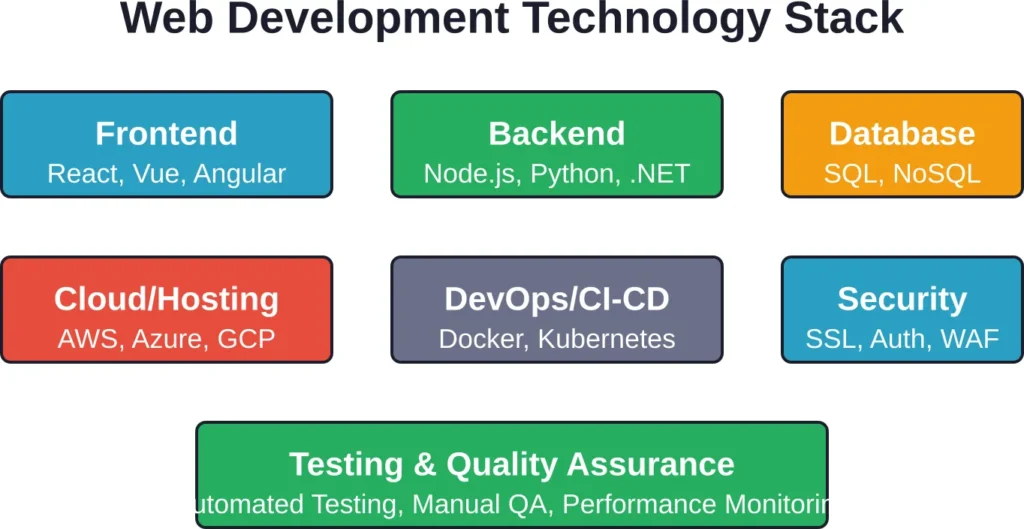
Custom development typically involves several specialized roles:
- Frontend developers who build user interfaces
- Backend engineers who handle server logic and databases
- UX/UI designers who craft user experiences
- DevOps specialists who manage deployment and infrastructure
- QA engineers who ensure quality through rigorous testing
The investment varies significantly. Basic corporate sites start around the $5,000-$10,000 range, while complex B2B SaaS platforms can require six-figure budgets. Geography influences costs too—agencies in the US and Western Europe typically charge higher rates than distributed teams in Eastern Europe or Asia.
How We Selected These Companies
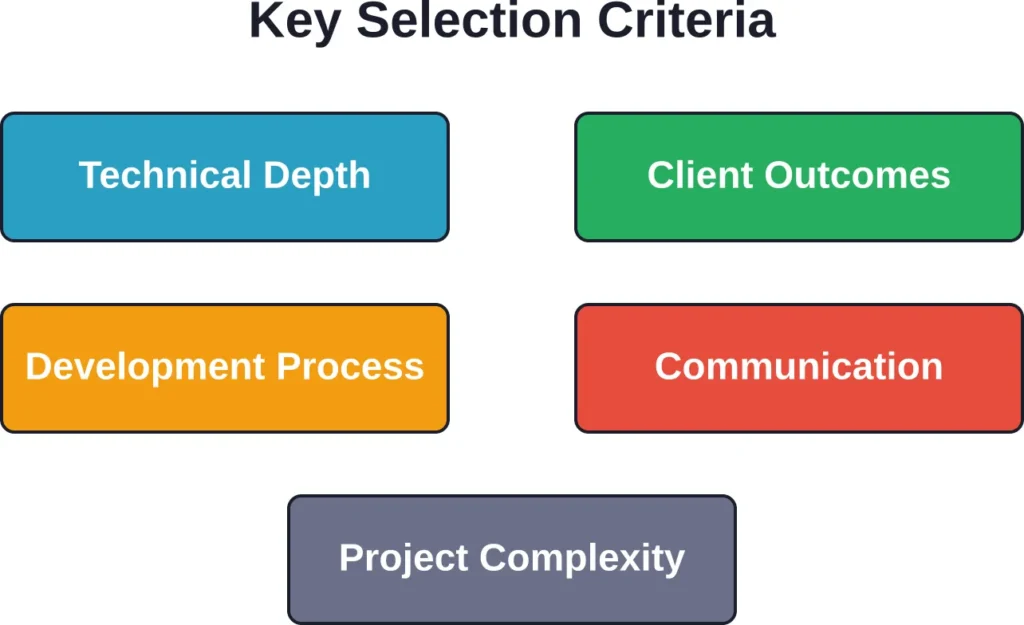
This isn’t a random list. We evaluated agencies using specific criteria:
Technical expertise: Does the company demonstrate proficiency across modern tech stacks? We looked at their ability to work with frameworks like React, Vue, Angular, Node.js, Python, and emerging technologies.
Client outcomes: What results have they delivered? We examined case studies, client testimonials, and independent reviews from platforms like Clutch to verify real-world impact.
Project complexity: Can they handle sophisticated requirements? We prioritized agencies with proven experience delivering enterprise-grade solutions, not just marketing websites.
Development methodology: Do they follow best practices? Agencies using agile methodologies, continuous integration, and robust testing protocols ranked higher.
Communication and transparency: How do they manage client relationships? Clear communication, realistic timelines, and transparent processes matter as much as technical skills.
We excluded agencies that primarily offer template-based solutions or those with limited verifiable client feedback. The focus remains on companies that deliver genuinely custom development work.
The Complete List: Top 15 Customized Web Development Companies
1. Lengreo

Lengreo acts as a complete marketing and tech partner, offering tailored website development alongside B2B digital strategies. The company builds eCommerce platforms, business websites, portfolio sites, and high-converting landing pages.
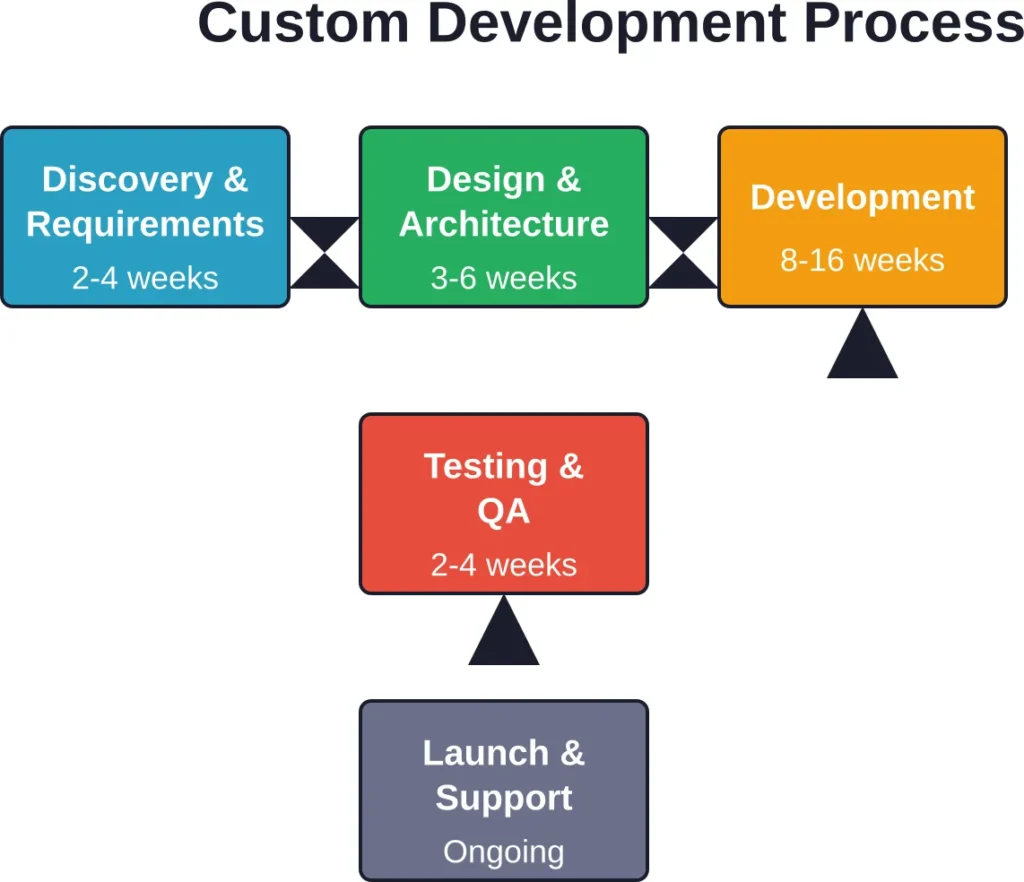
Their process starts with discovery, business analysis, and research, followed by prototyping, design, development, implementation, and ongoing quality assurance with support. This end-to-end approach ensures websites directly support lead generation and business growth objectives.
Client feedback emphasizes the team’s proactive, high-quality delivery and ability to integrate website solutions into broader marketing efforts for measurable ROI.
The company combines website development with SEO, paid ads, and lead generation services, creating cohesive digital experiences that drive qualified opportunities.
Best for: Companies seeking custom websites tightly integrated with performance-driven B2B marketing strategies.
Contact Information:
- Website: Lengreo.com
- Phone: +31 686 147 566
- Email: [email protected]
- Address: Vrijstraat 9 C/D, 5611 AT Eindhoven, Netherlands
- LinkedIn: Lengreo
- Twitter: @Lengreo
- Instagram: @lengreo
2. Gilzor

Gilzor specializes in custom software development with a strong emphasis on full-cycle web development services. They create tailored web applications and platforms from initial idea validation through design, development, testing, and post-launch maintenance.
The team prioritizes business analysis and user-centric approaches to ensure web solutions precisely match client needs while reducing unnecessary rework. They deliver secure, scalable web platforms that support startups, SMBs, and product companies.
Client projects demonstrate their ability to build functional and attractive web and mobile-connected solutions across industries, focusing on real business outcomes like improved efficiency and user engagement.
Their expertise covers end-to-end web development alongside supporting services such as UI/UX design and quality assurance.
Best for: Startups and businesses needing custom web platforms built from concept to production with ongoing support.
Contact Information:
- Website: www.gilzor.com
- Email: [email protected]
- Address: Poland, Warsaw, Office 58, street Adama Mickiewicza 37, 01-625
- LinkedIn: www.linkedin.com/company/gilzor-softwaredevelopment
3. Oski
Oski delivers custom web development and smart software solutions for enterprises and ambitious startups. They design, develop, deploy, and maintain well-engineered web platforms with strong frontend capabilities and seamless integrations.
Their approach emphasizes innovative design, intuitive user experiences, and robust performance using modern frameworks while incorporating cloud solutions and CMS platforms like Umbraco and WordPress for flexible content management.
Client testimonials highlight reliable delivery, excellent project management, and the ability to create scalable web solutions that enhance operations across industries such as e-commerce, logistics, and fintech.
The company provides comprehensive web-focused services including frontend development, AI integrations, and full-stack solutions tailored to specific business requirements.
Best for: Tech-forward enterprises and startups requiring high-quality custom web solutions with modern technologies and reliable ongoing maintenance.
Contact Information:
- Website: oski.site
- Phone: +48571282759
- Email: [email protected]
- Address: Kaupmehe tn 7, 10114 Tallinn, Estonia
- LinkedIn: www.linkedin.com/company/oski-solutions
4. A-listware

A-listware provides custom software development and dedicated teams for tailored digital solutions, including web and enterprise applications. They focus on building responsive, secure web platforms through outsourcing and team augmentation models.
Their process ensures seamless integration with client teams while delivering custom web development, cloud applications, and modern UI/UX designs that support business scalability.
The company excels at creating enterprise-grade web solutions such as portals, eCommerce platforms, and internal systems that streamline operations and enable B2B/B2C interactions.
Services span full software engineering, including frontend and backend web technologies, application development, and infrastructure support for complete project delivery.
Best for: Businesses looking for flexible custom web development through dedicated or augmented teams that integrate directly with their existing processes.
Contact Information:
- Website: a-listware.com
- Phone: +1 (888) 337 93 73
- Email: [email protected]
- Address: North Bergen, NJ 07047, USA
- LinkedIn: www.linkedin.com/company/a-listware
- Facebook: www.facebook.com/alistware
5. Mobian
Mobian builds dedicated engineering teams for custom digital products with full-stack web development capabilities. They specialize in creating production-ready web solutions as part of end-to-end mobile and AI-powered platforms.
The company follows clean architecture principles and delivers scalable web backends, APIs, and integrations while maintaining strong documentation and communication standards.
Their expertise includes legacy system integration and post-launch support, ensuring custom web components remain maintainable and performant as products grow.
Teams work in outsourcing or outstaffing models across industries like fintech, healthcare, and logistics, where reliable web foundations are critical.
Best for: Companies needing senior-level custom web development within dedicated teams for complex, scalable digital products.
Contact Information:
- Website: mobian.studio
- Phone: [email protected]
- Address: Harju maakond, Tallinn, Kesklinnalinnaosa, Masina tn 22, 10113
- LinkedIn: www.linkedin.com/company/mobian-studio
6. Clay
Clay has built a reputation for high-end digital experiences that push creative and technical boundaries. The agency attracts brands willing to invest in standout digital presence.
Their work emphasizes the intersection of design innovation and technical excellence. Projects often feature sophisticated animations, unique interaction patterns, and carefully crafted user experiences.
The client list includes well-known brands across technology, consumer goods, and media. Common themes include premium positioning and differentiation through digital experience.
Clay’s team structure supports both strategic thinking and detailed execution. This combination helps translate brand positioning into functional digital products that users actually engage with.
Best for: Established brands seeking premium digital experiences that differentiate from competitors.
7. Lounge Lizard

Lounge Lizard describes itself as a “brandtenders” agency—mixing branding with digital development. They’ve operated since 1998, giving them perspective on how web development practices have evolved.
The company serves clients across B2B and B2C sectors. Their approach integrates brand strategy with technical implementation, ensuring websites reflect and reinforce brand positioning.
Client feedback emphasizes collaborative working relationships. Teams involve stakeholders throughout development rather than disappearing for months before unveiling finished products.
Lounge Lizard maintains offices in New York, Nashville, and other locations. This physical presence supports clients who prefer in-person collaboration alongside remote work.
Best for: Companies wanting integrated branding and development from a single partner.
8. Dotlogics
Dotlogics focuses on custom web development with particular strength in e-commerce platforms. They build solutions for brands outgrowing standard Shopify or WooCommerce capabilities.
The technical team handles complex requirements like custom inventory systems, multi-vendor marketplaces, and sophisticated pricing logic. These capabilities serve retailers with unique operational needs.
Beyond e-commerce, Dotlogics develops corporate websites, customer portals, and internal business applications. The common thread is custom functionality that template solutions can’t provide.
Client reviews highlight responsive project management and ability to meet deadlines—factors that matter significantly when launches tie to business events or seasonal demands.
Best for: E-commerce businesses needing custom functionality beyond standard platform capabilities.
9. Bop Design
Bop Design specializes in B2B web development with focus on lead generation and conversion optimization. Their approach treats websites as business tools rather than digital brochures.
The team combines development with content strategy and SEO implementation. This integration ensures websites don’t just function well technically but also attract and convert target audiences.
Client work spans professional services, technology companies, and industrial manufacturers—sectors where long sales cycles and multiple stakeholders characterize typical buying processes.
Bop Design emphasizes measurable outcomes. Projects include analytics setup, conversion tracking, and ongoing optimization recommendations based on user behavior data.
Best for: B2B companies treating websites as lead generation tools rather than just company information.
10. The Creative Momentum (CloudMellow Company)
The Creative Momentum combines creative design with solid technical development. Now part of CloudMellow, they maintain their brand identity while accessing broader resources.
The company serves small-to-medium businesses alongside larger enterprises. This range reflects versatility in handling projects of different scales and complexity levels.
Client testimonials emphasize the team’s responsiveness and willingness to educate clients about web technologies. That educational approach helps stakeholders make informed decisions about features and priorities.
Technical capabilities include modern frontend frameworks, CMS implementations, and custom backend development. The team stays current with evolving web standards and best practices.
Best for: SMBs and enterprises seeking balanced creative and technical expertise.
Understanding Development Costs and Timelines
Budget questions dominate early conversations with development agencies. And for good reason—costs vary dramatically based on project scope, technical complexity, and team composition.
Basic corporate websites with limited custom functionality typically start around $5,000-$10,000. These projects involve straightforward layouts, standard content management, and minimal integrations.
Mid-complexity projects—customer portals, member management systems, or e-commerce sites with custom features—generally range from $25,000-$75,000. They require more sophisticated backend logic, user authentication, and data management.
Enterprise platforms, B2B SaaS applications, or systems with complex integrations often require six-figure investments. These projects involve multiple user roles, sophisticated workflows, third-party integrations, and extensive testing.
Timeline matters as much as budget. Meaningful custom web projects rarely complete in less than 8-12 weeks. Complex platforms can require 6-12 months from kickoff to launch.
Several factors influence both cost and timeline:
| Factor | Impact on Cost | Impact on Timeline |
|---|---|---|
| Requirements clarity | High – unclear requirements increase revisions | High – discovery phase extends timeline |
| Custom integrations | High – API work requires specialized expertise | Medium-High – depends on documentation quality |
| Design complexity | Medium – custom designs cost more than templates | Medium – unique interfaces need more testing |
| Security requirements | Medium-High – compliance adds development time | Medium – security testing extends QA phase |
| Mobile responsiveness | Low-Medium – standard practice for modern sites | Low – built into development workflow |
Real talk: many agencies avoid discussing costs upfront because project requirements vary so dramatically. But reputable companies should provide ballpark ranges after understanding basic project parameters.
Custom Development vs. Template Solutions
The custom-versus-template debate surfaces early in most web projects. Both approaches have legitimate use cases—the key is matching approach to business needs.
Template solutions—WordPress themes, Webflow templates, Shopify stores—offer speed and cost advantages. A competent developer can launch a template-based site in 2-4 weeks for a fraction of custom development costs.
But templates impose constraints. They limit functionality to what the template supports. Customization often means wrestling with someone else’s code structure. Scaling beyond original template capabilities can prove difficult or impossible.
Custom development removes those constraints. Developers architect solutions specifically for unique requirements. Every component serves a defined purpose. Scaling becomes a matter of adding functionality rather than fighting template limitations.
The trade-off? Time and investment. Custom development takes longer and costs more upfront. But for businesses with specific requirements, competitive differentiation needs, or growth plans, that investment pays returns through better user experiences and operational efficiency.
Here’s a practical framework:
Consider templates when:
- Requirements fit standard patterns (basic corporate site, simple blog, standard e-commerce)
- Budget constraints limit options
- Time-to-market matters more than differentiation
- Limited technical resources exist for ongoing maintenance
Choose custom development when:
- Specific workflows or processes need digital implementation
- Integration with existing systems is critical
- User experience needs differ significantly from standard patterns
- Scaling plans require flexible architecture
- Competitive advantage depends on digital experience quality
Some projects use hybrid approaches—template foundations with custom functionality layered on top. This can work but requires careful architecture to avoid technical debt.
Key Questions to Ask Development Agencies
Initial conversations with potential development partners determine whether the relationship will succeed. The right questions reveal capabilities, processes, and cultural fit.
About their process:
“Walk me through your typical project lifecycle from kickoff to launch.” This question reveals whether they follow structured methodologies or improvise as they go.
“How do you handle requirements that change mid-project?” Change happens on every project. Their answer shows flexibility and change management approach.
“What does your QA process look like?” Quality assurance separates professional agencies from code shops. Look for mentions of testing protocols, browsers/devices covered, and bug tracking systems.
About communication:
“Who will be my primary point of contact?” Some agencies assign account managers. Others have developers communicate directly. Neither is wrong, but knowing expectations matters.
“How often will we have status updates?” Weekly check-ins? Daily standups? Monthly reviews? Align their communication cadence with internal expectations.
“How do you handle time zone differences?” Relevant for distributed teams. Overlapping work hours improve collaboration.
About expertise:
“What projects have you completed similar to ours?” Generic portfolios matter less than relevant experience. Have they solved problems comparable to yours?
“Which technologies do you recommend for this project and why?” This reveals technical thinking. Good agencies explain trade-offs, not just push preferred stacks.
“What happens if you encounter technical challenges you can’t solve in-house?” Even great teams hit expertise limits. How they handle gaps matters.
About post-launch:
“What support do you provide after launch?” Bug fixes? Training? Ongoing maintenance? Clarify what’s included versus additional services.
“Will I own all code and intellectual property?” Most contracts transfer ownership, but confirm this explicitly.
“How do you handle feature requests after launch?” Understand their process for post-launch enhancements and associated costs.
Red Flags to Watch For
Not all agencies deliver what they promise. Certain warning signs indicate potential problems:
Unrealistic timelines: If an agency promises complex custom development in 2-3 weeks, they’re either misunderstanding requirements or planning to cut corners. Quality work takes time.
Vague proposals: Professional agencies provide detailed scope documents outlining deliverables, timelines, and responsibilities. Generic proposals suggest they haven’t fully understood the project.
Lack of process: Asking about their development methodology shouldn’t draw blank stares. Established agencies follow structured processes—agile, waterfall, or hybrid approaches.
Poor portfolio documentation: Showing pretty screenshots is easy. Good agencies explain the problems they solved, technologies used, and results achieved. Surface-level portfolios warrant skepticism.
Communication gaps: If getting straight answers during sales conversations proves difficult, expect worse during actual projects. Early communication patterns predict working relationships.
Extreme pricing: Dramatically low quotes often mean offshore teams with minimal experience or corner-cutting development practices. Suspiciously high prices don’t guarantee quality either—evaluate based on demonstrated capabilities.
No client references: Legitimate agencies gladly provide references or case studies. Reluctance to connect prospects with past clients raises questions about actual track records.
Technology lock-in: Some agencies push proprietary platforms or unusual tech stacks that make future maintenance dependent on them. Insist on mainstream technologies unless there’s compelling justification.
Modern Development Approaches and Technologies
Web development practices evolve rapidly. Agencies stuck using outdated approaches produce sites that feel dated and perform poorly.
Current best practices emphasize several key areas:
Performance optimization: Modern sites need to load fast. Research indicates that AI-driven caching can improve cache hit rates by optimizing data availability and reducing latency. Techniques like code splitting, lazy loading, and optimized asset delivery directly impact user experience and search rankings.
Mobile-first development: More users access websites via mobile devices than desktops. Mobile-first approaches design for small screens first, then enhance for larger displays—ensuring core functionality works everywhere.
Progressive web apps (PWAs): PWAs combine website flexibility with app-like features—offline functionality, push notifications, device integration. They offer native app benefits without app store complications.
API-first architecture: Separating frontend presentation from backend logic (headless architecture) provides flexibility. Content management systems serve data via APIs, allowing multiple frontends—web, mobile apps, kiosks—to share the same backend.
Component-based frameworks: Modern JavaScript frameworks like React, Vue, and Angular enable building reusable interface components. This approach improves consistency, speeds development, and simplifies maintenance.
Serverless deployment: Cloud platforms like AWS, Google Cloud, and Azure offer serverless hosting that scales automatically. Applications pay for actual usage rather than maintaining always-on servers.
These aren’t just buzzwords. They represent fundamental shifts in how professional developers build and deploy web applications. Agencies should articulate which approaches they use and why they fit specific project requirements.
Security and Compliance Considerations
Security breaches and data privacy regulations make security practices critical evaluation criteria for development agencies.
Professional agencies implement security throughout development—not as an afterthought. This includes:
Secure coding practices: Preventing common vulnerabilities like SQL injection, cross-site scripting (XSS), and cross-site request forgery (CSRF). These represent basic security hygiene that all developers should follow.
Data encryption: Protecting sensitive information in transit (HTTPS/TLS) and at rest (database encryption). Any site handling user data needs encryption.
Authentication and authorization: Implementing robust user verification and access controls. Multi-factor authentication, secure password policies, and role-based permissions protect both users and systems.
Regular security updates: Keeping frameworks, libraries, and dependencies current. Outdated software components represent major security risks.
Compliance frameworks: Depending on industry and geography, projects may need to comply with GDPR, CCPA, HIPAA, PCI-DSS, or other regulations. Agencies should understand relevant requirements and build compliant systems.
Penetration testing: Some projects warrant third-party security assessments. Professional agencies should support or conduct penetration testing for high-stakes applications.
Ask potential agencies directly about security practices. Their answers reveal how seriously they take these responsibilities.
The Role of AI in Modern Web Development
Artificial intelligence is reshaping web development workflows—both in how developers work and what they build.
On the development side, AI coding assistants help developers write code faster. According to MIT Sloan research, AI-assisted development can significantly accelerate engineering productivity.
But here’s the thing—AI tools amplify capabilities rather than replacing developers. They handle boilerplate code, suggest solutions, and catch errors. Human developers still architect systems, make strategic decisions, and ensure quality.
On the product side, web applications increasingly incorporate AI features:
- Personalization engines that adapt content and recommendations
- Chatbots and virtual assistants for customer support
- Predictive analytics for business intelligence
- Content generation and optimization tools
- Automated testing and quality assurance
According to Forbes, evaluations serve as a north star for AI companies in measuring and optimizing quality. The same principle applies to web development—agencies building AI-powered features need strong testing and validation processes.
Environmental considerations matter too. Data centers consume significant global electricity resources, and AI workloads increase that demand. As noted in Smashing Magazine research, advanced algorithms can parse through stylesheets and JavaScript files to detect unused selectors or redundant logic, producing leaner, faster-loading pages. Efficiency isn’t just good for user experience—it reduces environmental impact.
Maintenance and Long-Term Partnerships
Launching a website isn’t the finish line—it’s the starting point. Ongoing maintenance, updates, and enhancements determine whether digital investments continue delivering value.
Smart businesses plan for post-launch relationships with development partners. This might include:
Technical maintenance: Regular updates to frameworks, libraries, and security patches. Neglecting maintenance creates technical debt and security vulnerabilities.
Performance monitoring: Tracking site speed, uptime, and user experience metrics. Issues often emerge gradually rather than catastrophically.
Feature enhancements: Adding functionality based on user feedback and business needs. Digital products should evolve as requirements change.
Content updates: While content management systems enable internal teams to update content, add pages, and modify basic elements, complex changes may need developer involvement.
Scaling support: As traffic grows or new markets emerge, infrastructure may need optimization or expansion.
Some agencies offer maintenance retainers—monthly fees covering ongoing support and minor updates. Others work on a project basis for larger enhancements.
The key is establishing clear expectations upfront. What’s included in post-launch support? What costs extra? How quickly will they respond to issues? Getting these details in writing prevents frustration later.
Making the Final Decision
Selecting a development partner represents a significant decision. The wrong choice wastes money and time. The right partner becomes a strategic asset that enables business growth.
Start by defining clear requirements. What problems need solving? What functionality is essential versus nice-to-have? What timeline and budget constraints exist?
Narrow the field to 3-5 agencies that match core criteria—relevant experience, appropriate size, geographic/timezone fit, and budget alignment.
During evaluation, dig deeper than marketing materials:
- Request detailed case studies for similar projects
- Ask to speak with past clients about their experiences
- Evaluate their discovery process—do they ask good questions?
- Assess communication style and responsiveness
- Review proposed timelines and deliverables for realism
- Clarify intellectual property ownership and post-launch support
Trust matters as much as technical capabilities. Web development projects involve tight collaboration, challenging decisions, and inevitable surprises. Work with teams that demonstrate transparency, clear communication, and problem-solving approaches aligned with organizational culture.
Price matters, but it shouldn’t be the sole deciding factor. The cheapest option often delivers the least value. The most expensive doesn’t guarantee the best results. Focus on value—which partner offers the best combination of capabilities, approach, and cost for specific requirements?
Finally, remember that agency relationships often extend beyond initial projects. Companies that deliver excellent work on first engagements become trusted partners for future initiatives. That long-term perspective shifts evaluation criteria from transaction to partnership.
Frequently Asked Questions
Custom web development timelines vary significantly based on project complexity. Simple corporate websites with basic functionality can be completed in 8-12 weeks. Mid-complexity projects like customer portals or e-commerce platforms with custom features typically require 3-6 months. Enterprise applications, B2B SaaS platforms, or systems with extensive integrations often take 6-12 months or longer. The discovery and requirements phase alone can span 2-4 weeks for complex projects. Agencies providing significantly shorter timelines may be underestimating scope or planning to use template approaches rather than true custom development.
Web design companies focus primarily on visual design, user experience, and interface layout—the look and feel of websites. Web development companies handle the technical implementation—writing code, building functionality, creating databases, and ensuring everything works properly. Many agencies offer both services, but some specialize in one area. For custom projects, technical development capabilities matter most. Beautiful designs mean nothing if the underlying technology is poorly built. Look for agencies with strong development teams, not just design portfolios, when planning custom web applications.
Both approaches have merits. Local agencies offer in-person meetings, shared time zones, and cultural familiarity. They typically charge higher rates but may provide easier communication. Remote or distributed teams often offer comparable expertise at lower costs, especially when working with agencies in Eastern Europe or Asia. Time zone differences can complicate real-time collaboration but don’t necessarily prevent successful projects. The key is evaluating the specific team’s capabilities, communication practices, and references regardless of location. Many successful projects involve distributed teams, while some local partnerships disappoint. Focus on demonstrated competence and working style fit rather than geography alone.
Verify portfolio work through several methods. First, visit the live websites they claim to have built and confirm they actually exist and function well. Second, ask for detailed case studies explaining the problems solved, not just pretty screenshots. Third, request client references and actually contact them to discuss their experiences. Fourth, look for independent reviews on platforms like Clutch, GoodFirms, or Google. Fifth, ask technical questions about projects in their portfolio—developers who actually built the work can discuss architecture, challenges, and solutions in detail. Be skeptical of agencies that can’t or won’t provide references, offer only surface-level portfolio descriptions, or show work that’s dramatically different from their current stated expertise.
Ask agencies about their secure coding practices and how they prevent common vulnerabilities like SQL injection and cross-site scripting. Inquire about data encryption both in transit and at rest. Question their approach to authentication, authorization, and access controls. Ask how they handle software updates and security patches for frameworks and dependencies. If relevant to the industry, verify their understanding of compliance requirements like GDPR, HIPAA, or PCI-DSS. Request information about their testing processes, including whether they conduct or support penetration testing. Professional agencies should answer these questions confidently with specific practices rather than vague assurances. Hesitation or inability to discuss security practices indicates inadequate capabilities.
Address this scenario in contracts before starting work. Professional agencies include change management processes defining how scope changes, timeline extensions, and budget adjustments get handled. Typically, clearly documented scope changes trigger formal change requests with associated costs and timeline impacts. Good contracts distinguish between delays caused by the agency versus client-side issues like slow feedback or changing requirements. Establish communication protocols for identifying potential overruns early, not after they’ve occurred. Ask about their track record for delivering on time and on budget—past performance indicates future behavior. Include milestone-based payment schedules so funds get disbursed as deliverables are completed rather than all upfront, providing leverage if issues arise.
This depends on the content management system and architecture. Agencies should build sites with CMS platforms that enable non-technical staff to update content, add pages, and modify basic elements. WordPress, Contentful, and similar systems provide user-friendly interfaces for content management. However, technical changes—modifying functionality, adding integrations, updating frameworks—typically require developer involvement. During project planning, clarify which updates you want to handle internally versus those needing developer support. Good agencies provide training on the CMS and documentation for common tasks. They should also offer ongoing support options for technical updates, whether through retainer agreements or project-based work. Avoid agencies that create dependency through proprietary systems or unnecessarily complex architectures.
Conclusion
Choosing a custom web development company isn’t about finding the biggest agency or the cheapest option. It’s about identifying the partner whose capabilities, approach, and culture align with specific business needs.
The 15 companies profiled here represent different specializations and strengths. Some excel at enterprise complexity. Others bring strategic design thinking. Several specialize in emerging technologies or specific industries.
No single agency is “best” for every project. The right choice depends on project requirements, budget constraints, timeline pressures, and organizational culture. What works for a startup building an MVP differs dramatically from what an enterprise needs for customer portal development.
Use this guide as a starting point, not a final answer. Research agencies that seem aligned with needs. Ask tough questions. Demand references. Evaluate their discovery process as carefully as their portfolio.
Remember that website development represents an investment in business capabilities, not just a technical project. The right partner helps translate business strategy into digital experiences that drive results—customer acquisition, operational efficiency, competitive differentiation, or revenue growth.
Take time to make an informed decision. The weeks spent evaluating options prevent months of frustration with the wrong partner. And when the partnership clicks, the results speak for themselves—digital products that serve business objectives, delight users, and adapt as needs evolve.
Ready to start evaluating development partners? Begin with clear requirements, prioritize agencies with relevant experience, and focus on building relationships with teams you trust to deliver results.